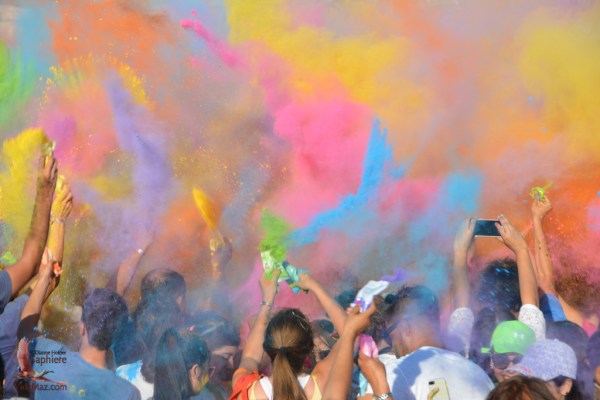
Bollywood movies, YouTube videos and Facebook photos have taught most of us about Holi, the Hindu holiday welcoming spring, the “festival of colors.” The vibrantly colored Gulal powders are said to signify the triumph of good over evil. Click on any photo to enlarge it or view a slideshow.
Thanks to Karina Barcena and a core crew of helpers, Mazatlán has been blessed these last two years to have its own HoliFest. This year we had a group of people join us from Durango, and it included an Indian national who studied yoga with Iyengar himself.
Karina Barcena in front of some of the attendees
Taking place yesterday on the grounds of the Convention Center, the HoliFest Mazatlán event was attended by 2000 people, according to the organizers. Participants represented a huge diversity of folk: babes in arms through to grandparents, groups of friends and entire families. It ROCKED! The event included a guided meditation, a yoga class, demonstration, live Indian-style music with Inda and Yani of Kirtan, live reggae, and lots of dancing. And, by the way, it also included just a few colors!
I’ll let the photos speak for themselves. Be SURE to attend this event next year, planned for April 2017!
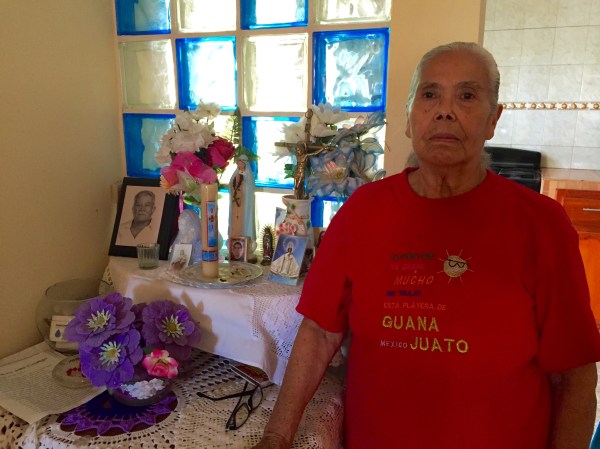
Margarita is 78 years old. I don’t think she looks it…
“Comadre, you need a sobada.”
“What’s a sobada?”
Context
I am, gratefully, a pretty healthy 55 year old. I’m overweight—I love good food and chocolate. I drink alcohol, I sit at the computer too much, working and reviewing photography. But I climb the lighthouse at least a couple of times a week, I’ve done yoga regularly since my late teens, I absolutely love zumba, dancing, walking, bike riding… I exercise and eat healthy.
Thus my dismay and frustration that, after injuring my right shoulder LAST JULY (while doing yoga), I still, nine months later, couldn’t lift my arm much past my shoulder, couldn’t put my hair up without pain, couldn’t even open my armpit enough to get a stick of deodorant in there. I should have been overjoyed that nothing was broken or torn, but somehow that fact just added to my dismay and impatience—why wouldn’t this injury heal? Why did I still need to ask Greg for help dressing and undressing myself every day? I most certainly did not like being physically handicapped or having chronic pain!
I’ve gone for regular massages since I injured myself. Portland, Chicago, Tokyo, Kyoto, DC, Las Vegas, Mazatlán, Dimas—everywhere I went, massage was a constant (thank you, Mary!). It helped with the discomfort, but it sure wasn’t curing anything. I worked with two different chiropractors—one horrible and one a savior (bless your artistry, Terry!). I went to my acupuncturist; she also helped. I participated in 2-1/2 months of three times/week physical therapy, with handsome and charming young men. But nothing alleviated the pain.
Despite treatments over the same number of months required to gestate a new human being, I still had extremely limited range of motion in my shoulder. Between the pain, the multiple therapist visits, the ice packs and the hot showers, I had very little ability or time to actually work. My injury had nearly taken over my life. I am blessed with the world’s most loving and caring husband, but even he was sick of my whining. And I had to get ready for a big work trip. Something had to be done!
What is a Sobada?
My comadre Silvia said I needed to get a sobada. A sobada? Never once in nine years living here, 37 years of travel to Mexico, and six summers in Mexico City as a child, do I recall hearing the word “sobada.” Then my comadre’s Mom told me the story of when she went to a sobadora (woman who performs sobadas) and how it had cured her. “She lives near my house. You should go.” I didn’t commit, but I was intrigued.
Throughout that next week I heard the word “sobada” about eight times, unsolicited. It was one of those coincidences, I felt, indicating that something was meant to be; one of those times when the universe sends me a loud message, so I’d better listen up.
But what in the heck was a sobada? I didn’t want to get myself into something I would regret. Not another bad chiropractor story. I couldn’t find a clear meaning of “sobada” in the dictionary. Searching the web, “sobada” is everything from a recipe for cooking tripe to prenatal and postpartum massage, supposedly dating back to the Mayans in Yucatán.
So I asked a few of my local girlfriends if they would please explain to me what a sobada is. One of them said, “it’s just that—a sobada.” Meaning, “it’s a kneading.” “So how is una sobada different from a massage?” Every single one of the girlfriends I asked, all seven of them, then referred me to their favorite massage therapist. None of them criticized sobadas, but they obviously didn’t want me going to a sobadora, either.
Matters were taken out of my decision volition when Silvia called to tell me she was picking me up at 5:30. She was going to take me for a sobada. I felt a mix of hope and dread. I certainly had no idea what I was getting myself into. But, if you know me, you also know I was open and curious. I theorized that a sobada was a unique Mexican-style massage, in the same way shiatsu is Japanese massage, and reflexology and tuina are native Chinese methods of massage. I was eager to learn about this new folk remedy of my adopted home. And, I was afraid; I didn’t want some inept folk remedy practitioner wreaking havoc on the little progress I’d made thus far.
Meeting La Sobadora
Silvia picked me up promptly. We drove to her mother’s house, and she hopped into the car as well. Then we drove another four blocks, and stopped in front of a house in Colonia Francisco Solís. I love the neighborhood; it’s very basic, but you always see people sitting outside, visiting with one another, kids playing in the street. It’s a friendly, family-oriented place.
The sobadora’s home is one of those open to the street: the kitchen, dining and living room open to a wall of windows facing the car port, with an iron gate on the street. When I arrived, workers were doing construction across the way. There was no bell, and no door to knock on, so my comadre’s mother called out, “Margarita! I’ve brought the señora!”
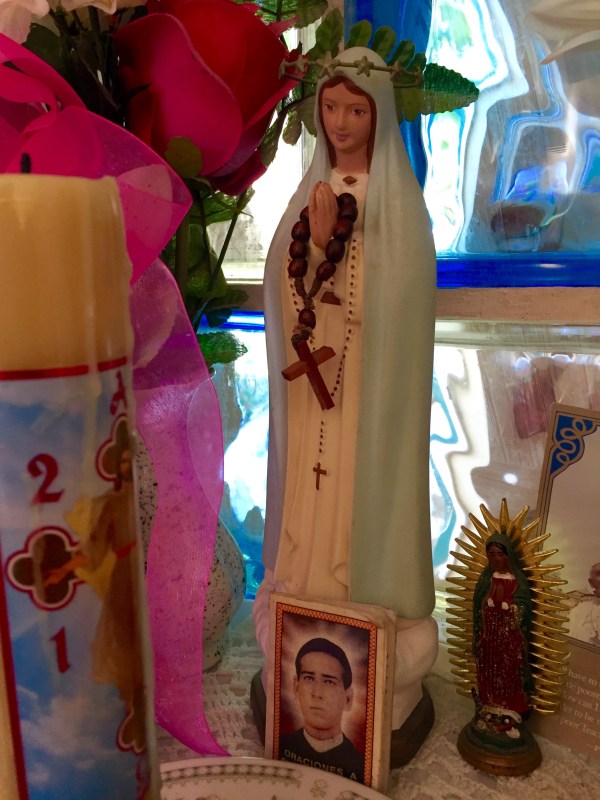
Once in the door I saw a basic cement home, sparsely furnished. A special needs girl—a granddaughter, fidgeted in her wheelchair at a dining table. A woman—Margarita’s daughter, also sat at the table. There were photos of family throughout the room, a statue of the Virgin (the healing virgin, I was told) at a small altar, a photo of the Pope, a rosary, some other religious icons, and Jesus was etched into the glass of the entryway. Margarita was obviously one holy, and very Catholic, woman.
Margarita’s Virgin of Healing
She began telling stories as soon as we entered her home, and her mouth never stopped moving during the hour or so we spent with her. Margarita is 78, short, broad, bright-eyed, vivacious, and dressed in colorful polyester. She’s matter-of-fact, and speaks in our local dialect. I learned she has ten children remaining of 14 she birthed, and lost track of how many grandkids and great-grandkids she told me she has. She was kidnapped and raped at 13, and she and that man went on to have all those children. When he died, she remarried, at 35, to a wonderful man willing to take on 14 kids. I only understood about 40% of what she was saying, as she was speaking to the six of us in the room at a million kilometers a minute.
She pulled over a high-backed chair with a straight back, the beautiful carved kind from Concordia. She instructed me to sit on it. “Take off your blouse,” she instructed. Really? In front of all those construction workers and all five of you, all of whom are staring at me, I thought to myself. Reading my unexpressed thought, she kindly walked over and closed the door. Fortunately, much of the glass facing the street was covered with newsprint, to filter out prying eyes. Now I only had five women staring at me.
Getting off my blouse is not an easy feat given my disability, but I did it. I sat back down. Then she unbuckled my bra. Ok, I can handle nudity. But I could sense my comadre’s discomfort with it. When Margarita asked me to tie my hair back, I was in a bit of a predicament. One, the range of motion in my arm doesn’t permit me to get my hair up into a ponytail. Two, to even try, I needed to drop the unhooked bra that I was holding in front of my chest. I did my best, while Silvia nervously let me know, “Comadre, your bra fell.”
I sat back down on the chair, again holding my bra over my chest in some silly sign of demureness. Margarita left the room, and came back with a bottle and a jar. She instructed me to sit sideways on the chair, and lathered me with a eucalyptus or menthol oil. As she oiled me, Margarita performed the sign of the cross on my body several times, and implored God and the Virgin to guide her hands and make me healthy. Then, she commenced to massage my throat, neck, shoulders, arms and back.
Unlike the chiropractor, she didn’t seem to adjust bones. Unlike the orthopedic, she didn’t ask for x-rays or MRIs, or even any physical history. Heck, she didn’t even ask how I’d injured myself. Unlike the massage therapist, she didn’t work my muscles or try to break up my scarred fascia. She stroked my throat and neck first, finding a gnarl of what she called “nerves” on the right side of my neck. I am surprised that none of the massage therapists had found it. It was painful, but she didn’t push too hard; she pressed in long strokes over my neck and throat, smoothing the knot. It jumped around and would not be soothed, but her stroking it was comforting and loving. Unlike the chiro and the massage therapists, Margarita didn’t complain about how tight I am; she did say that my injury wouldn’t resolve itself today; it would take three visits.
I interrupted one of Margarita’s stories to ask her how she came to be a sobadora. Is this something you study to do? She told me, “No, I don’t read or write. I have the don (the gift).” She told me she learned she had the don / the gift of sobar (to knead) when she was nine. A boy in her neighborhood fell into a well, and she cured him. The neighbor asked her mother where she learned to do that, and when her mother replied that she’d never been taught, she just did it naturally, they all decided it was a gift from God. Nowadays, she has learned to read—she had a Bible open on her dining room table.
Margarita finds another knot of nerves in my wrist, and a third in my hand. She also finds some between my shoulder blades. When she rubs them it hurts, but not too bad; no Lamaze breathing is needed, like it often is with the chiropractor. She basically runs her hands over what I guess are ligaments in my body, finding spots of concentrated energy, lumps, bumps, knots, and pain. Then, she smooths them, with the camphor oil or whatever it is. It smells like the Chinese stuff I use—the green oil. Margarita tells me to notice that she rubs up from the elbow to the shoulder, and down from the elbow to the wrist. This is key in healing my body, she tells me. She also advises me to move my hands each morning and massage them a bit. I am not to take a bath or get my hands wet for the rest of the day after the sobada. Hmm…
During my treatment, Margarita tells the stories of other people she has healed, always with sobada, and also with herbs, teas, and poultices. I learn that wrapping a swollen ankle in newspaper will reduce the swelling. She shares several recipes for healing potions and teas. She is obviously very well versed in folk medicine. She finishes rather abruptly, and tells me to get dressed. I’m covered with oil. I don’t want to put my blouse back on. But what choice do I have? Hopefully hot water will remove the oil from it later, and I’ll definitely bring a towel to my second session!
Margarita wants to finish my treatment with a communal prayer to the Virgin. But Silvia says we don’t have time. She has to take our compadre, her husband, to the dentist. It’s her day of helping others get healthy. I thank her, her Mom, and Margarita, and arrange to get my second sobada. Silvia asks how much we owe, and I pay Margarita 100 pesos.
I found a video on YouTube about a Mexican sobador:
Here’s another one, in English, of a sobador in Perú:
Folk Medicine and Sobadas
According to the World Health Organization (WHO), traditional or folk medicine is defined as “the sum total of the knowledge, skills, and practices based on the theories, beliefs, and experiences indigenous to different cultures, whether explicable or not, used in the maintenance of health as well as in the prevention, diagnosis, improvement or treatment of physical and mental illness.” To me, it is a worldwide treasure, and I am confident that folk medicine contains much wisdom and many answers to issues facing our world today.
As an interculturalist, I know that Native American healing traditions date back at least 12,000 and perhaps as many as 40,000 years ago, and that healing energy is believed to come from a spiritual source. Most practitioners are identified as children and considered natural healers, though many are also actively trained or educated by an elder.
Greg and I enjoyed three days with a traditional curandero or healer/holy man in the Peruvian Amazon on our honeymoon. Similar to many of you, no doubt, I love temazcales, or Mexican sweat lodges. I’ve used ayurvedic medicine, received Thai watpo, and I’m curious about Australian Aboriginal ngangkari massage. Just this week a girlfriend of mine who teaches at Columbia University joked with me that we owe it to the world to conduct an international experiential study of healing waters and massage treatments. So, I most definitely was observant as Margarita worked on me.
I came home happy last night. Pain-free. I’ve awoken this morning two hours before my alarm is set to ring. Pain-free. My range of motion isn’t great, but it’s a bit improved. Most importantly? It’s pain-free. Oh, I mentioned that. 😉 I pray it lasts! I have a chiropractic appointment this morning. And, before I go to the ballet tonight, I have my second sobada scheduled. I have a month of work travel coming up, and I need to be able to do it. Last summer, three months of work travel are what caused this nonsense in the first place.
Wish me luck! I do pray that Margarita’s sacred healing hands will work their miracles with my injury and restore my health!
I was most looking forward to dancing to my favorite local band, La Falsa Orquesta Cubana, and indeed, we danced to salsa, bolero, cumbia and conga till well after midnight. The highlight of the evening, however, were the three performances by the new graduates.
It is unbelievable how talented these young adults are! Representing ten different states of Mexico, they are, indeed, a national pride. I didn’t attend the Delfos fundraiser last weekend, but I’ve heard from 7-8 people how disappointing the choreography was. Not Wednesday night! This choreography rocked! There were three student-choreographed performances:
Bripola, a two-person dance about the vibrations that occur when the strings of a small guitar are plucked and strummed.
Diagram of the Trajectory of Laurence, another dance by two dancers, representing the steps forward, backwards, up, down and sideways through space.
Passaro, a group dance representing the intense energy of flying birds.
Many of the graduates’ families came from out of state to support them, and donated items for the silent auction and door prizes. The dinner was also amazingly good.
THANK YOU to all of you who read this blog and bought your tickets and got a table together! Seeing the energy, excitement and talent in these young people gave everyone who attended such encouragement.
If you would like to support their effort to raise money for the airfare, you can deposit your donation to Bancomer #0193238377, in the name of El Espacio del Verbo. You can also donate from US$5 upwards via Internet on Fondeadora.
If any of the students would like high-resolution images of these photos without the watermark for your personal use, just let me know.
I do sincerely hope the event raised a lot of money for your journey. Best of luck! Show them just how talented Mazatlán and México are!
Religious tourism is such a powerful way to experience a culture, its history, people, and places. We’ve so enjoyed traveling throughout Mexico, including Oaxaca, Barrancas del Cobre, Zacatecas, Guanajuato, and Michoacán to participate in sacred events. Easter is the holiest of holidays in the Roman Catholic calendar, and Mazatlán and its nearby small towns do a lot to commemorate Easter.
Celebrations normally begin on Holy Thursday (March 24, 2016) with foot washing in the evening, and continue on Good Friday (March 25, 2016) with a reenacting of the crucifixion of Jesus Christ. Here in Mazatlán most parishes participate in these events; just contact your local parish to confirm time and place.
One of the biggest reenactments here in town has traditionally been PAJUMA (Pascua Juveníl de Mazatlán), a three-day diocesan event that takes place in the baseball stadium. On Good Friday the kids reenact the crucifixion of Christ in the stadium and then, still fully costumed, process silently from the stadium at about 5:00 pm, to the Cathedral of the Immaculate Conception downtown, passing by the Aquarium, along the malecón, the Fisherman’s Monument, and the pangas in Playa Norte. The procession then turns left and goes down through Plaza Zaragoza to the cathedral. There are not many places in the world you can see a Way of the Cross enacted along the oceanfront! I’ve called them and messaged them, but am unable to confirm if it will be the same schedule this year.
Since Mazatlán’s beaches get so very crowded, and the traffic doesn’t permit us to get around easily, Semana Santa is also a wonderful time to get out of town. This year, we’ll be spending Holy Week up around Los Mochis, to celebrate with the friends we made during the Konti celebrations a couple of years ago. But you do not have to go far to participate in some really incredible religious tourism celebrations. Why not spend a few days, and really get to know one of our region’s small towns and their traditions?
Reenactments of the crucifixion traditionally start at 11:00 am and continue until Jesus’ death, liturgically at 3:52 pm. Crucifixions (they don’t actually nail anyone here, just hang them up with ropes, which is still a difficult feat for those crucified) are held in:
Chametla (Rosario; 100 km from MZT)
Malpica (Concordia; 38 km from MZT)
Matatán (Rosario; 82 km from MZT)
San Ignacio (111 km from MZT)
Teacapán (Escuinapa; 130 km from MZT)
San Ignacio also conducts a Procession of Silence on Friday night at 7:00 pm. Cosála has one, too. I highly recommend that you avoid driving in the mountains at night; better to spend the night.
Photo from Fernando Barraza
Photo from Fernando Barraza
Photo from Fernando Barraza
Of particular interest to me this year will be the reenactment in Chametla, as my friend who is a favorite teacher to so many, Fernando Barraza, is directing the event. It is also the opposite direction from some of the troubles that have sadly been happening again lately in the mountains.
The celebration in Chametla this year is entitled “Calvario.” The play will involve over 60 actors who will walk over two kilometers, beginning on the main street, just down from the cathedral in front of the tostada stand called “Mangazo” or “El Chombi.” From there the procession will wind though town—it takes a different route each year—ending with the crucifixion this year on the hill in front of the cemetery.
If you go, I urge you to spend the night there or in nearby Pueblo Mágico, El Rosario. There is terrific hiking around the area, and lots to see; make a nice weekend of it.
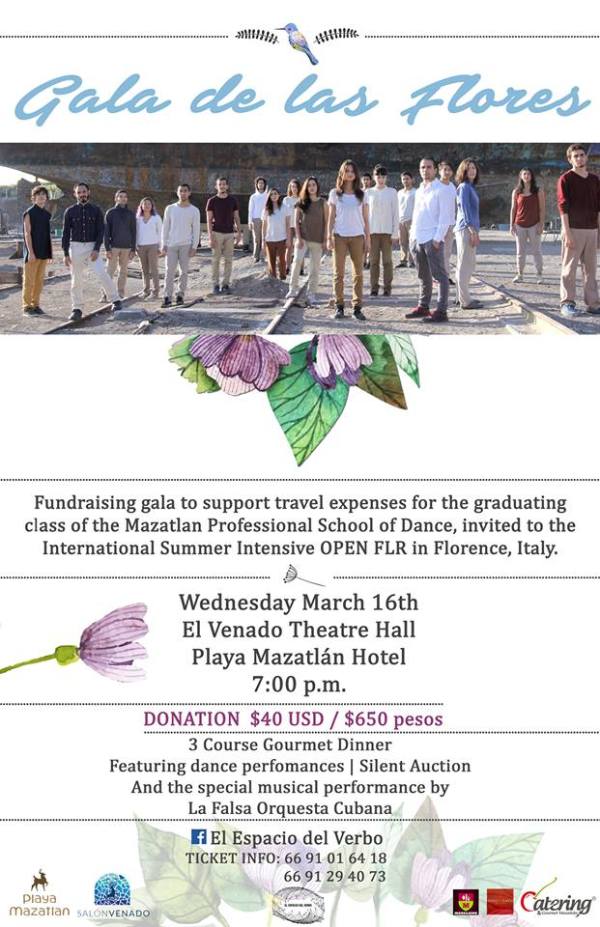
Now I have even BETTER news! You can help them get to Italy AND attend one of the BEST dance parties EVER! The date is Wednesday, March 16, and the venue is the Hotel Playa. Our absolute favorite local band, La Falsa Orquesta Cubana, will be playing. The 650 peso price includes a 3-course meal and dance performances. This is indeed going to be a night to remember!
I do NOT want to have you tell me after the fact, “Why didn’t you let me know?” So, please, share this news widely with all your friends! Get a table together and come, let’s dance and have some fun! And, oh yeah, support the kids 😉
Two businesses have tickets on sale: Look Gallery and HelArte ice cream shop across from the Nid Art Gallery. Isa Medina will be selling tickets at Allegro Café on Wednesday March 9 from 9-11am, and at the same times on Tuesday March 15 at Allegro in the Zona Dorada. You can contact her and she will deliver tickets to you: isahudgins@gmail.com
Secondly, I want to let you know that TODAY, Friday during Art Walk, the about-to-graduate dancers will be performing short pieces and contemporary dance fragments at four different galleries around town: BAUPRES, DELIRIUM, LOOK, and NIDART. The kids and their friends/family will be collecting donations and selling tickets for the fundraising dinner. The schedule is:
Baupres, Delirium and Nidart: dance performances at 5:00, 6:00 and 7:00 with live music in between/during the break.
Look: continuous dance performance from 5:00 onwards to recorded music.
 Bollywood movies, YouTube videos and Facebook photos have taught most of us about Holi, the Hindu holiday welcoming spring, the “festival of colors.” The vibrantly colored Gulal powders are said to signify the triumph of good over evil. Click on any photo to enlarge it or view a slideshow.


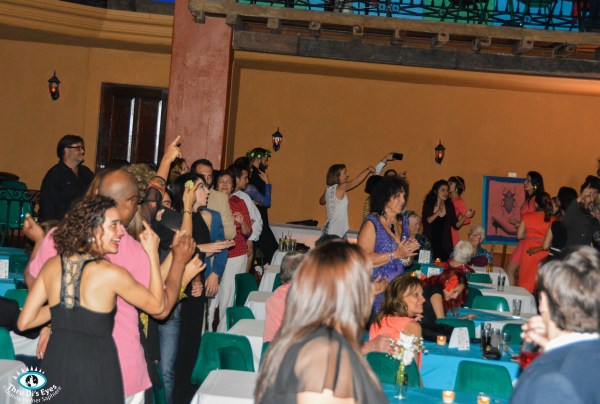 … last Wednesday night at the Hotel Playa with the 24 new graduates of the Escuela Profesional de Danza. What a wonderful evening! It was a benefit to


 ¡VidaMaz!