Behind the Chamber: Mozart and His Women

250full-feed

Angelica Aragón

Sounds sexy, right? Intriguing? This performance, the second in the Camerata Gordon Campbell series this year, sounds absolutely fabulous to me. It will take place on Sunday, January 11, at noon in the Angela Peralta Theater.

We all love art—listening to music or looking at paintings. What is even better to me, however, is when curators use music or visual art to tell us a story, to give us a glimpse into the lives of the artists—to take us with them into their lives. I love an exhibition that showcases the work of two friends who were painters, for example, comparing and contrasting their viewpoints, experiences, personalities and techniques. It’s so much more enriching than simply looking at the paintings and enjoying them. Such an approach accesses more of our senses simultaneously.

“Mozart and His Women” takes such an approach. It is musical tour de force, performed by the Chamber Orchestra, and it will be accompanied by readings from private letters between Mozart and his family and friends. So, we will hear the concerto that Mozart composed for his brother, Frederick, on the latter’s birthday, while we listen to the letter that Wolfgang wrote to him on that very occasion. Sound awesome?

The video below shows Gordon Campbell, Director of the Orquesta Sinfónica Sinaloa de las Artes and of the Camerata Gordon Campbell, and Guianeya Román, his collaborator and wife, as they talk about the genesis of this performance. Be sure to listen for what Mozart called one of his best friends—he may have been Mazatleco after all!

Joining the Chamber for this concert will be the wonderful Angelica Aragón. I know her as an actress in movies and telenovelas, the daughter of my beloved Ferrusquilla. So my first question to Gordon and his wife was, “Does she sing?” No, in “Mozart and His Women,” Angelica will be performing the roles of Mozart’s mother, sister and wife, as she reads from the letters. We may even see a cameo by Gordon himself, in a white powdered wig.

Be sure to get your season tickets for only 150 pesos each, or your ticket to this event only at the unbelievable price of 200 pesos. Tickets at the TAP box office or online (though, personally, I can never get the online payment to work). We are so very truly blessed here in Mazatlán!

I am doing this series on the Camerata, not because we want to start reporting here on this blog, but because we so often find out about events after the fact. Sure, we see the announcements ahead of time, but often we don’t really know what the various performances are about. And we are blessed with a plethora of terrific options here in Mazatlán! It is my hope that this “Behind the Chamber” series can help you to discern what the performances will involve—they are so exciting this year! Many thanks to the Maestro and his wife for spending time with us to give us some background details and build our excitement.

Restaurant Review: Del Pueblo y Para el Pueblo

2.IMG_0165

Del Pueblo al Pueblo, north side of Agenda Insurgentes, just east of the malecón

The Estero del Camarón, the estuary along Avenida Insurgentes, just east of the malecón, has long been a muse for me, a natural reprieve amidst the urban activity. Back when I drove Danny to school I passed by it daily, and, living so close by, we still pass by it almost every day in the course of our activities. The reflections of the sky in the lagoon, and the sight of the birds sunning themselves, make for an oasis in the middle of the city.

A few of years ago a restaurant went in on the north side of the road. Gradually, Del Pueblo y Para el Pueblo has encroached on the estero, much to my dismay. Such seems to be the way of things here. We ate at this small restaurant a few times after they first opened. We loved the location, the nature surrounding us as we ate, the sound of the birds in the trees and the water. The food, however, was nothing to rave about. I took photos, but never blogged about it; it just was not good enough.

The last couple of times we’ve eaten here, however, it’s been for breakfast. And their breakfast rocks! Maybe their food overall has improved. Lord knows they have developed the space very well. At first it was just the small building with a couple of outdoor tables. Then they put up tarps to separate the space from the street and give diners some privacy. Then they put up a tarp roof, followed by pavers for the patio, and, finally, a more permanent (tarp fastened to beams) roof. Next came a sound system, and now they have two full hot tables for breakfast buffet on Saturday and Sunday (8 am till noon), plus a rolling grill on which to cook eggs to order. The chilaquiles de camarón/shrimp chilaquiles are to die for! And they have a healthy plate as well (egg white omelet with nopales/prickly pear cactus, salsa and a bit of queso fresco)!

Breakfast is served from the buffet (95 pesos) or off the menu (average price 75-80 pesos, including juice or coffee and fresh fruit). The lunch menu includes the standard items you’d expect in a small roadside place. The bathroom is indoors, and has a functioning sink, soap and towels. One of the waiters speaks English well, and the owner does a bit.

The views are really pleasant. We definitely enjoy having breakfast at Del Pueblo al Pueblo. If you’re looking for a simple place, with a gorgeous view, something a bit different than our killer ocean views, Del Pueblo al Pueblo may just fit the bill. Check it out and please, let me know what you think.


The Transience of Friendships in Mazatlán

DSC_0030

I’ve lived a lot of places: Wisconsin, the San Francisco Bay area, Tokyo, Kyoto, Hamamatsu, Salamanca, Mexico City, Kansas City… What has been a defining factor of friendships in Mazatlán for me has been transience. Maybe I’m unique, or maybe you’ve had similar experiences?

Many of the most interesting Mazatlecos I’ve met have been world travelers; their children often leave for school, marry and have children abroad, and the parents are then split between worlds. Quite a few of the expats we have met and grown to love here, even though full-timers, have gone home, moved nearer their grandchildren, or moved on to a new location; wanderlust is in their blood. Nationals love it here, but several of those we’ve become most fond of have been called to another city, transferred by their employers or moving because life here has gotten tough or taken a new turn.

In Tokyo or Mexico City, the people I met and loved, Japanese or foreign, tended to be settled there for life. Yes, there are plenty of born and bred Mazatlecos, or people who have lived here 30 years or more. But, somehow, I am able to quite easily count two hands’ worth of fingers of people I’ve loved and lost to moving in the mere eight years I’ve lived here.

There’s sadness in that, of course, but there are upsides as well. We can travel to visit these friends. We can stay in touch over the distance, and share glimpses into life in other areas. And, to me, it’s proof we are blessed here in Mazatlán with friendships with people who are intelligent, interesting and vibrant, people who embrace life fully and who see the world as their home.

One such beloved family we met through our son, Danny. Danny went to secundaria at Colegio Andes with another US American girl, Sierra, and her little brother, Kelton. Her father, Brian, taught there. Heidi, the Mom, works at El Cid, so we still get to see her occasionally, though she splits her time between here and her family in Portland. They moved because they wanted a different, better in their opinion, education for their kids. We miss them dearly. They were fun. They are fun. Adventurous. Curious. Crazy. Global minded. Outdoorsy. They were just a whole lot more fun when they lived here, close by, and we were able to join them for an adventure or to create some memories.

We saw the Samore family on a recent trip to Portland, and of course they come to Mazatlán to visit every once in a while. They’ll be here soon. You may know them and miss them, too.

This morning we were fortunate to receive a copy of an article in the school newspaper of the high school where Brian currently works. I want to share it with you, because it is a testament to the caliber of the people, the kind of weirdness and passion, we are privileged to be able to share space and time with here in Mazatlán. Although we miss them, we are so privileged to be able to call them friends. Whether you live here in Mazatlán, spend part of the year here, or are hoping to move here, we wish you wonderful friendships!


Behind the Chamber: Skipping From Carnegie Hall to Mazatlán

201411241258065

Daniela Liebman


A twelve year old girl from Guadalajara plays piano so well that she has already performed in Europe and Asia, as well as in both the Palacio de las Bellas Artes and Carnegie Hall—where she received a standing ovation. Earlier this year she won the prestigious Premio Nacional de la Juventud award, given to outstanding young Mexicans between 12 and 28—when she had barely reached the minimum age.

The girl is Daniela Liebman, an incredibly hardworking and naturally talented musician, and she will be coming our way this Sunday, January 4, 2015. Her career is rising quickly, she’s in very high demand on the international stage, and this is most probably the last concert she will play for over a year. Daniela may well go on to world fame, and thanks to the annual Camerata Gordon Campbell series, we get to create lifelong memories right here, in our own Angela Peralta Theater, for only 200 pesos (less if you buy tickets to the full series).

Maestro Gordon Campbell, Director and Conductor of the Orquesta Sinfónica Sinaloa de las Artes, and his wife and collaborator, Guianeya Román, sat down with us to talk a bit about next Sunday’s concert, how they came to know Daniela, and how they were able to attract her to Mazatlán to perform for us.

Born to musically inclined parents—a US American father and a Mexican mother—the maestro and his wife tell us that Daniela is both an terrific artist and a very well-adjusted child: she loves reading, and often skips onto stage due to her excitement at performing. View the video of our interview, below:

We were told that the family is very dedicated to Daniela. Her father sat with her four hours a day when she was younger, helping her practice. Daniela’s parents have told Gordon that if at any time the gifted pianist does not wish to continue her musical training, she is free to choose whichever interests suit her. Soon the family will be moving to Fort Worth, Texas to continue her training with a well-known teacher there.

Be sure to get your season tickets for just 150 pesos each for the 8-concert series, while you can still choose the best seats. Tickets can be purchased online or at the Angela Peralta Theater box office.

Reflections on Schooling in Mexico—Straight From the Source

One of the most common inquiries we get from readers has to do with how our son adjusted to the transition to Mexico. We’ve written about it before:

However, this time you can hear the story from the child’s perspective. Our son just returned home for winter break from his first semester at college in the States. He brought with him some sample homework assignments to share with us. One of them answers the question so often asked of us quite well. It is pasted below. He moved here with us after sixth grade, so he entered middle school/secundaria in Mazatlán and went on to complete high school/prepa as well.

Just before moving to Mazatlan.

Just before moving to Mazatlan.

White, middle-class, and worriless: these are three adjectives that adequately describe my childhood. I grew up in a suburb outside of Kansas City, Missouri where I attended grade school. My neighborhood was quite homogenous; our only real source of diversity came from a third-generation Mexican family and another Jewish family that lived a few streets down. However, as a young child I never took notice of this.It wasn’t until the events that closely followed my sixth grade graduation that I realized how uniform my place of living had been.

The day was young as I left school on my bike. The shade of oak trees provided me with a sense of relief after spending a hot, sunny afternoon in gym class. Despite the coolness under trees, I worked up a sweat by the time I arrived home. My helmet latch made a snapping noise as I hung it on the handlebars and made my way through the garage. I walked in and commenced my homework.

Shortly after, the parental squad came in and communicated that they had something to tell me. “Danny, we’re moving to Mexico this summer.” What? Mexico? Had my parents gone insane? I liked my life here, it was comfortable and easy! All I wanted to do was attend the local high school and act like the kids on MTV. I didn’t speak Spanish; everything on CNN was about how much drug violence there was in Mexico. My parents had lost it. My protests that day and throughout the following weeks fell on deaf ears. They were about to ruin my life, and I could do nothing about it.

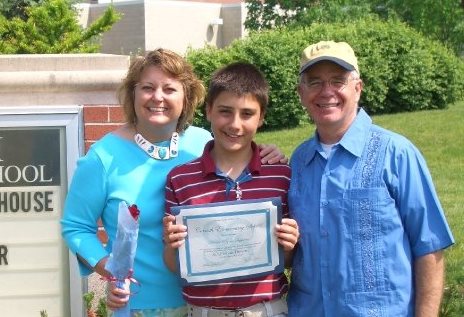
I remember my sixth grade graduation fondly. I used to be just some other kid, but now I was, “the guy moving to Mexico.” My friends worshiped me, similar to the way that most sixth graders are amazed by high school students. As I got up on stage to receive some pointless award that my mother had pushed me to strive for, I remember the deafening applause and cheers that fell upon me. Even though I didn’t consider most of them as close friends, the moment felt good. It made me forget my melodramatic reaction to moving.

Flash forward to first day of school in Mexico. Everyone was brown. People stared at me. My uniform pants were too baggy and my shirt too tight. It was so hot here. Nervous shakes, sweaty palms, no eye-contact. I found a desk in what would be my homeroom for the next year and managed to avoid talking to anyone. An older man walked into the room and jabbered for a few minutes. Something that sounded like a slurred Latin spilled out of his mouth. This liquid dialect poured into everyone’s ears and was understood by their brains. It wasn’t by mine. I tried writing down the sounds I heard in a notebook so that later Google might be able to help me translate something (a mostly futile attempt).

My first few days at that school were filled with terrifying moments. Whenever someone asked me a question, my voice would crack. Every time a teacher had me introduce myself in a god-awful icebreaker, I would feel vertigo as I stood up from my desk. I didn’t eat lunch for the first few weeks because I was scared. The idea of asking for what I wanted off of a menu I didn’t understand with a line of hungry, unforgiving teenagers waiting behind me was too traumatic. I tried hard to avoid any awkward situation or any circumstance within which I could be made to look a fool. As a consequence, I learned the cues of Mexican culture and the Spanish language much more slowly than I would have had I not been so self-conscious.

An incidental character in my transition to Mexican culture was another American student whose name was Misty. She was going through the same culture shock as me, so you’d think we’d become great friends, yet we didn’t get along. I heard once that things you especially don’t like about other people were the things you don’t like about yourself. Who knows if that is true, but it was definitely the case with Misty and me. Misty was just as lost and confused as I was, just as emotional, but she handled it very differently. She expressed her emotion, frequently running crying to the bathroom when she didn’t understand something. She only spoke English when people asked her questions.

What I admired about her was that she seemed unafraid to try new things. She did everything that I wanted to do but couldn’t because of my ridiculous self-consciousness. I instantly hated her for it. Over the years, Misty and I became friends. We now joke about how much we despised each other. She hated me because I seemed to be doing better than her. I hated her because she felt a freedom I didn’t permit myself. Our relationship was based on envy and it was poisoned because of it.

I’ve learned a lot since then, though. I don’t try to fit in and be cool anymore. Because of this, I am usually happier and make better friends. In the U.S. I had always tried to fit in and had succeeded at doing so. In Mexico, being like everyone else, as a foreigner, was impossible for me. I think that has been my greatest lesson from living in Mexico. Of course, Spanish will look great on my resume, and I’m sure growing up in cultural diversity and as a minority will permit me a different perspective on some subjects. However, overcoming adversity in Mexico was the greatest lesson for me. I learned how to stop giving too much importance to what others thought of me. Sticking out doesn’t make you an outcast. That is what Mexico taught me. That is what being a minority taught me.

Six years later!

Six years later!

We hope this helps. Our son is wiser, stronger, and more resilient for having lived here. Good luck in your adventure!