Under the Big Top

I do love a good circus. And I especially love the aerialists: trapeze, tight rope, spinners, acrobats. Click on any image to enlarge it or view a slideshow.

Circo Atayde Hermanos is here in Mazatlán for a couple of weeks. Their performance schedule is below. A girlfriend and I went recently and enjoyed it very much—we paid 200 pesos for very good seats. It’s a simple, classic circus, with clowns, jugglers, balancing acts, a guy who’s shot out of a cannon, motorcyclists riding inside a globe, and my beloved aerialists. The show is animal-free, as animals have been outlawed in circuses in Mexico since 2014.

What I really loved about this is that those kids selling popcorn, candy apples and toys are the performers themselves! So engage them in conversation and learn a bit about what they love about their lives and their job. Itzel, the girl with the loop on her head, told me she loves the traveling. She’s been all over Mexico and the US, and has hopes to get to Europe. She told me quite a few performers get trips to Europe for special performances. She studies with a teacher that the circus provides for the kids in the troupe.

Circo Atayde Hermanos is 130 years old this year. I have been told that it was actually founded in Mazatlán back in 1888, after the two Atayde brothers, who hailed from Zacatecas, fell in love with two sisters from El Rosario, and that Francisco Madera delivered his campaign speech under their tent here.

51092681_2532829363400329_1356177434570915840_n

Photo from the Atayde HMOs Facebook event page

The internet tells me (third-hand, as their own site doesn’t have a history) that the circus was founded in Zacatecas. Desiring to figure out the real story and get some behind-the-scenes photos and interviews, I arranged an appointment with them. Their local promotions director, however, is quite a piece of work and that interview very distastefully never happened. In its absence, enjoy the pics I did get!


Gratitude for Life in Mazatlán

Research has shown that gratitude—taking the time to reflect on what we are thankful for in our lives—has physical, psychological and social benefits. Feeling grateful provides us stronger immune systems, fewer aches and pains, lower blood pressure and better sleep; more positive emotions, feelings of alertness, joy, pleasure, optimism and happiness. Thankful people are more helpful, generous, compassionate, forgiving and outgoing; they feel less isolated and lonely.

Gratitude is a major aspect of most every world religion. The three Abrahamic faiths all value thankfulness. From the words of King David in the Book of Psalms—“Oh Lord, my God, I will give thanks to you forever” (30:12), to the words of Jesus in the Gospel of Matthew—“You shall love your neighbor as yourself” (22:37-40) and the words of Muhammad in the suras, “Gratitude for the abundance you have received is the best insurance that the abundance will continue,” it is clear we should appreciate what we have. Buddhists give thanks for all that life has to offer, the good and the bad, as suffering helps us appreciate our gifts and become more compassionate. Hindus show gratitude through service and hospitality. Confucianism and Taoism look at gratitude as a key pillar of daily life. Here in Mexico we have the small pewter milagros, expressions of thanks for healing delivered or promises kept. Etruscan culture had similar gratitude offerings, but they were commonly made of terracotta.

Many people in the world take classes, participate in therapy, or write in gratitude journals in order to cultivate an attitude of gratitude. Here in Mazatlán, however, it comes naturally to most of us. It’s actually difficult to live among such kind, happy people, in such gorgeous surroundings, and not feel grateful.

It is said that gratitude has two components. First is an affirmation of goodness: life is not perfect, but we are able to identify some amount of goodness in our lives. Living here in Mazatlán, we know that things are not always rosy or “paradise”—as the tourist brochures may say. We live in reality, but most of us are also incredibly grateful for the opportunity to enjoy this incredible place, be it our natal or adopted home.

Second, gratitude involves a humble dependence on others or a higher power—a recognition beyond personal pride, that something beyond oneself helps us achieve the goodness in our lives. In this case, Mazatlán itself, the beauty of our natural setting, the friendliness of her people, causes a sense of thankfulness in nearly everyone who lives here.

Today I was reflecting on our lives here. We’ve been coming here since 1979. We were married here. We raised our son in Mazatlán. We’ve lived here full-time since 2008. I am consistently and eternally grateful, for so very many things. Below is today’s “top 15” list. I’d very much welcome hearing what you are most grateful for in the comments below.

  1. Incredible VIEWS—of the port, the ocean, the city, the mountains—including those overlooking the rise of the Super Wolf Moon or the eclipse of the blood moon. Click on the arrow, or just pause and watch, to view each slideshow.

    This slideshow requires JavaScript.

  2. 20 miles of gorgeous BEACH on which you can relax, eat and drink, play volleyball or soccer, swim, do yoga or tai chi, fish…

    This slideshow requires JavaScript.

  3. The world’s most amazing SUNSETS, not to mention SUNRISES!

    This slideshow requires JavaScript.

  4. CULINARY experiences for every palate, from street carts to beach palapas and fine dining, traditional to fusion. Food offerings are anchored in our fresh-caught SEAFOOD: lobster, oysters, scallops, and fish and supplemented by the harvest of fresh VEGGIES grown right here in the tortilla basket of Mexico. The ORGANIC FARMERS’ MARKET on Saturday mornings brings together local and international community members who value health and sustainability.

    This slideshow requires JavaScript.

  5. World-class VISUAL AND PERFORMANCE ART—opera, ballet, modern dance, symphony, mariachi, norteño and indigenous arts. Our local art community is both talented and welcoming, more than willing to teach as well as collaborate. Mazatlán is also blessed with an international caliber municipal art school with classes for anyone in the community, and we are, of course, home base to the international music sensation that is banda.

    This slideshow requires JavaScript.

  6. A long history as a mixed COMMUNITY OF NATIONALS AND INTERNATIONALS, from back in our heyday as a major hub on the trans-Pacific sailing trade route. This gives me the benefit of LOCAL FRIENDS who teach me so much, are patient with my lack of understanding, and who make me very grateful to call this place home; and INTERNATIONAL FRIENDS who bring me love and understanding in ways that are familiar and comfortable, allowing me to go out and explore and experiment with the new and unfamiliar and also find respite and reflection. Expats here are amazingly talented, adventurous people, give back in hugely beneficial ways to the local community, and make life in Mexico so much sweeter!

    This slideshow requires JavaScript.

  7. Any kind of SPORT you could want to participate in: runners have loads of organized marathons, triathlons and 5 and 10k races; swimmers have an Olympic pool, open-water swim club and ocean-fed public pool; we all enjoy the world’s largest open-air gymnasium, the malecón, where you can bike, roller blade, run or walk; hikers can enjoy the lighthouse, Deer Island, or any of a myriad of rustic trails around the municipality; we have baseball, golf, tennis, surfing….

    This slideshow requires JavaScript.

  8. Amazing WILDLIFE! We have BIRD WATCHING: in the mangrove jungle, Estero del Camarón, Estero del Yugo, Playa Norte, the botanic garden… pretty much anywhere in town. Look to the ocean and you can see whales, dolphins and rays jumping. Just outside of town you can enjoy watching and photographing macaws, jaguars, deer or coati, among many other animals.

    This slideshow requires JavaScript.

  9. HOLIDAY CELEBRATIONS that people travel across the world to attend, including our family-oriented and inclusive CARNAVAL, supposedly third-biggest in the world, and our DAY OF THE DEAD celebration combining the best of Mexican tradition and innovative artistry. Many mazatlecos are globally minded and talented, so we also are able to enjoy HOLIFEST, ANIME festivals and other innovative events.

    This slideshow requires JavaScript.

  10. Excellent diversity of EDUCATION at affordable prices, which attracts national as well as international families to life in our port, and an ECONOMICALLY DIVERSE city, with tourism, the port, fishing, farming, a brewery, coffee…
  11. Loving and inclusive SPIRITUAL COMMUNITIES with services in multiple languages, where we can grow, reach out to help others and feel loved.
  12. ARCHITECTURE lovers will find a mix of unique historic buildings downtown in tropical neoclassical style and award-winning modern structures such as the Carpa Olivera remodel or the Montessori school.

    This slideshow requires JavaScript.

  13. FIREWORKS nearly every night of the week somewhere in town, and loads of free public entertainment in the various plazas.

    This slideshow requires JavaScript.

  14. Nearby SMALL TOWNS to escape city life. These include BEACH TOWNS like Barras de Piaxtla, Stone Island, Caimanero, Escuinapa or Teacapán, where we enjoy dozens of miles of pristine beach. Also wonderful are MOUNTAIN TOWNS such as La Noria, El Quelite, Copala, Concordia, where we can take a day trip to learn about mining, see completely different flora and fauna, or eat fresh cheese and meat. These small towns offer a completely different way of life from Mazatlán as well as local arts and craftsmanship, and the opportunity to take killer night photos of the Milky Way.

    This slideshow requires JavaScript.

  15. The FRIENDLIEST PEOPLE you’ll meet anywhere on the planet. I’ve traveled and lived in most of it; I have a bit of experience on which to place my judgment. Here you’ll find the riches of the rich and the poorest of the poor, and most everyone you meet will be eager to offer a smile, a salutation and an offer of assistance.

    This slideshow requires JavaScript.

    Please remember to let me know in the comments below what makes YOU grateful to live in or visit Mazatlán! All photos are my own, ThruDisEyes.com.

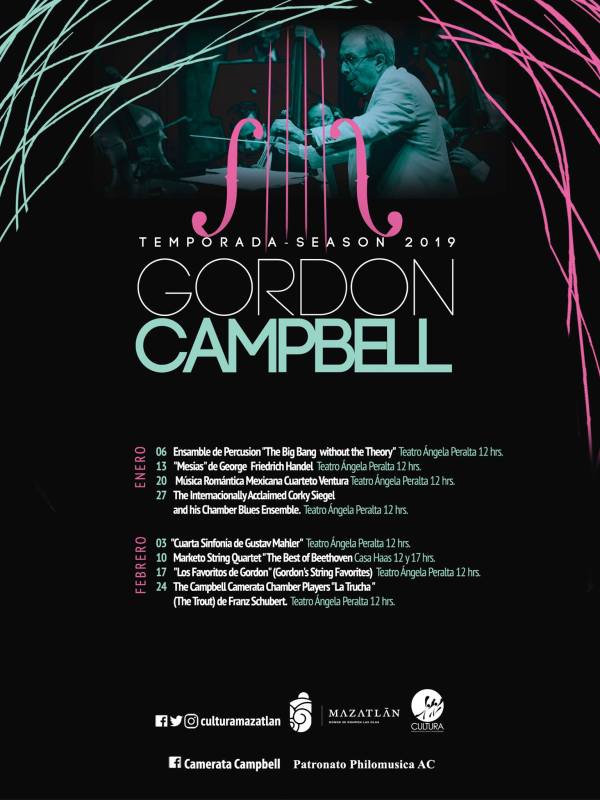
2019 Camerata Campbell Series

49342979_740819989631643_5173177263516024832_o.jpg

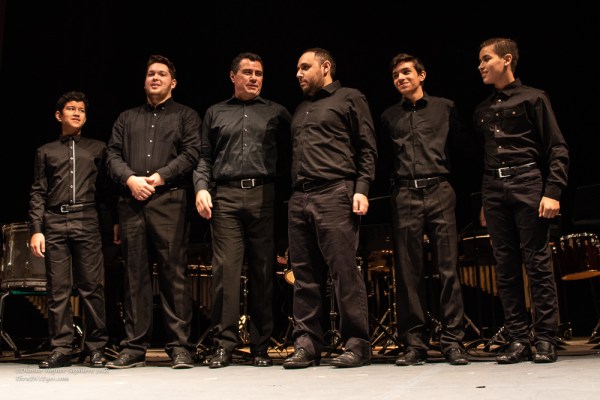
The 2019 Temporada Campbell started off with a bang—a Big Bang. Entitled “The Big Bang Without the Theory,” the outstanding percussion concert did include a bit of theory after all. Click any photo to enlarge it or view a slideshow.

Quick! Do you know how many types of percussive instruments there are? Two main categories: membranophones and idiophones. And what differentiates the two?

The Camerata’s Percussion Ensemble has played for us before, and they always astound—especially because they are so young to be so incredibly talented!

Mazatlán, we are in luck, as this was the first concert of this Sunday at Noon series, which continues through the end of February. Do NOT miss getting your tickets and enjoying a Sunday afternoon of pleasurable music followed by a lunch al fresco in historic downtown. February 27th should be of particular interest to our readers. See you in the theater!

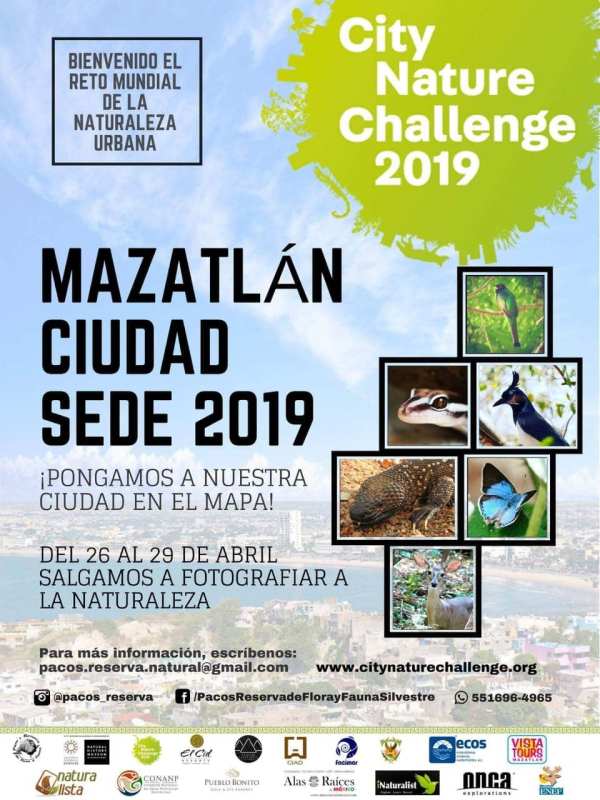
City Nature Challenge

43676323_731335040547404_6810896483013885952_oOutdoor enthusiasts, environmentalists and photographers delight in the wealth of flora and fauna to be found in Mazatlán. Now we have a terrific chance to let the world know about the incredible biodiversity of our urban area—we are much more than just sun and beach!

Francisco Farriols Sarabia, local naturalist guru, along with our Faculty of Marine Sciences have registered Mazatlán for the City Nature Challenge 2019, or Reto Mundial de la Naturaleza Urbana. The effort is officially supported by the Secretary of Tourism (SECTUR) and the National Commission on Biodiversity (CONABIO). The goal is to put us firmly on the international ecotourism map. I hope that you, your friends and family will join in as citizen ecologists! If you are a teacher, let’s get the students involved, too! There is a nice online education toolkit. Let’s do this! Let’s put Mazatlán on the map for good reason!

The challenge will take place April 26-29, 2019, and there will be several pre-event warm-ups or “BioBlitzes.” To participate you’ll need your cell phone or a camera and the iNaturalist app—you can install it on your phone and/or register and use via your desktop on a web browser. If you prefer to work in Spanish, the fully synched Mexican equivalent is Naturalista.mx.

City Nature Challenge is an initiative started in 2016 as a friendly competition between Los Angeles and San Francisco during Citizen Science Day. The Natural History Museum of Los Angeles County and the California Academy of Sciences wanted to highlight urban biodiversity in their cities, and asked residents and tourists alike to help them document it. The multi-day effort met with such success that, three years later, over 100 cities worldwide are registered to participate! Their website states that in 2016:

Over 20,000 observations were made by more than 1000 people in a one-week period, cataloging approximately 1600 species in each location, including new records for both areas. During the 2016 CNC, we heard so much excitement and interest from people in other cities that we decided we couldn’t keep to the fun just to ourselves. In 2017 the City Nature Challenge went national, and in 2018, the CNC became an international event!

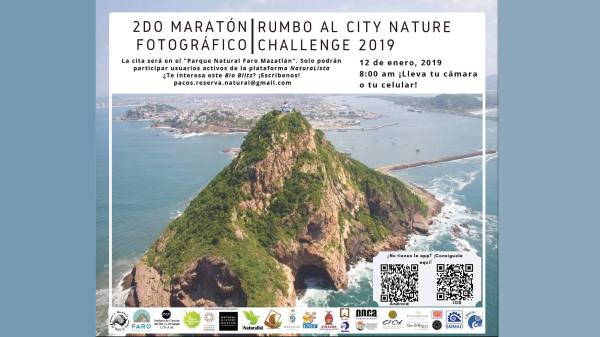
I first learned about City Nature Challenge back on October 13th, when Paco (Francisco) held a meeting of local photographers up at Estero del Yugo, to help get the effort started. Since then Paco has decided to hold mini-challenges, to help more people become involved and ready for the big effort.

48380454_2035974423369486_863078217911631872_oThe second BioBlitz or mini-challenge will be held at the lighthouse beginning 8-11am on Saturday January 12th. Register with inaturalist.org and bring your cell phone or camera of your choice. Together we’ll have fun, get out, breathe some fresh air and get some exercise, and learn a bit more about our local flora and fauna. It’ll be a great way to get trained and prepared for the main challenge in April!

iNaturalist.org is a really cool platform where normal people like you and me can register photos we take of plants, animals, insects or marine life. We upload a photo we’ve taken, along with the place and the date on which we captured the pic. If you know what the plant or animal is, you label it. If not, somebody who does know will fill it in for you, and you can “accept” their ideas and recommendations, or choose which one is correct. In this way we all learn a bit, and scientists are able to track migration routes and the proliferation of different species. Paco himself has more than 35,000 identifications and 2200 species registered! Me? I have about ten…

I hope you’ll join me, both on the January 12th and in April for the main event! Please help me get the word out by sharing this and inviting your friends and family to join in! Together we can build more ecological awareness and care in our fair city.

Nearly Secret Gem of an Overnight Trip

DSC_5157The December party season is exhausting. After the holiday, wouldn’t it feel wonderful to chill out for a couple of days in the middle of a spectacularly biodiverse rain forest, in a large, clean cabin with killer views, incredible stargazing, a full kitchen and all the modern amenities?

Every year tourists from over 25 countries are drawn to this very spot, home to a world-renowned breeding program for green macaws, aiming to rescue them from extinction. This gorgeous nature preserve has a semi-Olympic pool, tennis court, dozens of kilometers of hiking trails, waterfalls, petroglyphs, a museum, aviary and several climactic zones. You’ll witness breathtaking sunrises and sunsets, and amazing stargazing both with your naked eyes as well as through an astronomical observatory telescope.

How far do you have to travel to get to this magical place? Costa Rica? Malaysia? Chiapas? No, the Reserva Ecológica de Nuestra Señora Mundo Natural is right here in Sinaloa, just three hours by car or bus from Mazatlán—twelve kilometers east of Cosalá. It’s home to the most important macaw rescue program in northwestern Mexico, a two kilometer long zip line that is the second highest in the country (500 meters), and an astronomic observatory that partners with observatories in Russia, Chile and New Mexico to monitor near-Earth asteroids and space junk.

Not only is the nature preserve nearby, it’s affordable—because it’s part of our state university, UAS: Universidad Autónoma de Sinaloa. A three-bedroom cabin (for eight people) with loads of natural light, air conditioning and a full kitchen costs 3000 pesos/night; they also have hotel and hostel rooms for 800 pesos/night. You’ll want to be sure and spend the night: the reserve closes to the public at 5 pm and opens at 10 am, so sunrise, sunset, moon and star gazing are not available to day visitors but only to those smart enough to spend some time here. The wild macaws are also best seen at dawn and dusk, yet another reason to spend the night here.

The 60,000 annual visitors to the reserve come for the incredible biodiversity of the area. You may also meet some of the domestic and international scholars conducting research here from Guadalajara, UNAM in Mexico City, Brazil, Chile, Spain and the UK. Fauna you’ll probably see include the green macaws that the area is famous for, plus white-tailed deer, coati, ocelots, lilac-crowned parrots, iguanas, gray hawks, owls, and a few things you may want to avoid: rattlesnakes and tarantulas. Flora-wise there are loads of braziles, amapas, mautos, moras, higueras, apomos, flor de Santiago, sabinos, rosarillas y papelillos and mangos. Should you wish to hold a workshop, large meeting or party here, there is even a conference center with closed circuit TV, a restaurant and space for up to 200 people!

During my visit there were several groups of students visiting from UAS. They conducted research in nature during the day and enjoyed pizza parties at the pool in the afternoon. There was a large family reunion, with family members coming from different states to meet up here, just outside Cosalá. Quite a few area businesses conduct employee-training programs here, and the reserve plays host to religious retreats, as well.

The General Manager of the reserve, José Alfredo Leal Orduño, was kind enough to spend a few hours touring me around the property and facilities. He spends the work week in Culiacán, but is at the reserve on the weekends. Leal told me that when UAS was founded in 1968, Governor Sánchez Celis gave the fully functioning reserve property—including hot water, electricity, a huge freezer and about 85 cabins—the equivalent of 260 hotel rooms—to the university as a source of income. It seems the property owner, a mining company, was delinquent on taxes; their loss was the university’s gain. The university, however, proceeded to nearly completely neglect the facility for the next forty years. By the time Leal took over, looting had destroyed 75 of the original cabins. What remained were the two haciendas on the property, which had been used by the mine superintendents, and the service buildings. The original structures were remodeled to become the cabins, hotel and hostel we see today. The rooms are a pleasant mixture of historic, rustic beauty on the outside and modern convenience and aesthetics on the inside.

DSC_4959

José Alfredo Leal Orduño, General Manager of the Reserva

All cabins have hot and cold running water, air conditioning, private bath, and a full kitchen with refrigerator/freezer, stove, microwave and coffee maker. While you have a kitchen and can cook when you wish, if you let staff know ahead of time they will arrange for a local woman to come in and cook meals for your party. There are large decks as well as lookouts and rest areas where you can read a book or watch the nature around you. The cabins are accessible by car, making this an enjoyable respite for the mobility impaired, and the reserve’s 18 employees stand ready to help.

If you are physically fit you can take an early morning hike with a biologist from the lower Habitas River Valley, with its mines, petroglyphs and waterfalls, all the way up to the top of the Sierras, through several climactic zones. The reserve is on the border between Sinaloa and the state of Durango.

When is the best time to visit? Leal says it’s winter, November to May, the dry season. Anytime between June and October is when the rain forest is in full regalia, the river is at its highest and the waterfalls their most powerful. He showed me videos of a thunderstorm taken from within a cabin and it was absolutely beautiful—the sound of fresh, wet summer air! Macaw courting season is in February and March, which should be quite the experience, though Semana Santa is always sold out months ahead of time.

60% of the reserve’s visitors are from Culiacán, with a very small percentage from Mazatlán. That is strange to me, since the two cities are equidistant from the nature preserve. What a loss that mazatlecos don’t take better advantage of this terrific public resource! I trust you’ll help me change that reality by visiting soon.

The Reserve is open Wednesday through Sunday from 10 am to 5 pm, though I urge you to spend the night. To make your reservations call (696) 9650306 between 9 am and 1 pm or 4 – 7 pm (English spoken).