National Ballet Director Invites You

e24dfee9-f341-4e28-906b-f69f60a31810

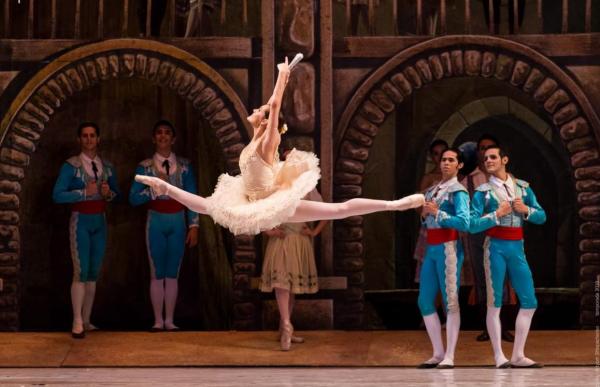
I’ve told you about this season’s “not-to-be-missed” ballet gala with lead dancers from Mexico’s best dance companies: the National Bellas Artes as well as the Ballet de Monterrey. They will be joined on stage by top students from two of Mexico’s leading ballet schools—in Veracruz and Monterrey—as well as from a local mazatlecan ballet academy.

The International Ballet Gala will take place on Sunday November 17th at 6:00 pm in the Angela Peralta Theater. It is a fundraiser for DIF Mazatlán, which helps families in need. Tickets are available at the Angela Peralta box office or by sending a WhatsApp to Carolina at +52-1-669-941-2550 and paying via PayPal. There is only one performance, so be sure to secure your good seats now.

On Monday I had the distinct pleasure and privilege to host the Director of the National Dance Company, Maestro Cuahutémoc Nájera, in our home. He and his wife make their home here in Mazatlán, and have high hopes for our local cultural and dance scene. He tells me how much he loves the Angela Peralta Theater, and how he performed there as a young dancer, before it was completely remodeled.

I thoroughly enjoyed meeting the maestro. He is very easy to talk to, charming, and down to earth, counter to the stereotype of so many talented artists. Below is the promo video for the event. Get your tickets now, as I’m confident this event will sell out.

https://videopress.com/v/oOTfpQdj

Humble Beginnings Don’t Hold Him Back!

74602865_424079794971033_601125907670761472_o

+ The Masculine Form (project in development)
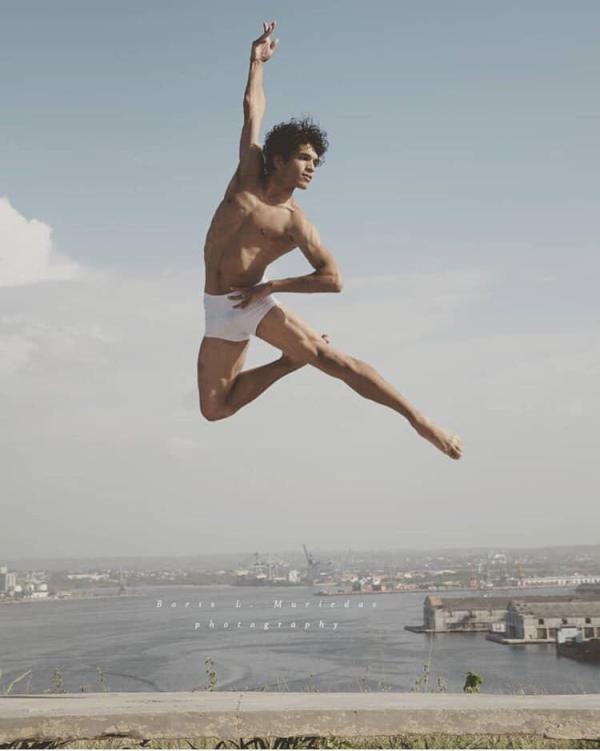
Photos: @santiago_barreiro @insidenatgeo #insidenatgeo

Most every society worldwide seems to be suffering a breakdown in the social fabric these days, a rise in corruption and violence, a loss of the values that make individuals and our communities healthy.

Maestro Cuahutémoc Nájera—the director of Mexico’s National Ballet Company—and his wife, Maestra Carolina Rios, strongly believe in the power of dance to strengthen communities and build strong, healthy, disciplined and principled individuals. Luckily for us, they live here and see dance as a tool to secure a better future for Mazatlán and México. Click on any photo to enlarge it or view a slideshow.

The maestros shared with me a post by es+Cultura that I found to be extremely powerful, and I have translated it for you below:

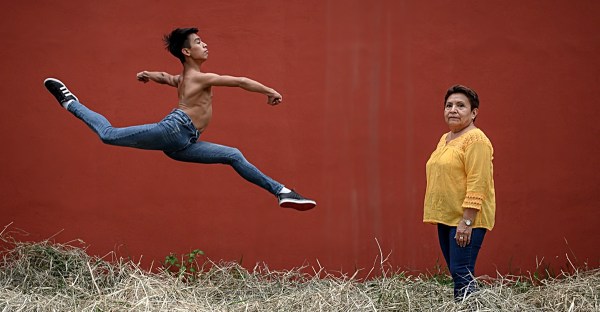
“Seven years ago the priest told Aaron’s grandma, Magda, ‘get him out of that ballet; the kids there become gay.” To avoid conflict she agreed, though she never followed through, because her grandson’s dream was to be a dancer and she was going to support him.

Aaron de Jesús Márques is one of the talents discovered by a program (PROVER) that seeks to promote dance in the city of Córdoba, in the state of Veracruz, giving scholarships to boys from complex social contexts. If the boy has needs and the desire, they pay for his studies, transportation, equipment and food for eight years, eight hours a day. The low enrollment of men in the private academy of Martha Sahagún was the impulse for this project, which now has various generations promoting the talent and diversity of Veracruz.

When he was barely seven years old Aaron didn’t even know what ballet was, in fact, the term didn’t sound familiar, but when the opportunity presented itself he didn’t hesitate even a minute to run up to the teacher who conducted the auditions to show her his physical conditioning. Months later when he’d begun his training, he understood that what his body was really asking him for was to dance ballet, and now no one would get in his way.

Aaron lives with his grandmother, or better said, his mother, as that’s what he likes to call her. She raised him once his Dad died and his biological mother emigrated for a better life economically. Magda supported the family. She was responsible for feeding, taking care of and giving life to the dreams of her grandson. The career of a classical ballet dancer involves a lot of dedication and discipline; it is a family project and in most cases requires the moral support of a feminine head of the household.

Classical dance gave the boy a stylizing manner to move his body, it proposed a language in which it wasn’t necessary to use impact and force like so many other disciplines. Aaron dances to express himself without words, to liberate himself from the structure that questions, violates and judges masculine feelings.

The exercise of classical western dance has implicated from its beginnings situations of violation and exclusion, it has generated negative stereotypes against men who pursue this discipline as a way of life. The hegemonic precepts around what it means to “be a man” in Latin American culture tend to determine how ballet is seen as art. In this 21st century, respect for the male dancer still hasn’t penetrated deeply into society, where machismo and its prejudices only put pride in “manly” sports . With this line of reasoning, dance is habitually associated with femininity. In this sense, there are unequal conditions for dancers, with men playing subordinate roles. This conception brings with it endless social conflicts. Today’s man tries to feel, express and free himself from established obligations (to procreate, provide, protect). However, society insists on assigning gender roles when and where they should not be. Dance in and of itself should not divide, distinguish or bias.

Aaron and some of his colleagues, plus his teacher, will be here in Mazatlán on Sunday, 17th November, performing in the Angela Peralta Theater at 6:00 pm, along with principal dancers from Mexico’s two best ballet companies: Ballet de Monterrey and the National Bellas Artes. Get your tickets at the box office now or WhatsApp Carolina at 52-1-669-941-2550; the performance benefits DIF Mazatlán (local families in need).

In the video below, Maestro Nájera tells us a bit about Aaron’s terrific program in Cordoba, Veracruz, where for the past ten years street kids have been given a new lease on life and a future in professional dance through educational and dance scholarships with amazing results.

Carolina dedicates herself to teaching young students; she owns and runs a dance school up in the marina. In the video below, she talks to me about the ways she has witnessed dance helping her students to be stronger, healthier, with higher self esteem, more cooperative and disciplined, and her plans for programming in the public spaces of Mazatlán.

International Ballet Gala!

be1136e4-88a5-449e-b79f-9855d2179c3c

You do NOT want to miss this incredible benefit performance by the principal dancers of the best ballet companies in Mexico! Dancers will join us from the Ballet de Monterrey, the Compañía Nacional de Danza de Bellas Artes in Mexico City, the Escuela Superior de Música y Danza in Monterrey as well as from the renowned Fomento Artístico Cordobés. The gala will benefit DIF Mazatlán — families in need in our municipality and take place on Sunday, November 17 at 6:00 pm in the Angela Peralta Theater; the promotional video is below.

Error
This video doesn’t exist

Now, let me tell you the story behind this terrific event; Mazatlán is so incredibly lucky. Carolina Rios, originally from Culiacán, has a ballet school here in the marina (Carolina Rios Ballet). A talented and experienced dancer in her own right, it turns out she is married to Cuahutémoc Nájera Ruiz, the National Dance Coordinator and former principal dancer of the Instituto Nacional de Bellas Artes! The couple frequently travels to Sinaloa, of course; they fell in love with Mazatlán and decided to raise their daughter here. Sounds a lot like our family!

DSC_5738©

Caro Rios

So, Carolina moved here three years ago to prepare the way for the family, but Cuahutémoc keeps getting promoted, and, well, hasn’t been able to fully make the move yet (he will be here on Monday for a press conference about the gala).

Despite her busy schedule with their five-year-old and her dance academy, Caro is very passionate about promoting cultural events in Sinaloa. So, she’s called on her friends, including Marta Sahagún Morales from Fomento Artístico Cordobés, and Diana Farias Ortegón, Director of the Escuela Superior de Música y Danza de Monterrey, both of whom said they’d love to bring their dancers to Mazatlán and support any cultural effort here that Carolina has planned. God bless good friends! She invites you to the event in the video below.

Dancers from other companies were also happy to join in. The gala will include four dancers from Bellas Artes (Ana Elisa Mena, Roberto Rodríguez, Valeria Mariaud and Argenis Montalvo) and two Cuban dancers from Ballet de Monterrey (Daniela Favelo and Jonhal Fernández). The performance will include international classics as well as some contemporary choreography.

The gala will include a musical interlude with an aria sung by Mazatlecan mezzosoprano Daniela Rico Coppel, and piano played by Lorenzo Sendra Galván Duque, an autistic child prodigy from Guadalajara. Click on any photo to enlarge it or view a slideshow. The complete and incredibly impressive program for the event is:

Introduction
Choreography by Carolina Rios • Music by Ludwig van Beethoven • Interpreted by Ana Elisa Mena and students of Carolina Rios Ballet

Bohemian Rhapsody
Choreography by Josué Rebollo • Music by Queen • Interpreted by Jorge Emilio Peña, Engel Pérez , Aron de Jesús, Jesús Martín Rivera, Braulio Fernández, Alec Reyes, Roberto Cobos, Armando Villa and David Pérez, students of Fomento Artístico Cordobés • Directed by Martha Sahagún

Don Quijote “Pas de deux from Act IV with Kitri and Basilio”
Choreography by Marius Petipa • Music by Ludwig Minkus • Interpreted by Valeria Mariaud and Argenis Montalvo

Planimetría del Movimiento
Choreography by Irina Marcano • Interpreted by Ana Elisa Mena and Roberto Rodríguez

La Esmeralda “Pas de deux of Diane and Actéon”
Choreography by Agripina Vaganova • Music by Riccardo Drigo and Cesare Pugni • Interpreted by Daniela Favelo and Jonhal Fernández

Musical Interlude
Daniela Rico Coppel / Mezzosprano • Lorenzo Sendra Galván Duque / Piano

Intermission (10 Minutos)

Swan Lake “Pas de deux of the White Swan”
Choreography by Marius Petipa and Lev Ivanov • Music by Piotr Ilich Tchaikovsky • Interpreted by Valeria Mariaud and Argenis Montalvo

Giselle “Adagio from Act II”
Choreography by Jean Coralli y Jules Perrot • Music by Adolphe Adam • Interpreted by Ana Elisa Mena and Roberto Rodríguez

La Bayadére “The Kingdom of the Shades”
Daniela Favelo and Jonhal Fernández • Music by Ludwig Minkus • Students of the Escuela Superior de Música y Danza de Monterrey

Get your tickets now at the Angela Peralta box office or by sending Caro a WhatsApp (+52-1-669-941-2550) and paying via PayPal. This looks to be the most exciting event to take place in Mazatlán in quite some time. Help me get the word out and let’s fill the Angela Peralta to capacity!

Symbols of the Spirit

Final Cover

Book Review—Symbols of the Spirit: A Meditative Journey Through Art
By Glen Rogers, ©2019 Luna Arte Contemporáneo
Paperback, 104 pages, US$30 or 500 pesos plus US$5 shipping from glen@glenrogersart.com

You will want to savor your time with this gorgeous volume created with love and wisdom by very talented printmaker, painter and sculptor, Glen Rogers. The book is filled with Glen’s beautiful artwork expertly laid out and printed in rich colors, accompanied by short text and guided meditation.

Glen’s work has long been grounded in archetypal imagery—metaphysical symbols from the collective unconscious. As a young feminist artist, Marija Gimbutas’ insights in The Language of the Goddess spurred Glen to walk in the footsteps of early goddess cultures. Over the next several decades Glen made spiritual and artistic pilgrimages to sacred sites around the world. On these journeys and in her art and life in between, Glen discovered and nurtured an internal resonance with sacred archetypal symbols, which then became a focus of her work. When she began authoring this latest volume, she set out to write a book about two of her favorite symbols: the bird and the lotus. Once she began, however, she quickly realized there were eight key symbols that appear again and again throughout her body of work.

In Symbols of the Spirit Glen writes a two-page essay on each of these eight symbols that have imbued such meaning and beauty into her art and daily life: the bird, circle, lotus, moon, seed, spiral, vessel and vesica piscis. She covers the symbols’ historic use and meaning as well as how they came to speak to her personally. Glen includes a short meditation or experiential activity inviting the reader to connect with the energetic properties of each of the symbols: to “experience it with your heart and allow the images to become part of your visual and spiritual vocabulary.” Click on any photo to enlarge it or view a slideshow.


The effect is one of pure joy and thoughtful contemplation. If you are looking for reading that nurtures the spirit, the heart, one’s creativity and authenticity, you will find it here. Merely touching the rich pages deepens and calms one’s breath. Keeping this book near you in your home or work space provides a quick escape from the harried world we live in.

Most Mazatlán residents have much to thank Glen for, including the First Friday Art Walks in Centro Histórico and the OMA Gallery at the airport. She owned Luna Art Gallery in Mazatlán, and currently splits her time between our city on the bay and San Miguel de Allende. Born in Mississippi, Glen holds an MFA from San Jose State University and has a long and esteemed art career. For decades she worked in public art and as a community leader. Glen has had solo exhibitions throughout the USA and Mexico plus several in Peru, and group exhibits on four continents.

Glen feels that these eight archetypal symbols offer a promise of healing and transformation, a spiritual and artistic anchor to the Sacred Feminine. She views the creation of art as meditation—a communing with a higher power. Working with ancient symbols provides a bridge to our ancestors and a heart connection to the past. Glen’s experience tells us that these symbols provide healing on a subconscious level, and that once we’ve healed ourselves we can heal the world, because archetypes allow us to go deeper inside to find new truths to the dilemmas we face individually and collectively. Do we really need reasons more powerful than these to invest our time and talent?

Glen’s record of giving back to the community and trying new things is evident in this book. Making such personal works available to everyone—artist and non-artist alike—allows us a peek into what pushes someone as amazingly talented as Glen, and in doing so inspires us to look inward as well. Meditating with Glen via these precious pages is a truly therapeutic endeavor.  Contact Glento start enjoying your copy.

“The man who speaks with primordial images speaks with a thousand tongues.”
—Carl Jung


Mamut!

62186994_2350224208600454_7348558798572748800_n
The archeological museum in Mazatlan (located on Sixto Osuno, across from the Art Museum) has a very large visitor on display until August 25. I encourage all of you to take some time to go check out: Mamut: The Prehistoric Giant.

What is Mamut? Mamut is mammoth in English. So, yes, there is a huge frigging mammoth skeleton sitting inside our little, often unnoticed and sorely under-appreciated, museum. This particular mammoth is on loan from Mexico City. If any science nerds are wondering, it is a Columbian mammoth. It was brought here in crates from Mexico City and took a team of five archeologists 12 complete days to reassemble. It is a sight to behold.

The museum is open from 9:00 a.m. to 6:00 p.m., seven days a week. The cost is only 45 pesitos and you get to see much more than a mammoth. The museum is chock full of pieces of history from Sinaloa and beyond with many placards in English if your sciencey Spanish is a little rusty. Pro Tip: get in free any day with your INAPAM card, and Permanent Residents get in free on Sundays. Gilbran, Director of INAH for Sinaloa, is generally there and speaks great English.

As recently as 10,000-15,000 years ago, mammoths roamed Sinaloa and other parts of Mexico. If you think banda is loud, can you imagine the sound and feeling of a pack of fifty 4-ton beasts coming towards you? This mammoth was not discovered locally, but rather in Ecatepec in 1995. The bones displayed are 80% original to this animal with missing parts replaced with bones from other mammoths or modeled. This is the reason one leg appears shorter than the others, as it was missing and another mammoth had to supply the replacement.

Cause of death is not known, but it’s pretty certain that some of our early ancestors ate well off the missing leg—whether hunted or scavenged. This mammoth died early at around age 25. Mammoths are known to have lived easily to be 80 years old. I could bore you with facts and figures, but suffice it to say, it’s big, it was heavy, and it’s here. Go check it out!

Oh, and here are some pictures (thanks Dianne):

Just click any photo to see it larger.