Social Services’ (DIF) Annual Report

P1250554

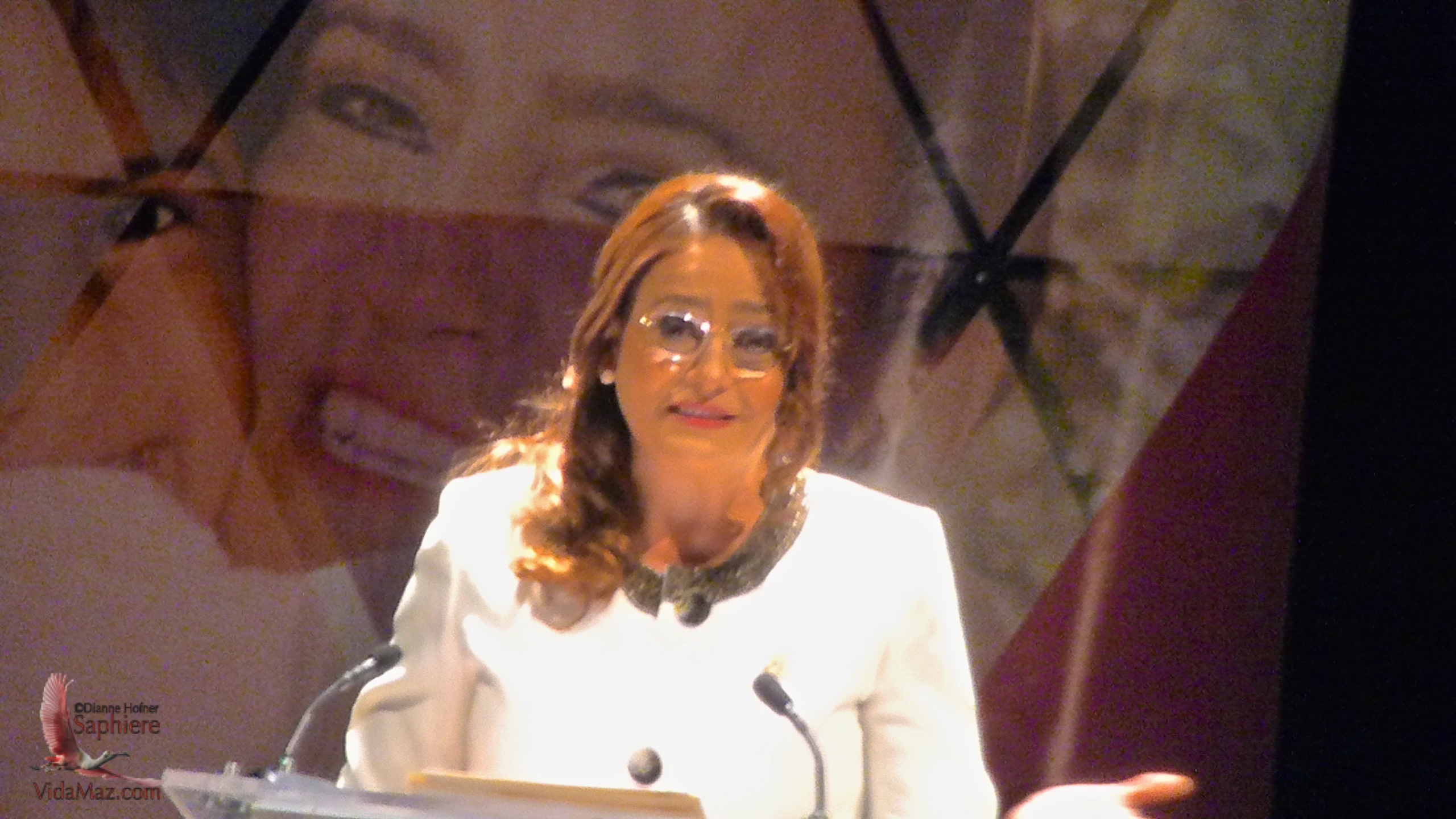
Sylvia Treviño de Felton giving her first “State of DIF Mazatlán” report in the Angela Peralta Theater

This morning the Presidenta del Systema DIF de Mazatlán, Sylvia Treviño de Felton, gave her first annual report to a full house in our gorgeous Angela Peralta Theater. I attended with a group of girlfriends, and walked out of today’s event amazed at the amount of work Ms. Treviño and her team have been able to achieve. Congratulations and thank you to all!

I’ve long been fascinated with the incredible work done by Mexico’s DIF, the national system for the Development of the Family (Desarrollo Integral de la Familia). DIF’s services target children, women, the handicapped, and families in need. Its broad range of services includes, among many more:
  • Healthcare, including basic services, eye care and physical therapy
  • Education to prevent teenage pregnancy and domestic violence, and on topics such as human rights
  • Occupational training
  • Free breakfasts for school children
  • Food, blankets, and coats for the needy
  • Scholarships
  • Early childhood education and eldercare
  • Drug rehab
  • Community centers
  • Dances, balls, sports events, and parties
  • Help for unwed mothers
  • The improvement of parks and public spaces

DIF’s is a much different system than those I’m familiar with from my previous residences: the USA, where the Department of Health and Human Services seems to me far removed from daily life, and churches, non-profits and other civic organizations play a major role in feeding the homeless or aiding victims of domestic violence; or in Japan, where government-provided social services seem primarily to involve health care and pensions.

When I’ve been disappointed by municipal administrations, somehow our local DIF still shines through. How much better, then, under a first couple who seem to truly and honestly care about the welfare of our people and the city?

This morning’s event kicked off with two songs sung by a selection of adorable girls from the local DIF chorus, and a dance performance done in silhouette and demonstrating some of the various services provided by DIF.

Instead of the usual long and detailed verbal report, Ms. Treviño instead showed us a ten-minute video summarizing DIF Mazatlán’s major activities during the first year of the Felton administration. It was much more impactful to see photos and watch video as the facts and figures were shared.

Sylvia followed the video with a short and heartfelt presentation, and shared copies of the official 2014 printed report with the Mayor and the Director of DIF Mazatlán.

If you regularly read this blog, you know that I am frequently disappointed by government officials who so frequently grab the limelight and the credit away from staff and volunteers who do the day-to-day heavy lifting. Such was not the case today. Ms. Treviño de Felton showed a second video, one she had created especially to thank DIF staff—the team that helps realize all the good work on behalf of children, women, the elderly, the handicapped, and families in need in our municipality. It was a wonderful feeling to be amongst the cheering, hooting and hollering coming from the DIF staff and volunteers present in the theater, as they saw photos of their favorite colleagues appear on screen.

If you are not familiar with the activities in which DIF Mazatlán is engaged, I urge you to watch the video below, subtitled in English. Unfortunately the video that was shown this morning, summarizing the first year, does not yet appear on DIF Mazatlán’s YouTube channel. I’m confident it will in a few days, so if you’re interested, be sure to check the link.

Behind the Chamber: The Art of the Horn

You know we are blessed with cultural events here in Mazatlán, but I especially love it when we are privileged to host a world premiere!

Next Sunday, February 8th in Casa Haas, we will hear Brahms’ classic piece for horn, with a companion piece written by Robert Cummings expressly for Maestro Gordon Campbell. Aigul Kulova will be on piano, Oleana Bogaychuck on violin, and Gordon Campbell on the horn. Maestro Gordon Campbell and his wife, Guianeya Román, give us a Behind-the-Chamber look at the upcoming concert.

Performance will be at noon was sold out, and CULTURA was opening a second performance at 6:00 pm. Tickets for this event are only 200 pesos, and can be purchased at the TAP box office or online. Come and listen to Maestro Campbell get out from behind his baton and play, for a change!

Behind the Chamber: Opera La Serva Padrona

Do you love good opera as much as I do? Premiering for the Empress of Hapsburg’s birthday in 1733, the opera buffa (comedic opera) “La Serva Padrona” (“The Servant Turned Mistress”) by Pergolesi will be the fourth offering in this year’s Camerata Gordon Campbell.

Originally written as an intermezzo, the theme of “La Serva Padrona” is timeless and something most anyone can relate to. A young woman, working as a maid for a wealthy elderly bachelor, has designs on marrying him and inheriting his estate. She works in cahoots with Vespone, a mute fellow servant, to make her goal a reality.

Greg and I recently interviewed the Director of the Sinfónica Sinaloa de las Artes, Maestro Gordon Campbell, and his wife, Guianeya Román, in our home. Below is their Behind-the-Chamber peek into La Serva Padrona:

The concert will take place at the Angela Peralta Theater this Sunday, February 1st, at noon. Karla Muñoz, soprano, will sing the role of Serpina, the maid. Carlos Serrano, baritone, will sing as Uberto, the master of the house. Actor Larik Huerta will play the mute servant, Vespone. The stage director for this performance is Rodolfo Arriaga.

Tickets for La Serva Padrona are only 200 pesos each, and can be purchased at the TAP box office or online.

It’s a Horse Parade!

CabalgataDo you love horses? Do you love an excuse to party, and are amenable to doing so before, during and after you ride 25 kilometers on a horse? Do you have kids who enjoy watching horses dance? If so, you ought to join in the Familia Escobar’s cabalgata or cavalcade next year. The cabalgata is held up in Cerritos on the second to last weekend in January every year, and this time 600 horses and riders, from five states of Mexico, participated.

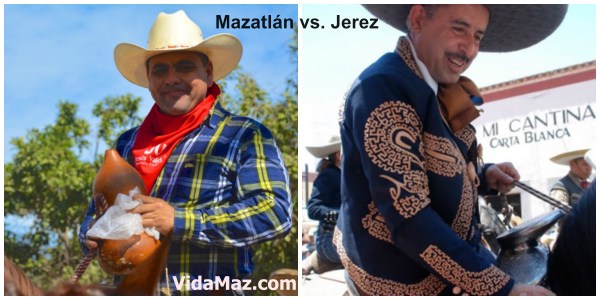
This was so very different from our first cabalgata—in Jerez de Zacatecas, on Holy Saturday of 2011. That one hosted thousands of charros with incredibly beautiful sombreros, tooled leather and embroidered suits. Here in Mazatlán, it’s puro Sinaloa, baby! Most everyone wore a cowboy hat rather than a sombrero, though we did see a few baseball caps as well. Almost everyone had a bandanna around their neck, jeans instead of leather, knee-high leather boots, and either a brightly colored shirt or a plaid shirt instead of an embroidered, fancy mariachi-like top. And, in typical Mazatlán style, we saw one guy without a shirt.

One surprising thing, at least to us: they were drinking a whole lot less here than what we witnessed in Jerez. Amazing? I’m confident they made up for it at the final ranch, or perhaps it’s because this is much more a family event, but we only saw beer, not the quantity of tequila and whiskey that we did in spring 2011 in Zacatecas. I will also say that Mazatlán wins, hands-down, in the friendliness department!

Men, women, children, couples, families, and singles participated. Riders told us there were over 1000 people participating, Tourism reported 600, but at most we saw 250-300 pass by us. We waited on the beach in Delfín for quite a while, significantly north of the bridge. However, the riders must have turned back to the road from the beach quite a ways north of Delfín, because we only saw a few on the beach—the bulk of them we saw on the road to Emerald Bay.

The cabalgata started at Rancho Chuchupira, which is about 14 km north of town. Because the bridge is under construction, the riders this year rested at Oceanica, the drug rehab center in Delfín just north of the wonderful new bridge. There the facility’s staff watered the horses, and guys on 4-wheelers handed out beer and water. The riders continued south along the railroad tracks, turning west for another rest at Rancho El Palomo, and then ate lunch and partied with beer, food and banda music at Rancho Las Habas. Quite a deal for 150 pesos! We met riders from Nayarit, Jalisco, Zacatecas, Durango and the USA, and were struck by how incredibly friendly everyone was. Greg and I both received multiple offers to hop on a horse and join the fun.

If you’ve never witnessed a cabalgata, it’s worthwhile taking the opportunity. Sinaloa is farm country; raising horses is part of one people do on the ranchos here. Cabalgatas are another wonderful cultural opportunity we can avail ourselves of here in Mazatlán. I do, however, recommend you ride rather than just observe. Looks a whole lot more fun!

Whale Watching in Mazatlán


1.DSC_0310 - Version 2

One of many happy humpback couples we saw on our excursion last week

I love how you all join in the excitement about our whale-watching trips with Onca Explorations. On our first trip in 2009 we had unbelievable good fortune; we had so many pods of whales come right up to the boat—breathing beside us and playing with us—that we lost count of how many whales we saw! The video on the link above will give you an idea. Remember, the camera is not zoomed on those shots! We felt like we could almost reach out and touch the whales, they came up so close to us.

Each year we have been blessed to see whales, though each time out has been a bit different. The humpbacks (ballenas jorobadas) that frequent our waters are the most acrobatic of the baleen whales; in fact, that’s how they got their name—the humped back motion they make when they breach out of the water. In addition to breaching, humpbacks spy-hop, lob-tail, tail-slap, and fin-slap. In our various outings we have seen humpbacks jump on top of each other and hit each other with their pectoral fins, which the males do to establish dominance and secure a mate. This time out, however, we saw a bunch of couples romancing—swimming around slowly and gently, courting and most probably mating with one another. Here, in warmer waters, is where the humpbacks mate and have their babies.

Onca’s owner, marine biologist Oscar Guzón, had to teach a class so did not go out with us this time. Saúl Herrera was our guide, and he told us that no one has ever recorded seeing humpbacks mate. Apparently it’s not uncommon to see huge gray whale penises in areas such as Baja, where they frequent. Saúl lowered a microphone so that we could hear the male humpbacks singing. They produce their haunting songs by pushing air through their nasal cavities.

Below is a short clip of one of the happy couples, swimming about romantically, with the Baja Ferry and the smaller Onca I (we were on the Onca II) in the background. First you’ll see their spouts, then the dorsal (back) fins come up, and, finally, the whale on the right dives sharply enough that the fluke comes briefly out of the water. Ah, love. You can see how coordinated their water ballet is.

The gestation period for humpback whales is 11-12 months, so calves this year were conceived in our waters last year 😉 Mature humpbacks reach 40-50 feet in length and weigh about 80,000 pounds (females are bigger than males). Their tail flukes—up to 18 feet across—are like human fingerprints: individual identifiers. No two flukes are alike.

Humpbacks live up to 50 years and are sexually mature at 6-10 years. Below you can see some of the great variety of flukes, as well as some of the spouts, that we saw during this trip. As you can see, there was a whole lot of love going on out there! Click on any photo to enlarge it or view a slideshow.

Oscar is a marine biologist, and he, Saúl and the crew of Onca have now spent nine years cataloguing and tracking the whales that frequent our waters. Their research has made huge contributions to what scientists now understand about humpback behavior at the southern tip of the Sea of Cortéz. Below is a clip of Saúl telling us a bit about cetaceans in our waters, including that they have recorded sightings of 17 species of cetaceans here in Mazatlán.

In addition to whales, this year we saw two species of dolphins (bottle nose and spotted) and, the stars of the trip, the mantas. Be sure to click on the link if you haven’t seen those photos!

Another great advantage of this whale-watching excursion with Onca is the great view of Mazatlán from the water.