The Transience of Friendships in Mazatlán

DSC_0030

I’ve lived a lot of places: Wisconsin, the San Francisco Bay area, Tokyo, Kyoto, Hamamatsu, Salamanca, Mexico City, Kansas City… What has been a defining factor of friendships in Mazatlán for me has been transience. Maybe I’m unique, or maybe you’ve had similar experiences?

Many of the most interesting Mazatlecos I’ve met have been world travelers; their children often leave for school, marry and have children abroad, and the parents are then split between worlds. Quite a few of the expats we have met and grown to love here, even though full-timers, have gone home, moved nearer their grandchildren, or moved on to a new location; wanderlust is in their blood. Nationals love it here, but several of those we’ve become most fond of have been called to another city, transferred by their employers or moving because life here has gotten tough or taken a new turn.

In Tokyo or Mexico City, the people I met and loved, Japanese or foreign, tended to be settled there for life. Yes, there are plenty of born and bred Mazatlecos, or people who have lived here 30 years or more. But, somehow, I am able to quite easily count two hands’ worth of fingers of people I’ve loved and lost to moving in the mere eight years I’ve lived here.

There’s sadness in that, of course, but there are upsides as well. We can travel to visit these friends. We can stay in touch over the distance, and share glimpses into life in other areas. And, to me, it’s proof we are blessed here in Mazatlán with friendships with people who are intelligent, interesting and vibrant, people who embrace life fully and who see the world as their home.

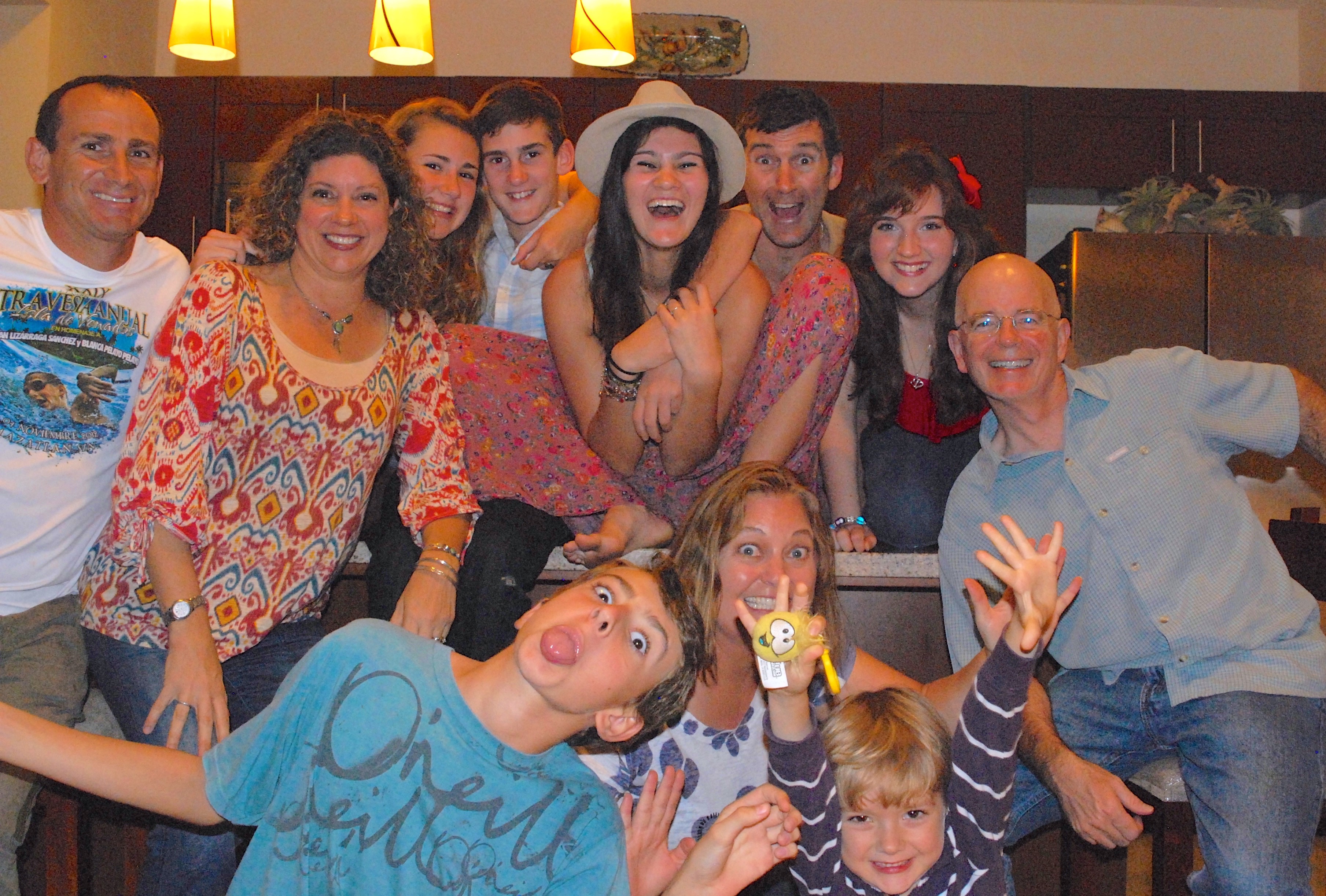
One such beloved family we met through our son, Danny. Danny went to secundaria at Colegio Andes with another US American girl, Sierra, and her little brother, Kelton. Her father, Brian, taught there. Heidi, the Mom, works at El Cid, so we still get to see her occasionally, though she splits her time between here and her family in Portland. They moved because they wanted a different, better in their opinion, education for their kids. We miss them dearly. They were fun. They are fun. Adventurous. Curious. Crazy. Global minded. Outdoorsy. They were just a whole lot more fun when they lived here, close by, and we were able to join them for an adventure or to create some memories.

We saw the Samore family on a recent trip to Portland, and of course they come to Mazatlán to visit every once in a while. They’ll be here soon. You may know them and miss them, too.

This morning we were fortunate to receive a copy of an article in the school newspaper of the high school where Brian currently works. I want to share it with you, because it is a testament to the caliber of the people, the kind of weirdness and passion, we are privileged to be able to share space and time with here in Mazatlán. Although we miss them, we are so privileged to be able to call them friends. Whether you live here in Mazatlán, spend part of the year here, or are hoping to move here, we wish you wonderful friendships!
 

Reflections on Schooling in Mexico—Straight From the Source

One of the most common inquiries we get from readers has to do with how our son adjusted to the transition to Mexico. We’ve written about it before:

However, this time you can hear the story from the child’s perspective. Our son just returned home for winter break from his first semester at college in the States. He brought with him some sample homework assignments to share with us. One of them answers the question so often asked of us quite well. It is pasted below. He moved here with us after sixth grade, so he entered middle school/secundaria in Mazatlán and went on to complete high school/prepa as well.

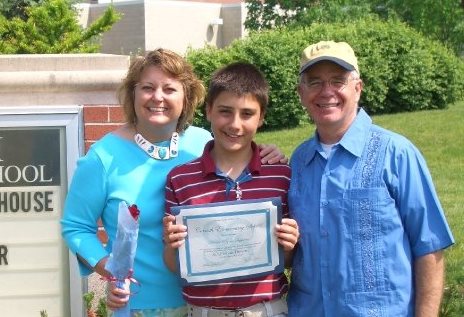
Just before moving to Mazatlan.

Just before moving to Mazatlan.

White, middle-class, and worriless: these are three adjectives that adequately describe my childhood. I grew up in a suburb outside of Kansas City, Missouri where I attended grade school. My neighborhood was quite homogenous; our only real source of diversity came from a third-generation Mexican family and another Jewish family that lived a few streets down. However, as a young child I never took notice of this.It wasn’t until the events that closely followed my sixth grade graduation that I realized how uniform my place of living had been.

The day was young as I left school on my bike. The shade of oak trees provided me with a sense of relief after spending a hot, sunny afternoon in gym class. Despite the coolness under trees, I worked up a sweat by the time I arrived home. My helmet latch made a snapping noise as I hung it on the handlebars and made my way through the garage. I walked in and commenced my homework.

Shortly after, the parental squad came in and communicated that they had something to tell me. “Danny, we’re moving to Mexico this summer.” What? Mexico? Had my parents gone insane? I liked my life here, it was comfortable and easy! All I wanted to do was attend the local high school and act like the kids on MTV. I didn’t speak Spanish; everything on CNN was about how much drug violence there was in Mexico. My parents had lost it. My protests that day and throughout the following weeks fell on deaf ears. They were about to ruin my life, and I could do nothing about it.

I remember my sixth grade graduation fondly. I used to be just some other kid, but now I was, “the guy moving to Mexico.” My friends worshiped me, similar to the way that most sixth graders are amazed by high school students. As I got up on stage to receive some pointless award that my mother had pushed me to strive for, I remember the deafening applause and cheers that fell upon me. Even though I didn’t consider most of them as close friends, the moment felt good. It made me forget my melodramatic reaction to moving.

Flash forward to first day of school in Mexico. Everyone was brown. People stared at me. My uniform pants were too baggy and my shirt too tight. It was so hot here. Nervous shakes, sweaty palms, no eye-contact. I found a desk in what would be my homeroom for the next year and managed to avoid talking to anyone. An older man walked into the room and jabbered for a few minutes. Something that sounded like a slurred Latin spilled out of his mouth. This liquid dialect poured into everyone’s ears and was understood by their brains. It wasn’t by mine. I tried writing down the sounds I heard in a notebook so that later Google might be able to help me translate something (a mostly futile attempt).

My first few days at that school were filled with terrifying moments. Whenever someone asked me a question, my voice would crack. Every time a teacher had me introduce myself in a god-awful icebreaker, I would feel vertigo as I stood up from my desk. I didn’t eat lunch for the first few weeks because I was scared. The idea of asking for what I wanted off of a menu I didn’t understand with a line of hungry, unforgiving teenagers waiting behind me was too traumatic. I tried hard to avoid any awkward situation or any circumstance within which I could be made to look a fool. As a consequence, I learned the cues of Mexican culture and the Spanish language much more slowly than I would have had I not been so self-conscious.

An incidental character in my transition to Mexican culture was another American student whose name was Misty. She was going through the same culture shock as me, so you’d think we’d become great friends, yet we didn’t get along. I heard once that things you especially don’t like about other people were the things you don’t like about yourself. Who knows if that is true, but it was definitely the case with Misty and me. Misty was just as lost and confused as I was, just as emotional, but she handled it very differently. She expressed her emotion, frequently running crying to the bathroom when she didn’t understand something. She only spoke English when people asked her questions.

What I admired about her was that she seemed unafraid to try new things. She did everything that I wanted to do but couldn’t because of my ridiculous self-consciousness. I instantly hated her for it. Over the years, Misty and I became friends. We now joke about how much we despised each other. She hated me because I seemed to be doing better than her. I hated her because she felt a freedom I didn’t permit myself. Our relationship was based on envy and it was poisoned because of it.

I’ve learned a lot since then, though. I don’t try to fit in and be cool anymore. Because of this, I am usually happier and make better friends. In the U.S. I had always tried to fit in and had succeeded at doing so. In Mexico, being like everyone else, as a foreigner, was impossible for me. I think that has been my greatest lesson from living in Mexico. Of course, Spanish will look great on my resume, and I’m sure growing up in cultural diversity and as a minority will permit me a different perspective on some subjects. However, overcoming adversity in Mexico was the greatest lesson for me. I learned how to stop giving too much importance to what others thought of me. Sticking out doesn’t make you an outcast. That is what Mexico taught me. That is what being a minority taught me.

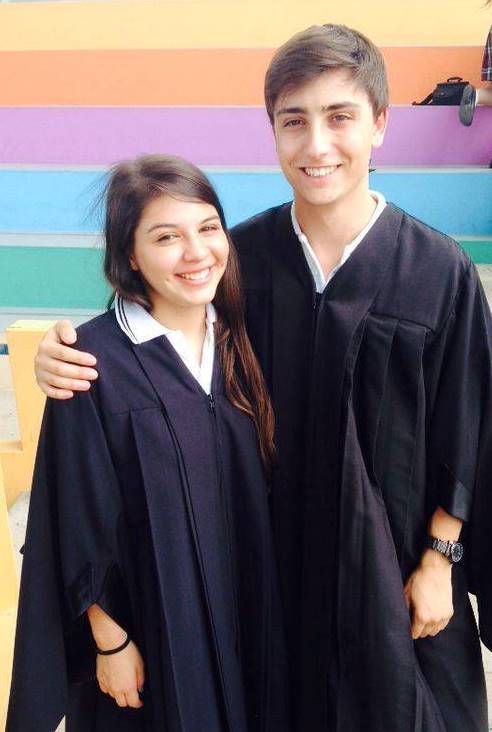
Six years later!

Six years later!

We hope this helps. Our son is wiser, stronger, and more resilient for having lived here. Good luck in your adventure!

The People You Touch

DSC_0808 Faces and Places of Colonia San Antonio

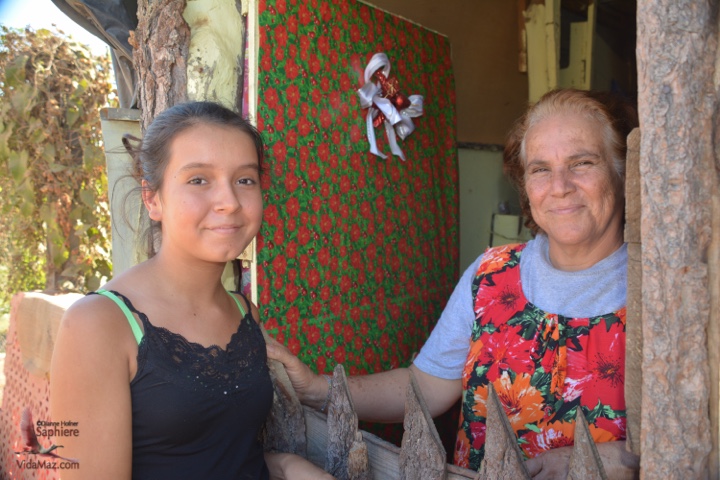
Every year we are privileged to be able to help the Medina family and all the others who help out with Desayuno de los Pollos. This year, thanks to help from so many of YOU, we have already been able to purchase 2500 whole chickens and pack up 1500 packs of despensas, or 10 days worth of food. This should feed about 13,000 families this year. We also take gently used clothes, toys and candy to share. In the slideshow below are photos of just a few of the people you touch. And, of course, they are people who very much touch us back in turn, making our holidays bright. (Click the arrows in the slideshow below to view photos more quickly. Please let me know what you think of these portraits! Thanks!)

This slideshow requires JavaScript.

Yesterday I went out, as usual, with Yolanda and Jorge, to meet with community leaders of Colonia San Antonio. We handed out about 900 (!) tickets for food to members of the community. Why is this important? Because Colonia San Antonio, as so many other colonias on the outskirts of town (we give out food along 7-9 routes every year; San Antonio is just one of them), is an invasión. This means that the land on which the houses are built is privately owned, and the people living there are squatters. Normal procedure in these circumstances is that poor people move in, “squat” on the land, build homes out of pallets, recycled tarp, or even cardboard or metal. Eventually they band together and string electrical wire for themselves, and lay pipes for water. They have now done this in Colonia San Antonio.

Five or so years ago, when we first started going there to hand out chickens, they had neither water nor electricity. Now they do. I don’t see any transformers or breakers or anything, pretty much just a very long extension cord running from house to house. But, they do have electricity. Once the community grows large and successful enough, the city, or municipio, decides to access the colonia. The city pays the landowner for the land, and the people living in the invasión are required to start paying taxes.

The good news is, the squatters get to own their land and their homes. Some of the people who occupy the land in these invasiones, however, do not live there full time. Some come out to visit the homes they have only on the weekend, like a (very basic) country house. Others farm the land, but live in town. They basically squat as a way of making (a bit of) money, eventually, when the city decides to give the squatters a deed to the land they occupy.

Yolanda, Jorge and I go out here to meet with community leaders, so that they can take us around, home to home. They can tell us who lives here full time, and who only happens to be here once in a while. The community leaders tell us which families are most in need (maybe they need two chickens or packs of food, or extra clothing), and which are doing better than others. In this way, we can be as equitable as possible in what we hand out. This week, we were there from about 10 am till 2:00 pm.

It is one of my favorite days of the year. I am able to meet with incredible community leaders, people who themselves have fallen on hard times, don’t have much in the way of money, but who have the caring and the fortitude, the vision and the sense of justice, to better their communities. I also have the privilege to meet the people I’ve met with over the past five or so years that we’ve been going to Colonia San Antonio. I get to visit with people we know, and get a glimpse into how people there live.

This year, I made a point of taking photos of two things: the faces and the places of Colonia San Antonio. The first slide show, above, is of some of the faces of this invasión. You can see the joy, the dignity, and the difficulty these people experience every day. I have so very much to learn from so many of these people. I am so grateful to be able to meet with them and, hopefully, share with them a bit of joy and ease their burden just a bit.

The second slide show, below, is of the places: the homes, stores, and plazas of this colonia. It amazes me how simply people here live, how hard they work for what they have, yet how clean they keep their homes, the care and love they bestow on their children. How, despite the dust EVERYWHERE, most everyone has clean clothes and skin and hair. Nearly every home is decorated for the holidays, and many of them have beautiful demonstrations of religiosity as well, especially for the Virgen de Guadalupe. (Click on the arrows in the slideshow below to view all photos more quickly.)

This slideshow requires JavaScript.

You are most welcome to join us on Christmas Eve morning, Wednesday this week, to caravan out to the 7-9 routes we’ll go on and hand out chickens, food, clothes, toys and candy. We’ll meet at Quince Letras downtown, 6:30 am if you have a pickup truck, 7:00 am if you are coming to help out. We should be finished by noon. Merry Christmas and see you Wednesday morning!

Part of the #MyGlobalLife Link-Up.

Touring the Cuauhtémoc

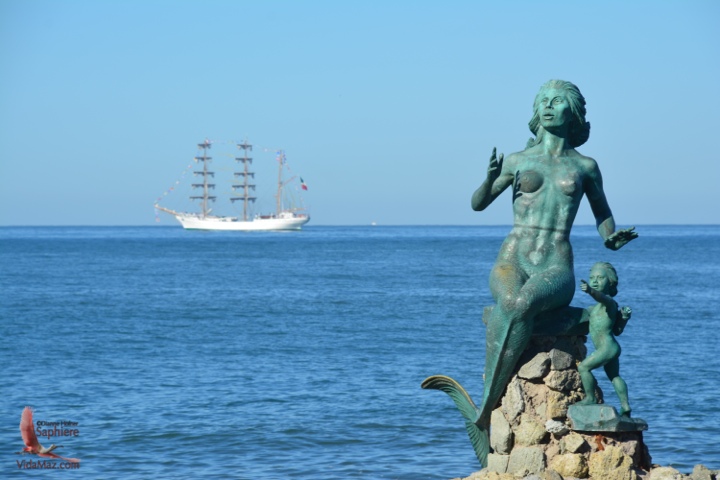
Our mermaid and the Cuauhtémoc

Our mermaid and the Cuauhtémoc

Earlier I shared with you our photos of the Cuauhtémoc’s arrival in Mazatlán, as the cadets and staff stood on the spars of the three-masted barque, singing the anthem. It was a once in a lifetime experience, for sure! Many of you seemed to think they were just standing up there, but we could tell they were fastened on in some way. As we toured the ship yesterday, some of the staff members demonstrated the harnesses they use to climb up into the rigging. They also told us some of the favorite ports of call they’ve had, and whether we’ll be able to see the Cuauhtémoc with its sails up. See the video below.

The captain of the Cuauhtémoc is Juan Carlos Vera Minjares. The ship is traveling with 254 people on board, including 69 fifth-year cadets who will receive degrees in Naval Science Engineering. 19 of the cadets are women!!! Woot woot! I most unfortunately did not meet any female cadets, or you’d be hearing from her. 😉 We were also told that on Sunday 4300 people toured the vessel.

Upon boarding the Cuauhtémoc, the first thing that struck us is just how many thousands of kilograms of rope this Class A tall ship uses! Rope, rope, everywhere rope! Officially called cordage, we saw everything from thick halyards (used to raise heavy yards) to thin, smooth, flexible sheets (used to control the orientation of a sail). We even saw rope tied around steel cable. The rigging looked incredibly complicated and intricately woven. And, of course, we saw impressive knots as well. Click on any photo to view it larger or see a slideshow.

Second to the quantity of rope everywhere, we were impressed with the beauty of the wood on the Cuauhtémoc. The deck itself was gorgeous, most of the pulleys we saw to help hoist that rope were made of wood, but also the stairways of the ship, the lifeboats, seating areas and doors were all wooden. After leaving Mazatlán the ship is headed to an astillero in Acapulco for repairs and refinishing, but it looked in fine shape to us.

What would a historic replica barque like this be without brass? Lights, portholes, binnacles, telegraphs, cleats, bells, propellers… all shined to a brilliance. There were even brass plates on the deck where heavy equipment is serviced, so that it doesn’t scratch the wood decking.

One very interesting bit of trivia that we learned is that the Cuauhtémoc sports a unique innovation: tercudos, or handwoven yellow “fluffy things” that cushion the rigging to protect the sails from damage. A cadet told us that when they are punished for misbehavior, they are often ordered to make tercudos.

As with any community, part of what makes the Cuauhtémoc so special is its crew. Everyone we talked with during our tour of the vessel was outgoing and friendly, ready to tell us stories and answer our questions. We learned that the staff (tripulación) wear blue and white striped shirts, and the cadets, the day we visited at least, were in white uniforms. They all seem to enjoy purchasing gifts for family and friends as they travel, but the huge challenge is where to store the gifts, as they only have very skinny tall lockers into which to cram their loot. The cadets sail on the Cuauhtémoc in their final, fifth year at the Naval Academy. Most of the staff are older and have family at home, and have made multiple journeys: Istanbul, Barcelona, Tokyo, Shanghai, Alexandria, Ukraine, Venezuela…

Because this ship is so special, even the signage and trademarks are very cool. See below.

Because it is such an old-fashioned ship, I converted a few of our pictures to black and white. I like how they turned out; I hope you’ll enjoy them.

I guess the photographic opportunities of this gorgeous vessel have seduced me, because we drove over to the port again today at sunset, just to see if we could get some shots with the colored sky and, closer up of the lights at night. The sky, unfortunately, didn’t cooperate so well—not one of those over-the-top sunsets that we are so frequently blessed with.

Thank you for reading and watching along with me! I sure have enjoyed the Cuauhtémoc’s visit. Thank you to all the staff and cadets who helped us learn and kindly showed us how things worked!

Día de los Muertos, Mazatlán 2014

La Pareja: Together in life and death

La Pareja: Together in life and death

What a welcome home! The callejoneada (alley parade) this year for Day of the Dead in Mazatlán was the best ever, if I dare say so! It was a perfect evening weather-wise: clear skies highlighted by a gorgeous crescent moon, and warm weather that was cool enough for comfort. More people and especially more complete families participated, more dressed up, the beer flowed more freely and was better organized, and the main costumed characters were spectacular!

This year’s event was a tribute to Maestro Rigo Lewis, the long-time creator of our unbelievably gorgeous Carnavál carrozas/floats, so the callejoneada for Day of the Dead had a Carnavalesque air to it this year; it was a beautiful fusion of two local traditions for which Mazatlán has international fame. Kudos and thanks to CULTURA and to the Centro Municipal de Arte staff and students! By the way, I’ve been told we will STILL this year AND next year in the Carnavál parade will have carrozas designed by Maestro Rigo! His legacy lives on, thanks to his hard work and passion.

Click on any of the images below to see it larger or to view a slideshow.

I am sorry to have been so long away from this page, but after seven years it was wonderful to reconnect this summer with family and friends north of the border in a lengthier, more meaningful way. We were able to celebrate my aunt’s 80th birthday, be with my sister-cousin through surgery, and settle Danny into his dorm room and college life. For that I am ever grateful! Plus I had a month of work in Europe, where I met incredible people and thoroughly enjoyed myself. Of course we missed home, and our friends and family here, terribly.

Saturday night felt like our personal welcome home party, as we hugged loved ones everywhere we went. Funniest, to me, was how often I had to ask, “Who are you?” as the costumes were so excellent that they disguised identities quite effectively!

I can’t imagine not dancing in the parade with the live music, if one is able to do so, as it is just so much fun! There are, however, many people who line the route to watch and enjoy, as well as those who camp out at front-row-seats in bars and restaurants to watch the parade pass by.

Life in the Plaza Machado after the callejoneada was a sight to behold as well. I unfortunately can’t tell you anything about the event inside the theater, as though we waited in line at the Machado for about 90 minutes to get tickets, they ran out long before it was our turn.
We met one woman who was here in town to celebrate her 50th birthday, all the way from Washington DC with two of her best girlfriends. They obviously brought complete Day of the Dead costumes with them for their holiday! We saw store-bought costumes, handmade costumes, traditional and modern versions, and fortunately there were many of us who were still alive and un-costumed to enjoy the rest!
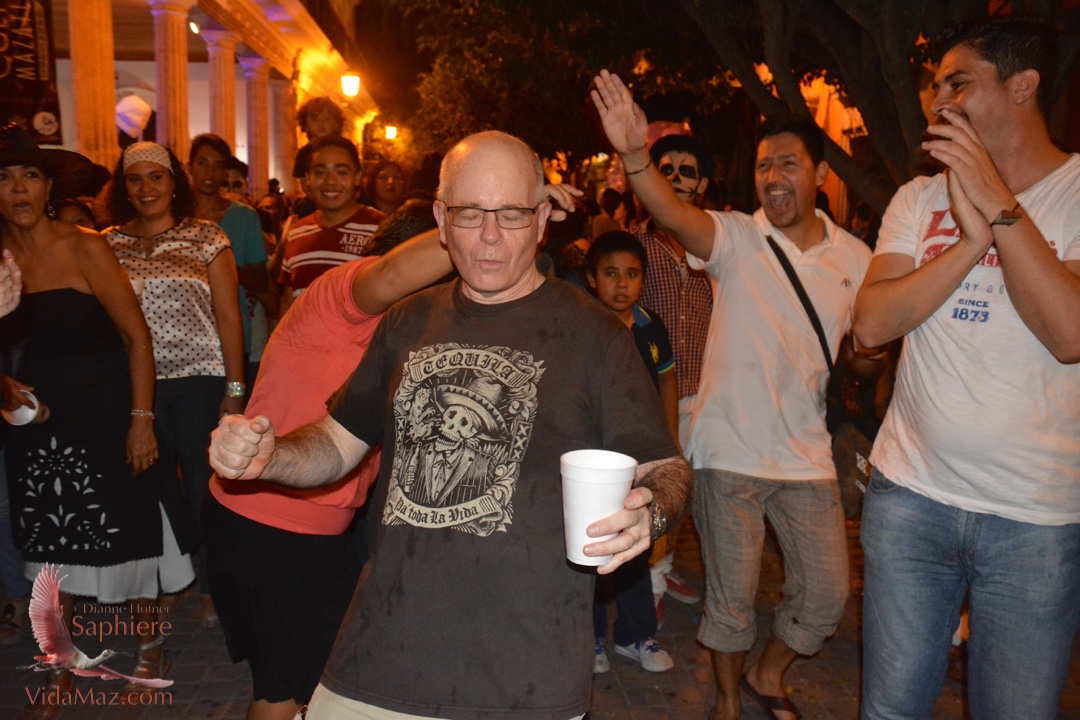
My absolute favorite moment of the evening, and there were so many awesome ones to choose from, was as the callejoneada entered the plazuela. Just in front of the theater, a group of young men started cheering loudly, dancing and jumping around. “Güero! “Güero!” they were shouting. As I turned around to see what all the happy commotion was about, I realized they were cheering on my partner, Greg. He was dancing happily, having been soaked with beer head to toe earlier in the evening.
31.DSC_0378Guero!
CULTURA TV is going to stream it’s video of the callejoneada this Wednesday, November 5, at 5:00 pm local time. Be sure to check it out! There are many more aspects of Day of the Dead in Mazatlán; the callenjoneada is just one activity. This blog post can give you a broader idea for your trip. I know my favorites include making an altar to remember my departed family members and friends, as well as remembering them in Mass each year. We hope you’ll join us so we can dance with you all next year!