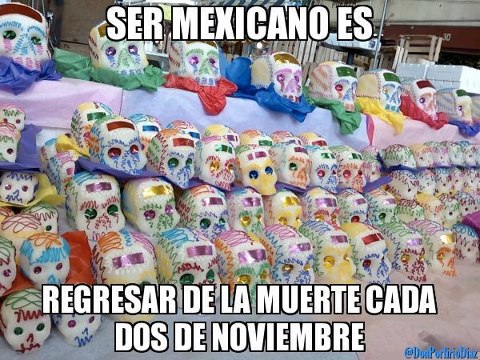
“To be Mexican is to come back from the dead every November 2nd”
This coming week is a wonderful time in Mazatlán, with altars to departed loved ones set up in homes and businesses, “dead bread” (pan de muerto) for sale in the bakeries, and sugar skulls everywhere. Soon we’ll be reading the calaveritas in the newspaper, in homage to (or roasting of) politicians and celebrities.
I thought it a good time to share with you a previous post we did about Day of the Dead festivities in Mazatlán: Day of the Dead in Mazatlan
The callejoneada (parade with the Catrinas past the altars with the donkey-pulled beer kegs) will be Thursday night starting in the Plazuela Machado at 8 pm. RIGHT NOW the Municipal Center for the Arts, Cecilia Sanchez Duarte, Glen Rogers and others are working on cool steamroll prints of Catrinas and other images to be carried in the callejoneada. If you are on Facebook you can check out photos here.
Please be sure to get out and enjoy all our beautiful port has to offer! Day of the Dead is one of our favorite local festivities!
What an absolutely beautiful, perfect day today in Mazatlán! Families picnicking on the beach, kids playing in the surf, and every kid with a boogie or surf board out, hopeful — the final day of Surf Nationals 2012! It’s a tough life here. We had some fried chicken and mashed potatoes from Puro Pollo, some ceviche, and camp chairs under a big shady umbrella on the beach. Another absolutely perfect Sunday in Mazatlán. Enjoy the slideshow!
The fiestas patrias this week in Mazatlán are always fun. Independence Day is the annual festival that involves the Grito. It is not to be confused with Revolution Day (Nov. 20), Constitution Day (Feb. 5), or Cinco de Mayo. This one is Independence Day, September 16, the day of “¡Viva México!”
In Mazatlán there is always a huge parade on the 16th, involving military elements and school kids. It is well worth attending. More on the parade below.
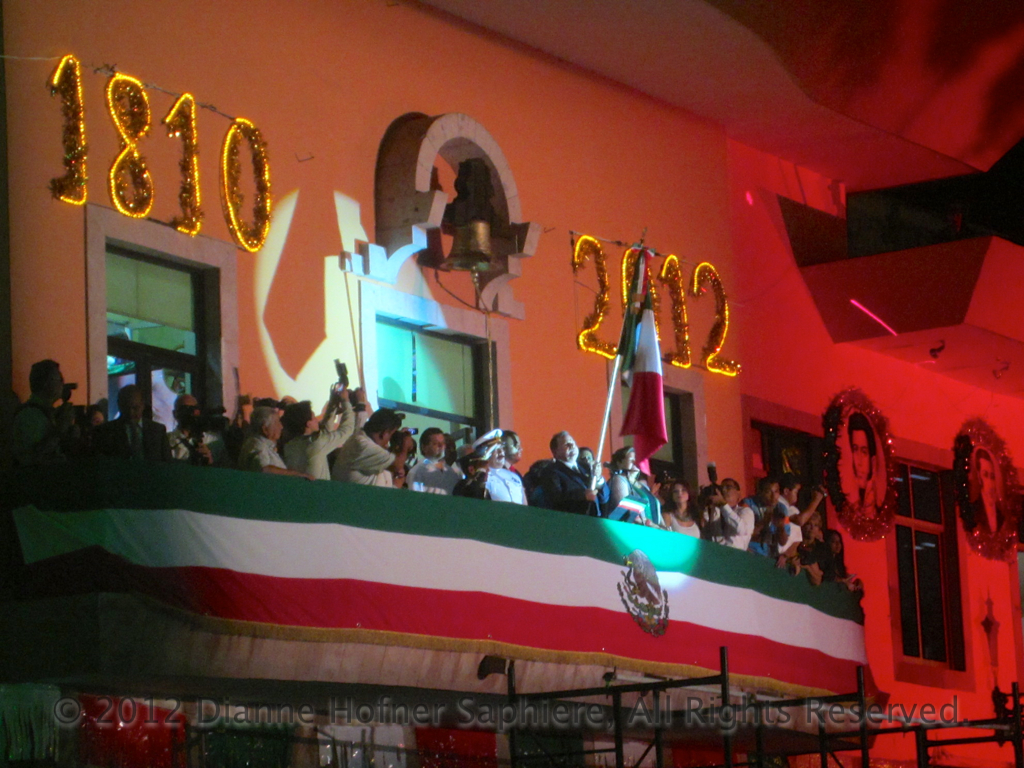
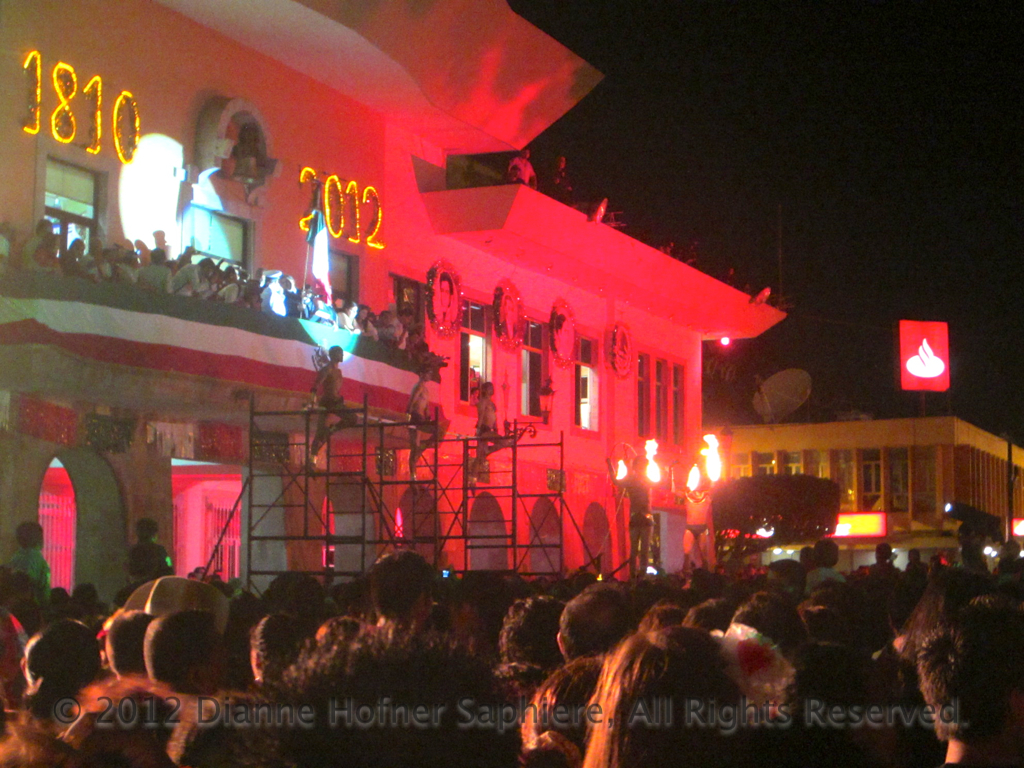
And, there is our annual favorite, the events leading up to the “grito” on the night of the 15th. Always held in the Plaza República, this year’s events were exceptionally well scripted and performed, and most definitely of international caliber. We are truly blessed to live in this gorgeous port. Where else can you attend events like this, for free, feel very safe, and have front-row seats? We parked a few blocks away, took a nice stroll over, and enjoyed ourselves immensely. The lights in the Plaza were absolutely gorgeous.
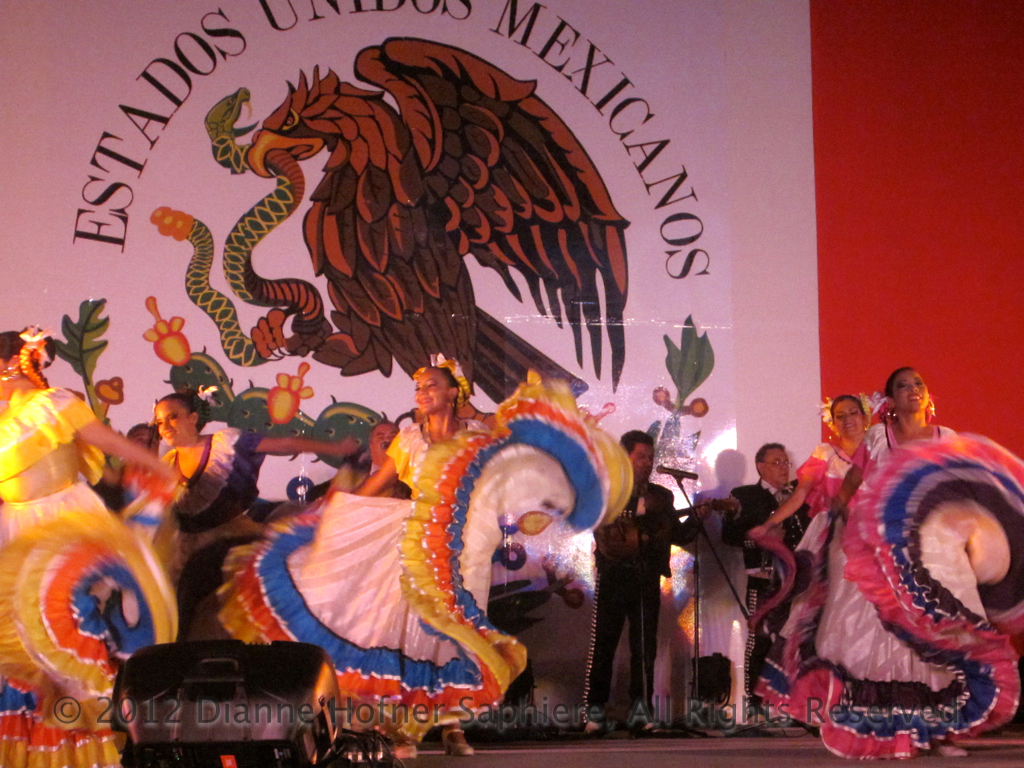
Though we didn’t show up till about 9:15, events in the Plaza República began at 6:00 pm. When we arrived the incredibly talented young people of the Ballet Folklórico had already been dancing for an hour. We showed up in time to see one of our favorite local bands, La Falsa Orchesta Cubana (from that small island….Isla de la Piedra ;)).
There was a Master of Ceremonies and a clown, Trikis Trakes, who kept the crowd engaged while the stage was rearranged between musical acts.
We were treated to a selection of “Playback” numbers, the term they use here for lip-synching to retro songs. It was fun, as usual. Definitely a crowd favorite. The young dancers did a truly outstanding job.
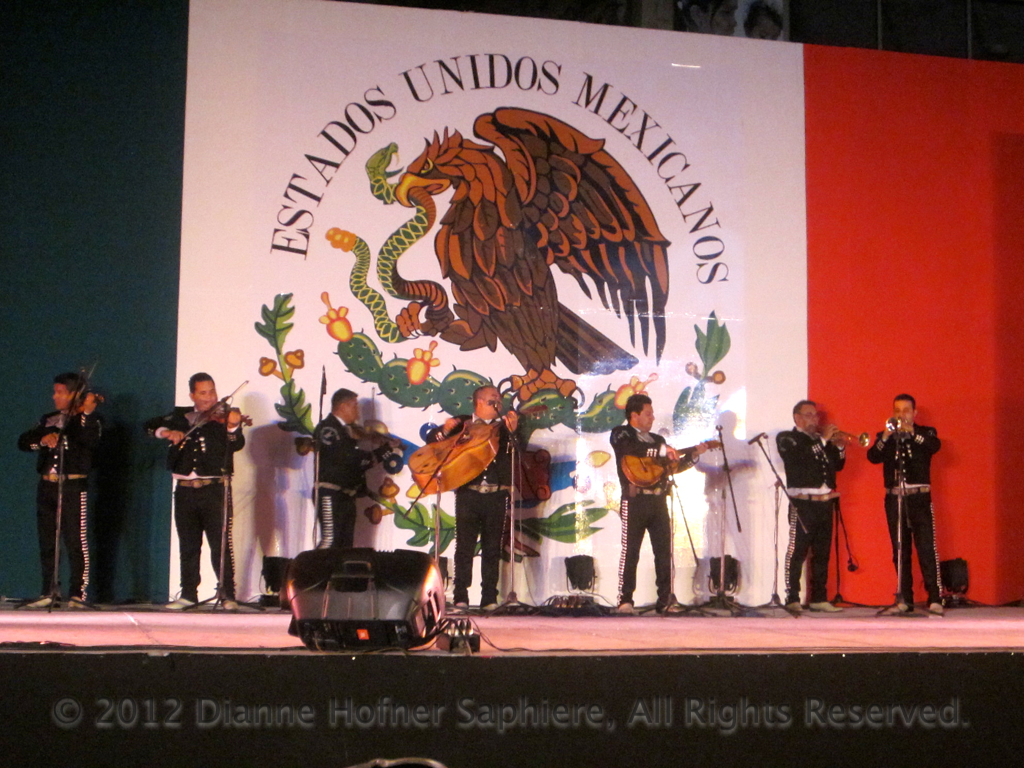
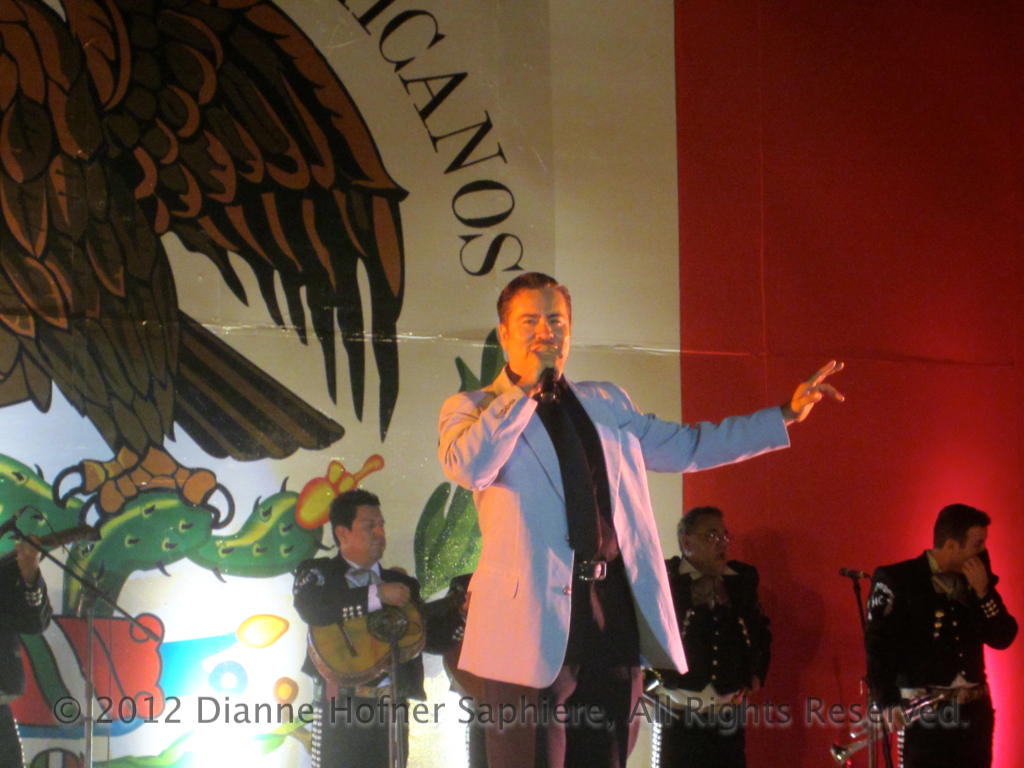
Next up was Mariachi Continental, our local Mazatleco mariachi group. Very happily for us, renowned Mazatlán-born tenor Oscar Gomez was in town (he’d come to star in a Pedro Infante tribute earlier in the week). He accompanied Mariachi Continental on a few songs and it was just incredible. I swear the man carried a note for nearly a minute!
Again, the young dancers blew our socks off! And by now they’d been dancing nearly two hours! Hats off to them and to their teacher!
The only slight misstep of the evening occurred about 10 minutes till eleven, when the Banda de Guerra marched into the Plaza, on time no doubt, but their drums and bugles interrupted the climactic final song of Oscar Gomez, Mariachi Continental and the dance troupe.
The Banda de Guerra of course brought in the flag, taking it up inside to the city hall. The boxing match telecast live from Las Vegas was on the TV inside, and even for the arrival of the national flag, that TV wasn’t turned off.
Mayor Higuera brought the flag out on the balcony in order to deliver his official Grito for the year.
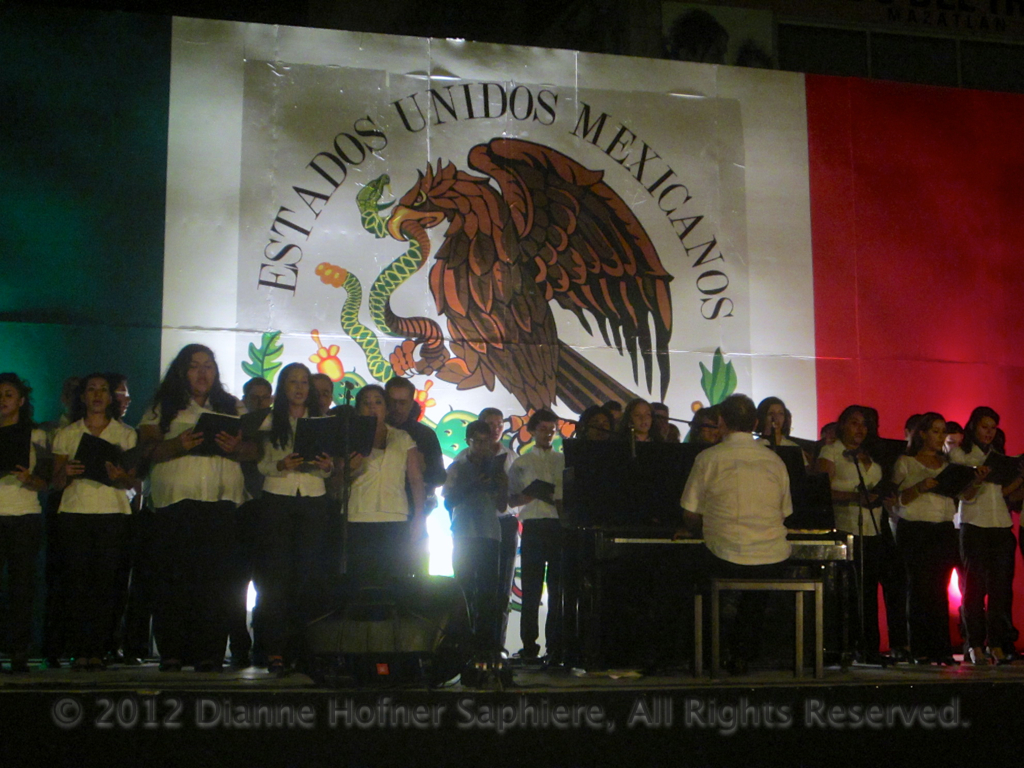
The Chorus of the Angela Peralta Theater sang the national anthem, also accompanied by the Banda de Guerra.
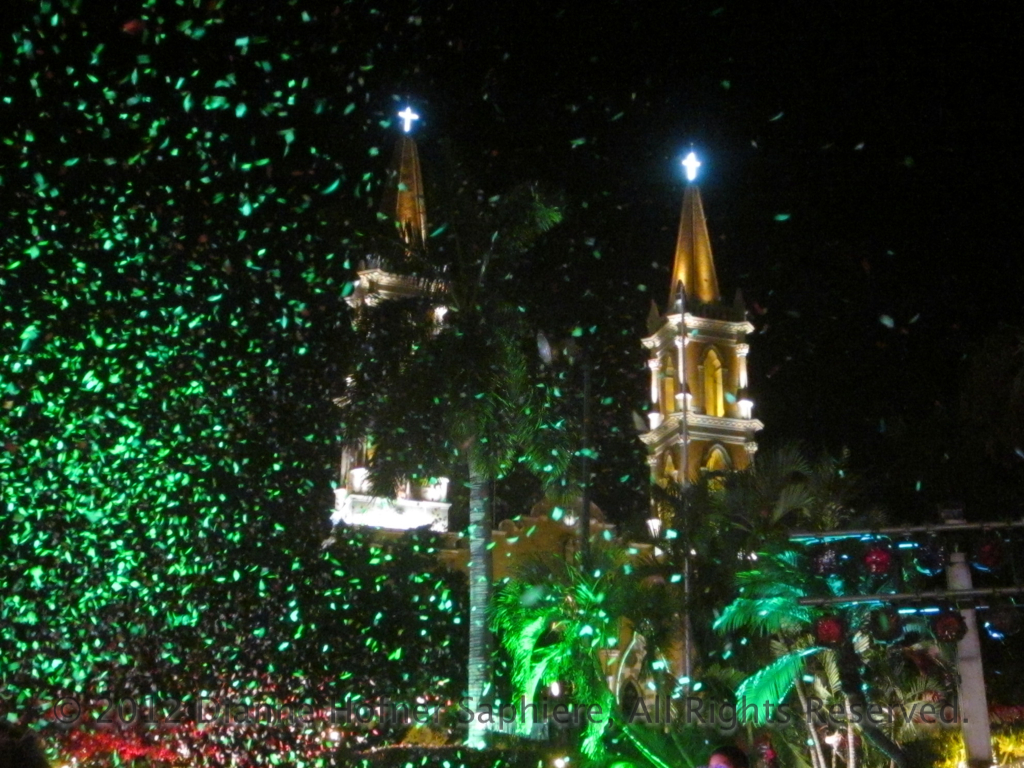
Confetti was released twice during the night, once after the Grito and again after the national anthem. It was so beautiful against the lights.
The official ceremony was followed by an aerial and fire dance performance, conducted just in front of the officials on the balcony of city hall.
Then a terrific fireworks display over the cathedral. The night was still, so the fireworks were gorgeous though there was little wind to clear the smoke quickly.
The final act of the evening was when the real crowds started to arrive: a free concert by perhaps the most popular local banda, Los Porteños.
Heading out of the Plaza República was really beautiful. By now the place was packed, and in the darkness the lighting really glowed.
The events in the Plaza República were vendor-free, so we were thirsty afterwards. We strolled over to the Plazuela Machado for a drink before heading home. The plazuela was jam-packed with families, young people, and groups of adult friends. It was a gorgeous evening there as well.
—
Independence Day is an asueto, day off work, and usually involves a puente or long weekend. It commemorates Mexico’s fight for independence from Spain. It is not to be confused with:
Revolution Day the on November 20 (which is also an asueto/day off work), commemorating 1920 start of the movement to overthrow dictator Porfirio Díaz, which led to a decade of civil war and the constitution of 1917 and a new president, Obregón, in 1920 .
Constitution Day February 5 (1857 and 1917 constitutions, day off work the first Monday of February), or the popular gringo and Mexican-American holiday (which is now resurging here as well):
Cinco de Mayo (not a day off of work or día de asueto), which marks Mexico’s independence from France (in Puebla in 1862, President Benito Juarez and General Zaragoza).
El Grito (de Dolores), the Cry of Independence, is an iconic aspect of Mexican Independence Day. It was shouted by Padre Hidalgo from the small town of Dolores near Guanajuato in 1810, and is shouted in most towns and cities of México each year at 11:00 pm on the night of September 15. “¡Viva México!
The annual Independence Day Parade or Desfile Cívico-Militar in Mazatlán usually starts at 9:00 am on the 16th from the Fisherman’s Monument. It includes school kids dressed up, marching bands, and members of the military. This year it included 3000 participants: 1000 members of the Mexican Army’s 8th Infantry Batallion, 400 members of the 4th Naval Zone squadrons, students from eight junior highs, seven high schools and the Nautical School (1500 students total), and horseback riders from the Charro Association. It was a two hour parade culminating at the Aquarium after going down Ave. del Mar and around town.
In 2010 Mexico commemorated its Bicentennial of Independence. We celebrated it in Guadalajara, capital of the state of Jalisco. You can see our blog post about that here.
Several of you have asked me to post information about Day of the Dead (Día de los Muertos) celebrations here in Mazatlán. This holiday is one of our favorites, and we’d love for you to enjoy it as much as we do!
Day of the Dead in Mazatlán is a happy, festive celebration that takes place November 1 and 2 — All Saints’ and All Souls’ Days in the Christian (particularly Roman Catholic) religious calendar.
The tradition goes back prior to the import (or imposition) of Christianity to the New World. As in other indigenous belief systems around the world from Asia to Africa to Latin America, Mazatlecos believe that once a year departed family members and friends come back to this world to visit their family and friends. And who wouldn’t want to take advantage of a once a year opportunity to party again with departed loved ones?!
Bakeries, Candy Stores and Artesanía Shops
One of the first signs that Day of the Dead is approaching is that you begin to see pan de muerto, bread of the dead, in the bakeries. These loaves of bread are often put on a family’s altar and then eaten after the ancestors have had their fill. You will also see calaveras or skulls made of sugar and amaranth, decorated with brightly colored frosting, for sale in the bakeries and candy stores. If you are visiting Mazatlán during the end of October or first days of November, be sure to stop in a bakery or two, and definitely visit a traditional candy store.
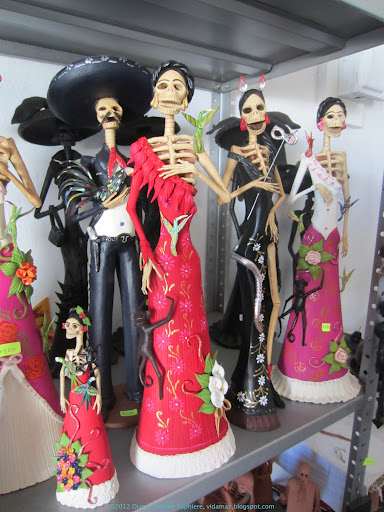
Also be sure to visit one of the many handicraft shops around town, as you will find wonderful Day of the Dead souvenirs, including traditional ceramic Katrinas and calaveras, skeletons representing people working in all sorts of different professions and engaging in sports and other hobbies. You’ll find lots of souvenirs to take home. Between the bakeries, candy stores, handicraft shops and even the fabric stores, you will find loads of wonderful gifts to take home.
Altars
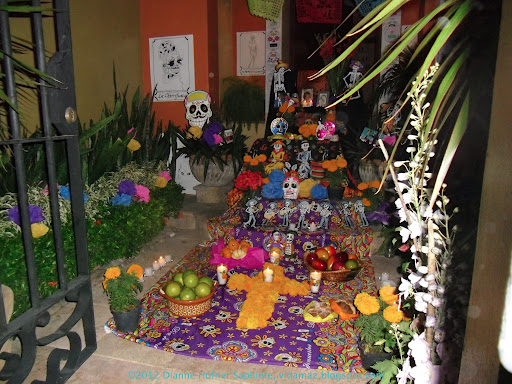
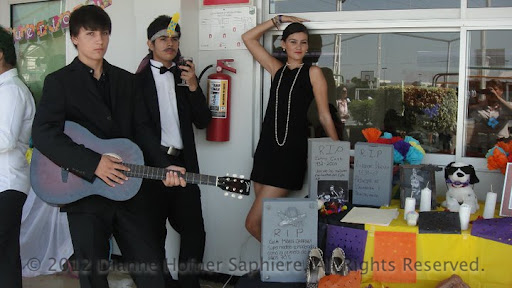
Next you will begin to see altares or family altars. Many families put together an altar to welcome back their departed loved ones.
On a table or a multi-tiered piling of crates, they put out photos of loved ones along with articles that belonged to them, cempasúchitl (marigold) flowers, tissue paper flowers, salt, candles, and water. Ofrendas or offerings of favorite foods or drink and items from favorite pastimes are also set out to entice the dead to stop in and stay a while.
There is an art to making an altar, and here in Mazatlán you will see everything from charmingly simple to very elaborate altars. Some years the Mayor’s Office or Secretary of Tourism have put out a map of the altars available for public viewing (usually the ones that will be visited during the callejoneada, below), so it’s worthwhile to check if a map’s available. If not, walking around the streets of historic downtown is definitely worth an afternoon or evening.
If you are in the Golden Zone, you will find that many hotels and other businesses set up altars, often for famous people that have passed on (i.e. Michael Jackson, Marilyn Monroe). Many of the altars are really heartwarming, showing incredible love and attention to detail.
The Callejoneada Parade, Evening of November 1st
Unlike celebrations with lengthier histories and more solemnic processions such as those in Michoacán or Oaxaca, Mazatlán’s Day of the Dead celebrations involve donkeys that pull gigantic kegs of free beer through the streets of downtown.
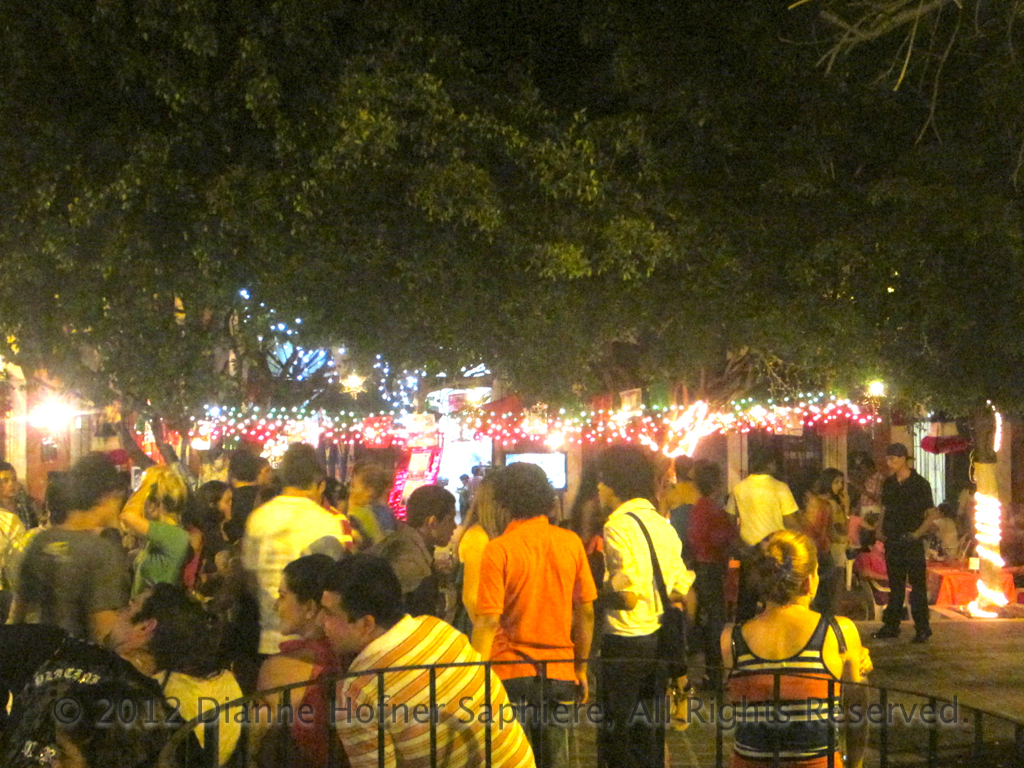
This callejoneada, a parade through the narrow streets of the Centro Histórico, takes place from about 6:30 pm on the evening of November 1st. It begins and ends in the Plazuela Machado, and afterwards families tend to hang out for cena or late night supper. Before the callejoneada there is frequently a performance event in the Angela Peralta theater. Many years there have also been public performances in the Plazuela Machado after the parade. Check schedulesor ask around to be sure what’s on when you’re here.
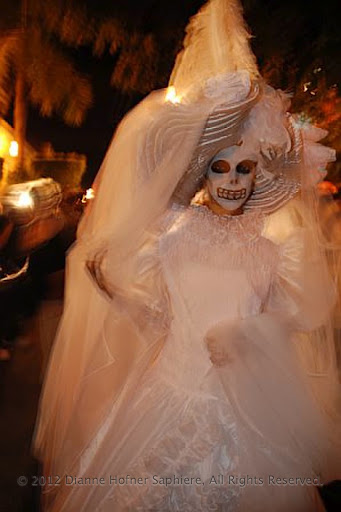
The white Katrina accompanies
children to the afterlife.
The black Katrina accompanies
adults to the afterlife.
The callejoneada is, for us, a not-to-be-missed event. Our very talented young dancers and actors from the Centro Municipal de Artedress in costumes.
Live bands join in.
Many in the crowd also wear skull masks or skeleton costumes, and a group of hundreds if not more than a thousand dances and sings its way through the streets of downtown, visiting the various altars to help the white and black Katrinas accompany the souls of those who have left this life during the year safely to the afterlife. Do not miss the callejoneada!
Wear comfortable shoes, do not hesitate to push your way up to the donkey cart for some free beer (wear clothes that you won’t mind having beer spilled on), have your camera set to night action mode, and be prepared to enjoy!
Perhaps you’d like to see a short video clip of the Day of the Dead parade?
Cemeteries
Be sure to visit the municipal cemetery or another, smaller one during Day of the Dead.
Most families will visit the graves of their ancestors to clean the gravesite, to set out fresh flowers, and, often, they take along a picnic, hire a band, and party a bit, right there in the cemetery!
While the children play, grandparents, uncles and aunties, Mom and Dad share a beer, eat some lunch, and reminisce about the dearly departed. I trust someone does this on my behalf some day!
As you approach the cemetery you will see flower shops and impromptu vendors selling all sorts of gorgeous flowers and decorations. Entering the cemetery, you will often see bands wandering around, hoping to be hired. Also, many workers are available to help tend to a tombstone, or simply carry water. It’s well worth a couple of hours. Most years we have been invited by friends to join their celebrations, though the first year we were here strangers invited us to join them.
“Roasting” the Living: Newspapers and School Fairs
Another tradition this time of year is to celebrate the living as if they were dead. I believe this somehow reminds us all that we are on a one-way path through life.
The first time I witnessed this was at my son’s school. We walked in to find fake gravestones lining the walkways, with the names of (living!) teachers on the headstones! Each headstone contained a calavera or funny poem about the teacher. You will see many of these calavera poems in the newspaper, written about major politicians or celebrities in the news.
Friends will have the names of their (living) friends put on one of the sugar skulls, so that the friends can “eat their own death.” To someone not familiar with these practices it can seem a bit eerie, but it’s all done in good humor and filled with affection. One year at our son’s school they did “living altars,” where the kids acted out famous dead people.
Halloween
The Catholic diocese here tends to encourage people to celebrate Day of the Dead and very much discourages any celebration of Halloween, often referring to it as a witch’s or devil’s holiday. In Mazatlán, however, you will see children dress up in costumes and go trick or treating at the Gran Plaza or within El Cid residential development, usually on the evening of October 31.
Young adults, from junior high school on up, hold costume parties for Halloween.
Most of the dance clubs also hold Halloween parties. You’ll also see a lot of very sexily costumed young people waiting in line outside the clubs to celebrate a version of Halloween that, in my day, had not yet been invented 😉
We do hope you’ll enjoy Day of the Dead (and Halloween), Mazatlán style!
The other really terrific Children’s Day event in which we participated last weekend was a huge festival for local kids from the more marginalized neighborhoods of town. It was held at the Canchas Juarez on Sunday. (I already posted about the terrific opening of the Marco Polo Park last Monday, which was Children’s Day here in Mexico.)
The festival at the Deportivas Juarez was very well organized: well-publicized, a published schedule, lots of organizers wearing colored shirts, Scouts present to help out. There were people at the park collecting donations of toys and gifts all week leading up to the event. They had a clown as a Master of Ceremonies who was just terrific, and the mayor and his wife and the full Cabildo Infantil 2012 showed up. The whole Juarez complex, by the way, is amazingly state-of-the-art: green grass on the fields, covered bleachers, large clean toilet facilities. Kudos to the city and the local business sponsors for building this new park for our kids!
The children on Sunday had so many terrific activities in which they could participate! There were sports events such as running races on the track, baseball games, soccer and American football games. There were carnaval-type games and face painting. There was music and dancing. There were gifts and prizes, from new bicycles and soccer balls to dolls and toys and books. We made a human fish and a helicopter arrived to take photos, to the delight of the kids. But the biggest hit of this party, hands-down, were the half dozen or so swimming pools that they had brought in and filled on-site. Some of the kids didn’t want to get out of those pools even to run and wave at the helicopter (though the helicopter was a HUGE hit)!
The event was organized by a long list of local grassroots organizations, and sponsored by a large number of local businesses. About 1500 kids had a really terrific time; an amazing turnout for a first-time-ever event, I thought. I was so proud to be involved. There were so many giggles and delighted faces.
Take a look and enjoy the slideshow above! If you’d rather see larger photos, click through to SmugMug. Some videos I took of the event have also been posted to YouTube, if you are curious. I’m sure they’ll be edited together in time; right now they are just raw footage. First one is here, and you can see there are about a dozen more if you’re trying to find something in particular. Enjoy!














 ¡VidaMaz!