You may recall that last month we went to Durango, prior to the road opening. This weekend we had to go again. Thank GOODNESS the road was open! The Baluarte Bridge is incredible, and the entire drive is unbelievably gorgeous and easy (three hours door to door). Greg will write more about that in a separate post.
We were heartbroken to miss the callejoneada for Day of the Dead here in Mazatlán, but we thought we’d share with you a glimpse of what Día de los Muertos looks like elsewhere. In Durango the cemeteries were full of people, of course—flowers, cleaning, bands, praying and partying. The city also hosted a hot air balloon festival. In the main plaza, in front of the cathedral, there was a large “Day of the Dead” display set up. It contained a dozen or more life-sized papier maché katrinas and other scenes, plus a few stages for performances.
Durango was completely different this time, primarily because last time we were there it was the height of their major annual cultural festival. Streets, plazas and restaurants were much less crowded this time around. Below are some photos we took this trip—a favorite new restaurant, some street scenes, and the plaza display. Click any photo to enlarge or view a slide show.
Best enchiladas moles since we were in Oaxaca
This is the hole-in-the-wall restaurant where we ate the enchiladas, out of this world pozole and birria. Around the corner from the Hotel Gobernador.
Not sure what happened to those enchiladas 😉
The main plaza in Durango is decked out with katrinas
The main plaza in Durango is decked out with katrinas
The balloon man…
Looking from the stage towards the cathedral
Children and adults alike here dress like cowboys. I almost felt like I was back in Arizona!
The shoe shine guys really get a workout here in Durango.
Katrina in the main plaza
Katrina in the main plaza
Katrina in the main plaza
Katrina in the main plaza
Katrina in the main plaza
Papel picado hanging over the stage
The crowd watching the stage
Mariachis ready to play along 20 de Noviembre street
Love this church
Very cool tree stump on a curb
La Virgen de Guadalupe in tilework
A great old neon down the street from Zorrita.
On Friday night Greg and I wandered back down to the plaza while Danny studied for his test, and there was a children’s folkloric dance group performing. What was out of the ordinary about this one was that the kids all dressed up as calacas—skeletons—and in glow-in-the-dark costumes. The stage was lit with black lights, so it was a pretty cool effect. We enjoyed it a lot.
Just prior to the performance, the little kids had fun posing for my camera. During the performance, shots were of course very challenging, as it was very dark and the kids were constantly moving. They danced to some songs you’d expect—Michael Jackson’s “Thriller,” for example—and they also took us on a tour around México.
I put together a short (three minute) video of the performance. I trust you’ll enjoy watching it. The kids had soooo much fun in their costumes. They knew they looked great.
On the pedestrian street to the left of the cathedral, just down from Hostal de las Monjas and across the street from our favorite little cenaduría, El Parcero Tacos Bar, is a large funeral home, Funerales Hernández. They had an altar to Jenni Rivera that was larger and more superb than ANY I have EVER laid my eyes on. They called it a “Monumental Altar de Muertos.” It contained dozens of life-sized katrinas, ceramic and sugar skulls, antique and artesenal chachkes, Jenni Rivera music playing (not too loud), a mini disco ball for effect, and gorgeous paper work. Just take a look:
Closeup of some of the painted ceramic skulls, below, and sugar skulls, above
Close-up of some of the musicians and the large central photo of Jenni
Check out the dancing katrinas, the musician katrinas…
The papel picado hanging above the Monumental Altar
The flowers are real! The candles are real! Dozens of skulls of every sort
The sign out front
The left side of the Monumental Altar. Look closely!
On our way back to the hotel, we walked by the old Palacio Municipal. It was all decorated for Day of the Dead, too. Those photos are below.
The huge central altar in the Palacio Municipal
One of Greg’s favorites, a charicature
One of the many papier maché katrinas
One of the many papier maché katrinas
Pan de muerto/”dead bread” used as candle holders
Pan de muerto/”dead bread” used as candle holders
Papel picado hanging over the altar, from the second floor ceiling
Well, since the SATs (college entrance exam for many schools in the USA) are held in Mazatlán only in the springtime, we drove to Durango this weekend so Danny could take the test. The last two times we drove that route, it took 3 and 3 1/2 hours for us to get from Mazatlán to Durango. This time, on Friday, it took 5 1/2! Granted, it was raining and foggy, and there was a whole lot of truck traffic. But we counted only 18 tunnels and 12 bridges that we crossed. We would swear that more of the new highway was open the last times we went. Perhaps more has closed due to damage from the recent heavy rains?
Needless to say, we arrived on Friday evening much later than we would have preferred, since we had to get up at the crack of dawn to get Danny to the test. But we had a great weekend! Unbeknownst to us, Durango is celebrating its 450th birthday (since summer), and right now is the Festival Cultural Revueltas—music, literature, dancing, theater. The streets were packed and all were having a grand time. While we have seen a lot of folkloric dancing in our day, it was the first time we’d witnessed ballet folkloric danced to banda music! (I post a short video below, if you’d care to see.)
We stayed in a beautiful hotel very near the American School, where the test was held—the Hotel Gobernador. Click on any photo below to enlarge it or view a slideshow.
Hotel Gobernador registration desk
Comfy corner of the lobby
View of the café
Outdoor seating in the café
View of the swimming pool
View of the lobby
Chandelier from underneath
Huge wooden chandeliers in the lobby
While Danny took the test, Greg and I spent a whopping 20 pesos to go round-trip on the teleférico, or gondola, one of four in Mexico. What a gorgeous day we had, and such incredible views! At the top of the route is the Santuario de Nuestra Señora de los Remedios, a beautiful, small, and very old church, dating back to the founding of the city itself (and worship at the site by native Mexicans even earlier). (Click on any photo below to view it larger or view a slideshow.)
Sign for the gondola
Sign for the gondola
Sign for the teleférico
Looking from the gondola
View looking down from the gondola
View looking down from the gondola
View of the city from up top
The teleférico
Nuestra Señora de los Remedios
Crucifix in the sanctuary
Inside the church
Bell tower
View of the city from up top
New cross to be built up top the cerro
On top of the cerro, a hole for the new cross?
View from up top
Kids inside the gondola
Sign for the church
Us up top the hill
At the top of the gondola, a group of folkloric dancers were performing. Many of them were the same dancers that we’d happen to see again that evening in the Plaza de Armas. (Click on any photo below to view it larger or view a slideshow.)
Folkloric dancers
Duck quickly!
Hello, lady!
Folkloric dancers
Acting out a funeral
Acting out a funeral
Acting out a funeral
Ready for action
The smallest dancer
Once Danny was finished with the test, we ate lunch at an incredible restaurant, Esquilón (Hidalgo #411, tel 618-811-1632). The space was awesome, the food was very, very good, and they have loads of private party areas. We highly recommend it. (Click on any photo below to view it larger or view a slideshow.)
Main dining room
Ceiling decorations
The front room
The patio
Patio
Our appetizer
A party room
Upstairs party room
View from upstairs
View from upstairs
Dianne’s lunch
Danny’s lunch
Greg’s lunch
Our dessert
Goofy and the dessert
Private dining room
Us on the patio
As part of the festival there was a handicraft market going on. As always, I was interested in the native peoples. There was a lovely Huichol couple doing beadwork, and several Tepehuanos sewing barbasca de pino/pine needle basketry. While we weren’t able to make it this trip, there is an Artesanías Tepehuana (O’dam) at Tuxpan 227, cel. 618-151-9862 or 618-116-8849. We also learned that there is an Indigenous Art and Culture of Durango Cooperative at Isla Acerralvo 211, cel. 618-171-9661 that sounds well worth visiting. Danny was able to buy a nice birthday gift for his friend, made of animal skin, so he was also quite happy. (Click on any photo below to view it larger or view a slideshow.)
Huichol couple
Huichol couple from the rear
Huichol lady beading
Tepehuano gentleman doing basketry
Tepehuano gentleman doing basketry
Tepehuano gentleman doing basketry
Our favorite part of Durango, always, has been the beautiful architecture. The climate there seems to be so much more forgiving than ours here in Mazatlán, and they light the buildings up so gorgeously at night! It is breathtaking.
An old doorway
Plaza IV Siglo
Church near our hotel
Church near our hotel
Night lighting
Night lighting
Cathedral and main square fountain
Siglo IV at night
Night lighting
Night lighting
Night lighting
Night lighting
Cathedral at night
Night lighting
Cathedral at night
Cathedral at night
Finally, let me share with you some various shots of children playing and other city scenes.
Bicycle
Ready and waiting
Playing in the fountains
Old convent hotel
Door to the old convent hotel
Great cena place!
Cucumber juice and tequila!
Cenando
Night lighting
Night lighting
Once the highway and the Puente Baluarte are truly open, they are predicting that the trip to Durango will take 2 1/2 hours. Even at 4 hours, it is well worth a visit!
My heart goes out to all the fresh water shrimpers and shrimp farmers in our fair state. As you have no doubt read, “Early Mortality Syndrome” has killed 90%-98% of the estuary shrimp in Sinaloa, robbing so many local families of their livelihoods. It is heartbreaking. This is the same disease that has decimated shrimp populations in much of Southeast Asia (China, Thailand, Vietnam) as well as Sonora and Nayarit.
Sinaloa has a long and proud history of both deep water and estuary shrimping. Our state produced 50 thousand tons of shrimp in 2011, making us the main producer of shellfish in Mexico.
This is not the first time such a disaster has occurred. White Spot Syndrome and Taura Syndrome are two diseases that have previously wiped out the year’s shrimp harvest, and such aquaculture diseases seem to be increasingly common worldwide.
Let’s hope the deep water shrimpers do better! I know we all thoroughly enjoyed the “necklace on the bay” when all the boats headed out to sea on Friday night.
Here’s the original Frasca post:
—
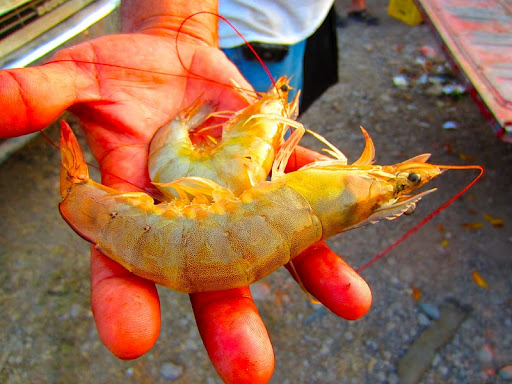
We had a FANTASTIC afternoon and evening learning about shrimping with a cast net/atarraya in the estuaries of Agua Verde, which is between Caimanero and El Rosario. We returned home with heartfelt smiles, new friends, 5 kilos of huge fresh shrimp (for which we paid about 7 bucks), a bunch of fresh crab (which our new fishermen friends gave us for free), and a bucketload of end-of-season mangoes ($4 for a crate full). ¡¡Viva Sinaloa y los Sinaloenses!!!!!!
We set out late Saturday afternoon with our compadres, Jorge and Silvia, to attend the first annual “Festival de la Frasca.” While Jorge told me “frasca” is not a word, and that I surely must be trying to say “zafra” or “open season,” local people tell us it is a southern Sinaloan term meaning “to capture shrimp from the estuary.”
The Festival de la Frasca was supposed to be a food fest with live music. But as usual they were running late setting up, and before we could really get into the party we found much more exciting things calling us.
Just one month ago we had driven this very same road, but shrimp season is now open, and it was an even more wonderful place! I HIGHLY recommend you visit during shrimping season! While the season lasts 6 months, the first few weeks are supposedly the best, as the shrimp and the shrimpers are the most plentiful.
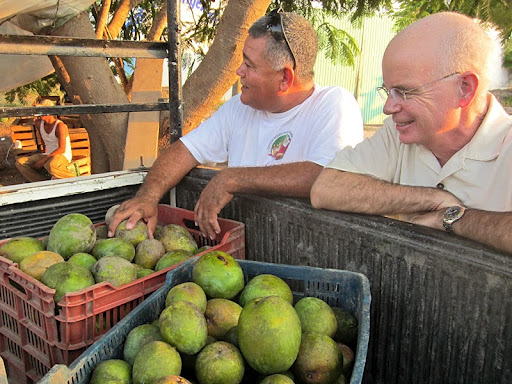
As we drove in we saw men with cast nets (atarrayas) everywhere. Though mango season has finished, it is now the height of the shrimping season, and they have already planted tomatoes. After tomato season will come chile season, and so goes the year here.
Shrimp season is huge. We were told that opening day is like Carnaval—wall-to-wall people everywhere, with families fishing, picnicking and partying all night long. Family members come from all over the region back to Caimanero and Agua Verde to help with the shrimping, and to perform their obligations under the cooperativa(to work a minimum of so many hours and to capture a minimum of so many kilos). Women and children hang out with the fishermen, so it feels like life transfers from town to the estuary during this time.
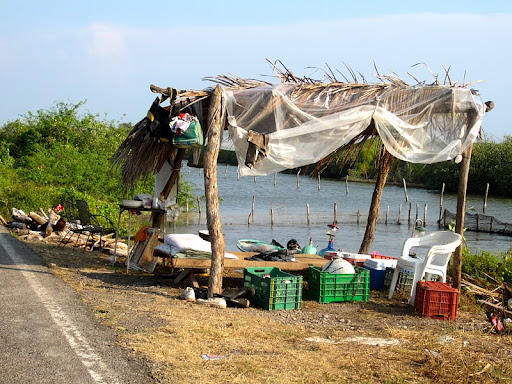
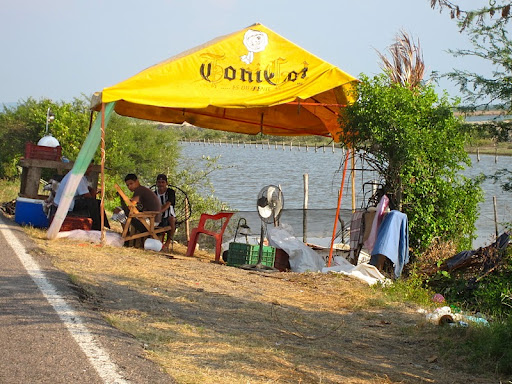
Beside the road that just two weeks ago looked so very different we saw little houses or shelters, many of them housing the shrimpers. A standard shelter like the one shown here has one or two lights powered by a propane tank, a plastic shelter for rain, chairs, a way to cook (usually a fire pit), a radio and a cell phone. As you can see, they sit just off the road. Can you imagine spending the night there with cars, trucks, and motorcycles coming by a few feet away from you all night?
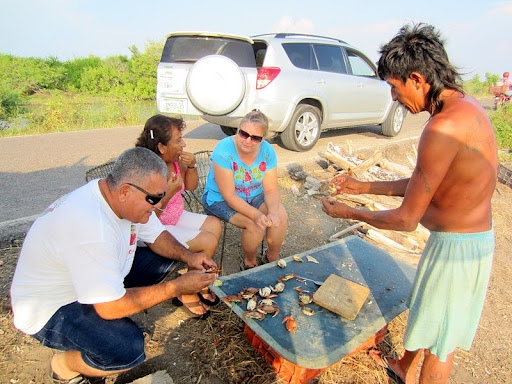
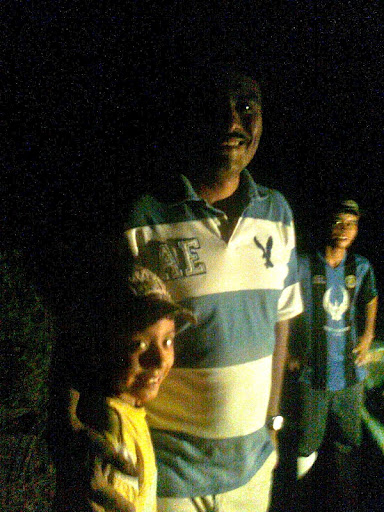
We greeted one of these guys, Rodolfo, at one of the stands, and he urged us to pull over and join him. So we did. The night crew, including Marco (who lives in Mazatlán but returns home for shrimp season), his 8 year old son and his 17 year old nephew, plus one other man, were just pulling up as we arrived.
Rodolfo proceeded to feed us a whole mess of fresh crab and shrimp, beside the road, in the fresh breeze, looking out over the estuary. La vida dura. While I well know, from living in Japan, how to crack open a fresh crab, scrape out the lungs, and eat the juicy brain and meat, this fisherman really enjoyed teaching us, and my comadre, Silvia, really enjoyed learning.
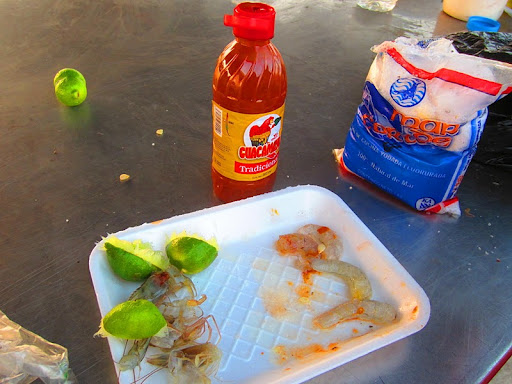
Here we also ate shrimp crudo with salt and lime (my all-time favorite—huge prawns, still wiggling; oh yum!), but he also cooked some for Silvia in a pot of broth.
We stayed here about an hour, chatting, feasting and just generally relaxing. We bought our first few kilos of shrimp, as well as receiving a huge bagful of cooked crab.
There were also many changueros, who we’ve heard about since arriving in Mazatlán, but this was the first time we met a few. They are estuary shrimpers who are not members of a cooperativa. They catch shrimp but legally are not supposed to be doing so. Many of the changueros used purina (shrimp chow) to get the shrimp up to the surface. None of the cooperativa fishermen we met used purina. They were very proud to explain to us that their shrimp were the purest.
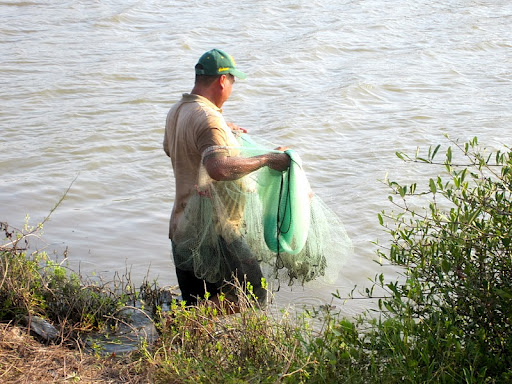
Below is a video of one shrimper casting a net, and his wife helping him take out the shrimp and put them into a bucket.
After getting back in the car, we made the rounds of several cooperativas. At the first one the view was spectacular.
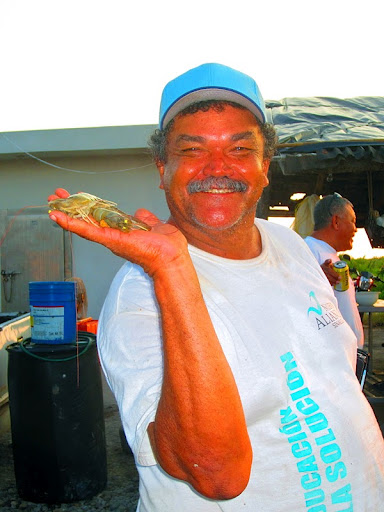
Rodrigo, a man we met there, sold us some more live shrimp. At left is his photo, and below a video of some of the shrimp wishing they could run away.
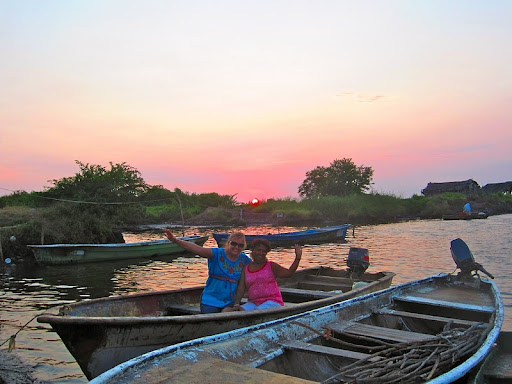
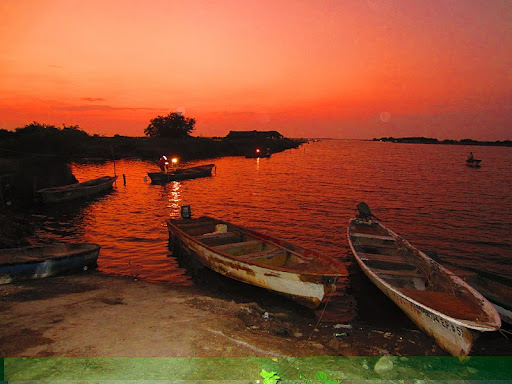
We had arrived here just in time for sunset. The sky and the water glowed. People were all so friendly, open and hospitable that it was amazing. Everyone was eager to talk, to explain this long Sinaloan shrimping tradition, and to share their catch of the day with us. To me this frasca tradition is soooo important; it’s Sinaloa’s history, and the if not some of the best shrimp in the world. And tons of it are harvested BY HAND here each year and shipped worldwide. I know such shrimping used to happen right here in Mazatlán; even next to Hotel Playa was an estuary (no wonder Zona Dorada floods).
The fishermen brought out packets of salt, fresh limes and bottles of salsa, and urged us to eat from their catch to our hearts’ content. Alfresco dining overlooking the estuary with friendly, happy, relaxed, knowledgable people; it was a wonderful afternoon. Every boy we met knew how to cast a net. They seem to start as young as seven or eight.
“Girls just wanna have fun…”
We also sat here for quite a long time, again feasting on raw shrimp (no cooked ones this time), and watching the guys cast their nets in the scenic little harbor.
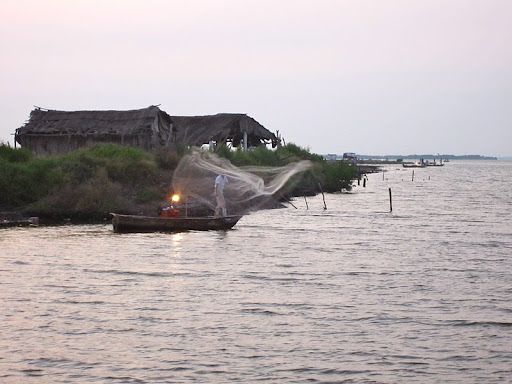
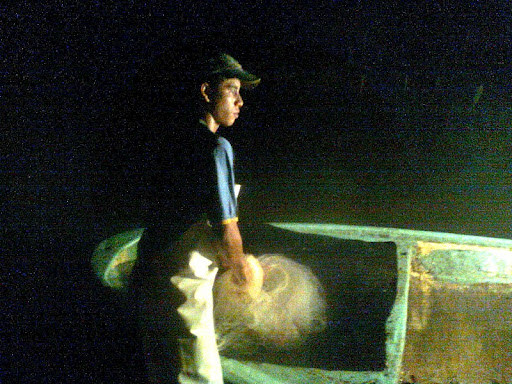
The video below shows a guy casting his net from a panga, so you can see that as well as the earth-bound approach shown above.
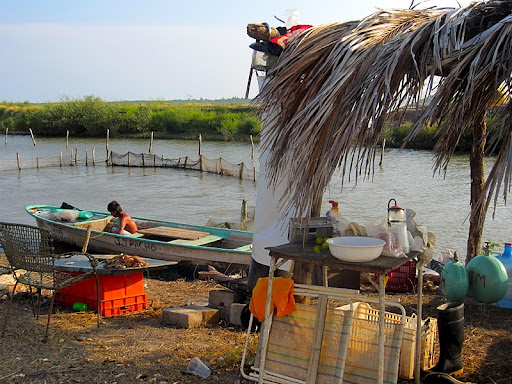
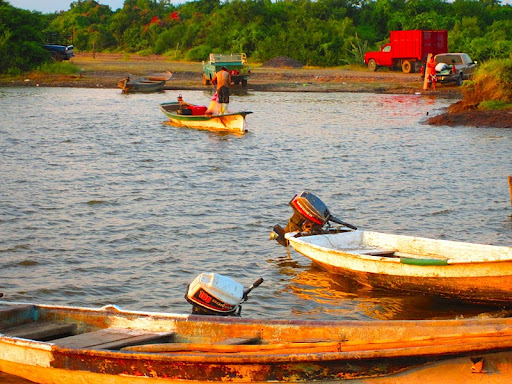
The pangas or small fishing boats go out with two guys normally, one remero or rower, and one atarrayero or net caster. Most of the estuary is only hip- or waist-deep, so the remero carries a long stick or remo and basically pushes the panga along, similar to the movement of the gondolas in Venice.
Below is a short clip of the gentleman at left rowing.
There are various cooperativas to which the shrimpers belong. This drive out to one of them was really something — estuary on either side of the road, with loads of lit pangas all around.
Below is a video, so you can get a better feel for this road-with-water-on-both-sides drive.
After visiting some very cool places and meeting lots of wonderful people, we ended up spending another couple of hours sitting with Marco and his family. It was so peaceful there, and so very pleasant. Excuse the poorer quality of the photos from here on. The batteries on our camera died, so the remaining photos are taken with our phone.
On the way out we stopped at one last cooperative, this one the largest we’d seen. Here they had a large building or warehouse, surrounded by dozens of pangasfishing. Families were sitting and standing everywhere, waiting for their husbands, fathers, boyfriends and brothers to come in with their catch.
A semi-truck full of ice was waiting nearby.
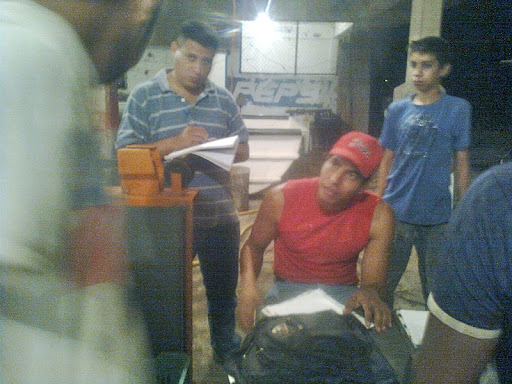
A group of men with a scale and ledgers was registering incoming shrimp.
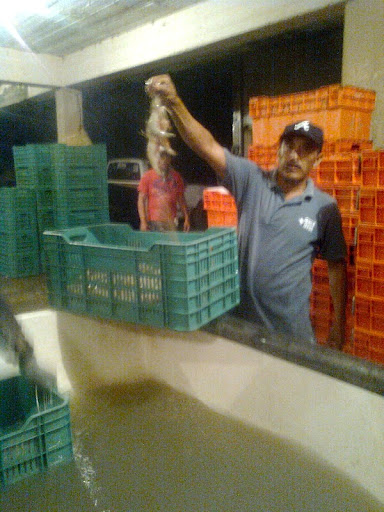
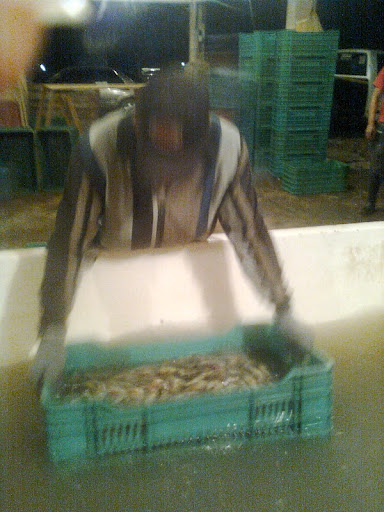
After dipping the bins full of shrimp into ice water, they placed the bins in the refrigerated truck where they are covered with ice and then taken to Mazatlán for sorting, packing and export.
It was at this last cooperative that we also saw our youngest atarrayero, this boy of about eight, at left.
We kept telling our friends that this was an otro mundo, or other world, that most guests in Mazatlán don’t know anything about or understand. We learned a lot about how the cooperativas function and about the life of a shrimper. We all got to eat live shrimp and enjoy some great company. The festival probably happened, but we know we had a lot more fun hanging out with our friends and meeting new ones. We already have plans to go back. We will definitely go opening night next year for the carnaval de cameron, and will head out some month just before the full moon when the really large shrimp are said to be much more plentiful and easier to catch. To be able to find Rodolfo and Marco’s shelter, we put their spot into our GPS and got their cell phone number. Stay tuned.
I took this photo during the Vía Crucis/Stations of the Cross of PAJUMA Mazatlán (Diocesan youth group). It is taken from the top of the lighthouse after the celebration of an open-air mass. Unfortunately this event does not happen every year.
When I arrived in México I couldn’t wait to participate in some of the incredible Holy Week religious events that I had so long heard about and seen—especially those that re-create Jesus’ long walk to the cross, the Via Dolorosa.
Because our son is still in school, we can’t travel while classes are in session. So, we take advantage of the school break to see some of this gorgeous country, and thus we are usually out of town and miss these great events locally. We have had the pleasure of participating in Holy Week ceremonies in the states of Chihuahua (Copper Canyon) with the Tarahumara, Zacatecas, Guanajuato, and Michoacán among a few others…
Do you know that there is a long tradition of beautiful Holy Week events right here in Mazatlán and the surrounding towns? Kindly, our friends over at Mazatlán Interactivo have agreed to permit us to use their photos and legwork to share with you some of what is available right here in southern Sinaloa.
The biggest events locally take place on Good Friday, which this year falls on March 29, 2013. The reenactments of the crucifixion are generally held late in the morning. These involve members of local parishes dressing up in period costume and acting out the 14 Stations of the Cross. This can get very graphic, with realistically simulated whipping, nailing of hands and feet, and bleeding. It is a beautiful and very moving sight to behold, and I highly recommend you experience it. The actors’ lines come directly from Bible verses.
In some communities there is also a Procession of Silence after darkness sets in on Good Friday. Members of the community process through the streets holding lit candles and religious relics. Often there is solemn music and the procession is followed by a mass.
Mazatlán: The flagellation of Jesus, image from PAJUMA
Mazatlán: Simon of Cyrene carries the cross, image from PAJUMA
Mazatlán: Jesus and the two thieves on the cross, in the baseball stadium, image from PAJUMA
Mazatlán: Attendance at this local religious event is usually very good, image from PAJUMA
Mazatlán: PAJUMA’s Via Crucis up the lighthouse hill, with open-air mass (won’t be held in 2013)
Mazatlán
Here in Mazatlán the Diocesan youth group annually conducts PAJUMA (Pascua Juveníl de Mazatlán) a three-day event that takes place in the baseball stadium Estadio Teodoro Mariscal on Maundy Thursday, Good Friday and Holy Saturday (March 28-30, 9 am – 7 pm each day). The full three days’ attendance is only 50 pesos, and there is no age limit on participation. The kids reenact the crucifixion of Christ there in the stadium and then, still fully dressed, process from the stadium to the cathedral.
MARCH 29, Good Friday, 5:00 pm Procession of Silence
PAJUMA participants will leave the baseball stadium at 5:00 and head out to the cathedral of the Immaculate Conception downtown, passing by the Aquarium, along the malecón (not many places in the world you can see a Way of the Cross enacted along the oceanfront!), the Fisherman’s Monument, and the pangas in Playa Norte. The procession will then turn left and go down through Plaza Zaragoza to the cathedral.
MARCH 30, Holy Saturday, 5:00 pm and 6:00 pm
Mass of the Resurrection of our Lord, and then the closing of Pascua Juveníl de Mazatlán. Entrance is free after 5:00.
Pretty much every church in the city will have Stations of the Cross on Good Friday, and a vigil with foot washing Thursday evening. Plus, of course, Easter mass. Some congregations reenact the Vía Crucis as well; check with your local parish. Mouseover a photo above to view the caption, or click on one to view the slideshow.
Cosalá (172 km from MZT) MARCH 29, Good Friday, 11:00 am Traditional Stations of the Cross, in the church
MARCH 29, Good Friday, 7:00 pm Procession of Silence
Mouseover a photo below to view the caption, or click on one to view the slideshow.
Cosalá Procession of Silence: photo from Mazatlán Interactivo
Cosalá Procession of Silence: photo from Mazatlán Interactivo
Cosalá Procession of Silence: photo from Mazatlán Interactivo
Cosalá Procession of Silence: photo from Mazatlán Interactivo
Cosalá Procession of Silence: photo from Mazatlán Interactivo
Cosalá Procession of Silence: photo from Mazatlán Interactivo
Cosalá Procession of Silence: photo from Mazatlán Interactivo
Cosalá Procession of Silence: photo from Mazatlán Interactivo
Cosalá Procession of Silence: photo from Mazatlán Interactivo
Cosalá Procession of Silence: photo from Mazatlán Interactivo
Malpica (Concordia; 38 km from MZT) MARCH 29, Good Friday, 11:00 am Reenactment of the crucifixion of Christ, starting from the moment Judas Iscariot kisses him and Jesus is apprehended into custody in the Garden of Gesthemane.
Viacrucis escénica en Malpica. Photo courtesy Mazatlán Interactivo
Matatán (Rosario; 82 km from MZT) MARCH 29, Good Friday, 11:00 am Reenactment of the crucifixion of Christ as he made his way to Golgotha.
Viacrucis representativa en San Ignacio. Photo courtesy Mazatlán Interactivo
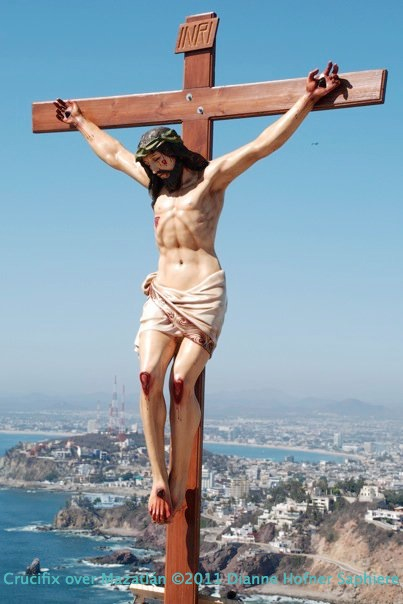
San Ignacio (111 km from MZT) Our good friends, the reason we ended up loving and living in Mazatlán in the first place, are originally from San Ignacio. It is a gorgeous small town with a huge image of Christ on the hill.
Many of you have asked for details about the spring equinox events this year in our World Heritage petroglyph site, Las Labradas. It is definitely growing and becoming more organized every year. Today the State Secretary of Tourism published this guide. You can search “Las Labradas” on this blog for driving instructions, details, photos and videos of past events. I am sooooo happy the local community is involved and beginning to benefit from this terrific event, and that it serves to preserve the heritage of this region.
For those of you who don’t read Spanish:
9-10: Meditation and yoga
9-2: Exposition and sale of organic products and regional handicrafts, guided tours, ulama (ancient ball game) demonstrations, natural medicine and individual cleansing (usually a curandero working with smoke and plants)
11-11:30: Ribbon cutting/official opening
11:30-12:30: Presentation of two books, “Las Labradas” and “The Tropic of Cancer” (History of southern Sinaloa)
11-1: Mayan Dances—Yoreme ceremonial ritual
1: Group cleansing
1-5: Restaurant service in Chicayota pueblo with traditional meal including ballusa and maguey flower.
For those of you who would like transportation to and from, Sinaloa Adventures tour agency, tel 191-20-05 (Laura Purón) is offering two packages, priced at 225 pesos and 390 pesos respectively.

















 ¡VidaMaz!