Three Years in Mexico with a Junior High School Student


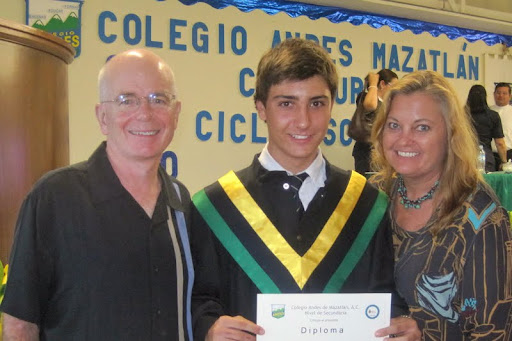
We moved here three years ago. Today our son graduated from secundaria/junior high/middle school. He has gained enormously by living here, as have we.

When we moved here our son didn’t speak much Spanish; now he pretty much passes for Mazatleco if Mom and Dad aren’t around. Bilingualism is way better than speaking only one tongue, for sure. After 3 years our 15 year old is not yet grammatically perfect in Spanish, but then, he isn’t really in English, either 🙂  Key for me is he is now extremely comfortable speaking Spanish or English, one on one, in a group, public speaking, in a formal meeting with adults. He can lead his peers, he can motivate, he can tell jokes and stories and crack people up, in both languages. Three years well invested, and at least three more to go.

When we left the US, our son’s mind was on our neighborhood, city and maybe the state in which we lived. He didn’t think about much beyond that in the world, and he didn’t like languages or cultures. He was a science, history and math guy. Now, three years on, he knows what it’s like to live as a minority member of society. He has gained confidence making new friends, going into new situations and figuring out how to get along. Not much intimidates him.

He now loves languages and thinks he’s good at learning them, anxious to try out Italian and French. He’s gone from wanting to see movies dubbed into English to wanting to see movies in their original language, with subtitles if needed. He gets that the original provides the most honest portrayal and feeling. He is keenly interested in international affairs, environmental concerns. He can recite to you UN resolutions and the rights of women, children and people worldwide.  He still loves history, and likes science and math. He talks of going to university in, well, South America, Italy… he now sees that there is a whole world out there. This is the primary reason we moved here: to provide him a broader worldview, and I thank goodness that he has done such a terrific job in this regard.

As our son graduates to high school (or preparatoria), he looks forward to a new adventure in a larger school with only a few of his current classmates. Being in a small private school now, there is a bit of a reshuffling as students decide where to study for the next three years. His graduating class of about forty will be spread out across various schools in town, breaking up this close knit bunch of kids who entered and experienced the hardest years of adolescence together. This is in sharp contrast to the normal trek in the United States, of elementary schools merging into middle schools and middle schools merging into high schools, where groups of friends remain intact and take on new friends. With this new school, he will enter as a Spanish speaker and a bit of a “local.” There will be close to 275 kids in his grade, so the huge size increase may be the biggest adaptation he has to make.

Before we moved, our son gave us strict instructions that he didn’t want to live in Mexico like some “rich gringo.” While of course the average wage in Mexico is much lower than that of the US, which he was speaking to, his eyes have been opened to just how rich the rich can be in a country like Mexico, where there are huge gaps between rich and “middle class.” He is able to describe class differences, their customs and values. He has become a “blended culture” person in the sense that he now knows what he likes and dislikes, personally, about the various cultures with whom he has contact. He doesn’t judge, knowing every worldview is “right,” but he doesn’t let himself get lost, either. I’m proud of him for that.

Thank you, Mazatlán. Thank you to his teachers, tutors, mentors, Scout leaders and friends.

And to you friends, many of whom we now love, too: best of luck in prepa! Remember to maintain these precious existing friendships!

Other posts on this blog about schools:
High Schools and Foreign Residents in Mazatlán
Inauguration of Soccer Season
Moving to Mexico (Mazatlán) with School Kids

 

Oh What a Night! • Día de la Música 2011


Oh what a night! One of our favorite events all year, this year was fantastic as usual. The winning combination?

  • Five open-air stages with 20 bands performing throughout the night
  • A sixth open-air venue, this one where we could watch visual artists create
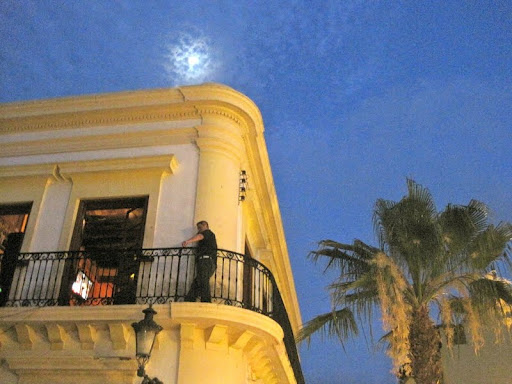
  • Perfect weather, including a gorgeous moon
  • Mazatlán’s beautiful architecture and the ocean waves as a backdrop
  • The fun-loving, joyous, quick to laugh and dance-till-they-drop Mazatlecos
  • Enough of a crowd to feel the pulsating energy, yet uncrowded enough that you can find a good seat, a terrific view, and enjoy a good drink, cena or botanas…

I have not danced, sweated and laughed so much in a while. Thank you, Mazatlán! Below is my two-minute highlight of the evening. After you click “play” you can toggle to view in HD.

Twenty musical groups performed last evening between 7 pm and about 1 am. Those performing on Escenario Paseo Olas Altas (Banda y Tropical):

  1. Ensamble de percusiones
  2. Banda la Mazatleca
  3. Grupo Fussion (my personal favorite of the evening)

Performing on the Escenario Machado:

  1. Coro Guillermo Sarabia
  2. Camerata Mazatlán
  3. Pumcayo
  4. The Sconek-T
  5. Klezmerson
Performing on Calle Niños Heroes and Mariano Escobedo, the Escenario Rock y Tendencias:
  1. Venus Rex Machina
  2. Claussen
  3. Carlitos Ojos Rojos
  4. Los Insensatos
  5. Dapuntobeat
Performing on Calle Venustiano Carranza, in front of the Art Museum (Música del Recuerdo):
  1. Suncai Gitano (they were very good also)
  2. Grupo Fussion (they performed on two stages)
  3. La Negra, La Blanca y La Redonda
  4. Zarzuela al Piano
On Calle Venus, entre Constitución y Sixto Osuna (Escenario Fusión), were:
  1. Chadoma Social Club
  2. The Lori Davidson Group
  3. Radio 3
  4. Belle et Fou Texas
Visual artists at A la Vuelta de Venus:
  1. Carlos Olvera
  2. Ster Aguirre
  3. Dave Gamez
  4. Hello Sobre
  5. Iván Lizarraga
  6. Rodolfo Loaiza
  7. Iván Mayorquín
  8. Nava One
  9. Bacse
  10. Mayk Silvas C.
  11. Angelferd
  12. Salomon Cusehr
  13. Ferruco
  14. Norte 23
  15. Alex Knives
  16. Julio Montero
  17. Pablo Llamas
  18. Crisarth
  19. Paulina Rueda
  20. El Dante
  21. Roberto Vásquez
  22. Braulio Armenta
Link to our friend Nancy’s blog entry on last night’s events. She has some very nice quality video.


Turkish Cooking with a Mexican View


In my last post I told you all how I fell in love with Turkey: her beauty, history, people and blend of cultures. Well, I also loved the food. Succulent, savory lamb, and roasted and raw vegetables in multiple combinations with every meal. I especially loved how the Turks prepared eggplant, or patlican (pronounced “patlijan”).

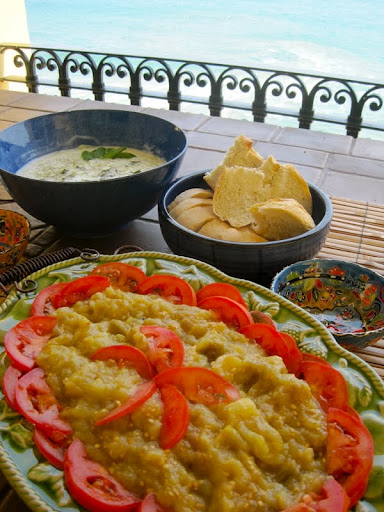
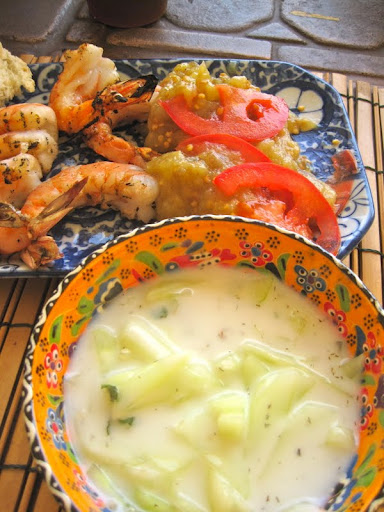
So, I bought Greg a book called “Turkish Cookery,” figuring his real gift would be that I’d try out some of the recipes. Today was my first try. I was of course worried. I’ve never cooked anything Turkish before. But man oh man oh man, was it good! At left is a glimpse of the meal we ate today on our Mexican terrace overlooking the Pacific Ocean.

The weather here in Mazatlán has been very hot and humid. We took a long sweaty walk along the malecón/boardwalk this morning, and I then spent a couple of hours gardening. So, a cool meal sounded best today. Cucumbers are in season here, so first on today’s Turkish menu was cacik (pronounced jajik), yoghurt with cucumbers.

This dish is similar to Indian raita. I’d call it a cucumber-yoghurt salad, though my boys called it “cucumber soup.” I guess it is sort of like a gazpacho. It was easy-peasy to make and I HIGHLY recommend it on a hot day!

Peel, thinly slice and chop 2 large cukes. Sprinkle them with a bit (1 teaspoon or so) of sea salt. Let them sit. Put 500 grams plain yoghurt in a bowl, and with a whisk whip in about 1 cup of water. Add to the yoghurt mixture the salted cucumbers along with a clove of crushed garlic. Stir, and garnish with chopped fresh mint and dill. You can also drizzle a bit of olive oil on top (I didn’t and it still rocked). Be sure to chill this and eat it cold; the flavors really came forth after a couple of hours in the refrigerator. So refreshing!

The second dish I made was the one I was really craving: patlican salatasi, or eggplant salad. I ate this dish, or adaptations of this dish, quite a few times during my trip. Every time I’d ask the waiter, my meal mates or friends what the dish was called. Everytime they’d tell me “patlican,” “eggplant.” “Yes, I know it’s eggplant. But what is the name of the dish?” No one seemed to know. The photo in the cookbook looked like the dish I was craving, but what would it taste like????

First step was to mix the juice of one lemon with 1/2 cup of olive oil.

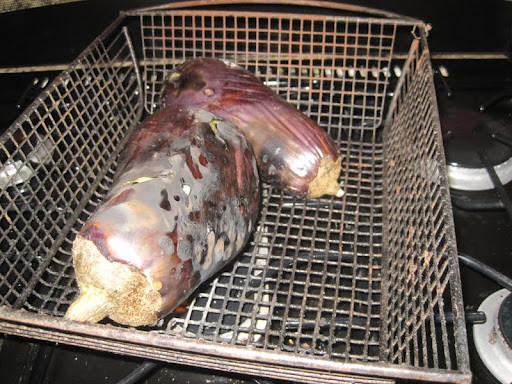
Then, just like in Japan, this recipe required that I roast the whole eggplants over an open flame, till the inside becomes tender and the outer skin becomes charred, then hold under cold running water for a few seconds before peeling off the skin. In Japanese cooking I absolutely love eggplant roasted in this fashion, and my taste proves consistent for Turkish cooking as well, evidently. After peeling the roasted eggplants (I roasted 3 big ones), you put them in a bowl and mash them up with a fork. I also used two knives like pastry knives to make sure all the pulp was cut and easy to eat.

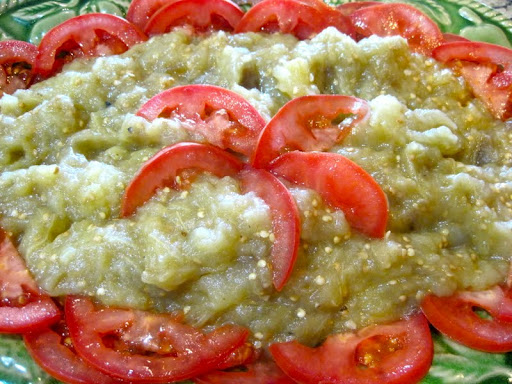
Into the mashed roasted eggplant I dumped the oil/lemon juice, added a tablespoon of balsamic vinegar, and a couple of cloves of minced garlic (the garlic wasn’t called for in the recipe, but hey, we love the stuff). I garnished the plate with sliced tomatoes (the recipe said to also garnish with onion, green pepper and olives), and we ate the roasted eggplant salad with French bread. Mmmmmm! Definitely a hit!

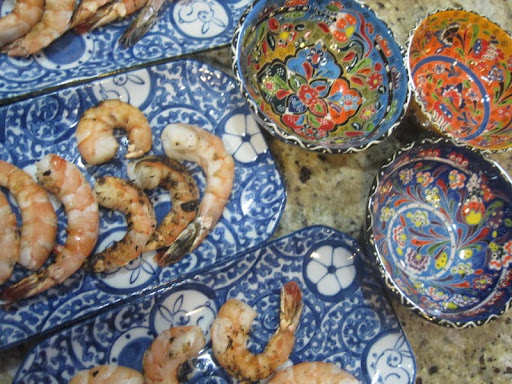
As long as I was roasting on top of the stove (too much work to start the grill, I guess, or maybe I just like that grill to be Greg’s territory), I figured I might as well roast the shrimp we had for lunch as well. After grilling I drizzled these with a bit of sesame oil and a bit of homemade aioli.

What to serve all this in? While in Turkey I bought a few Kütahya bowls, underglazed and handpainted. You can see them in the photo at left, the bowls to the right of my Japanese plates. The Kütahya remind me of our Mexican Talavera, don’t you think? In the same way as Talavera, Kütahya painting varies widely quality-wise (and price-wise!).

Here is a close-up of some of the food. Afiyet olsun!!! (Bon apetit!)

And here is a photo of one of the handsome men who lunched with me, a new convert to the joys of Turkish food 🙂


Desfile Semana de la Moto 2011 / MotoWeek Parade

This is our third Moto Week parade. It was much lower key than other years–fewer people, less organized. The parade lasted at least two hours. We LOVED it. Time to sit back in our chairs, sip a soda or beer, look out over the ocean and the incredible sky, and thank God that we are able to live in Mazatlán, amidst so many fun-loving people.

There are lots of photos in this album (130 or so). It’s really fun. So, please, pour yourself a cup of something, sit back, and enjoy… Join us next year!

Travelogue Spring Break 2011, Day 12: Espinazo del Diablo/Devil’s Backbone

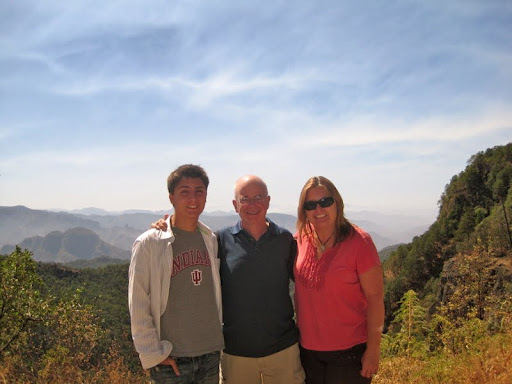
The road between Mazatlán and Durango (Highway 40) is called “Espinazo del Diablo”, or “Devil’s Backbone,” due to its steep incline, hairpin turns, and sheer drop offs. Originally this spring break trip we had intended to leave Mazatlán and go over the Devil’s Backbone through Durango to Zacatecas. It’s only about 180 miles/300 km, not so far. But, it takes at least five hours, and some have even reported it taking ten hours! Many of our local friends convinced us that we should not do that because it was far too dangerous. Instead, our friends recommended we go around, through Guadalajara, making a big southern circle to get to Zacatecas. We followed advice and were happy we did. Our roundabout route enabled us to spend a few days in Guanajuato.

We intended to return the same route on the way home. Thanks to our friends’ advice, we were now scared about traveling over the reported 3800 curves of the Devil’s Backbone. But, who wants to retrace their steps? We wanted to see new territory, and we’d heard that the drive through the Sierras via Durango was gorgeous. Durango is a city fairly close to Mazatlán, with others being Culiacan or Guadalajara. There are not a lot of big cities nearby our home, and sometimes one craves a city.

What we found today was a gorgeous drive with a much-improved roadway, and some fortunately very responsible drivers. While I wouldn’t want to make this drive often, I would definitely make it again. Neither Greg nor I felt it any worse than the drive to Tahoe or down Cañada Road on the SF Peninsula (N CA), or Oak Creek Canyon in AZ where I grew up. It is, however, much much longer.
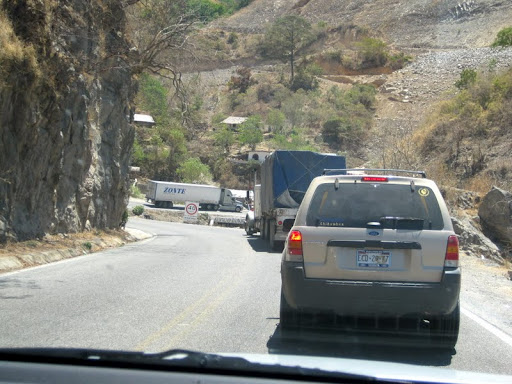
We left Durango about 9 am and arrived in Mazatlán about 3:00, with stops for breakfast and lunch on the way, as well as losing one hour to the time change. That means about a 5 hour drive from Durango to Mazatlán for us today. Over the curves we averaged 30 mph, but when we were stuck behind trucks or a line of cars we frequently progressed at 2 or 5 mph. It is definitely slow going!

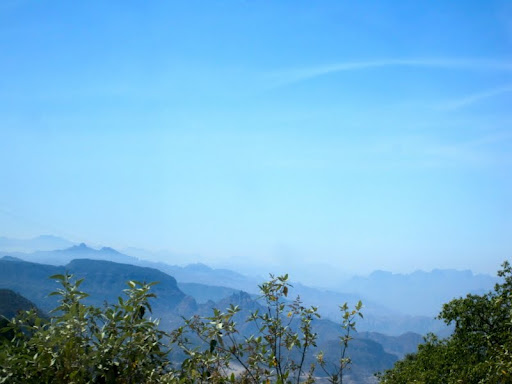
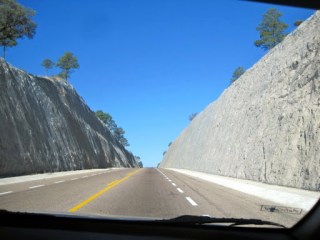
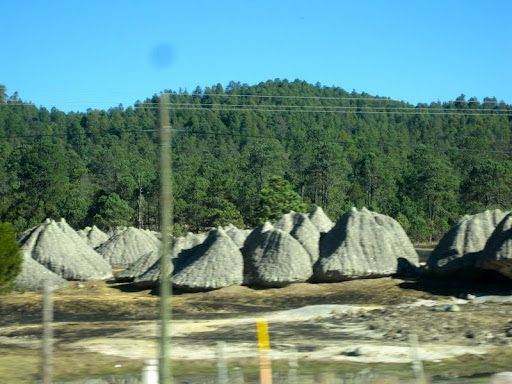
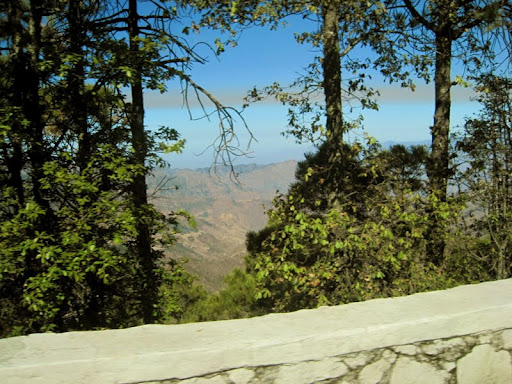
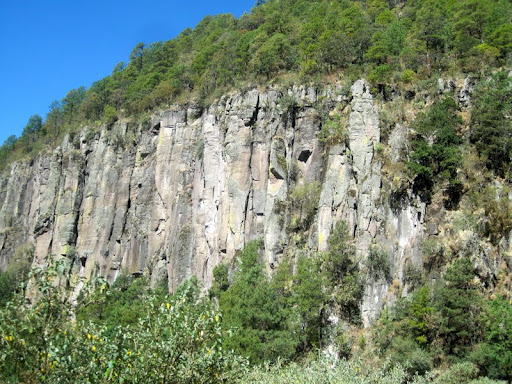
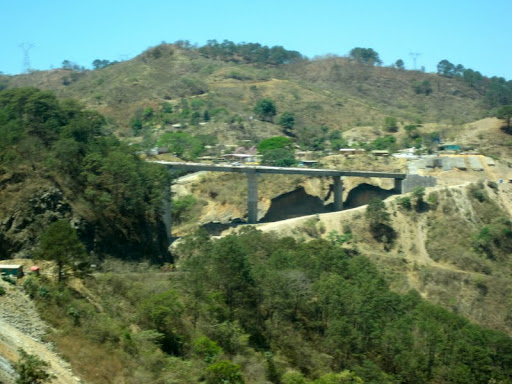
The new portion of the road that is open is terrific—two lanes each way, flat and smooth, clearly marked. The scenery along the route is terrific, with some unusual rock formations and incredible vistas.

John Wayne’s ranch is along this route, as are a couple of national parks, some nature preserves, and several places to rent cabañas. Come summer I think it would be fun to go up there, rent a cabaña, and spend a few days sniffing the pine trees, hiking and mountain biking. It was wonderful to smell pine in the fresh air and to feel the nearly-freezing temperatures of the sunny morning. The highest point, we’ve been told, is 1890 meters/6200 feet, less than Flagstaff AZ where I grew up, and far less than Conifer CO where Danny grew up.

Once the new cuota ended the free road was two lane, with oncoming traffic. The actual “Espinazo del Diablo” or “Devil’s Backbone” of hairpin turns and steep drop offs is only a portion of the road between Durango and Mazatlán, a 2-3 hour portion depending on which big slow trucks you get behind and how kind they are to pull to the right when you want to pass. Greg and I felt it was not nearly as bad a drive as we had been led to believe. With the new highway, it should be great. There were guardrails in most of the places that needed guardrails, something others had mentioned as making this drive so dangerous. Our guess is the rails have been recently installed. The biggest danger is closer to the Mazatlán side, nearing Copala, where the road, at least today, was still two lane and had absolutely no shoulder. If you happen to be making a hairpin curve while some crazy person is passing in oncoming traffic, there is not much you can do. Fortunately, today we only had two small instances, both very manageable. So, as of now we’ve overcome our fear of the Devil’s Spine.
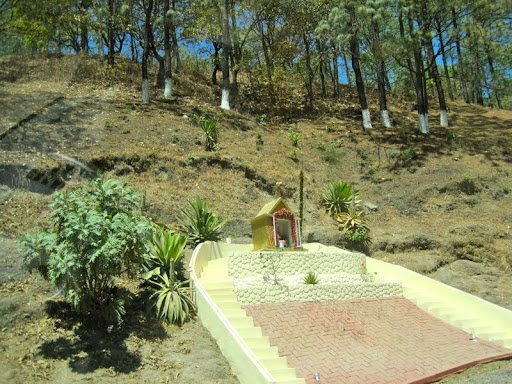
There were lots of cows and horses by the side of the road, free range, and we saw some turkeys as well. It was a very scenic drive. Unfortunately we also saw loads of roadside shrines, dedicated to people who had been killed in car accidents.

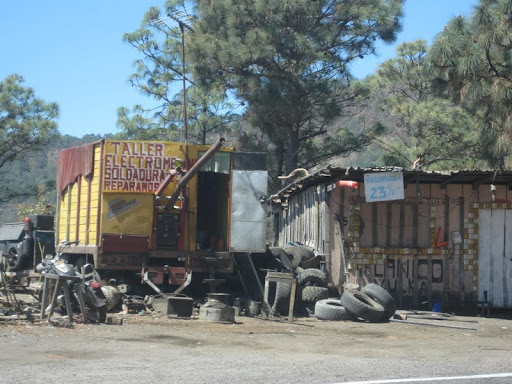
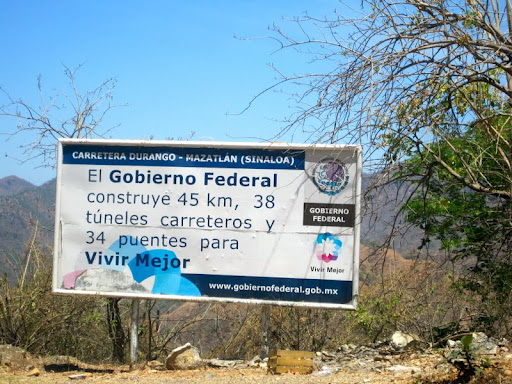
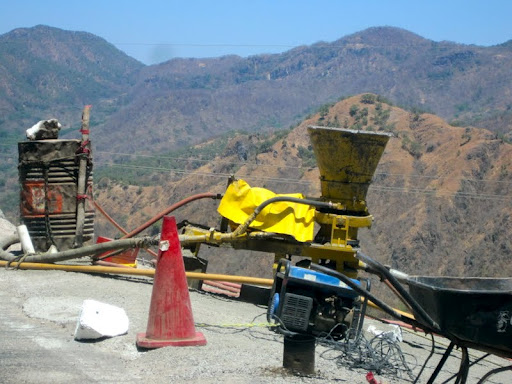
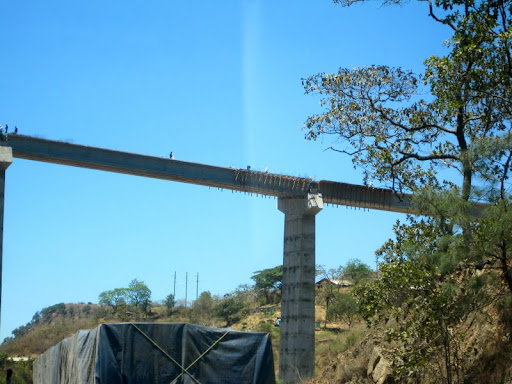
Along the way are many construction sites. Information on the signs varies, but a website for the project indicates that the new road is going to include 63 tunnels along with 8 bridges over 300 feet in length and an assortment of smaller bridges. Along the way there are many makeshift towns that seemed to have arisen so that the road/bridge workers can have somewhere to live. Please visit the website to get a better understanding of the engineering challenge in making this drive safer, quicker and easier.
The workers work in incredibly dangerous-looking conditions, with steep drop offs and no safety equipment from what we could see.
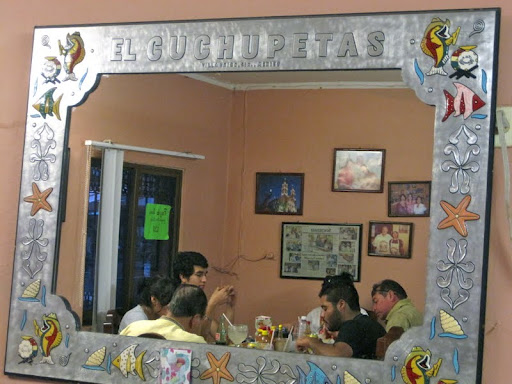
We had our last meal of this spring break holiday together in Villa Unión at Cuchupeta’s, a place we’ve long been planning to visit. We were not disappointed.