High Tides/High Sands


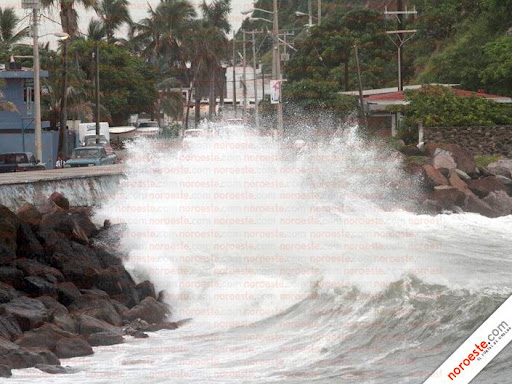
The last 2-3 weeks have seen tides higher than we’ve seen in a long time here. Often this time of year the waves splash up over the seawall near Valentino’s, sometimes even onto Avenida del Mar. But this year, the waves have even been splashing onto the Avenida in Olas Altas.

Last Thursday we were taking our morning walk and we had to turn back because we were getting sand blasted. We’ve noticed the last week or so that there are 2-3 inches of sand all along the malecón in various places, as well as onto the street.

The surfers are of course happy with these waves, as are the body boarders. Though the waves are too high for some. The fishermen have not generally been pleased. The waves have overturned quite a few of the pangas, and the port as well as the beaches have been closed a few times due to the high seas. The fishermen have had to put their pangas up on the malecón several times for safe keeping. Shrimp season this year is predicted to be fantastic, thanks to all the high seas plus the rain.

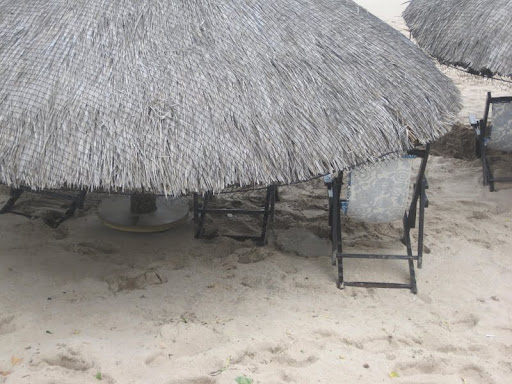
Today we bicycled down to the Pedro Infante statue. We were, gratefully, splashed by waves a few times as we rode. What was most remarkable, however, is that the beach is AT LEAST ONE METER HIGHER than it normally is! There are places where you can now almost walk from the malecón onto the beach. There are numerous palapas into which the waves are now entering freely. The few palapas that have laid concrete flooring, that are normally a foot or two above sea level, they now have sand for flooring. La Corriente and other palapas near the Hotel De Cima have had to bring in bulldozers to dig their spaces and furniture out from under the sand.

In the photo at left, note that the round table is normally about one meter ABOVE the sand. The lower part of this palapa, normally, is well above head height. Not this week!

In this next photo, please note that the sign normally has a pole that keeps it a couple of feet/half meter or so ABOVE the sand.

And all this, with no hurricane, and with no real horrific storm. It’s eerie.

In addition to all the high seas, of course, we have had heavy rains. It is rainy season. Saturday a week ago we received in one day one-third of the rain we normally get in one year! Nine inches poured down in seven hours. Thousands if not tens of thousands of homes have been flooded repeatedly, and most of those families have lost all their furniture. It rained high in the Sierras as well, and as the rivers brought all that rain down to the sea, the rivers carried in them tree trunks, dead cows and pigs, silt, sediment, and trash of every sort. The tides were just right that the rivers washed it all out to sea, and then the waves came in and washed it all up to the beach. Everyone has spent the last two weeks cleaning up wood and other items from the beaches. It’s been a remarkable, community-wide effort.


Sunsets in Mazatlán/Atardeceres en Mazatlán


Many of you know how much we LOVE sitting on our terrace and watching the incredible light shows that God blesses us with each and every day. I often share the “sunset of the day” on my Facebook page, and they are some of the most-liked posts. So, I thought you might like to watch a slideshow of some of my favorite Mazatlán sunset shots. Enjoy! You can watch it in full screen and high definition if you’d like.


El Faro/The Lighthouse

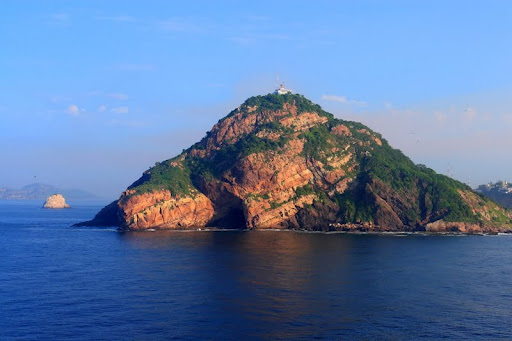
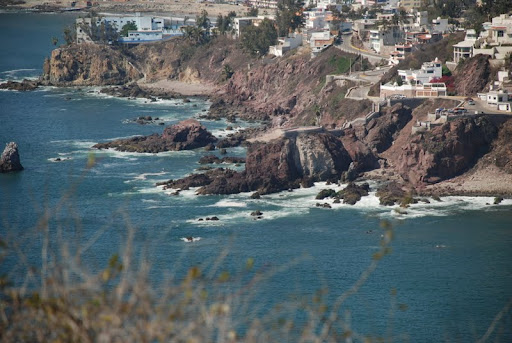
At 160 meters above sea level, the El Faro de Mazatlán is said to be the highest naturally located lighthouse in the world. I don’t know for sure that this is true, but neither can I find evidence to contradict it (see my notes on Gibraltar at the end of this post). What I do know is that a hike up our beloved El Faro hill is WELL worth it. In every season of the year it is gorgeous!

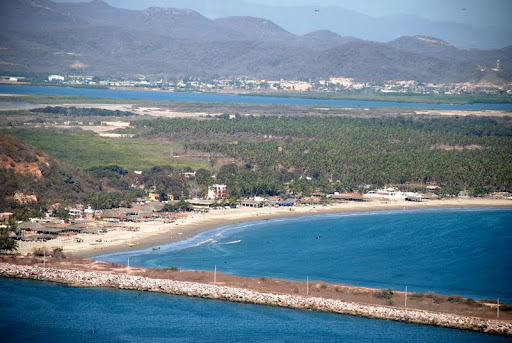
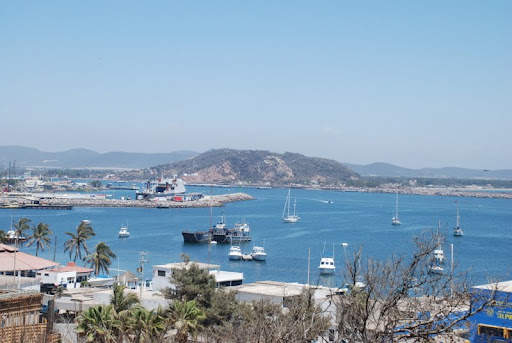
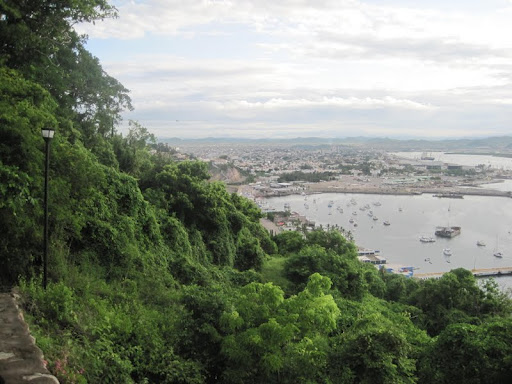
The view from the top of the hill is of course SPECTACULAR. You can look west to the Sierras, out over the city and waterways of Mazatlán, or east to the vast expanse of the Pacific. It’s a great place to sit and have a picnic, and take some panoramic photos of the pristine beaches of Isla de la Piedra while they remain undeveloped.

Your hike up the hill will only take 15-20 minutes. There are plenty of people who run the route. It starts out as a dirt path, and higher up turns into about 300 concrete steps which wind their way around a few switchbacks. Each turn and each elevation provides you a different vantage, and all are delightful. It’s as pretty on a clear day as on the rare cloudy or rainy one.

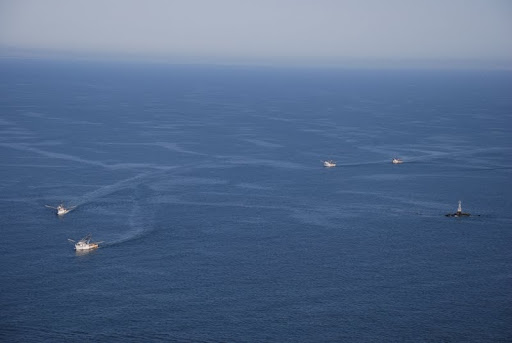
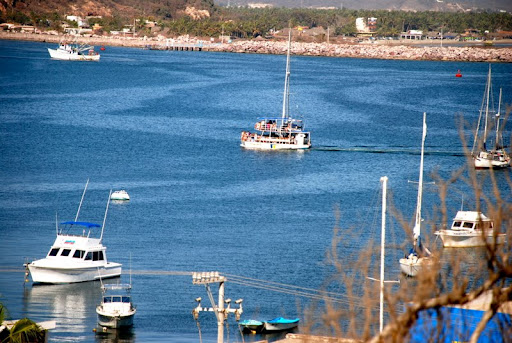
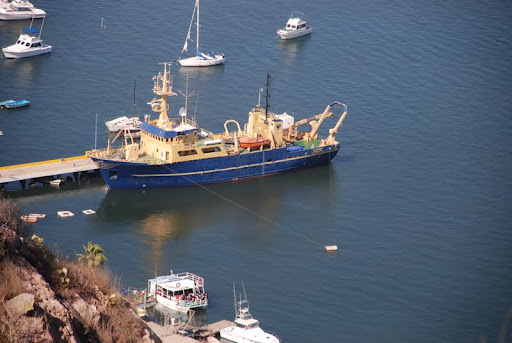
You’ll see ferries, cargo ships, shrimping boats, fishing boats, party boats, sailboats, and pangas.

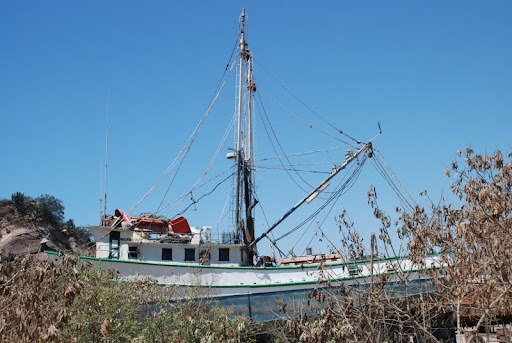
You start your hike on the east side of the port. This is where many of the fishing excursions and party boats load their passengers, and there are a few dry docks and boat repair facilities to catch your interest.

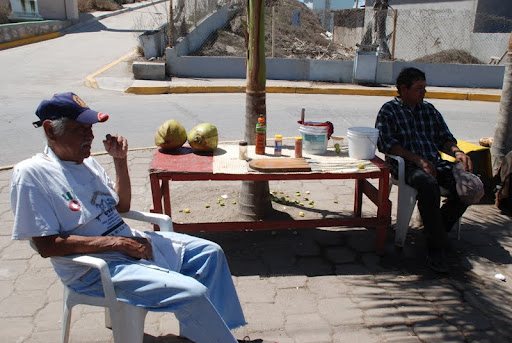
At the entrance to the lighthouse walk, at the base in front of the port, is a coconut seller. You might want to join him for some refreshment on the way up or down.

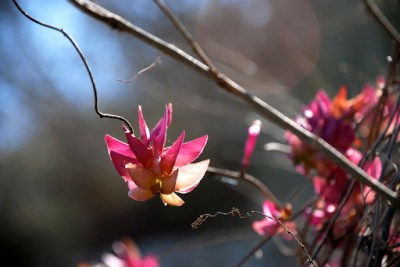
The flora and fauna on your hike will delight your senses. In the early spring the cacti bloom. The green contrasting with the brilliant blue of the ocean will make you so glad you came! In just about any season of the year you’ll see something flowering.


We climb the lighthouse hill at least once a week, we enjoy it that much. Two weeks ago I told everyone we were “Wasting Away Again in I-gu-a-na-ville,” because we saw at least eight different iguanas sunning themselves during our climb to the top. We saw lime green, deep green, yellow, orange, brown and black iguanas.

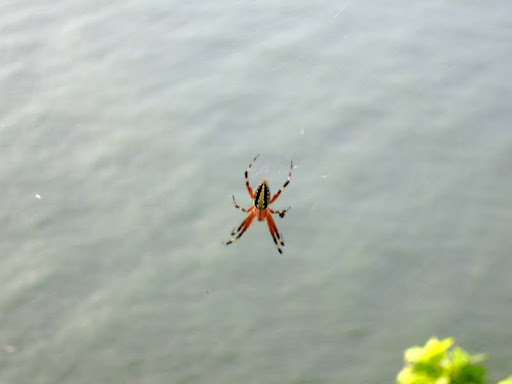
This week I had to change that to “Arañaville,” as the spiders were out spinning their webs in whatever direction you cared to look. It was incredibly gorgeous!

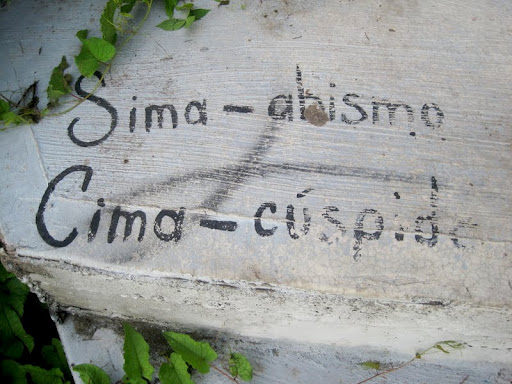
Along the route people have graffitied the stairs. Near the top of the stairs is one of my favorites: a Spanish lesson. It teaches the difference between “top” and “abyss,” which sound similar in Spanish (or at least the Mexican version of the language).

Once you reach the top, and after you take in the view to your heart’s desire, there is also a trail that takes you down behind the lighthouse, on the other side. There are several resting places, and a steep climb involving rope at one point that leads down to the water.

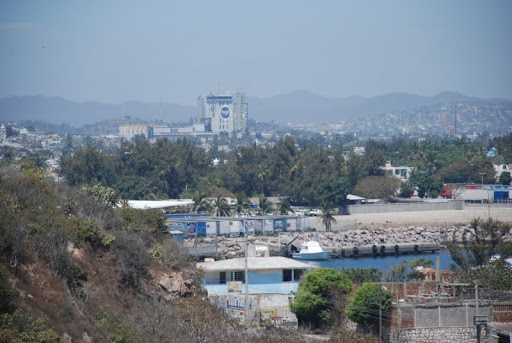
Here you can see our much-worshipped cervecería, the Modelo beer brewery, from lighthouse hill.

NOTE: The highest lighthouse in the world, some have told me, is the Europa Point lighthouse on Gibraltar. However, though the Rock of Gibraltar is 426 meters high, the lighthouse is located on the waterfront, not the top. There is only an aviation beacon at the top of the Rock of Gibraltar. Thus, I’m not sure how our local El Faro ranks globally. It may indeed be the highest.

Caimanero & Walamo: Day Trip from Mazatlán

Though Danny’s been in school a week already, tomorrow is the “official” first day of school. He took off with a bunch of friends to Isla de la Piedra, so Greg and I figured we should head out for a day trip as well. Where to go? We’ve been wanting to get back to Cosalá, but since it was already late by the time we were ready to leave that seemed too far to go.

We hadn’t been to Caimanero in a while. How about some zarandeado? Yeah! Even in the heat of summer, the beach has a nice breeze, so as long as we’d be under a palapa at one of our favorite restaurants, fresh fish, a gorgeous drive and an incredible view sounded great!!!!The drive to Caimanero is super easy and very scenic. You basically only make one turn, through Walamo, to get to Caimanero from Mazatlán. The drive is very relaxing, with lots of rural vistas and small town scenes. Estuaries with waterfowl (cranes, storks…), beaches and palm trees, mountains, and aguaculture farms (both shrimp and fish).

We left at 11:30, we were home by 6:00, we stopped a dozen or more times, and we ate a very leisurely and delicious lunch that only cost us 250 pesos with tip for two people with beer. Get your day trip gear on and take a trip, people! Enjoy! Be sure to watch the slideshow below to see just how incredibly lucky we are to live in Mazatlán, with so much to offer in the city and nearby.

Names and Apellidos

Phone calls are rarely easy in a new language or culture. I remember calling a friend, Arnoldo, shortly after we’d moved here. The person who answered yelled out for “Lalo” to come to the phone! What’s up with that? “Lalo” is short for “Eduardo,” not “Arnoldo!” Had they misheard me? Was my pronunciation that bad? I didn’t want to speak with someone I didn’t know…

A few months later I received a call from a friend who told me she was “Bertalicia,” a rather long name with the emphasis on the “Alicia” ending. I couldn’t figure out who she was, even though she repeated herself several times. It was embarrassing. Eventually she had to explain to me who she was. Why? Because I knew her as “Bertha.”

Then, I’ve called a home to ask for someone, only to be asked “which one?” It is a very common practice to name daughters after their mothers, and sons after their fathers. So, they could be asking whether I want to speak to the parent or the child. But, at least in this part of México, it is also common for several (or all) children to share the same first name!!!! We know one family of girls named María Ana, María José, and María de la Luz, and María de Pilar. Through experiences like these I’ve come to learn that particularly “José” and “María” are more like placeholders or titles rather than names; the commonly used name would be the composite or, often, just the second name.

“María” and “José” are obviously very, very common names in Spanish. Want to complicate matters a bit more? A man can have the name “María,”as in “José María.” Likewise, a woman can have the name “José,” as in “María José.”

And, we all know that Mexicans LOVE apodos or nicknames! There are the “standard” versions for men and women, such as when Jesús become Chuy, Mercedes becomes Meche, or Francisco becomes Pancho or Paco. In the above case, Ms. María Jose might be called Pepa, Pepita, Josefa, or even José, so be careful about gendering! Likewise, “Lupe” or “Guadalupe” can be male or female. There are also the individual nicknames, most often referring to a physical feature (flaco, pelón, negro) or personal characteristic (loco).

The stereotype, of course, is that Spanish speakers all have llllloooooooonnnnngggg names. How many movies have we seen where, women particularly, spend several minutes rattling off their multiple names? But what I have found most surprising and confusing is that people are called differently by different people. What should I call people? Ok, my Dad was called “Charlie” by people who grew up with him, and “Chuck” by those who knew him as an adult. But names here are more complicated than that. We know one guy who told us his name was “Victor.” Most everyone else we know calls him “Lorenzo.” At work, however, he is called “Toby,” a nickname taken from a television show about a boys’ club. I hate to ask him what his family calls him.

Remember back in high school Spanish classes, when they taught us the “rules” around names in Spanish? Here’s what I remember learning way back then:

  • People have a first or given name (e.g., Ana or Juan).
  • Sometimes they also have a second name (e.g., María or Pedro). In this case, their given name is a composite: Ana María or Juan Pedro. They may be called by one or both names.
  • It is also rather frequent for people to use a confirmation name (e.g., Teresa or Antonio). These often are not used on a daily basis, but can form part of a person’s complete name.
  • These given names are followed by apellidos or family/surnames: their father’s family name first (e.g., Ana María Teresa Pérez, or Juan Pedro Antonio Lizárraga), followed
  • By their mother’s family name (e.g., Ana María Pérez Fernández, or Juan Pedro Antonio Lizárraga Castro).
  • When a woman marries (e.g., the two people named above), she maintains rather than changes her family name and, in some situations, adds “de” and the family name of her new spouse (spouse’s father’s name) (e.g., Ana María Pérez de Lizárraga or Ana María Pérez Fernández de Lizárraga).
  • Their children’s names would follow the same rules, so in the case above the children’s last names would be Lizárraga Pérez, with “Lizárraga” being the main apellido.

That’s all fine and good, but I’ve come to find out there are national, regional, ethnic, socio-economic and familial variations on naming, as well as LOADS of exceptions to these rules. I know one family, for example, where each son in the family fortunately uses only one given name, but they have THREE surnames: de Alba Rulfo de Jimenez. Huh? Two Moms? Children of divorce? What the heck??? No, I’ve come to find out that there are also composite last names! Such composite surnames may be connected by “de” or by a hyphen. Sometimes only one of these is used, though officially it should be both (or all). And we can all see what happens when someone with a composite surname marries another person with a composite surname! Bring on the funny movie clips!

And if you, like us, have “gringo” names or, worse yet, a spouse with ONLY ONE given name, Lord help you when people try to enter your name into a computerized form down here. Most programs seem to require a second surname, and many also request a second given name. Thus our son ends up having to use his middle name, which he very much dislikes.

As with English names (hyphenated family names, for example), there are modern-day variations on naming practices in Spanish. In Spain, for example, the traditional order of surnames can be reversed under current gender equity laws, so that children use the mother’s surname first, followed by the father’s. There also seem to increasingly be more women who do not use their husband’s names. Maybe they established themselves professionally before marriage, or they hold professional licenses in their maiden names.

One final confusion I’d note is that, in writing, people often abbreviate names, whether given names or surnames. Thus, “María” becomes “Ma” and “Agustín” become “Ag.” It might be worthwhile to familiarize yourself with a few of the more common abbreviations.

I eagerly look forward to your teaching me more, or correcting my errors!!!! Thanks!

Have fun!

Saludos,

Dianne, Diana, or Di