Getting a Mexican Driver’s License in Mazatlán

For many of us, obtaining our first driver’s license was a treasured rite of passage. When it comes to our kids getting their licenses, however, like many parents the thought scares me. And the scariness factor is amplified because our son is learning to drive in what, for us, is a foreign land, and one in which the driving, at times, can seem a bit crazy. Guardian angels please protect him and those near him!

Greg and I obtained our Sinaloa driver’s licenses shortly after we arrived. We took the required class, submitted our documents, drove around the block, had our photos taken, and oilá. Others pay a “fee” and have it all done for them, but we did it above-boards and it was easy-peasy. In fact, the class was downright enjoyable — the teacher is a very good storyteller!

Now Danny’s just gotten his license, so I thought telling you about it might prove helpful for someone.

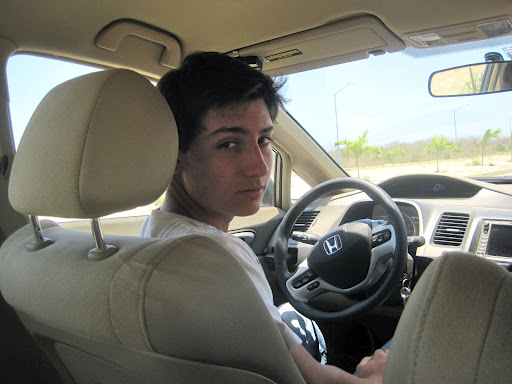
In his case, he’s a new driver, and we’ve been teaching him whenever we get a chance for about a year and a half. He started out slow, as does everyone, but these days he’s become quite competent.

He wants to work this summer to save money to buy a used car, and he will probably end up buying one with a stick shift. But, our car, the one on which he’s learned, is automatic. So, we enrolled him in a driving school so that he could learn how to use a clutch. The series of classes cost 1450 pesos, and included four rounds of driving of two hours each time, or eight hours total. In addition, there was a three hour classroom session during which they studied rules of the road. He seems to have taken to the standard transmission like a charm.

On Saturday he went to the tránsito, which is located just in front of the Aquarium here in Mazatlán. From the malecón, turn on the street towards the Aquarium. Go past the statue of Don Cruz Lizarraga, and turn right on the street on the far side of the vacant lot. The DMV office (tránsito) is at the end of the street, last building on your left, on the corner. There are two doors. The door on the right is where you file your paperwork.

The door on the left is where you take a class.

First-time drivers under the age of 18 have to take a five-hour class. They tell us the class is offered twice/month on Saturdays from 8:00 to 1:00. The classes seem to be pretty full, and the kids get a certificate upon completion which entitles them to be able to submit paperwork for a license. They do not take a written test.

When we got our Sinaloa licenses we already had U.S. driver’s licenses, so we only had to take a one hour class. At the conclusion of the class, they gave out a written test. There was an English language version of the test that they give out here in town, which seems much much easier than the Spanish language version (it’s multiple choice).

After the class and after you pass the written test, they give you paperwork so that you can go next door and get your license.
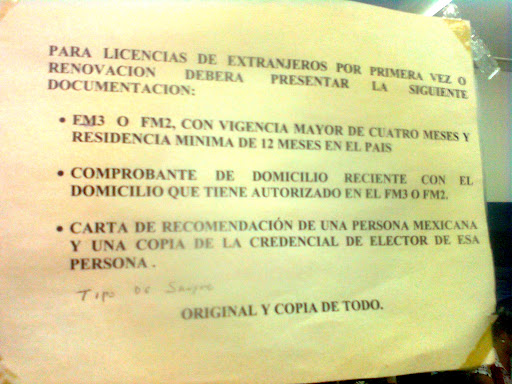
The documents a foreigner will need include (original and one copy of everything):

  1. Your Mexican visa or residency document
  2. Proof of residence/domicilio (water or electric bill with your name on it and your address)
  3. Letter of recommendation from a Mexican national, vouching that the person knows you and you are an upstanding person. This needs to be signed and accompanied by a copy of the signor’s voter registration card.
  4. You need to know your blood type (no proof required; just know it). If you don’t know, supposedly there is a lab about a block away where you can get tested. We know our blood types, so we didn’t experience this part of the process.
  5. The correct fee (see the photo at right for the chart of fees). Foreigners with FM3s are limited to 2-year licenses. First-time licensees pay for “Aprendiz.”
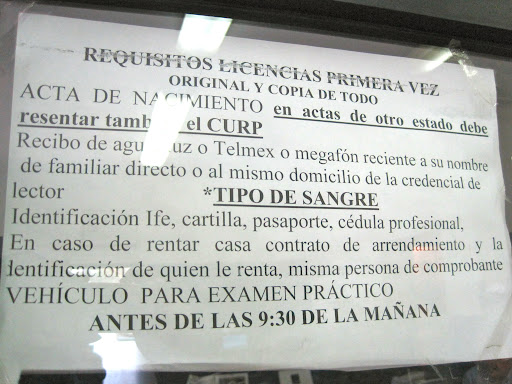

For first-time drivers like our son, you also need to bring:

  1. Birth certificate (to prove age)
  2. CURP
  3. Passport
  4. Parent needs to be present to sign

When you present your paperwork, they will usually ask you to do a driving test. So, you will need a car. They just asked us to drive around the block, nothing too challenging. We’ve been told that they want to be sure you buckle your seat belt and instruct the examiner to buckle his; this didn’t happen for us. Danny was also told that they ask you to pop the hood of your vehicle and show the examiner where you insert water, oil, coolant, etc., though he was not asked to do this.

Be careful as the street beyond the DMV office is one-way to the left; you don’t want to turn the wrong way. Also there are quite a few topes on the road leading up to the DMV office, as well as a stop sign conveniently hidden behind a tree.

After you drive with the officer, you pay your fee at a booth on the right side. Currently that fee is 344 pesos for a two-year period.
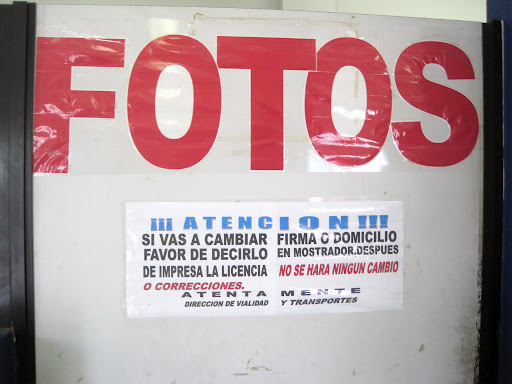
Next they take your photo and produce the license while you wait.

Each license contains a fingerprint of the license holder, so that’ll be the last step in the process. For us we filed the paperwork, did the drive around the block and got our licenses in under 90 minutes.
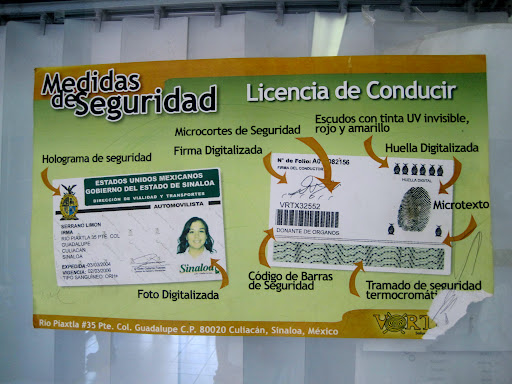
Licenses are issued Monday through Friday 8 am to 2:30 pm.

Renewals (as well as license plates, titles) can be done at this same office. However, we have had much better luck renewing our licenses at the DMV office in the Gran Plaza — it’s less of a crowd and seems to go quicker.

Good luck and drive safely!

NOTE: Our son said he learned a lot more in the driving school than he learned in the tránsito class, although he enjoyed both, and that he highly recommends the school for new drivers.

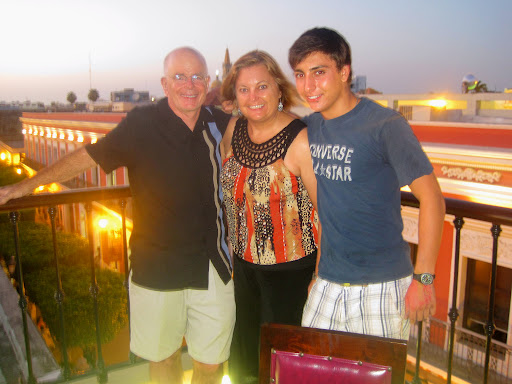
Opening of the Hotel Jonathon

We’ve been watching it being built. Have gone in a couple of times to check out the progress. Was supposed to have opened in time for Carnavál last February.

But, hey, the Jonathan Hotelis now open, it’s been open for five days, and it’s beautiful!

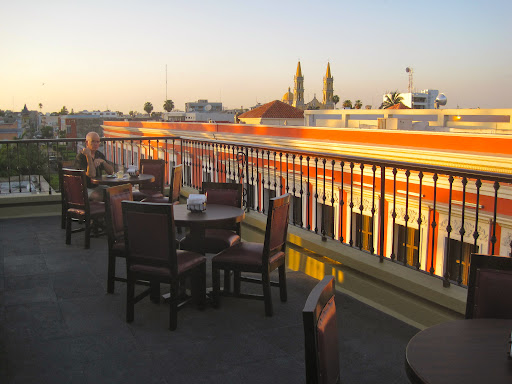
Facing the Angela Peralta Theater, it has a view of our city that we haven’t yet been privy to; unless of course you own a 3-story home right in front of the opera house!

On this Thursday evening during graduation and end-of-the-school-year season, it was quite the exciting place to be!

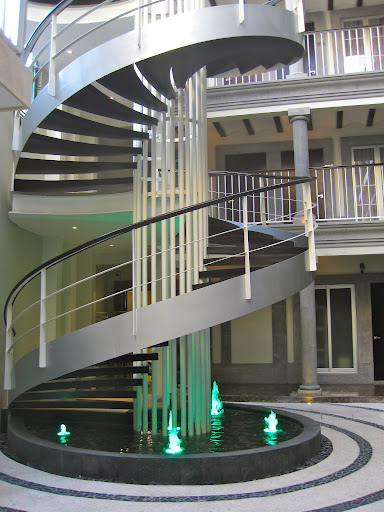
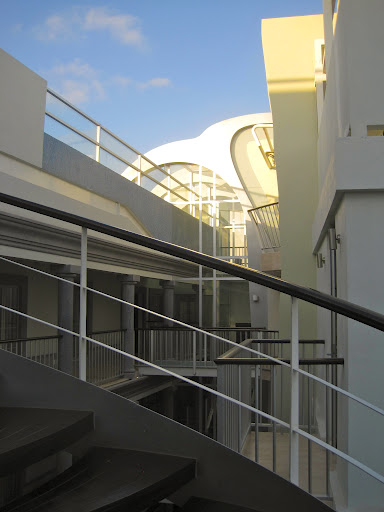
The Hotel Jonathan, built with Korean-San Diego money from what I hear, is really gorgeous.

Very modern, though they kept the historic façade per Centro Histórico regulations.

We went at sunset this evening, and had a drink up on the rooftop bar as we waited for Danny to finish his painting classes at the Municipal Center for the Arts.

The setting is gorgeous, although you see the reality of our fair city right next door.

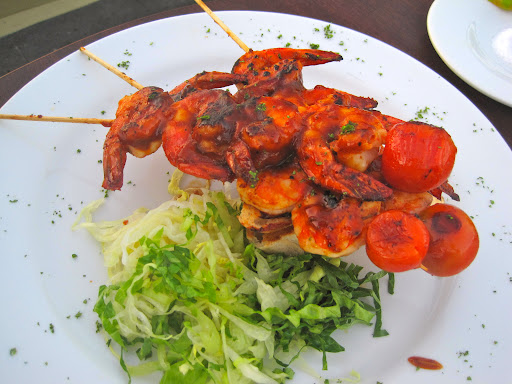
The food was good but not outstanding. That may of course improve as staff get accustomed to their roles. We ordered barbecued shrimp and crab-stuffed mushrooms. Danny later had clam chowder.

All our dishes were fine, just not remarkable. Presentation was nice.

The Jonathan Hotel would seem to be a beautiful addition to our local boutique hotel scene: well located, old-world yet modern, romantic yet sleek. The restaurant is on the ground floor and is gorgeous, with some nice Asian ink-brush paintings and floor-to-ceiling-windows onto the central courtyard.

A great place to wait for our kids to finish their classes. A great place for before or after the theater. A wonderful place to hear the Plazuela music without the crowds. Tonight the rooftop bar was ours and ours alone.

Let’s hope this venture endures! Good luck and god speed!

Update in July: The Hotel seems to have liked our photos. Check out the header on their web page. Would have been courteous to acknowledge this post and request use, but, glad it’s of use….

Children’s Day at Deportivas Juarez

The other really terrific Children’s Day event in which we participated last weekend was a huge festival for local kids from the more marginalized neighborhoods of town. It was held at the Canchas Juarez on Sunday. (I already posted about the terrific opening of the Marco Polo Park last Monday, which was Children’s Day here in Mexico.)

The festival at the Deportivas Juarez was very well organized: well-publicized, a published schedule, lots of organizers wearing colored shirts, Scouts present to help out. There were people at the park collecting donations of toys and gifts all week leading up to the event. They had a clown as a Master of Ceremonies who was just terrific, and the mayor and his wife and the full Cabildo Infantil 2012 showed up. The whole Juarez complex, by the way, is amazingly state-of-the-art: green grass on the fields, covered bleachers, large clean toilet facilities. Kudos to the city and the local business sponsors for building this new park for our kids!

The children on Sunday had so many terrific activities in which they could participate! There were sports events such as running races on the track, baseball games, soccer and American football games. There were carnaval-type games and face painting. There was music and dancing. There were gifts and prizes, from new bicycles and soccer balls to dolls and toys and books. We made a human fish and a helicopter arrived to take photos, to the delight of the kids. But the biggest hit of this party, hands-down, were the half dozen or so swimming pools that they had brought in and filled on-site. Some of the kids didn’t want to get out of those pools even to run and wave at the helicopter (though the helicopter was a HUGE hit)!

The event was organized by a long list of local grassroots organizations, and sponsored by a large number of local businesses. About 1500 kids had a really terrific time; an amazing turnout for a first-time-ever event, I thought. I was so proud to be involved. There were so many giggles and delighted faces.

Take a look and enjoy the slideshow above! If you’d rather see larger photos, click through to SmugMug. Some videos I took of the event have also been posted to YouTube, if you are curious. I’m sure they’ll be edited together in time; right now they are just raw footage. First one is here, and you can see there are about a dozen more if you’re trying to find something in particular. Enjoy!

New Marco Polo Park for "Differently Abled" Kids in Mazatlán


Can you imagine you are a child in a wheelchair, watching as your friends swing in the park? How do you feel? Watching them slide down the slide, or go up and down on the teeter totter, or round and round on the carousel, while you sit in your chair?

Rotary Club North chapter has worked for seven years in cooperation with many others in our community to build a park for “differently abled” children in Mazatlán. I love that term, along with the other commonly used term here, “special kids.”

The Grand Opening of the Marco Polo Park in Fraccionamiento La Campiña was this week, in commemoration of Children’s Day, and what a pride and joy to our local community it is! Huge kudos to everyone involved!

The first park of its kind in the state, there is hope that it’s success will spur the building of more parks with handicap-accessible play equipment throughout Mexico.

It is a true local success story. The first fundraising event for this park was held in December 2005, a chef’s dinner called De Amores y Sabores, with seven local chefs donating their time and talent. They served a seven-course dinner for 320 people. It was a huge financial and gastronomic success, and provided the initial funding to get started with the project.

With the cooperation of Rotary Club members and their wives, the land on which to build the park was secured. Several Rotary Presidents traveled north to Tucson and other places, visiting Rotary chapters to try to obtain funding to build the park. In the end, the park was funded locally, with municipal, state and federal government support, and many private companies from Mazatlán funding the manufacture of the special play equipment.

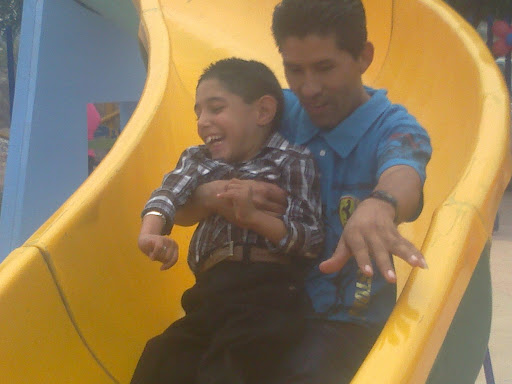
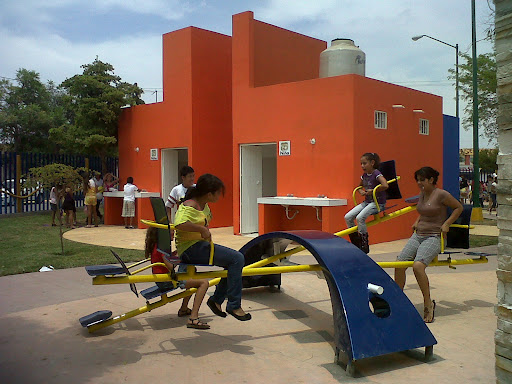
Leti Alvarado Fuentes assigned her architecture students a project: adapt common park play equipment so that special needs kids can use it and enjoy it. They did a terrific job. Then Jorge Medina, our resident iron work professional, found a gentleman who could manufacture the play equipment. And, oilá, Parque Marco Polo was born! The swing holds a wheelchair securely. The slide accommodates two people going down at once: one to hold the other safely. And the teeter-totter also accommodates two people: one to sit in back and hold the person in front. The merry-go-round wasn’t yet functional this week, so we have something to look forward to!

Below are two video clips. The first is television news coverage of the inaugural event, and the second is the early park animation that the Rotary Club used to attract donations.

If you are interested, here is a link to a newspaper story about the inauguration.

Finally, here are a few vocabulary words I learned, since I don’t hang out in too many children’s parks these days.

  • The play equipment in the park is just called juegos.
  • The merry-go-round is the carosel. Easy enough!
  • The teeter-totter (some call it a seesaw) is the sube y baja. Also easy enough, but more fun in English I dare say, lol.
  • The slide is the resbaladilla.
  • And, drum roll please, the most important piece of park play equipment, the swing: columpio!
Hearty congratulations to all those involved in this park! Now children can play alongside one another regardless of ability, creating an equality of joy! I do hope that many more parks of this type might be built, throughout our state and country, providing more access to all children.


Expat Lifestyles in Mazatlán: Cathy and Bill

One of the cool things about foreigners who move to Mazatlán is the variety of lifestyles they can adopt here. While the vast majority are retirees, more and more we see families and working people relocating to Mazatlán.

At one end of the continuum we meet extranjeros who live very Mexican lives, adopting the culture, speaking the language and, perhaps, obtaining citizenship.

On the other hand we meet those who have little desire (or sometimes ability) to learn Spanish, who socialize primarily or exclusively with non-Mexicans, and who in many ways have replicated their lives from NOB (north of the border). People at both extremes seem to live happy and fulfilling lives here, which is great to see.

And, of course, there are lifestyles representing every combination in between these two extremes, including many who volunteer ceaselessly and selflessly and many who party and sunbathe daily, living the retirement life they always dreamed of. We have artists, lifelong students, those who start small businesses, and those who remodel and restore historic homes.

Amidst so much diversity, Cathy and Bill stand out. They don’t fit into the most common expat categories, and they are one of the most interesting couples I’ve met here. Both in their fifties, Bill has recently retired and Cathy is nearing retirement. They originate from the US east coast. A few years ago they vacationed in Mazatlán, fell in love, and bought a house on their very first trip here: on a whim, so to speak. The home they bought is in a typical, centrally located Mexican neighborhood. No modern marina area or Centro Histórico, areas in which many other expats live and where perhaps things might be easier for them. Ok, plenty of other foreigners live in neighborhoods with few foreigners. But, neither Cathy nor Bill spoke Spanish when they bought their home, though they are taking lessons and learning quickly. Talk about jumping into the pool rather than checking the temperature first with your toes!

They are not like some retirees who live in the typical neighborhoods because there they can live on social security and a small pension because life is cheaper. Nor do they live in a gated community with killer views. Cathy and Bill live in a nice home a block from the beach, in a mixed-use neighborhood of small homes and businesses.

What’s remarkable to me about Cathy and Bill is how completely open they are to the culture and the people here, despite their initial lack of language and experience with Mexico. To me as an interculturalist, getting to know them has been a breath of fresh air. We witness a lot of unfortunate cross-cultural misunderstanding and negative judgment in our daily lives here, and we ourselves are not immune to it as we create our community here. But Cathy and Bill are excellent role models of how to be open minded, and how to jump into a new community wholeheartedly.

They have befriended their neighbor, an air conditioner repair guy, who has “taken them under his wing,” so to speak. He has welcomed Cathy and Bill as a member of the family and local community. Thus, the couple is invited to the kids’ baseball games, school performances, and every extended family party and event. And Cathy and Bill go. They don’t let the lack of language or cultural understanding stop them; they see these as an opportunity to learn, to build friendships, and to build community. Their circle of friends here keeps growing exponentially, as they learn local slang, how to make ceviche, or how to rehab a car Mazatleco-style.

We first got to know them in the way we first connect with many of the foreigners we know here in town: online. Greg probably answered a few questions they had about living here. He happened to mention our plans to attend a Banda El Recodo concert with our neighbors. They asked us to buy tickets for them to attend as well. The first time we met them was when we delivered the tickets to their house.

We have not had the good fortune to get to know a lot of foreigners in town who attend bandaconcerts, though I know they exist. In fact, among the thousands of people attending that concert, I honestly believe we were about the only foreigners at the event. Cathy and Bill’s excitement about attending this concert paralleled our own. They didn’t stress, as so many new immigrants would, about the hours and hours we waited for the main event to commence. Concerns about safety or violence didn’t prevent their attendance, as it does so many others. They danced and hooted with everyone else, taking photos and videotaping with sheer delight. They ate and drank the local food, with no concern about getting sick. They looked around with us to try and figure out how people were getting chairs to sit on, and together we found the way and happily sat. Till the band came on, of course! It was really refreshing to witness in someone new to town; the differences seemed to energize them rather than intimidate them.

I can count on these two for a funny, self-deprecating story. They were recently invited to a “nephew’s” birthday party. Their friends explained and explained the location of the party to them. They drew them a map. The children attempted to explain in their best school kid English. But Cathy and Bill were still confused. But they’re committed. They drove around in circles, trying to find the location, until they finally found their friends waving at them: from Burger King! Yes, they hadn’t understood the Spanish pronunciation of those well-known words, but it didn’t hinder them from enjoying the party with their friends or from making the most of the story afterwards!

It so happens that in front of where Cathy and Bill live is a large empty lot. When they bought the house, they wondered about it: whether and when it would be developed, mostly. Little did they know that this lot becomes home to major city-wide events a few times a year. While the crowds, litter, noise till all hours of the morning, and dust might bother a lot of people, instead of complaining Cathy and Bill embrace the excitement. “What a great location we have the good fortune to live in,” they say!

Their open-mindedness and enthusiasm are supplemented with a real desire to thank those they feel have made their new home such a joy to them. Each fall for the past few years, when Cathy and Bill drive south to their winter home, they pack their vehicle to the brim with bicycles and sports equipment to give to local kids, and a few adults who are now able to get to work much more easily.

It’s people like Cathy and Bill who make me really proud to be an American. Thank you, friends.

Readers, I first wrote this post a year and a half ago. Somehow the file became corrupted, and this was never posted. Now that I’ve figured out how to “rescue” the file, I’d like to give you a short update.

Cathy and Bill drive down to Mazatlán every year. They spend their summers up in the US going to garage sales and second-hand stores, buying used baseball equipment, bicycles, baby swings — you name it, but things that people here might find useful and hard to find the extra money to purchase. They fill their truck and haul it all down here every fall. They spend the first month they are here finding good homes for all these items.Parties at their home have now become an annual tradition. The neighbors block traffic on the street, one neighbor cooks tacos, another provides the DJ service, Cathy and Bill provide the tables, chairs, paper ware and beer, and fun is had by all. Last time we went there had to be 150 people there; and the four of us the only foreigners! They have far more patience, perseverance, and tolerance for ambiguity than I could ever hope to have. They give so selflessly and so joyously, and their love is returned to them multiplied many times over.

They spend every weekend cheering on their local friends’ kids at the kids’ baseball games, and they’ve been invited to many, many homes and parties. Even though they are here part-time, their lives are so intertwined and important to their Mazatleco friends. It is really wonderful to see how loved they are. Just last night, their friends here hosted a surprise going-away party for these two. Over fifty people attended.

Way to go, Cathy and Bill! Thank you for helping keep Mazatlán the multicultural mix it has always been! And for helping make our world a better place. Enjoy your NOB summer! We will miss you!