Private Estate Bottling Tour in Tequila

P1250141

My favorite Reserva de la Familia’s collector box


My favorite tour in the quaint pueblo of Tequila, Jalisco, is of Herraduras. The hacienda is beautiful, and the people are very welcoming and down-to-earth. I’ve generally avoided Cuervo, because I see it as such a machine. We have friends who love it, however, and they recently took us with them on a private bottling tour there. I HIGHLY recommend it!

Firstly and most importantly, every person on the tour gets a bottle of La Reserva de la Familia. This is INCREDIBLY smooth and easy-drinking tequila, leaving no hangover, and comes in an annual collector’s box designed by the artist-winner of their annual contest. We paid LESS THAN THE PRICE BELOW for a six-hour day that included a tour of the fields, the hacienda and gardens, a tasting, snacks, and our private bottling!

P1250136

First let me show you what our day included, and then I’ll give you the scoop about what I learned about how to get the best deal.

We started by getting into a van to drive out to the fields. Below are some photos of the demonstration we had there, where Ismael, one of Cuervo’s long-time jimadores, demonstrated to us how they uproot and trim a blue agave. Most of the hacienda tours will include something like this.

Click on any photo to enlarge it or to view a slideshow.

Next, we went back to the hacienda (not as old as Herradura, and we definitely felt it was more for show than to get work done in), and had a tour and explanation of the distilling process. In a group of about 30 people (it was a puente weekend), we saw the ovens, the tanks, the barrels. We sampled the leftover agave after it’s finished baking—it was good! Nice and sweet, sort of like sucking sugarcane. We also did a tasting of various tequilas out of the barrels. Again, most tours at most haciendas include something like this, and to me, Cuervo is not the prettiest hacienda.

From here we broke off from the group tour and went down into the cellar, where we would have a private tasting of Reserva de la Familia. Now we became about ten or twelve people. Again, it was a puente weekend; I believe that on a regular weekend we would have been fewer people.

The cellar was gorgeous—hard to take photos in, as it was so dark. We were allowed to drink pretty much all the Reserva de la Familia we could handle in the 30 or 40 minutes we were down there. Of course, we were already buzzed by the time we arrived in the cellar!

My favorite part was that we were instructed on how to use a copper ladle (benencia or ladrón) to dip into the barrel and fill a brandy glass. This part was a whole lot of fun, and unlike any other tour we’ve taken.

So, by now we’ve been “sampling” tequilas for about three hours, and this last cellar visit gave us the chance to sample the best of the best. Now we got to (try and stay vertical long enough to) climb up the stairs and go to a tasting. A TASTING? Seriously?! Oh my!

This took place in a gorgeous room all set up special. We were joined by a few additional people, so we were maybe four family groups in all. Our terrific guide for the day, Rosy, taught us a bit about how to smell and taste three different tequilas (the brandy snifter in the photo below is my leftover Reserva de la Familia from the cellar!), using a plate of tastes and smells (coffee beans, cinnamon, lime, etc.) to help us.

Next we thankfully got a bit of a break, and even some fresh air! We walked out through the gardens, after which we sat down to eat a few of the snacks that were included in our tour. Our break took place in a gorgeous little courtyard, and we had a beautifully sunny day. To my memory (which by now is quite fuzzy), they tasted great. We enjoyed chatting and laughing with the kids who came by selling fresh-made bread and rolls.

Finally we got to the BEST PART. We went back down into the cellar and got to bottle our very own private Reserva de la Familia bottles! We filled a clean bottle from the barrel. We corked it, wrapped it with tape so that it would be easy to open, then dipped the cork and tape into wax. You can tell by the photos below that my wax dipping didn’t come out as “clean” as it should have, but I sort of liked the artistic result.

Once the bottles were corked, we had to glue on the labels. Somehow our guide felt the need to straighten each of the labels I put on; can’t imagine why that would be. Our estate bottle numbers were officially registered into a log book, and we were able to hand-letter a personal message on each of our bottles. LOVED IT!

Finally, our bottles were wrapped in tissue paper and placed into the collector box, which is a different design every year.

Once our six-hour, wonderful day finished, we were able to walk around the hacienda further, have another round of something to eat, and shop in the gift shop. Since we had four identical boxes, plus a fifth matching box at home, I asked Rosy if she wouldn’t trade me out for a different box. I’d spotted a cool Japanese woodblock print-looking rabbit box earlier. Sure enough, Rosy did me that favor, and now we have two different kinds of collector’s boxes.


We stayed at a clean, bright hotel conveniently located right on the plaza, steps from the church, called El Jardín. You can see the affordable rates in the photo below. We were happy to spend the night in Tequila; we hadn’t done that on previous visits. As much tequila as we’d “tasted,” we were glad to have the hotel! The plaza at night was hopping, and we ended up with souvenir clay cups or jarras, which our bartender kindly filled with fresh fruit juice and tequila (because of course by then we were thirsty again).

The next morning we walked around a bit more, and enjoyed breakfast with Rosy, our guide from the previous day. As usual, I enjoyed people watching—kids playing music, men and dogs snoozing…

Okay, so here’s my advice if you want to do this tour. First, go online and get your Mundo Cuervo membership card. This gives you all sorts of different benefits. Next, “like” Cuervo’s Facebook page. There they share a bunch of special offers, contests and discounts. We were able to have our membership card upgraded to one of the top levels, which allowed the two of us to get our six-hour day including everything above for just 2900 pesos! Of course, we also had champion negotiator, our friend Paco, do the bargaining for us. Even at normal cost of 1600 pesos, however, the bottling on its own is a good deal, but the total price we paid blew me away for everything we did.

Tequila is a fun trip no matter what. Private bottlings require scheduling ahead of time, so if you want to do that, be sure to call ahead.


Be Sure to Plan to Attend!

dsc_0421This post is for all of you who complain that you only hear about things after the fact. Last year, one of the best trips we made was right here in Sinaloa: our visit to El Konti, the Lenten celebrations of the Mayo-Yoreme, which take place in northern Sinaloa and southern Sonora. I wrote extensively about this event last year. The Lenten Konti processions are a fascinating juxtaposition of native Mexican/pre-hispanic tradition, mixed with the Catholicism that came with the Spanish conquistadores. El Konti is a terrific example of a community rescuing its traditions, making conscious, concerted efforts to educate its youth and involve them in community life, rather than losing them to alcohol, drugs or petty crimes.

Well, Ash Wednesday was this past week, the 18th; Easter is April 5th; and every Friday from today till March 27th, the Yoreme communities will be celebrating Konti. Then, on Holy Thursday, Good Friday, and Holy Saturday—the high days of Holy Week—there will be extra special activities to witness. Why don’t you check it out?

I put some of my video footage together into an 11 minute movie, and I’d like to invite you to pour a cup of something, sit back, put it on full screen, and take a look. I find these people such great role models. Watch how they involve and educate their kids, rarely needing to correct them. Most of these kids are dancing for seven to eight hours straight—all day long, under the hot sun. They are wearing hand-carved wooden masks, heavy carrilleras or bamboo skirt-like percussion instruments, and tenabaris or pebble-stuffed butterfly cocoons wrapped around their legs. They wear handprinted or embroidered white manta clothing and cape, and simple huaraches on their feet. Some boys may not have all these things, and may have to improvise: I saw several tenabaris made out of recycled soda cans, for example, and some kids wearing jeans.

You can witness or participate in El Konti any Friday during Lent, or join in Holy Week festivities, in any of the Mayo-Yoreme ceremonial centers. Locations in Sinaloa include:

Municipio de El Fuerte: Mochicahui, Charay, Sivirijoa, Tehueco, Los Capomos, Jahuara II

Municipio de Ahome: Bacorehuis, San Miguel, La Florida, San Isidro, El Colorado, Ohuira, Lazaro Cardenas

Municipio de Choix: San Javier, Baca, Baymena y Choix (Colonia Huites)

Municipio de Sinaloa de Leyva: La Playa

Yoreme mapSan Miguel Zapotitlán is just a four-hour drive north of Mazatlán, 15 km north of Los Mochis on highway 15. It has a large procession bringing together 30 Yoreme communities in the municipality of Ahome. Mochicahui, which we visited, is located at km. 15 on the highway between Los Mochis and El Fuerte. We spent the night there, at a hotel we found right on the highway: the Hotel Doux.
If you’re planning a more extensive trip, you will be right at the starting point of El Chepe train, the transportation through the Copper Canyon. That was the first trip we took once we moved to Mexico, and one I very much want to repeat!

Loads of Pics of Carnavál Parades 2015

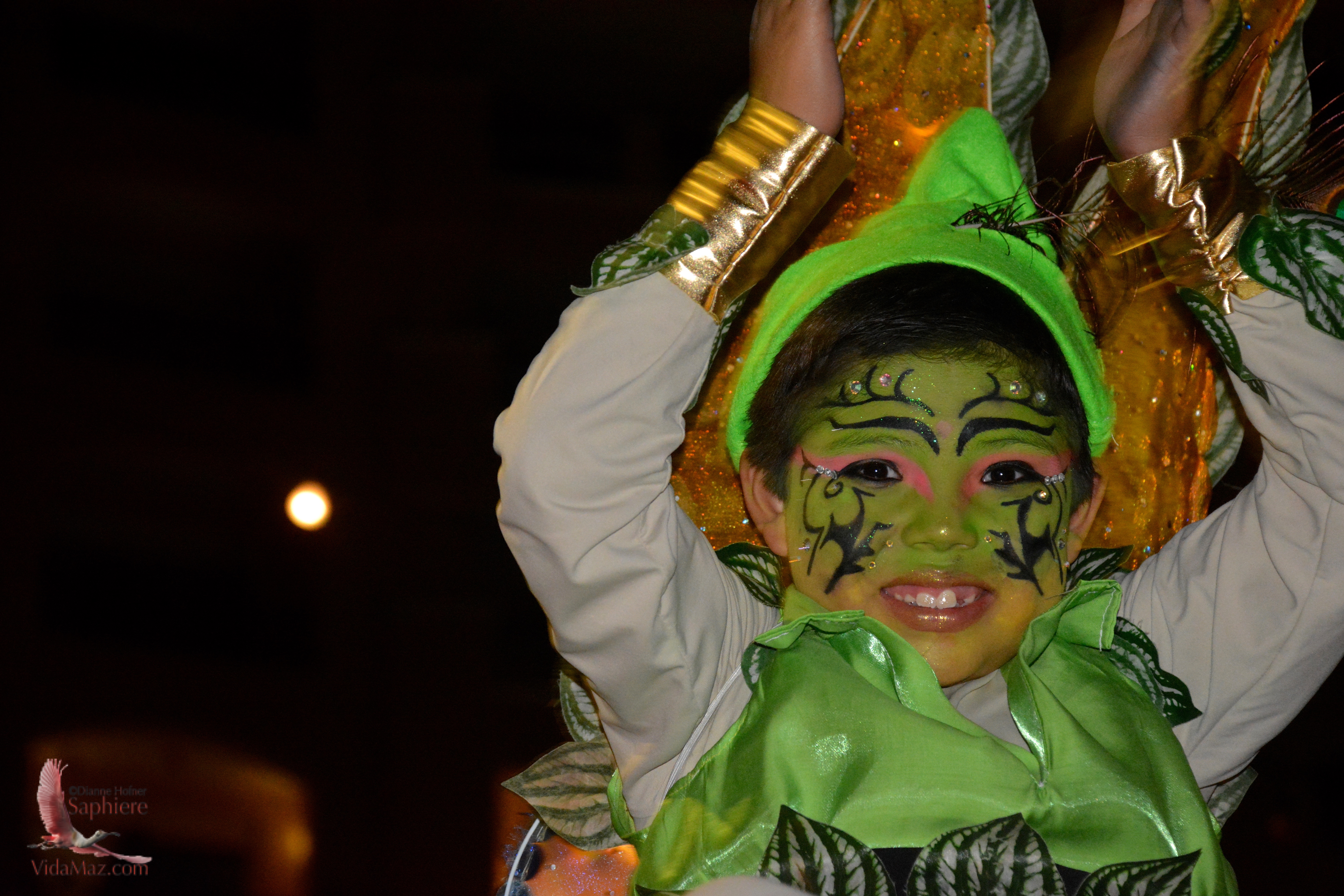
DSC_0711 - Version 2We absolutely LOVE the Carnavál parades every year. There is nothing better than a bunch of Mazatlecos in good humor, with their dancing shoes on and ready to party! Everyone from toddlers to grandparents get in on the fun. Mazatlán’s first Carnavál was 117 years ago (1898), and 2015’s parades had 31 floats. Dance troupes from studios and schools all over town participate in our parades. I love all the youthful exuberance and excitement as these kids, who’ve rehearsed for months and raised money for costumes, get their big day in the limelight. It is a city tradition, involving at some point in time nearly every family in town, it seems. I enjoy watching them in the parades, and also as they put on their makeup, chat, eat and warm up prior to the parades. I especially love the young couples in love. Here are just a few of my favorite Carnavál faces of 2015’s parades. Click on any photo to see it larger or view a slideshow (highly recommended).

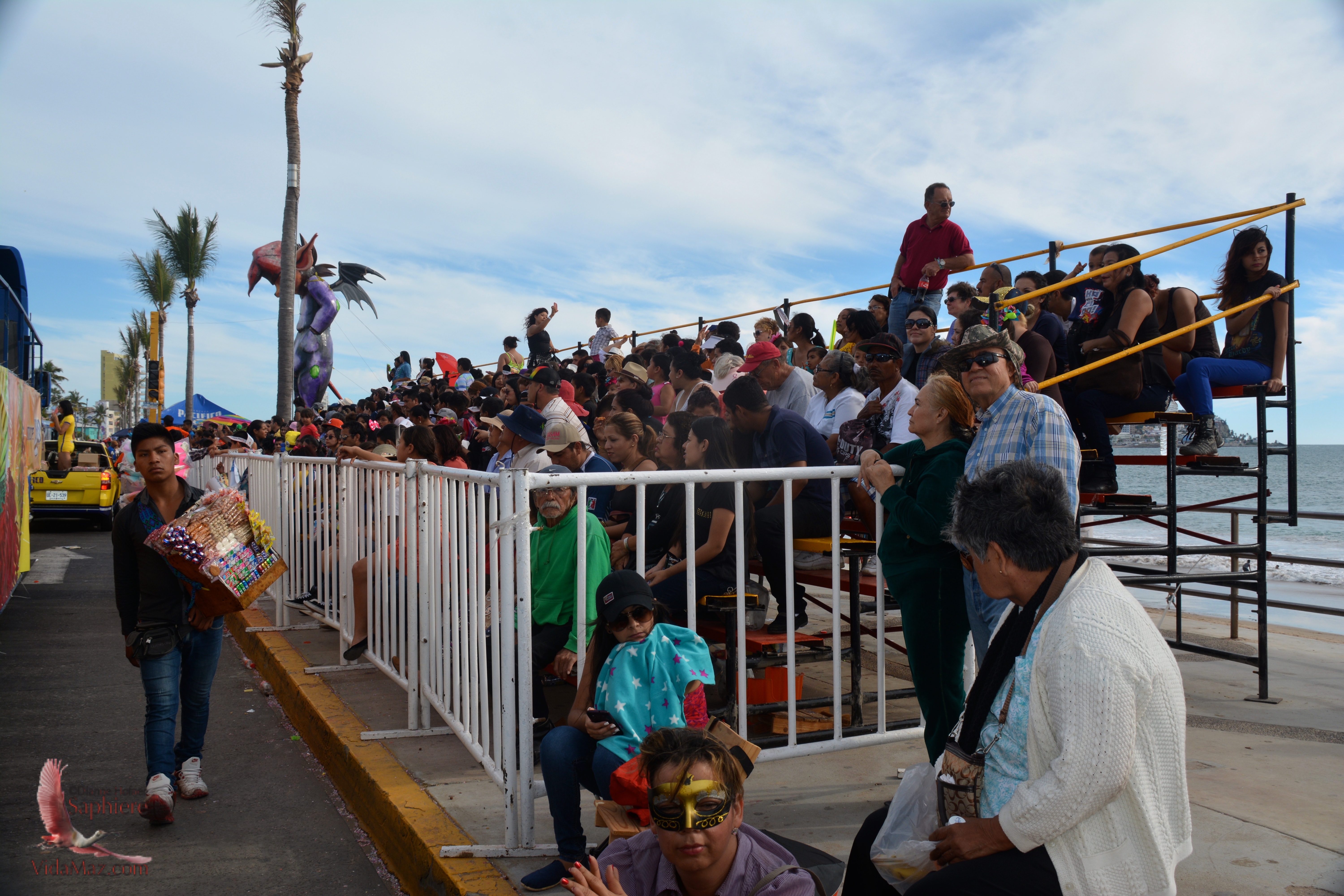
The parade on Sunday had 300,000 spectators, not to mention those on Tuesday! The city supplied free bleachers with 15,000 seats this year, making Carnavál fun accessible to more people.

DSC_0246

Most of the people in our condo building prefer to watch the parade from the pool deck. From there they can take photos of whole floats, with the bay and the sunset in the background. We prefer our annual street-side party, where we can cheer on the dancers and join with them when they invite us to do so. It’s great fun! Click on any photo to see it larger or view a slideshow.

This year the pre-parade came round and we all caught beads, hats, t-shirts and other gadgets. The main parade, however, was well over an hour late. It started fairly on time; we saw the fireworks. But then it stopped. We waited. We drank and danced. We talked with our neighbors and friends. We enjoyed the clowns and vendors passing by, and the families and kids playing in the street. And we wondered what had happened to the parade.

It seems a generator failed on one of the floats, and it took quite a while to get it functioning. Also, a huge group of people were blocking the parade route, and the police had to restore order to the scene. Finally, about 8:00 pm, the first parade reached us.

The theme this year, “Dreams of Momo,” the god of merriment, was interpreted as one of fantasy and mystery, including a variety of entries such as Ali Baba and the 40 Thieves, dragons, fairies, Indian goddesses, unicorns, a Medusa-like octopus, China, Japan, Egypt, and Native American chieftains.

As you know, Maestro Rigo Lewis, who designed our royal floats for over 50 years, passed away last year. This year of course was a transition year. I’m afraid it was a rather disappointing one. The royal floats were not nearly as regal, intricate, realistic or impressive as we have grown used to—no one gasped or said “wow” like they usually do. We have been told by some of the designers that CULTURA was afraid of losing Rigo’s legacy, so they wouldn’t let them create freely, but rather had them attempt to honor his baroque style. On the other hand, we’ve heard and read that CULTURA is eager to forge a more modern, minimalist style of floats.

All I can say is, I hope the outcome is better next year. The regular floats were uneven; some were really quite cool, and some looked like they were put together by high schoolers. For the first time ever, some of the commercial pre-parade floats were better than those in the main parade! We saw plain, undecorated iron rods and scaffolding; generators right in the middle of floats, blocking the view of key elements; floats that were very obviously made for third-story rather than street viewing, which ruins the whole tradition in Mazatlán of a street party and caters to the privileged; floats such as that of Momo that were so plain as to be embarrassing; people showing through sheer fabric on the floats when we weren’t supposed to see them; lights that were too direct and overbearing; and floats that had so many elements to them that there was no viewing angle from which you could see the main points clearly. All in all, the floats were not up to the standard that CULTURA has set for us. But, it is a transition year, and we can hope that 2016 will be better than ever.

There were quite a few LED floats, which we saw the first time a few years ago in the children’s parade on Monday night. This year, there was no children’s parade, nor were there fireworks on the malecón on Monday night. We really missed this, as did tens of thousands of Mazatlecos and tourists. The Espinoza Paz concert in Olas Altas was great, but not a replacement for a family-friendly, easily accessible and free-of-charge activity like the parade and fireworks.

Want to know one of the best parts of the pre-parade on the second day? A bunch of girls in one of the comparsas spotted Espinoza Paz dining in a sushi shop just down the street from us. Check out the hysteria that ensued:

In the end, it was a TERRIFIC couple of parades, with everyone feeling joyful and happy. Beautiful community-building was had by all. Complaining that some of the floats weren’t up to the incredibly high standards set in previous years doesn’t diminish the unbelievable wonder of the event. Thank you, Mazatlán, CULTURA, dancers, and everyone involved!

Annual Schedule for Carnavál de Mazatlán

Those of us who are privileged to live in Mazatlán either look forward to Carnavál as the best event all year, or hightail it out of town as the tourists pour in to enjoy this most wonderful event. Carnavál here is a festival of the people. Teenagers rehearse their dance moves for months, and joyfully don their costumes for the big parade days. There are events for children, for adults, and for the whole family to enjoy. Each year the party zone includes dozens of live bands playing each of the six nights of Carnavál, plus four main concerts/coronations.

Each of the coronations involves the pomp and circumstance of the coronation itself, dance performances and music, a concert by a major national or international performer, and a gorgeous fireworks show. Attendance at at least one if not several of these is a must!

The schedule of the main events for Carnavál doesn’t change year-to-year, although the dates do. In 2015 Carnavál de Mazatlán is February 12th through 17th. It is always the six days prior to Ash Wednesday.

PLEASE NOTE: In 2015 on Monday night it appears there will NOT be a second fireworks show on the malecón as in prior years, but instead a concert by Espinoza Paz in the Olas Altas party zone at 10 pm.

In the past, I’ve published a schedule to help people remember what happens when and where. In this age of infographics, it’s now possible for me to create and share one with you. I hope you’ll print it off for easy reference, and that it will help you plan your very busy and fun-filled week! If you click on the infographic below, it’ll take you to a page where you’ll see it larger, and you can view it even larger again in “presentation mode” on the upper left of that screen. This is my first time to make an infographic, so thank you for helping learn to do it as well as possible.

Don’t forget that we have loads of posts about past Carnavál events, as well as numerous videos on the VidaMaz YouTube channel. Here’s the infographic; please share it around!

See you at Carnavál!

Carnaval Schedule 2015


It’s a Horse Parade!

CabalgataDo you love horses? Do you love an excuse to party, and are amenable to doing so before, during and after you ride 25 kilometers on a horse? Do you have kids who enjoy watching horses dance? If so, you ought to join in the Familia Escobar’s cabalgata or cavalcade next year. The cabalgata is held up in Cerritos on the second to last weekend in January every year, and this time 600 horses and riders, from five states of Mexico, participated.

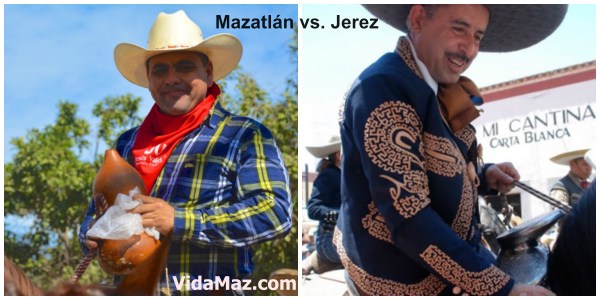
This was so very different from our first cabalgata—in Jerez de Zacatecas, on Holy Saturday of 2011. That one hosted thousands of charros with incredibly beautiful sombreros, tooled leather and embroidered suits. Here in Mazatlán, it’s puro Sinaloa, baby! Most everyone wore a cowboy hat rather than a sombrero, though we did see a few baseball caps as well. Almost everyone had a bandanna around their neck, jeans instead of leather, knee-high leather boots, and either a brightly colored shirt or a plaid shirt instead of an embroidered, fancy mariachi-like top. And, in typical Mazatlán style, we saw one guy without a shirt.

One surprising thing, at least to us: they were drinking a whole lot less here than what we witnessed in Jerez. Amazing? I’m confident they made up for it at the final ranch, or perhaps it’s because this is much more a family event, but we only saw beer, not the quantity of tequila and whiskey that we did in spring 2011 in Zacatecas. I will also say that Mazatlán wins, hands-down, in the friendliness department!

Men, women, children, couples, families, and singles participated. Riders told us there were over 1000 people participating, Tourism reported 600, but at most we saw 250-300 pass by us. We waited on the beach in Delfín for quite a while, significantly north of the bridge. However, the riders must have turned back to the road from the beach quite a ways north of Delfín, because we only saw a few on the beach—the bulk of them we saw on the road to Emerald Bay.

The cabalgata started at Rancho Chuchupira, which is about 14 km north of town. Because the bridge is under construction, the riders this year rested at Oceanica, the drug rehab center in Delfín just north of the wonderful new bridge. There the facility’s staff watered the horses, and guys on 4-wheelers handed out beer and water. The riders continued south along the railroad tracks, turning west for another rest at Rancho El Palomo, and then ate lunch and partied with beer, food and banda music at Rancho Las Habas. Quite a deal for 150 pesos! We met riders from Nayarit, Jalisco, Zacatecas, Durango and the USA, and were struck by how incredibly friendly everyone was. Greg and I both received multiple offers to hop on a horse and join the fun.

If you’ve never witnessed a cabalgata, it’s worthwhile taking the opportunity. Sinaloa is farm country; raising horses is part of one people do on the ranchos here. Cabalgatas are another wonderful cultural opportunity we can avail ourselves of here in Mazatlán. I do, however, recommend you ride rather than just observe. Looks a whole lot more fun!