Desfile Semana de la Moto 2011 / MotoWeek Parade

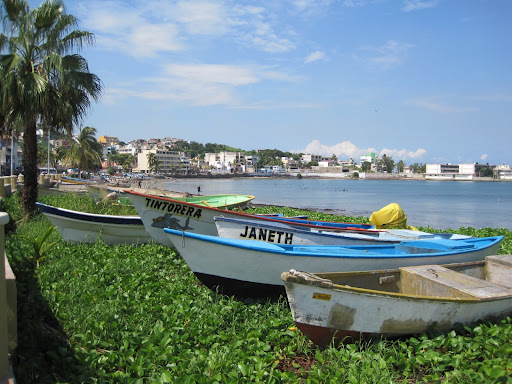
This is our third Moto Week parade. It was much lower key than other years–fewer people, less organized. The parade lasted at least two hours. We LOVED it. Time to sit back in our chairs, sip a soda or beer, look out over the ocean and the incredible sky, and thank God that we are able to live in Mazatlán, amidst so many fun-loving people.

There are lots of photos in this album (130 or so). It’s really fun. So, please, pour yourself a cup of something, sit back, and enjoy… Join us next year!

Fishing for Jellyfish


We walk the malecón nearly every morning, and at least 2-3 times a week we stop to buy fresh-caught fish. Most local panga fishermen, as fishermen worldwide, seem to have a very difficult life. They work through the night and make very little profit on their catches. Shrimpers have also had a difficult time in recent years, with fewer shrimp to be found, smaller sizes, and lower prices.

This morning in the paper I read that one new fishing market is to catch jellyfish. There have been three new permits issued in Sinaloa state, each permitting the catching of two tons of jellyfish per day. Now, having lived for so many years in Japan, I love jellyfish, and have eaten a lot of it. But I have never heard of a Mexican eating a jellyfish, so the article caught my eye. Sure enough, local fishermen are harvesting jellyfish in order to sell them to the Asian market.

They are fishing for cannonball jellyfish, the same species that US fishermen harvest off the southern Atlantic coast and the Gulf of Mexico.

Jellyfish have been eaten in Asia for over a thousand years. They are a huge market; Japan alone annually imports over $25 million worth of jellyfish, and that’s in addition to what they harvest locally! Jellyfish have a high nutritional value. They contain lots of collagen and protein and no cholesterol; it’s believed jellyfish rejuvenate cells and restore one’s youthful appearance.

There is a very short (two months or so) fishing season for jellyfish. It seems local shrimpers caught cannonball jellies in their nets, and found out that they could market them to Japan rather than throw them back. While many species of fish and shrimp suffer from overfishing, this same overfishing has caused an overpopulation of jellyfish. For years Japanese have created new ways to use and eat jellyfish, since they were in such over-supply.

What has no heart, bones, eyes or brain, is made up of 95% water, and yet is still a remarkably efficient ocean predator? You guessed it! Eat up now!

Some jellyfish recipes
Jellyfish salad
Stir-fried chicken with jellyfish
Jellyfish silk
From Australia
Jellyfish BURGERS????!!!
Jellyfish ice cream
Jellyfish shooter (not really jellyfish, but looks cool!)

Couldn’t resist concluding this post with a jellyfish photo from this year’s Carnaval parade, lol!


High Schools and Foreign Residents in Mazatlán


The most popular post on this blog has been the one about choosing schools, entitled “Moving to Mazatlán with Kids.” It would seem that more and more families are moving to Mexico, and Mazatlán in particular, with families, and there is a dearth of English-language information available to them.

Next year our son will be entering high school/prepa. We have gone through quite the comprehensive process with him, so that we could choose the most appropriate high school for his needs. I therefore thought it might be worthwhile to share with you some of the information we gained, in hopes it might help you with your planning, and spur further conversation/information sharing.

I will write a review of the four high schools that we looked at. Please know there are many more schools than this in town (none currently offer an IB program), including the public (federal) school that is actually the most highly ranked on national ENLACE tests, Vasconcelos. We have several (local) friends whose children go there, and they rave about the education and the caliber of the students at this school. While it is not one of the four I’ll review below, it may well be worth a look. There are also at least two brand-new schools coming to town, though I do not know if either (will) include a high school: Montfort and Rex. We also increasingly meet people who are homeschooling their children, and they seem very happy with their choice.

All the schools below have bus and cafeteria service, as well as after-school sports teams and cultural clubs and activities. All of the schools listed conduct study for the TOEFL test, which most kids will need if they graduate high school in Mexico and want to attend university in an English-speaking country. They all have virtual classrooms, but use them to VERY varying extents. Electives are not offered, other than the specialized tracks offered by some schools third (senior) year.

Colegio Andes
This private school is part of the Universidad Anáhuac system (an affiliation that started in 2010). While it is not owned by the Catholic church, it is affiliated with the Legionaires of Christ. There is a mass once a month, weekly “social participation” (kids volunteer in the community), and a heavy emphasis on values and morals.

The content taught in the classes is of high caliber. Math classes include calculus and science is also quite advanced. Most of the students come up through Andes from primary school (which is bilingual), so they speak English fairly well. French is taught in high school; another advantage of this program.

The high school is fairly new (maybe five years ago they expanded from junior high to include a high school?) and thus still fairly small. It is located next to the University of Durango, behind Sam’s Club. A graduating class currently has at most 20 students. This can be a huge advantage, as the ratio of counselors/advisors to students is an amazing 1:3, and students obviously get focused attention in class. The disadvantage to the small numbers is, of course, on the social side of things: kids at this age end to want friends and lots of them.

Andes is comprised of an L-shaped building, with preschool and primary school on the lower floors, junior high on the middle floors, and high school on the top floor. They have a 3D model for a new high school building to be built on the property, though construction dates seem to keep changing. The facility is noisy as there are usually small children playing on the playground. They have an auditorium, a library, and a science lab. Sports facilities include several basketball courts (maybe half size) and a soccer field (again, maybe half size), though last year they built a full-size field that is still dirt.

Advantages to Andes include that students are automatically accepted to any Anáhuac university worldwide. Anáhuac offers quite a few national competitions as well as scholarship opportunities for students. Students become Microsoft-certified from junior high. During high school they can be certified in 4-6 applications. They can also participate, as of this writing, in Model United Nations; the only school in Mazatlán and perhaps in Sinaloa that participates in this terrific simulation. In senior year Andes has four areas of specialty from which to choose, though they due to low enrollments they have not yet offered all four. Kids have cubbies in the classroom and wear uniforms.

Contact: Miss Carmelita Sapién, Directora, eiramarina@hotmail.com
Costs: Registration: $5200-$6500; Tuition: $3400/mo; Bus: $600/mo (amounts in pesos)


Anglo-Moderno
Also a private school, this one is not affiliated with any church. It seems to have the largest number of foreign children amongst its students; we were told during our visit here that there are two or three in each class, while someone else during this same visit told us nearly 1/3 of their school is non-Mexican (Chinese, Indian, French, American). The facilities are brand new; this was their first year in the new facility, in the marina next to Tec, near the new International Center. The new buildings house the junior high and the high school; primary school remains at their old facility in town.

Content taught here is also of high caliber. Each class at the prepa level has about 30 kids, and there are two salones or groups at each grade level (60 kids each grade). We were told there is a maximum of 35 students per class, and on our visit it appeared that there were a lot more girls at Anglo than boys.

The school includes a science lab (with safety shower), and library (small with few books). Sports facilities include a basketball court with a special floor, tennis courts, and a soccer field with grass (VERY hard to find in Mazatlán). There are plans to build a 3-story gym and we were told they also have plans to build an Olympic-sized swimming pool this next summer (note that plans often are not implemented per schedule here). English is taught at Anglo from primary school, and French language is taught from junior high. Thus, it is the most advanced language-wise, but any kids entering at the high school level who have not taken French will be playing catchup.

Kids here have cubbies with no locks. They wear jeans and a uniform shirt that is quite fashionable (newly designed last year).

Contact: Ms. Sashenka Acosta Palacios, 916-5090/91, PR,  Dir. Prepa: Mrs. Nora Cevallos
Costs: Registration: $6454; Tuition: $3598/mo; Bus: $600/mo; $3000 books; $200 shirt, $250 shorts, $170 sports shirt (amounts in pesos)

ICO
This is the oldest of the schools we looked at, founded by the Franciscans at the request of the city of Mazatlán in 1951. It is huge, feeling almost like a city unto itself. ICO is a tradition in Mazatlán. You will generally find that when locals talk about where they went to school, they absolutely glow with pride when saying they attended ICO. It also hosts primary school, junior high and high school, so always has a lot going on. Class size is large: 50 students per class is common, and there are five salones or classes at each grade level (750 kids total in high school). While there are few if any non-Mexican students here, they do host about five foreign exchange students each semester.

ICO has the most extensive facilities of any of the schools listed here, though they are older and more basic. There is a large amphitheater at the school, and the high school has its own auditorium, built last year and very nice. They have three science labs (including safety showers and an eye wash station!): biology, physics, and chemistry, with extensive equipment and supplies. Definitely the best outfitted of what we saw. They claim to have the biggest library of books in Sinaloa (we saw school libraries that had nearly zero books on the shelves). They have large sports fields and a gymnasium. They even have their own radio station, run by the high school students! There is a large computer lab, but the computers were the most dated of any of the schools listed here. High school students can get Microsoft certified.

Religion is taught two hours per week, there is a “vocational” class one hour a week (focused on living out God’s word, whether you enter the ministry or remain a lay person), and mass is held once per month. Teachers here seem to stay here; they appeared to be the most experienced/longest tenured of those at schools we visited. Thus, teachers here tended to be older than at other schools (they stay till retirement).

In senior year the students in ICO have four tracks or specializations from which they can choose. High school students here have no cubbies or lockers; each student takes home all their books every night, and carries them around every day. They have uniforms. In our estimation ICO is the most socio-economically diverse of all the schools listed here, the others attracting upper-class or upper-middle-class children and perhaps a few scholarship students. Here you will see variations in skin color. Another plus for us with ICO is that they have rooms at school for trabajo en equipo, a SEP (secretary of education)-mandated “group work” for all secondary and high school kids. We are used to running all over town to shuttle kids to other kids’ homes for group work, and the fact that ICO encourages kids to do group work at school was a huge plus, in our opinion.

Contact: Ms. Rosa María Hernández Alvarez, Directora de Prepa, 983-2766, rmhd_54@hotmail.com

Alicia, sub-director, speaks English
Costs: Registration: +/-$3000; Tuition: $2022/mo (amounts in pesos)

Prepa Tec Milenio
This high school was originally part of Tec de Monterrey, but when Tec pulled out of Mazatlán last year, Tec Milenio (a subsidiary) took over the high school. I point this out because Tec de Monterrey has an excellent reputation worldwide; Tec Milenio is not quite the same so should not be confused. This campus is also very new, second only to Anglo.

Classes average about 30 kids per class, with 110 kids in each grade, 280 kids total at the high school. We were told maximum class size is 36. They have plenty of room to expand and are eventually planning to build a separate high school on the campus (university and high school are currently in the same facility). Tec also has more girls than boys, on an 11:9 ratio we were told. There is one tutor for each of the three grade levels of high school.

The positives about Tec, to us, included that they did not have primary school and junior high on site. It is primarily a university, so we felt the high school kids get well-prepared for college during prepa. Many of the teachers teach at the university level as well, and the high school entrance exam is a College Board test, with just a lower cut-off score than for those entering university. The other thing we liked about Tec was, well, how high-tech it is 🙂 High school students don’t carry books; they carry their laptops to school. Homework is online, and submitted to teachers online. Students can be sure what has been assigned and whether it was submitted, and parents can log in and check students’ progress anytime. Communication with teachers is by email, or you can schedule a meeting. Most every classroom had a projector mounted on the ceiling.

Facilities include an auditorium, computer labs (very modern), language labs, a science lab (with safety shower and eye wash) and a library (with quite an extensive collection of books). Sports facilities include a gymnasium (brand new), basketball and tennicourts, and a soccer field. Like ICO, Tec has special rooms at school for trabajo en equipo, which we consider a major plus. Tec also has a “VIP Lounge” exclusively for students on the honor roll. There are no uniforms, which is of course a huge plus for most kids.

Contact: Dinorah: dsarabia@tecmilenio.edu, 182-52-50 ext 7951
Costs: Registration: $4212; Tuition: $4212 x 5; Bus: $2500/semester; After-school activities: $1000/mo; Insurance: $420 accident and $522 tuition/year; Only 3 books or so; No uniforms

It is a challenge to compare high schools by any objective measure. The national ENLACE tests are an objective measure of ability, and I paste those below. However, I think it is important to point out that most of the private schools, at least the ones described in this post, do not appear to teach to the ENLACE tests. Each of these schools test once every other month on their own content, and once every other month on the SEP-mandated tests. In contrast, public schools, notably Vasconcelos, below, are said to target teaching to the ENLACE tests. Thus, the scores below, I feel, are not necessarily an accurate measure of the caliber of the education in the school. It is also important to remember that, according to OECD 2009 data, Mexico ranks 34th (out of 65 ranked countries) worldwide in math and reading (and science) scores (USA ranked 14th, Canada 3rd). I don’t think any of us chose to bring our children here purely on the basis of the quality of in-classroom education.

ENLACE Results
2010
Insufficient
Basic
Good
Excellent
Reading
National Average
10.1
26.7
47.3
16.0
Andes
0.0
25.0
45.0
30.0
Anglo
0.0
6.9
55.2
37.9
ICO
0.4
6.7
53.3
39.6
Tec
0.0
4.0
68.0
28.0
Vasconcelos
0.0
1.0
21.4
77.7
Mathematics
National Average
36.5
36.8
17.6
9.0
Andes
38.9
22.2
38.9
0.0
Anglo
6.9
41.4
41.4
10.3
ICO
6.4
34.5
34.1
24.9
Tec
0
47.6
33.3
19.0
Vasconcelos
1.8
12.3
43.9
42.1

In summary, after three years of living here, we are loving it. Danny has completely changed his outlook: he is now a citizen of the world, and looks at countries worldwide as places he could study or live, perspectives he could learn, rather than looking no farther than the next city (which was his outlook when we lived in KC). He is bilingual and bicultural, and growing more so every day. People here ask him if he speaks English, which brings me true joy (though occasionally I myself wonder the same thing!). We feel that moving here has GREATLY enhanced the quality of his education, his upbringing, and his life. What he has learned, inside and outside the classroom, is good. Not always on a par with what he learned in his (nationally blue-ribbon-rated) school in the US, but sometimes better, and definitely much broader, including world laws, children’s and women’s rights, values and morals, how to be a good citizen, etc.

Anyway, I hope that if you are moving to Mazatlán with school children, or are attempting to choose a high school, that some of the above might serve you.


Talk with State Secretary of Tourism, 18 Feb 2011

Since I do not run a business here in Mazatlán, I don’t get out and around to many business or chamber-type meetings. Yet, I am a business person, and this is my community. So occasionally, when I do get a chance to attend such a meeting, I tend to get really jazzed. Such was the case last November with the Sergio Fajardo event that I blogged about, and such was the case last Friday when I had breakfast with Oralia Rice Rodríguez, our Sinaloa State Secretary of Tourism, along with about 65 local business leaders.

It is wonderful to get a glimpse into how business and politics are conducted here. I learn a lot about conversational and discussion styles, meet some cool local movers and shakers, and improve my Spanish. And, at least this week, I got a heads-up on some major news prior to it being released publicly (at least, I hadn’t yet heard about it!). Thank you to all who attended and were gracious enough to help me feel welcome!

Please know that any errors in my reporting below are due to inadequate notes or my lack of comprehension. I continue learning about my new home and its people. I post to this blog with the intent to share information in English, not as an expert, but as a resident. I welcome your (helpful  :)) corrections.

So, what happened that was of interest? The big stuff has since the meeting been reported in the press:

  1. Our beloved Las Labradas archeological zone (petroglyphs) will be named a UNESCO World Heritage site. WONDERFUL to hear about that in a venue such as this! I was amazed there was not an outpouring of enthusiasm when Secretary Rice said it; perhaps the others present already knew? The official naming will take place next November.
  2. They are trying to organize a major concert to commemorate the above event, and have invited Andrea Bocelli. This, again, was terrific news, and came out in response to a comment from one of the participants, who suggested that Mazatlán should start hosting world-class, big-name stars on a more regular basis, to resurrect our “golden age.”

In addition to the big news, a couple of trivia pieces that I found of interest: Sec. Rice told us that “Escuinapa” means “Queen of Love” in the Chametla language, and “Teacapán” means “Where love grows.” I did not know Chametla was a language. I googled both of these, but I couldn’t find the details; eager to hear my readers’ insights!

Humberto Rice kicked off the morning by introducing his sister, and then Oralia talked for 15 minutes or so. She seemed to know the majority of the people in the room, and appeared to be very comfortable speaking informally and conversationally to us. She told us:

  • Despite the travails our port and state have been through the past couple of years, hotel room occupancy is actually up about 4%.
  • Mazatlán is in sixth place in Mexico as a tourist destination.
  • The story about the cruise ship tourist who reported her purse stolen, and the homeless man who returned it to the port when he found it sitting beside a bench in the plaza (ALL its contents including ID papers, credit cards and cash intact). We do have terrific people who live in this town! (She did not mention the collection our local foreign residents took up to help and thank the homeless man.)
  • This administration wants a very inclusive and open government; that the shield of Sinaloa belongs “to everyone.”
  • When Malova called her and asked her to be Secretary of Tourism, she asked him why. He told her, “because I want to make Sinaloa the best place in which to live.”
  • She has an open office and any of us are welcome to come to visit her without an appointment. Very surprising to me, she even gave out her cell phone number!
  • At some length about the damage that has been done to our local economy by the US travel warning issued last year that includes Sinaloa and Mazatlán. She said Governor Malova has met with the US State Department, and many state officials have had meetings at the US Embassy in Mexico City, to push for the repeal of this bulletin.
  • She would like to hear how we would like Sinaloa to be six years from now, when the governor finishes his term. That they would like the public and private sectors to work together, to be congruent. That they have or can find the resources, but what they desire are proposals from the local community about how to develop our city going forward.
  • That we have a whole lot of room for development, saying there are 44,000 hotel rooms in Cancún and only 10,000 in Mazatlán, and that she’d be meeting that afternoon at 4:00 to discuss the strategic plan.
  • About the big project in the Historic Center, a pedestrian street along Constitución leading from the cruise ship dock to the Plazuela Machado, into which 6 million pesos will be invested this year.
  • She shared a vision for Mazatlán: To make our Pearl of the Pacific the number one destination for beach and culture in Mexico. I heard several people in the audience murmur that it already is.
  • She encouraged investment into textile plants, including tablecloths and uniforms. Maybe my Spanish comprehension fell apart here, but I wasn’t quite sure how this point fit into the overall theme.
  • The affluence of Sinaloa had risen 8.8% over prior year, despite the economic crisis, and that the numbers of tourists in various categories (cruise ship, national, international) were up 20-30%. This data sure hit me by surprise; I will say that living here, I do not feel an increase in tourism or affluence around me.
  • That TV Azteca would be broadcasting the Carnavál de Mazatlán events live, and that some local hotels are already reporting 100% booking for that period.
  • She shared another vision for Mazatlán: To make our city the “Barcelona of Mexico” and the Angela Peralta “La Scala of Mexico.”
  • Though there was a lot of talk about cruise ships, she also twice to my memory mentioned the importance (very happily to me) of ecologically sound development, and mentioned the upcoming (April 7-10) Congreso de Turismo de Naturaleza (Sustainable Nature Tourism Symposium).
After Secretary Rice finished speaking, the floor was opened to proposals and recommendations, with a format in which three people would each speak, Secretary Rice would respond, and then there would be another two rounds of three in the same manner. We ran out of time before getting to round 3, so only six proposals were offered. They were:
  1. Every tourist destination seems to have a lifecycle. We in Mazatlán do not want to be like Acapulco. We had a golden age, when the world’s best entertainers came here on vacation (rather than Hawaii, Cancun or Arruba). We need to do a big event, invite someone like Placido Domingo, to put us back on the world stage. We should also do surveys of the tourists in the airport.
  2. We need to clean our city: the roads from the airport into town, the malecón, which in the morning smells like a bathroom. This will benefit everyone, visitors and residents. Let’s not take the tourists around the dirty parts, avoiding them; let’s clean them up.
  3. Leticia Alvarado from Recrea read a proposal that was by far my sentimental favorite. She said that tourists come back to visit places where they meet people and can share emotional connections with them. She said we need to work to integrate locals and visitors, by filling our parks, our plazas and our public spaces with life, by cleaning them up, making them beautiful, and holding regular public events (VERY congruent with what Sergio Fajardo told us). She told us about a program in Culiacán where they have walking tours of the city at night, designed to increase safety/decrease fear. She said we need to make people proud to play futbol at the fields in Urías.
  4. There was a question about what COPARMEX can do to support tourist development. Apparently there has been talk for quite some time about making a Tourism Commission within the group, and that will finally be happening soon.
  5. Munir Aún said that we should not limit our dreams, that we should aim high. He suggested we move parallel with FONATUR’s plan for a Teacapan-Stone Island-Mazatlán corridor. It is obviously of utmost importance for Mazatlán to be an integral part of that corridor.
  6. The final question was asked by a developer who said that cruise ship passengers are in town for only a few hours, but part-time residents, whether national or international, spend on average 15 thousand pesos per month that they are in town, and most of them come on average for four months. He encouraged the Secretary to be sure to include this type of tourist in her planning.
Secretary Rice concluded the approximately two-hour meeting by asking those business leaders in the room, “Are we ready for the highway from Durango to open?” She talked about what an incredible opportunity the highway will open for Mazatlán, how much work it’s been. If people come and are disappointed, they won’t come back. We need to be ready, to capitalize on the opportunity. She talked about a “pueblo digno,” a proud city of Mazatlecans who love our heritage and our port. She reminded us that as seafarers and mariners we know how to survive a storm. And, again, she urged everyone to submit their ideas and proposals to the Secretary of Tourism; if they don’t have the resources, they will work with the other departments to get them.

In conclusion, I was left with several things in my mind. So hear goes my personal opinion:
  1. Couldn’t we put together an online “sign this petition,” asking for people’s support to have Mazatlán removed from the US State Department’s travel advisory? I receive several such online petitions every week; they can’t be that hard to do, right? And it couldn’t hurt?
  2. I realize the cruise ships are big money. They are said to build tourism because cruise ship visitors come back for longer stays later. And, we all know how ecologically unsound these ships are. I also very much worry about the impact they have on a local community. During certain hours of the day certain places are crowded and overloaded, while others remain empty. It’s a dynamic that does not seem to me either sustainable or sound for a community. But, yes, the money and exposure are good; many local families survive on that business. So, I would LOVE to see that the Secretary of Tourism keeps the cruise ship business in perspective. I invite her to look at the two vision statements she shared with us on Friday: Mazatlán as THE beach AND culture destination of Mexico, the Barcelona of our country, with El Teatro Angela Peralta being La Scala of the new world. We can all support these visions. Overly focusing on cruise ship tourism could very easily sidetrack us away from that vision, rather than helping to fund and maintain it.
  3. Mazatlán and its environs are absolutely gorgeous. Yet, when I look at photos from decades ago, I realize how much of that beauty we have lost. The gorgeous estuaries along the coast that we used to have! The mangrove forests! The clear blue skies! Any sustainable tourism development plan, it seems to me, MUST include a plan for preserving our natural environment. Ecologically sound development must guide us. The scrubbers on the power plants will be a good start, but we need to convert our buses for clean-air energy. Neither tourists nor locals want to wake up to black clouds of inverted air pollution! There are grants available internationally for this sort of thing. Let’s go, Mazatlán! We can clean and beautify our environment while we create a better style of life for our people! Cleaner air (and water) means healthier people and fewer medical bills.
  4. I’d like to echo what Leticia Alvarado Fuentes said. By bringing life to our public spaces, and encouraging year-round cultural activities, we will overcome violence, build community, and attract tourism. Year-round cultural activities, for everyone. Let us not get stuck in an us vs them, tourist vs local, mindset of hosting cultural activities in the tourist season with nothing for the locals the rest of the year. Mazatlán has an incredibly rich cultural life, and showing it off all year long can do nothing but extend our tourist season!

Foro Empresarial COPARMEX Mazatlán, 26 Nov 2010, No. 1

Yo soy fuereño nací de aquí muy lejos
y sin embargo les digo en mi cantar
que tienen todos ustedes un orgullo
el gran orgullo de ser de Mazatlán.

I love my adopted city. It is absolutely gorgeous. Our daily morning walks and bike rides along the seawall to buy fresh fish and shrimp, greet our neighbors, watch the fishermen play dominos, or talk to the oyster divers … make this place home. Some of the world’s most hospitable and happy people live here, in Mazatlán, nestled between some of the world’s most beautiful beaches and mountains.

But, as I’ve written about before, my beloved adopted home is sick. We hear the statistics about drug trafficking, we hear of murders amongst drug lords. As I look around my fair city I see more and more a numb reaction to the loss of human life, and, even in some of my most beloved (and internationally successful) banda groups, a glorification of violence. Living here drives a wedge between my extended family and us, as they cannot imagine why we would move to such a violent place.

We continue to feel much safer here than we did living in a US city. The violence here seems much more targeted and, honestly, carefully executed then what we were lived with in the States. Every Sunday as we set up for mass in the cathedral we lit a candle for each victim of a murder in Kansas City. By the end of the year it took me the better part of half an hour to light all the candles!

I struggle with what I can do to help my city. Our son participated in Model United Nations last year. They took up the theme of combating narcotrafficking. They didn’t find great solutions, as we might hope young people would. Rather, they got stuck, discouraged, just like all of us seem to. It’s a tough and complicated problem.

Today our local branch of COPARMEX held a business forum entitled Sinaloa: Un Futuro Extraordinario. I was able to attend, and it was incredibly educational as well as emotional! I learned a lot, for sure, and it’s going to take me a couple of blog posts to tell you about all of it (warning!). It was emotional for two reasons: the first speaker was awesome but depressed the heck out of me, but he perfectly set up the final speaker, who seemed to, finally, have some of the answers.

The first speaker was David Calderón, Director General of “Mexicanos Primero.” His presentation was excellent, full of informative, well-presented, meaningful statistics, all from their 2010 report (just released last week), which unfortunately does not yet seem to be posted online. So why did I find his talk so depressing? Because it caused me to think: Why in the world had we purposefully brought our son to a country in which 51% of its kids score “insufficient” on the country’s own national competency tests (ENLACE for secundaria)? And to a state where over 50% of the kids scored “below basic” on those same tests (ENLACE, PISA, EXCALE)? What were we thinking? I totally believe that education is the key to our future. Why had we brought Danny here? I know our reasons were precisely those: to get an education, a real one; to become bilingual, multicultural; to gain experience living as a minority rather than a majority member of society.

Today’s final speaker, a man with whom I would absolutely love to have a very long, wine-fueled, philosophical dinner, had such passion. He voiced clarity, he communicated his own inadequacies and gifts, and I found his message bringing tears to my eyes and hope to my heart. Yes! That was why we brought our son here! For him to learn first-hand that social inequality is not a good thing! We came here to motivate our son to want to help our world distribute power and opportunity, to understand in the marrow of his bones that an educated, empowered people is much healthier, safer, and saner than a populace filled with the vitriol and despair of socio-economic disparity and immobility. Our final speaker today was the former mayor of Medellín, Colombia, Sergio Fajardo Valderrama.

I figure I’ll need about three blog posts to summarize today, at least in my own mind.

  1. First, I hope to tell you a bit of the message I gleaned from Doctor Fajardo, a mathematician and architect’s son-turned-mayor.
  2. Second, I’d like to try to find “Mexicanos Primeros” 2010 report and summarize for you some of its powerful statistics.
  3. Finally, I’d like to do a lighter post on some of the cultural differences I found attending a business leadership conference like this, the first I’ve had the privilege to attend here since moving to Mazatlán.

I hope this introduction has whetted your appetite! Now I just have to find the time to write the posts ☺

Read post #2about this Foro.