The Best Views in Mazatlán

1.DSC_0174

Looking back at downtown over Goat Island from the top of Deer Island

Where are the best views of Mazatlán? Atop the lighthouse? From up top of the Freeman? I believe that the views from atop Deer Island rival even those taken from the air in a helicopter. They are some of the most glorious vistas our fair city has to offer.

If you’ve taken a kayak, catamaran, or any other kind of lancha over to the islands, or if you’ve swum, you know that. The water around the islands is so crystal clear—the color of turquoise—and you can view Mazatlán in its entirety, from north to south, with the Sierras as a backdrop. Click on any photo to enlarge it, or to view a slideshow.

Then, as you climb up the island from the beach, each hill reveals new views and surprises. I have climbed up the first hill before, but I had not done a trek of three of the four hills, as we did this past Tuesday. I have not gone to the backside of the island, and looked out from different elevations. It is truly stunning!

Petroglyphs in Mazatlán. No, not Las Labradas. Here in Town.
And, on Deer Island, in a cave on the back side, there are petroglyphs. Not just those north of town, in Las Labradas. There are petroglyphs right here in Mazatlán!

When our friends saw the photos, they said the petroglyph of the footprint looks like proof that aliens were here. Right next to the foot is a petroglyph of an animal with a long tail.

Footprint petroglyph on Deer Island, Mazatlán on the right. Modern-day pedicured foot on the left. ;)
Footprint petroglyph on Deer Island, Mazatlán on the right.
Modern-day pedicured foot on the left. 😉

Our Photo Class
It’s a funny story how I discovered this. I’m taking a (wonderful!) photography class with Salvador Herrera, and loving it. Well, he invited us to Deer Island for photography practice. He advised us to wear tennis shoes, and to bring sunscreen, a lunch, and water. He also said we’d be home by 2:00 pm. Little did we know that we’d be hiking all day, in quite precarious conditions, seeing the most spectacular views imaginable, and then even rappelling down into the cave with the petroglyphs, to return home after 5:00 pm! You gotta love Mexican communication style and spontaneity! It was an incredible day!

One of the students in our class is a cheerleader. He had a friend visiting him from León, and she’s a cheerleader, too. They were kind enough to do some jumps and flips for us, so we could practice our photography skills. Take a look.

Where is the Cave?
The cave with the petroglyphs is on the back side of Deer Island, just below the crest of the third hill. You climb up from the south side of the island, on the southern end of the beach. From the top of that first hill, you’ll proceed along the crest of the island, down and up two more hills. Then, on the top of the third hill (not the fourth or northernmost, the second from the north), you turn west and hike down in altitude a bit.

The climb gets steep and is not for anyone without great balance as well as good strength and stamina. The final entrance to the cave involves a five-meter sheer drop. Agile climbers can find footholds and handholds, but we used a rappelling harness and rope for added safety.

The Three Islands/Las Tres Islas
Quick! Do you know their names? Starting from the south: Isla de Lobos/Wolf or Sea Lion Island, Isla de Venados/Deer Island, and Isla de Pájaros/Bird Island. Many people and websites erroneously call the southernmost of the three islands Isla de Chivos/Goat Island, but that is actually the island in front of the lighthouse.

The biodiversity of the islands in our bay is an incredible treasure. Four climactic zones are found within such a small area: semi-desert, tropical, coastal and mountains. Over 500 species of birds can be found here, including gorgeous waterfowl and my favorite, blue-footed boobies! 20% of the species found here are unique to this area—you can’t find them anywhere else! The islands are composed of volcanic rock, landslides and foothills. On the islands you can find cacti, agaves, lichen, and deciduous shrubs including lots of beautiful plumeria. Plus, of course, goats, lizards, a multitude of butterflies and other wildlife.

The middle island, Deer Island, is the most-visited of the three. Its attractions include its beach, with fine white sand and crystal clear water, rippling out from the beach in increasingly darker shades of turquoise. The north side is great for snorkeling, lobsters and scallops, and it makes for a terrific kayak trip. Deer Island is 2.3 kilometers off the coast, 1.8 km, long and between 250 and 700 meters wide. It’s highest point is 178 meters (and don’t my legs know it!), and it has an area of about 54 square hectares.

Bird Island, on the north, is 120 meters high and has an area of 48.5 hectares. Goat Island is pretty much inaccessible.

For Sale?!
While most anyone in town will tell you that these three islands are an ecological preserve, and I sincerely hope they are protected by legislation, there is currently an advertisement to sell these three natural treasures.I do hope it’s a joke!

Do You Know the Legend of the Three Islands?
It is said that the indigenous people of this area were suffering from a succession of horrible hurricanes and flooding. The Mazatl people were beside themselves with grief; they were exhausted and starving.

The village chief asked the curandero what he could do to put things right and bring prosperity back to his people. The curandero went into a trance, and told the chief that the only way to put things right would be to sacrifice one of his three daughters—one of the three beautiful princesses—in order to restore the welfare of the pueblo. The chief loved all his daughters dearly, and was distraught because he loved his pueblo, too. He just could not bear to sacrifice one of his daughters.

Unbeknownst to the chief, his daughters swore a secret pact. The three of them loved their home, their neighbors, and their father so much, that they would sacrifice themselves and thereby restore the prosperity of the area. One night, under a full moon, dressed in white and with the diamond their mother had given each of them when they were born, the three princesses held hands and walked into the ocean, drowning themselves for the sake of their people. One sister’s hand came free, and she was swept slightly away from her sisters, but the other two sisters hung onto each other tightly.

The morning after their sacrifice, the Mazatl people saw three gorgeous islands out in the Bay of Mazatlán! One island was located slightly to the north, on its own, while the two to the south were connected. That was when they discovered that the princesses were missing! Such an act of pure, selfless love!

Thereafter, the climate changed and the weather of Mazatlán became tranquil and pleasant. To this day the three princess islands continue to protect the people, sheltering them from winds, storms and hurricanes. It is said that in the heart of each of the three islands can be found a diamond.

Do you know the name of the annual swim out to Deer Island? Yes? The Travesía!

Even if you are not incredibly mobile, you can get out to Deer Island on a boat and enjoy the views from the beach. If you haven’t done so, I highly encourage it. Spend the day; you’ll feel like you’ve gone to a Greek Island. If you are fit, take a hike up, at least to the first hill. The views will astound you. If you want to go to the cave, I’d recommend you go with someone who knows the route; it’s pretty tricky, at least for my level of adventurism.

And, of course, we couldn’t have asked for a better day!

An update/adaptation of this post appeared in M! Magazine in October, 2015 under the title, “Three Time’s a Charm.”

Farm to Table 2014—O•M•G!!!!!

1.P1100281

THE best meal we’ve had in six years in Mazatlán. Really. Good food involves the quality of the raw ingredients, the talent and creativity with which it’s prepared, the setting and ambience in which you eat it, and the magnificence of the people with whom you enjoy the meal. Today was cien por ciento, 100%!

Farm to Table 2014—the very first event of its kind in Mazatlán and, we believe, in Mexico. As with the first time for anything, we didn’t expect much. We hoped, but we didn’t expect. Well intentioned but poorly executed is the norm for first-time events. But no! This team pulled it off incredibly! An absolutely beautiful setting, a gorgeously perfect day, a multicultural, integrated group of very interesting, and fun-loving, intelligent people, amidst healthy, organic and delicious food, were all ours for leisurely enjoyment this afternoon. Every course, every single drink (from tequila to two wines to coffee), and the outdoor setting were beautiful! Kudos, kudos and more kudos to the organizers, chefs and servers!!!

About 100 people, including the mayor and his beautiful first lady, were seated in a field on Chuy Lizárraga’s farm at kilometer 21, just north of town. It was an absolutely perfect day—sunny, clear, yet cool enough to be enjoyable. No bugs, nothing uncomfortable, just pure unadulterated enjoyment!

Chefs from seven restaurants dedicated seven days of menus this past week to the “Farm to Table” event: Diego Becerra from El Presidio; Marianne Biascotti from Rico’s; Sarah Emerson & Gabriel Ocampo from First International Seafood House (F.I.S.H.); Enrique Espinoza of Rosso Nero; Enrique Freyre from Raggio; Hector Peniche of Molika & Krema; and Alastair Porteous of Water’s Edge. The culmination took place today at dinner in a farm field.

We were seated at long tables in the middle of a corn field, Italian style, decked out with fresh sunflowers, white linens, and all the wine and excellently prepared organic food the discriminating palate might desire. To top it all off, it was all in benefit of Avicultores Pérez Vidaña, an award-winning non-profit organization in Sinaloa that assists low-income families with severely handicapped children by teaching them to raise chickens and eggs for food. Proceeds from the event also support the Mercado Orgánico de Mazatlán’s educational programs.

Below is video of Sarah Emerson opening the meal.

Dinner (or lunch, if you prefer) consisted of eight different dishes, all prepared with organic ingredients and served family style: green salad, tabouleh, grilled veggies, chicken, quail, risotto, a dessert selection, and coffee with organic, artesanal ice cream. It was soooo wonderful to have so many vegetables, to eat one’s fill, and still feel healthy rather than weighted down! The sun was shining yet it wasn’t hot, the conversation flowed in several languages fluidly, and an excellent time was had by all.

Janet Blaser, the gorgeous, humble, hardworking, altruistic expat here in Mazatlán, has done sooooo much for our community. First she started M! Magazine, a bilingual publication we all love, which supplements other offerings and fills a much-needed gap here in town. Then she teamed with Verónica Rico, another absolutely beautiful, talented and intelligent woman, to establish the Mercado Orgánico, the MZT Farmers’ Market. None of us can imagine how we survived without the market all those years. And now, the two of them, plus a whole team of talented others, have given us the first Farm to Table Event! Below is video of her talk, just prior to dessert.

Jorge Luis Sanchez attended, a professor at UAS who also owns and operates his own organic farm. I learned soooo much by talking to him! Definitely want to take one of his classes! I suggested to Vero that they invite Jorge Luis to speak at one of the Saturday markets, so maybe that will happen. He knows so much about our environment, ecosystem, the human body, the origins of insecticides and herbicides and their impact on the world around us and our health, as well as having extensive knowledge about GMOs. With people like him in Sinaloa, our future is indeed bright!

May this be the first of many, many such excellent events. CONGRATULATIONS and thank you to all the organizers, chefs, wait staff and attendees!

Don’t Fall Prey to Scams!

extorcion

Scams are everywhere. From Canada to Chile, Russia to Italy, and China to Australia, you can bet con artists are eager to play with our ignorance (or innocence) and part us from our money.

North of the border we read so much advice about how to prevent online fraud, identity theft, or telephone scams. We know the criminals especially target retirees. Then we move to Mexico. The scams here are different. It’s a different place, a different culture. We need to learn the ropes, educate ourselves on how to avoid falling prey to a con. We may not know the language, or we may struggle with it, as well as with the customs and “fitting in.” Such factors can cause us doubt, feelings of powerlessness and thus, make us more prone to getting duped.

Con artists know human nature; they play on our hopes, fears and beliefs. And what’s one of the biggest stereotypical beliefs about Mexico these days? How violent it is—the preponderance of kidnappings and extortions. Most stereotypes are grounded in truth, but they become so generalized, applied so broadly, and become so firmly fixed in our psyches, that they become false “truths,” boxes into which we habitually throw people, without using our minds or our other senses as filters. The smallest glimmer of the stereotype in the back of our minds provides a direct beeline to our fear response. And that is just what the criminal wants, whether we’re a local or an immigrant.

Do you know the most common scam here in Mexico? It is a phone scam, 80% of which take place in private homes. Someone, most likely from a jail, calls our home. They either say they are our long-lost cousin or compadre who needs help, or they tell us they have our spouse or children held hostage. This latter is enough to get most anyone upset and, when we’re upset, we too often fail to act rationally. Remember that such phone scams are probably no worse than a scam north of the border but, because they play to our fears for our family, it can put us off balance. Think things through now, so that you are prepared if this happens to you.

Here is a summary of the advice I’ve most often read in the local press, about how to respond to a criminal call:

  1. First, think! Do we know the person on the line personally? Is this the person’s voice? Be assertive. Ask questions. Use common sense and intuition; if something doesn’t seem right, it’s probably not. Especially if the person is asking us to leave where we are, go outside, go into a hotel or certain store—don’t do it!
  2. Second, hang up. That is the advice we most often read in the local newspapers. If someone calls us and we don’t know who they are, especially if they are asking us questions or threatening us in any way, hang up. More often than not they will call back. Don’t pick up. We may worry about not understanding the Spanish, about offending someone by hanging up. But, if it doesn’t feel right, we are wise to trust our instincts.
  3. Never, ever, give out any personal information! This is true north and south of the border. If someone tells you they have your spouse or your children, or they are your long-lost cousin, don’t give them a name! Don’t tell them where you live. Don’t give them any information. Play the scenario through in your head, several times, so that the response will come more naturally should such a scam call ever come in. It’s a call we’re not prepared for. It plays to our deepest fears, and our deepest stereotypes. Don’t let it claim you.
  4. If you find yourself unable to hang up, press those on the phone for information. Plan this ahead of time, so you can think clearly in a crisis. Ask them what your spouse is wearing, or on which side of his head your (bald) spouse parts his hair. Hopefully hearing a wrong answer will then give us the courage to hang up the phone.
  5. Once you hang up, contact your spouse, children or cousin to verify that they are ok. You will feel better. Remind yourself that the caller was likely contacting you from outside Mazatlán. The most common calls here in town come from prison—and prisons even as far away as Tijuana! Most often, they just want spending money or time on their phones. But we’ve had friends, local and expat, who’ve given away much more than that. The caller is most likely not watching you or your family members. They are talking about kidnapping because they know it will more likely scare the money out of you.
  6. Call the police. That number is 066. Federal crime prevention can be reached at 088. The tourist police number is 669-914-8444. The anti-kidnapping unit can be reached at 01-800-3221-5803. Or, you can email noalfraudtelefonico@hotmail.com

Stay smart and safe, everyone! Remember, Mexico is a beautiful place, and we choose to live here for awesomely wonderful reasons. Like anywhere, we need to stay aware. Perhaps if we do, we can start to break the cycle of violence that is the kernel of truth in the stereotypes about our adopted home.

Town Hall Meeting for US Americans in MZT

75900_10202828512891008_1922606009_n

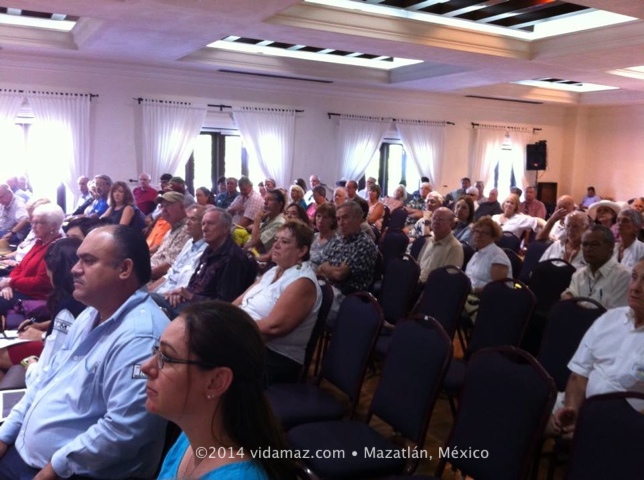
Yesterday, Friday January 24th, was our annual USA citizens’ town hall meeting at the Hotel Playa at 11 am. Several people have asked us for a report. Please allow us to summarize here on the site what we heard yesterday. Feel free to add in what we’ve missed, or to correct something you may have heard differently!

John, our wonderful consular officer, was here from Hermosillo, accompanied by Rob, the security officer, and Ian, also from their office, who’s been filling in a bit for Luís Ramirez while he’s out of town. Heather and Lety, our local consular office staff members, received a big round of applause, as did Luís in absentia. Adriana from our local office of Migración gave a short presentation, interpreted by Isa Medina. No one from Aduana/Customs attended. Iván Pico from the Mayor’s office was present, but was not asked to speak.

The meeting last about 90 minutes, and was well attended, though there were fewer people than in prior years (maybe 150 people?). John gave an overall report and then asked for questions, as did Ian and Rob. Last up was Adriana.

The meeting is primarily a chance for our consular staff to meet with and hear from US residents and visitors. This year not a lot of new information was shared, since there seems to have been pretty good communication throughout the year. Some interesting highlights included that:

  1. John asked for a show of hands for how many present had lived in Mazatlán less than five years, more than five, more than ten, etc. Most present have lived here over five years. The person present who has resided here the longest was Khacho, of JungleJuice fame, who said she’s lived in Mazatlán for 39 years. Only two or three hands were raised by people who had lived here fewer than five years. Interesting. Not sure if newer immigrants just didn’t attend the meeting or hadn’t heard about it.
  2. Rob and John both congratulated our governor for all the hard work he’s done to stem violence in our state as well as to change perceptions of violence here. Everyone agreed all is much calmer than it was for a while. In response to a request that the officials present do all in their power to stem the tide of sensationalistic State Department reports, Rob explained about the “double standard” law on the books in the US. It states that if any officer of the US government cautions any employee about safety protocol, that same message must be shared with all US citizens. Rob said that while the intent of the law is good, that’s why we get so many warnings that may seem silly or overly cautionary. Interesting to know; puts things in context a bit.
  3. Adriana from Mexican Immigration read the definitions and prices for the top three visa categories, with Isa interpreting. There were two main lines of questions for Adriana.
    1. The first was about how to renew visas. Such information is publicly available, and Adriana patiently attempted to answer audience members’ questions. It was obvious that too many rumors are going around about changes in visa status, that those in the room who have renewed visas are comfortable with the new process, and that accurate information on this topic is available online as well as in the Immigration office, so expatriates are encouraged to go to the source rather than believing or passing on hearsay. Towards the end of that discussion, 15 minutes were spent on personal inquiries, which John ably redirected to private discussions upon conclusion of the larger group meeting.
    2. The second line of questions for Adriana was around car importation, which of course is a matter for Customs and not for Immigration, and thus outside her area of expertise. She did clarify that local Aduana can not register cars that are supposed to leave the country and reenter; the local Customs office doesn’t have the necessary software nor authorization. Such can only be done by Customs at the border. O’Neal asked for an update on Luis’ efforts to get a representative of Aduana from the border down here, explaining that we have many retirees in Sinaloa and Nayarit who are no longer able to make the long trek of driving their cars to the border to re-register them, and others whose cars are so old that they are not mechanically fit enough to make it to the border for re-registration. John and Ian promised they would ask Luís about it. Several of those in attendance assured the audience that importing an auto is not really that difficult; most of the paperwork can be done through email prior to heading north. There are customs agents who are professional and speak English. One of our readers, Kitty Krohne, tells us, “We imported two vehicles. It was very straightforward….actually it was easier then getting the plaques here. If I can help or share more info with anyone I will certainly be happy to do so. You are welcome to pm me.”
    3. Quite a bit of discussion was had around the need for residents to check in and out when they leave the country. While the process at the airport is streamlined, land crossing is met with much confusion on the part of the foreign community. It was clarified that if leaving on Highway 15, one should check out and in at the 21KM checkpoint, even if they have no automobile-related business to tend to. It was pointed out that an official request to the Mexican government has been made to install signage for northbound travelers, and to improve traffic safety at this point. Adriana pointed out that there will be circumstances where checking in or out is not possible, with the example being any foreigner who travels overnight on a bus. The response to this was the familiar, ni modo.
  4. An inquiry was made about U.S. Notary services while Luís is out of town. It was pointed out by John that the Hermosillo office was sending officers down as needed to deal with this and other necessary work. If U.S. Notary service is necessary, one should check with Heather or Lety to see when such service will be available.
  5. A brief discussion around mordidas, or bribes to police officers, included a show of hands of who has been “shaken down” and who has not. Fortunately, very few have ever encountered issues. Those that do are asked to do their best to get the patrol car number, note the day and time, and report all to Iván Pico at the Mayor’s office.

Not so much to report. It was good to see everyone. I believe you all join me in gratitude that John and his staff hold these annual Town Hall meetings for us. Also many thanks to Lance at the Hotel Playa for donating use of a large salón for this purpose.

On a personal note, let’s all remember that we are guests in Mexico. Mexico is a sovereign nation free to change laws that affect us without consulting us or the U.S. Government. While we can ask our government representatives to explain what they believe is going on and ask them to inform their Mexican counterparts of our concerns, Mexico is under no obligation to heed such input. Mexicans are the first to admit that some of their laws and procedures are outdated, inefficient and nonsensical. Such is true in most countries. But we are obligated to follow those laws and we have no right or expectation that our government can change things. Expecting otherwise will most likely only get one frustrated.

Fiesta de las Velas Candlelight Procession in Cosala

DSC_0312

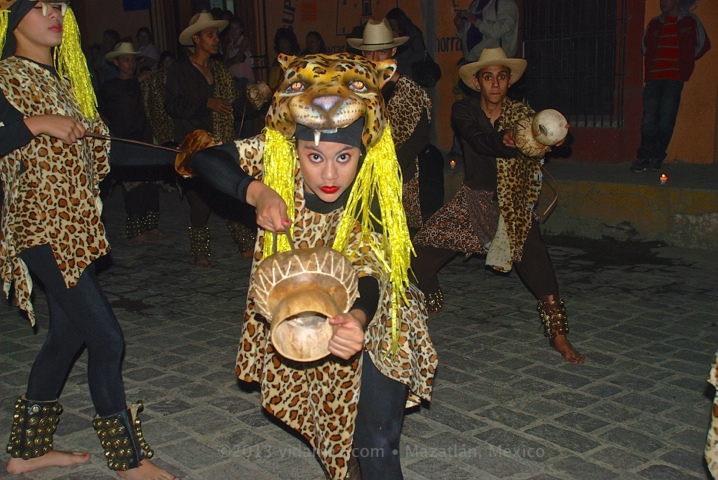
Danza del Jaguar

We have long loved the small town of Cosalá, the first and very well deserved “Pueblo Mágico” (2005) of Sinaloa. It’s history is well preserved in its lovely architecture as well as the lifestyle of its people. This year we were able to take time off work to attend the Fiesta de las Velas, which is held every December 11th, on the eve of Virgin of Guadalupe Day.

The candlelight procession was an absolute delight! It was not a “spectacle” or performance, as so many of these events become in larger cities. Cosalá’s homage to the Virgen is home-spun loveliness. The procession is a tradition that dates back over 300 years, and is the only event of its kind in Mexico or throughout the world! As Cosalá is only 2-1/2 hours from Mazatlán, we highly recommend you make the journey!

Mouse-over any photo to view it larger or see a slideshow, and be sure to scroll down to read the full post—there are lots of pictures in this one, as so much happened in such a very short time!

People all over town began lighting candles at dusk, setting them out in front of their homes and businesses, along the curb, on window ledges, and atop rock walls. We saw a wide variety of different candles: tapers, candles in glass, votives in glass, candles in plastic cups, and even beautiful Virgen de Guadalupe votives, so we supposed that each family buys its own candles to put out on this very special night.

As soon as the candles are lit, the children, of course, begin to have fun with them. What little boy can resist a burning flame? I very much enjoyed watching these three boys light sparklers from the candles their mother had just lit, squealing in delight. The entire night was just a joy.

At 7:00 pm, the electric lights in the city went dark, and the entire pueblo took on the lovely glow of candlelight. It was truly a sight to behold! The streets were nearly empty except for those waiting for the procession to reach them, so they could join in. The winding streets lined with glowing candles, street lights draped and shaded, it was truly magical.

As we walked around the pueblo, marveling at the beauty, we noticed a miniature Christmas village displayed in a window. The lady of the house quickly came out to invite us inside. This very humble-looking-from-streetside home was huge and wonderful inside! And its family was so very hospitable! We entered into a courtyard with a life-sized nativity, through to the living room with a huge Christmas tree and the village we had first noticed, past a large statue of the Virgin to another living room with a tree hung from the ceiling, out to a back courtyard that was strung with beautiful twinkle lights. Later on, we met the ladies of the house again during a procession.

The procession wound around town, lasting perhaps an hour and a half, growing larger and larger as more and more people joined in. The procession is most definitely inter-generational: grandmothers and children, husbands and wives, groups of teenaged friends or middle-aged women, all walking with candles in hand. This event was most definitely a photography challenge! In addition to low light, you have constantly moving targets! How to possibly capture candlelight and people moving? I’m sure many have done better than I did, but at least you’ll get an idea of the beauty and preciousness of it all, I hope.

The painting of the Virgin is held high, on the shoulders of local men, as she is fêted. In addition to the main image in the procession, there are of course images of the Virgen all over town to celebrate her on her special day.

People in the procession were singing and praying as they made their pilgrimage through town, from one church to another and back. There were also two groups of dancers in the procession. One group of mostly young girls carried a candle in each hand and danced in a choreographed way each time La Guadalupana was sung. They had their heads covered and were dressed in gowns, to represent the Virgen, I believe. The drummer accompanying this group was a boy dressed in a shirt with a beautiful image of the Virgen on the front.

The second dance group of the evening were the teenagers who performed the Danza del Jaguar, native to Cosalá. The young men act as hunters, while the young women act the role of jaguars, hiding, running from, and occasionally leaping at the young men. They play these terrific instruments called rotares: hollow so they’ll reverberate, with a leather cord attached that is pulled to create the sound of a jaguar roaring. Accompanying the dancers was a small band, in the back of a pickup truck, with several drums, more rotares, and other percussion instruments. This group walked immediately in front of the Virgin, and we were told that their dance clears the way of any bad spirits, cleansing and purifying the route for today’s honored guest.

The following morning as we were walking through the plaza, we noticed two of the jaguar dancers from the night before. The young woman, Maribel, had such striking eyes that we immediately recognized her. She was very congenial and outgoing, and was so very pleased when I asked her to tell us the story of the jaguar dance.

The procession ended at one of the town’s churches, where an outdoor Mass had been set up. The painting of the Virgen was proudly displayed on the altar, and Father Nahúm Villalobos said a heartfelt Mass attended by hundreds who crowded into the yard and filled the church proper to overflowing.

During the Mass, Victor Franco debuted a new song he had written for the town, Cosalá Bendita. We felt very privileged to be able to hear it as it was performed for the first time ever, in the presence of so many Cosaltecos who seemed incredibly moved by its words and melody.

After Mass concluded the outgoing Mayor of Cosalá, Mario Cuauhtémoc Padilla, and Francisco Córdova, State Secretary of Tourism, announced that the town had just officially named Fiesta de las Velas as a cultural heritage event. Next steps will be to seek state, then national, and finally, hopefully U.N. designation for this gorgeous event. I can not imagine it will stay small, sweet and uncrowded for many more years.

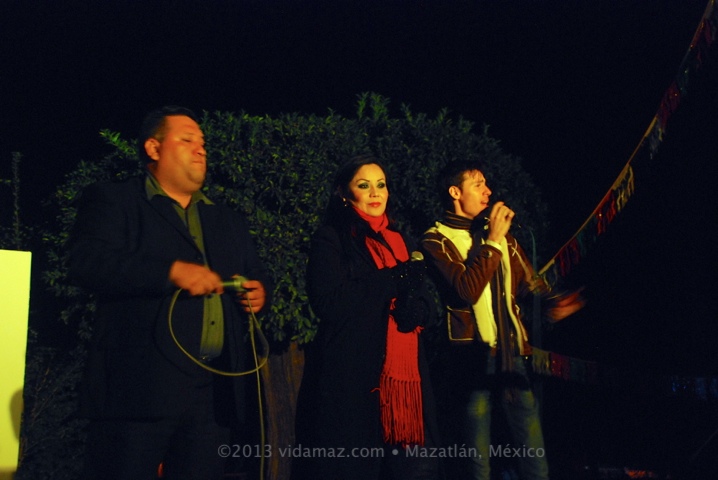
Following that ceremony was a singing performance, which culminated in singing Las Mañanitas to the Virgin.

Show

Our friends Sandra and Hector took us on this wonderful trip. They seemed to know absolutely everyone in town, so we felt so very welcome, and our friends Jeanette and Emery joined us as well. I will later do a post on the town itself, and our adventures the day following the procession, but let me leave this post here. It is definitely worth planning for next year. There are good restaurants in Cosalá, and several categories of hotels as well. I’d recommend you go up and stay two nights, as on the 12th there were fireworks, a town fair, and a children’s parade.

I put together a two minute video of the procession, including a bit of both dances and the prayers. You can view that below.