Ferrusquilla: "That statue of a composer…"

Mazatlán is privileged to have a strong and vibrant expatriate community, many of whom volunteer long hours to help make our city a better place in which to live. Many in the foreign resident community have of course grown up and lived most of our lives elsewhere. We love our adopted home, but we often lack basic “cultural literacy” about our adopted homeland. I put myself in that category, of course. Every day, many times a day, I learn something new. It’s part of why I love living here.

Last week, I noticed the below comment on one of the local expat discussion groups:

“It is located across the Malecon between two statues: the Deer, Mazatlan’s symbol; and a Sinaloa composer holding his guitar and sombrero.”

The note surprised me, because I figured everyone who lives here knows our beloved Ferrusquilla! But, of course, we don’t “all” know anything; we all have different pieces of information. I see Don Ferrusquilla once in a while, dining around town or taking a walk, and I loved his INCREDIBLE acceptance speech at the Premios Oye! last month (drag the play bar to 6:46 to skip the homage and hear the original poem he wrote just for the occasion, full of love for our fair city).

But, of course, we all hold differing pieces of knowledge, so I thought I’d share a bit of what I know about this “Sinaloa composer holding his guitar and sombrero” in the statue. Maestro José Angel Espinoza Aragón, “Ferrusquilla,” is a national cultural icon, famous throughout all of Latin America and Spain, and one of the greatest orgullos of Mazatlán. The United Nations awarded him the the Medal of Peace in 1976, the University of Sinaloa presented him with an honorary doctorate just a few years ago, in 2008, and he’s received many other distinguished awards during his career.

His “master work” is the composition “Echame a mí la culpa,” sung by most every well-known Spanish-language singer (here it’s sung by Amalia Mendoza, “La Tariacuri;” or this one sung by Javier Solís). The song inspired a Spanish movie of the same name, and decades later (in 1980) was still so popular that it won “song of the year” in Spain, as sung by Englishman Albert Hammond. Ferrusquilla has acted in 80 motion pictures alongside actors that expats will recognize such as John Wayne, Clint Eastwood, Dean Martin, Boris Karloff, Richard Burton, Anthony Quinn, Brigitte Bardot, and Robert Mitchum, and has composed, to the best of my research, 97 songs.

José Angel Espinoza Aragón was born in Choix, Sinaloa on October 2, 1919. After his mother died his father moved the family to El Guayabo and then Los Mochis, where his father remarried. In 1935, after finishing junior high, his family sent José to study in Mazatlán. In 1937 he got on a train headed to Mexico City, to study medicine, but life didn’t quite work out according to plan.

According to one interview, in 1938 the young José was working a side-job at a radio station, one that broadcasted the popular late-afternoon children’s show “Fifirafas el Valoroso.” The role of “Captain Ferrusquilla” on the show was originally played by the head technician, Carlos Contel, brother of the station manager. After Carlos’ brother told him to choose whether to be a voice actor or a technician, the show was left without a Ferrusquilla. José had the good fortune to be present in the studio when the director, panicked, asked around for a male who could read the part. Thus, by fate, the “man of a thousand voices” with the nickname “Ferrusquilla” was born.

Ferrusquilla fell in love with the female lead of the radio show, Blanca Estela (María Blanca Estela Pavón Vasconcelos). According to this same interview, the two lived in New York for a year, dubbing the voices of actors such as Ingrid Bergman, Elizabeth Taylor, and Mickey Rooney. Blanca died tragically in a plane accident in 1949. After her death Ferrusquilla decided to commit himself to music, and composed his first song in 1951.

Ferrusquilla married and had two daughters with Sonya Stransky Echeverría in the 1950s (the marriage lasted five years). He tragically lost another loved one, his daughter Vindia, in a car accident in Mexico City in 2008. His daughter Angélica is a successful actress. He has said that his daughters have been the joy of his life.

By the way, the statue of Ferrusquilla, on the malecón in Olas Altas, made by artist Carlos Espino, was unveiled in time for Ferrusquilla’s birthday, in October of 2007.

Fellow foreign residents of Mazatlán: let’s all, proudly, be sure to call this landmark the “statue of Ferrusquilla”!!!! And, Mazatlecos and fans of Ferrusquilla: please teach all of us more about this incredible gentleman, sharing your life memories of the legacy he’s given us!

Note/Update: Jackie Peterson wrote an article on Ferrusquilla in the Pacific Pearl last year. Somehow I missed seeing it, but you can check it out here. And one of my friends has given me the Maestro’s number and asked me to give Ferrusquilla a call, to let him know about this post, so I will do that as well.
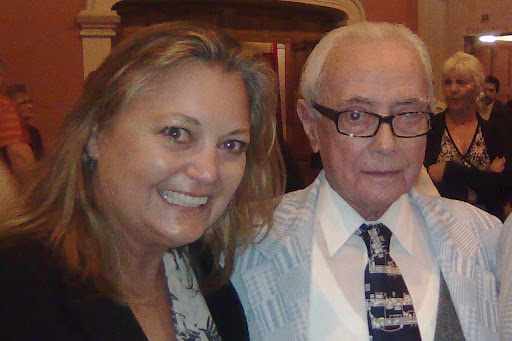
Update #2, March 5th: I met Maestro Ferrusquilla tonight. What a great man! He told me that in his younger years, he played for a year with Banda El Recodo, in the Cruz Lizarraga days, before he went to Mexico City and did the radio show. Cool trivia! He is a really nice and VERY interesting man and his English is GREAT! It felt very good to finally get up the courage to talk to him, and to have the honor of finally meeting him.

Counterfeiting and Scalping, Teenage-Style 2012 (llegar de colado)


My parents met one night when they both crashed a wedding reception. Neither one of them had been invited to the party. Neither one of them even knew the people getting married!

They lived in small towns near each other, and told me that in the day it was common to show up to drink and dance whenever anyone nearby got married or had a party with a band. According to them, the hosts didn’t mind. They expected uninvited guests to “crash.”

They fell in love after meeting as uninvited guests, a love that lasted nearly 60 years.

Fast forward to four years ago, when we moved to Mazatlán from Kansas City. One of my son’s cultural adjustments was that early on he just could not bring himself to go to a party to which, in his words, he “wasn’t invited.” Which to him, a good US American, meant that the host of the party had not personally invited him. “But here in Mexico, baby, if your friend is invited, and the friend invites you, you are usually welcome if not expected to join.” No, he just couldn’t do it.

The day after such a party, his friends would say, “Hey, Danny, where were you last night? We missed you!” Sometimes even the host of the party would say it to him. So, he learned a more inclusive approach to party-going. He learned he usually didn’t need a personal or direct verbal invitation; friends are always welcome.

But, this “open invitation” approach to parties obviously can get out of hand, especially when kids attend a huge school, when they have a wide circle of friends, or, as with teenagers anywhere, “the word gets out” and there aren’t a lot of other parties that same night. Two weeks ago there was just such a “small” quinceañera to which 300 or so kids showed up! Parents, who pay the bills for the parties, wisely want to limit attendance. But how? It bucks cultural norms.

In order to bridge cultural norms and economic realities, the wrist bracelet was invented. Parents can say, “We are only paying for 100 people for your party. We’ll invite 20 of our friends, and you can invite 80.” Then the parent gives the kid 80 personalized party invitation bracelets to hand out. If you have a bracelet, you can enter the party. No bracelet, no dancing.

Seems clear enough to me.

Well, the other night I learned that kids COUNTERFEIT the bracelets! One of our son’s friends proudly showed me the pulsera he had purchased blank, and how he had taken a Sharpie and carefully and competently copied the personalized text so that he could get into the party. I of course dutifully scolded the kid, and threatened my son with what horrible things would become of him if he ever were to do such a thing. But, in the process I’ve learned that such counterfeiting, and even scalping, of party entrance bracelets is common these days.

The kids told me about a boy at school who has a whole counterfeiting operation. He goes to a party place and buys a bunch of the identical bracelets for that weekend’s party (bracelets come in all colors and many foil or reflective designs as well). He has a counterfeiting “kit” with 3 kinds of Sharpies plus Q-tips and alcohol to clean up any erroneous strokes that occur while making the fake bracelets. He sells the blank bracelets for 25 pesos (they must cost a few pesos at most at the shop, but hey, he delivers right to you at school). Buying a bracelet complete with the counterfeited markings costs 40 pesos (15 pesos for his copying prowess).

If you don’t want to participate in counterfeiting, you can buy a pulsera from someone who was “legally” invited to the party but can’t or doesn’t want to go. These “scalped” bracelets sell for 100 pesos. Who says young kids nowadays aren’t enterprising! Capitalism is alive and well among teenagers in Mazatlán.

Thank goodness that these bracelets didn’t exist in the 1940s. My parents may never have met, and I wouldn’t be here!


Wednesday Hump Day


Mid-week. Wednesday. “Hump day.” We decided we needed to get out, see a bit of the “interior” of our beloved Mazatlán that we hadn’t seen in a while. Not like we don’t often do that, but, hey, it’s Wednesday and we’ve been working hard …

We ended up driving toward Infiernillo. We were so very psyched to spend time noticing just how clean everything looks, we suppose after it was cleaned up from the flooding last year. Danny’s Scout troop has gone out there many times cleaning up. But this was obviously a clean-up of larger, more mechanistic proportions. Well done, city!

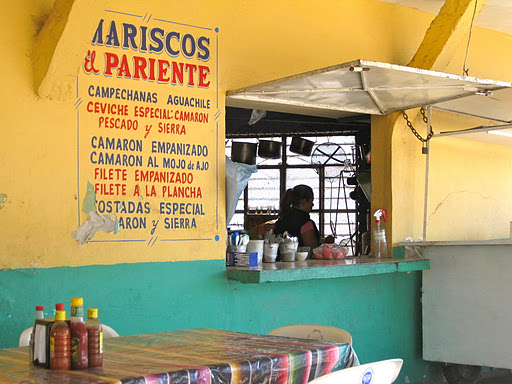
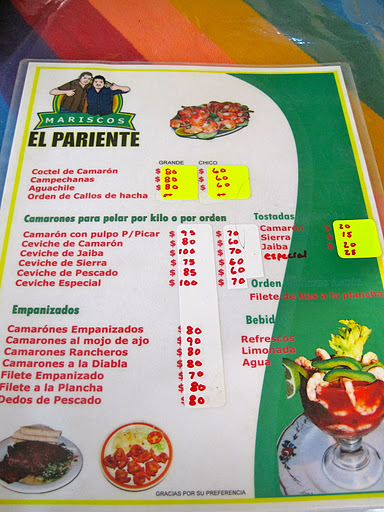
We stopped at a little mariscos and taquería that Greg had noticed yesterday, when he was refilling the gas for the grill. It is called El Pariente, and it did not disappoint.

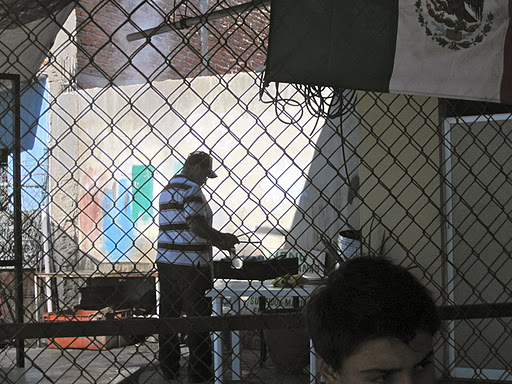
The owner was very gregarious, and worked busily on the outdoor grill. His wife worked the indoor kitchen.

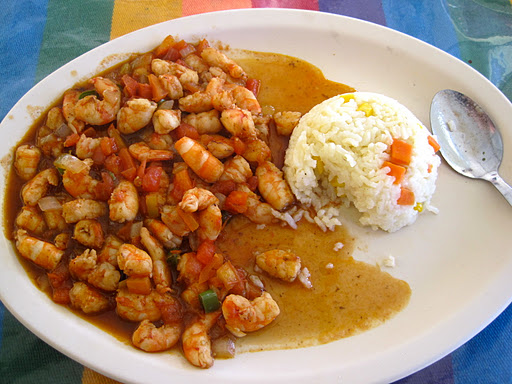
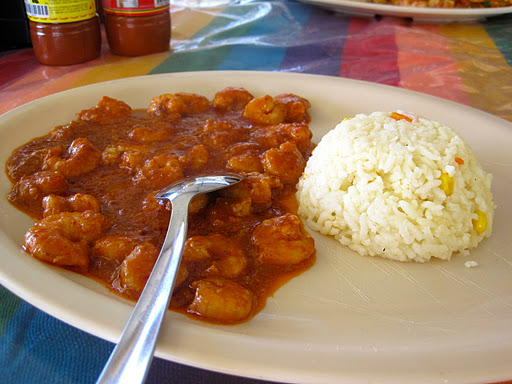
Despite the pull of the ceviche de jaiba and other cold dishes, we all ordered shrimp: camarones rancheros and

camarones a la diabla. Both were really tasty, portions were huge (we couldn’t finish), and

prices were definitely right: 80 pesos per plate.

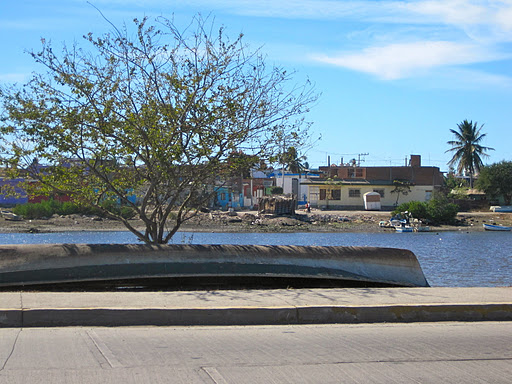
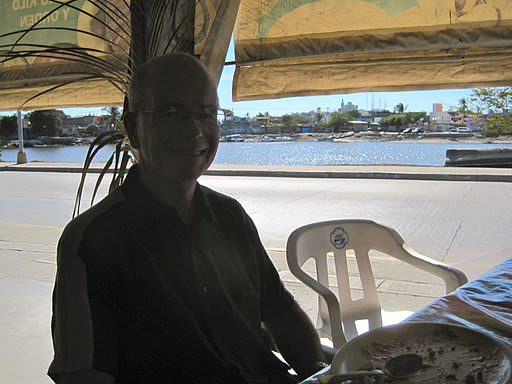
Plus, the view was very pleasant!

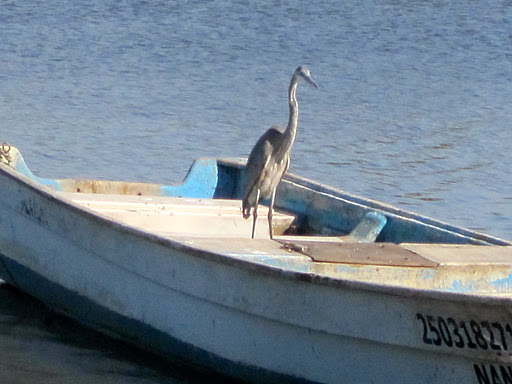
After lunch we drove around the other side of the estero, past the fishing pangas,

the waterfowl,

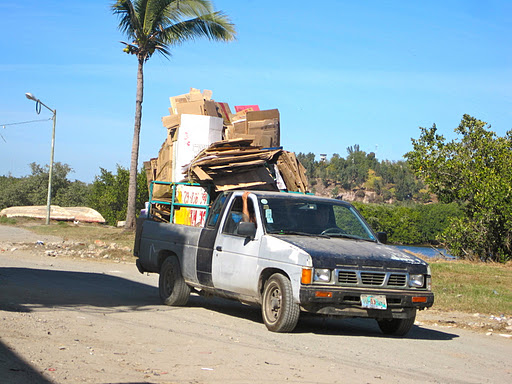
the recycling truck,

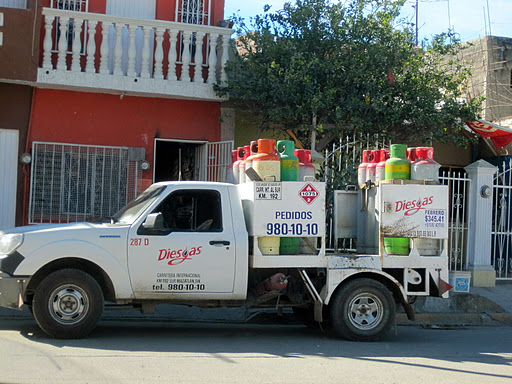
the gas delivery truck,

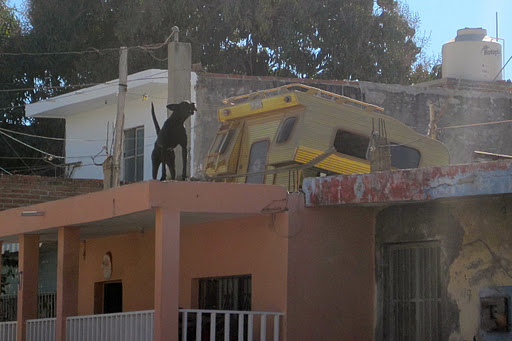
the roof dog protecting a roof-top camper shell (?),

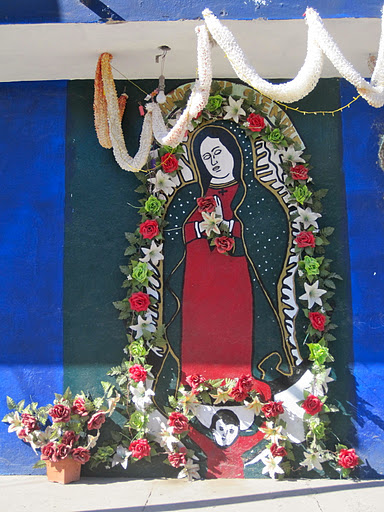
and a hand painted and festively decorated mural of the Virgen.

All in all, a most welcome mid-week respite to recharge our batteries and ground ourselves in the reality and security of our beloved city before we headed back to work.


Cultural Change on the Malecón: A Case Study

Ok, the title of this post sounds a little too “professional” for our family blog. But it’s about dear friends, Mexican society and our beloved malecón, so I think it belongs here. It is really the story of the power of one.

Our dear friend, Guy, retired from a career as an air traffic controller in Canada and relocated to Mazatlán about five years ago. He loves the “blue:” the ocean, the sky, the outdoors, the views. He is a passionate athlete. He started out running the malecón many times a day, and has evolved to roller blading it. He is a French speaker who also speaks English, and he has actively sought to learn Spanish since living here. Guy is very outgoing, optimistic and friendly. He loves coffee, and makes a great pot of cappuccino every morning, sharing it with those friends lucky enough to be nearby when it’s ready. Guy has become a city icon. Everyone knows the bald guy dressed in black who can be seen skating along the oceanside promenade nearly any time, day or night. To see him is to be reminded to enjoy this beautiful city in which we live—not to get lost in work or daily drudgery, but to take a look around and a deep breath, and to get out and move our bodies before we lose the ability to move them.

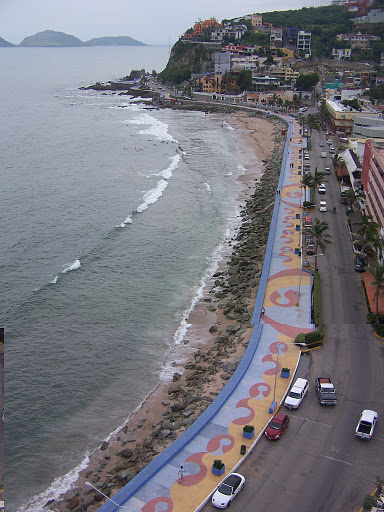
We also love walking and biking the malecón every day; it’s one of the best things about Mazatlán. In our opinion it’s the best oceanside promenade in the world, with 4+ miles of paved, gorgeous walkway between Valentino’s and Pedro Infante. We imagine that everyone would enjoy using the malecón. Thus, we have been repeatedly surprised by friends, mostly locals, who tell us they prefer to exercise at home or in a gym. I’ve had girlfriends tell me their husbands won’t “permit” them to use the malecón if they’re not with them. Girlfriends tell me they don’t use it because they don’t want to be out in the sun; it causes wrinkles and spots on their fair skin. Others say the malecón is dangerous; that you’re looking to get robbed.

And, honestly, I know very well that many people don’t use it because it’s beneath them. That is a side of society, any society, that I very much dislike. Beach vendors, people who can’t afford gym memberships, people whose only mode of transport is a bicycle or public bus, even beggars and homeless people, use the malecón. “I have more money than them. I was born higher class than them. I need to maintain my status by not associating with them.” No one in polite society says it directly, but it’s there; it’s palpable. And this is a side of any society that I’d love to change.

There are loads of Canadians and US Americans who come here and desire to make a mark on this gorgeous city, to help make our city better. They often wreak havoc on themselves and others despite their good intentions, because they come on like gangbusters and try to “change” or “fix” something they don’t yet understand, something that is much larger than they are (a culture, a society). I know this well; I’ve seen it worldwide; it’s my profession.

Guy didn’t set out to change anything. By setting out to enjoy himself and stay in shape, he has inspired many people to get out and move: to bike, run, walk, rollerblade… People from all walks of life started coming to Guy, asking him to teach them to rollerblade, to help them get started, to give him advice. They told him they’d pay him for his lessons. “No,” he’d say. “I’ll teach you for free, but you must pay it forward and in turn do something helpful for somebody else.” Thus his “entourage” was born, including a running group and a roller blading group, as well as, now, people who hang out at the coconut stand to share good conversation and homemade ceviche.

Guy has made a wide circle of friends from all different parts of society: government, big and small business, housewives and young singles, wealthy and humble. I am sooooo so so so happy to see the gatherings of people around him. It crosses socio-economic lines. There are people roller blading now who, personally, told me the malecón was no place for them! I have had friends who previously refused to use the malecón for the reasons above ask me if they could walk with us, bicycle with us. It’s because, I believe, they see these other people, “society” people, out there, exercising. Not just with Guy, of course. Kelly and his bicycling tours and groups, other running, roller blading and bike groups…. The culture is shifting. I’ve seen a huge shift towards egalitarianism and inter-mixing of the social classes on the malecón in the four short years I’ve lived here. Bravo!!! Long live culture change! Let’s keep it up! We aren’t there yet, but… Just the other day a friend asked another friend, aghast, “You have the coco guy’s phone number in your cellular?” Well, she did. And proudly so.

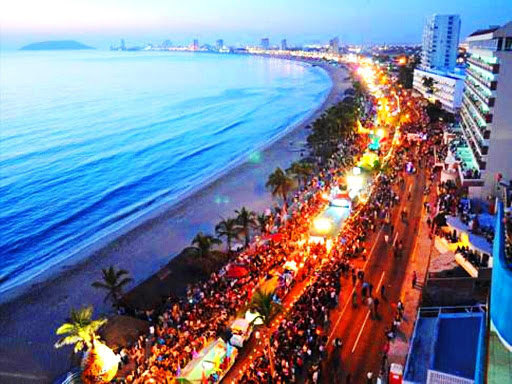
One last photo: this one of the malecón during Carnavál. Forbes Magazineranks our Carnavál/Mardi Gras one of the world’s top three. I will just add that it is VERY family-oriented. Come join us!

El Buki Show Last Night

We were very pleased to be invited last night to the second annual taquiza party which takes over the street in front of our friends’ Cathy and Bill’s house. This year we celebrated Cathy’s retirement. They must have had 100 friends show up, all locals. It is so wonderful to see how generous these two are to their friends, and how much their friends here care about them. One of them set up a disco móvil, the neighbors grilled carne asada, and the state police offered to shut down the street to make us more comfortable, so we were well taken care of.

After dinner, we were surprised to see a very familiar face: Marco Antonio Solis. No, not really. But he sure did look like El Buki! He is a friend of the mechanics next door, and he was more than happy to entertain us by singing karaoke to a few El Buki hits.

Above is a video of him singing. Unfortunately the photos and video are taken with a cell phone in the darkness outside, but you’ll get the idea. This is what I love about living here. You think you’re going to a low-key event where you’ll get to dine outside under the stars, spend quality time with some very cool people, and you end up also being entertained by a rock star.

I had to get my photo taken with him; you never know when I’ll have that chance again, lol!