Many expats in Mazatlán are fans of Murry Page. I for one love his writing and used to regularly look forward to his blog posts. Murry would thoroughly research and write about a broad range of cultural and historical topics, from chile to Diego Rivera’s murals, tequila to organ grinders, and bullfighting to Carlos Slim. As he traveled through, lived in and learned more about Mexico, we were able to educate ourselves thanks to Murry and his noviaand collaborator, Linda Hull. I am eternally grateful to Murry and Linda because years ago they came to our house to interview and help our son when he was in the midst of a fundraising campaign to get himself to World Scout Jamboree in Sweden.
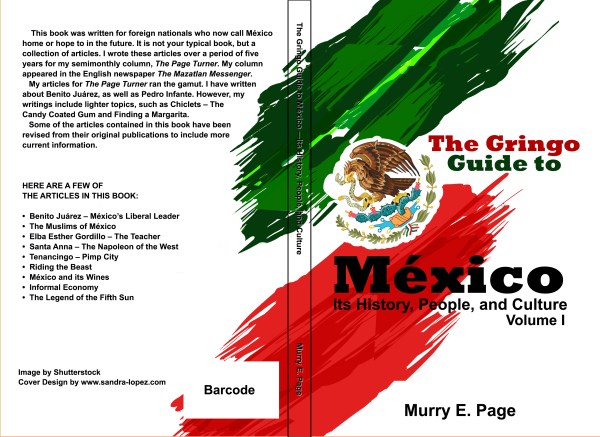
In November 2018 Murry plans to self publish two books, titled The Gringo Guide to Mexico: Its History, People and Culture. In them he assembles 56 editions of his Mazatlán Messenger column, The Page Turner, which he originally wrote over a five-year period. Murry has updated information where necessary to keep content current. He kindly shared with me a copy of volume 2 for review; it contains 160 pages and 28 chapters.
“… all of my writings have the purpose of providing foreign nationals living in México and those who hope to call México their home in the future, information that will make their life here more interesting and meaningful. It is hoped that those who read The Gringo Guide to México …will have a better understanding of the history, people, and culture of their new home.”
—page 4
If you were not able to read Murry’s work the first time around, and you are at all curious about this adopted country we call home, I highly recommend you get these books. And, if you did enjoy his columns the first time around, you may delight to read them all over again, remembering what you’d once read and since forgotten. While I learn something new every day, I am constantly saddened at the ignorance so many of us immigrants and seasonal visitors have about our host country. Are you aware of how Cinco de Mayo helped save the US from slavery? Why Pancho Villa is revered by some and hated by others, was first wanted by and later helped by the US government? And do you know the history of legal Mexican field labor up north, starting with the braceros?
It’s refreshing to read an engaging volume written by someone intelligent (retired lawyer), personable, and committed to the community—Murry dedicated 100% of the profits from his first book to Hospice Mazatlán and has served on the board of two local charitable organizations—on topics that pique our curiosity and are worthwhile knowing about in our daily lives. I love history, but I whither up in boredom reading a dry history book. These volumes are far from that—quick-reading and amusing, with personal reflections and anecdotes thrown in for good measure. I will admit to enjoying the columns more when they were spread out one every couple of weeks than in book form. As blog posts the facts and information were nice tapas, a fairly in-depth look at a topic that we could slowly savor. I would, therefore, recommend reading the book a chapter at a time, to more thoroughly relish the content. Discussing it with a partner or friends will let the facts settle in and stir further curiosity for learning.
Thank you, Murry, for being so generous with your passion for learning about Mexico, your time and your wonderful writing. Both books will be available in ebook (US$9.99 per volume) and paperback (US$17.95 per volume) on Amazon from November 1, 2018.
The new baseball stadium for our nine-time-series-champion Venados is advertised to be the best in all of México, and for once those superlative claims appear true. The architecture is stunning, the remodel retains iconic elements of the historic stadium around which it is built (weird-shaped historic columns, for example) and it increases seating to 16,000. We will now have:
38 luxurious suites with indoor, air-conditioned seating as well as outdoor seating for 15 people.
550 palcosor box seats, and a private VIP entrance and bar for them and the suites.
A seating area where vendors will speak English, to make this incredible cultural experience easier and more enjoyable for tourists and “polar bears” (“snow birds” as translated from Spanish).
Much improved locker rooms/clubhouse, umpire and training rooms and physical therapy facilities.
A media facility up top.
Pacífico beer is still a huge sponsor of the Venados, so Estadio Teodoro Mariscalcontinues the tradition as a Pacífico-only venue.
The stadium will glisten as an anchor to the remodeled Parque Central. It is envisioned to host not only the baseball season but other cultural and musical events, including, of course, our traditional and world class Carnavál coronations. The views from the stadium, both inside—of the field, and outwards—of the city, are fantastic! The only glaring problem is that they still have not solved the parking. Click on any photo to enlarge it or view a slideshow.
Panoramic of the field
One of the many bars; there is beer service to all seats.
Rock Gym
Interior of the Muchacho Alegre restaurant
The old joins the new
Reflection in a puddle
Uniquely shaped original 1962 columns/pillars.
Muchacho Alegre restaurant and the barber shop
Panoramic of the field
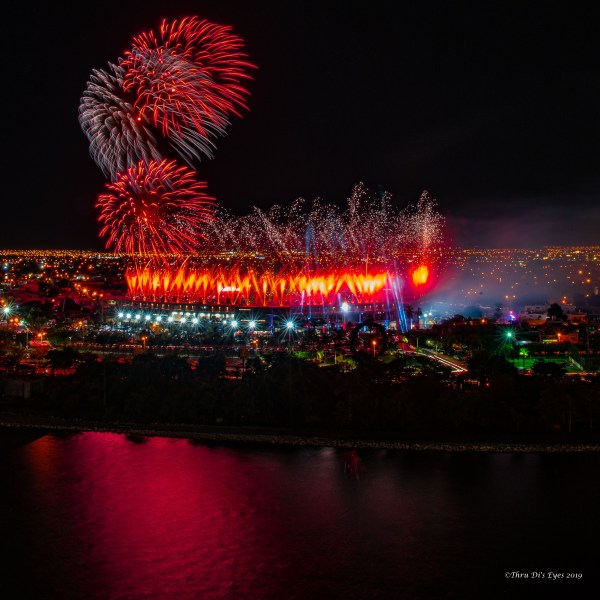
The 2018-19 baseball season opened on Sunday October 14, and I was ready with my camera for what I was confident would be a spectacular fireworks show. My gut instinct proved true: these were fireworks as Mazatlán has never before seen over a stadium! They were flawlessly choreographed to music by Mazatlán’s own Arte Pirotecnia, and the show mesmerized everyone who saw it. The only issue photographically was that so many fireworks went off at once that it was difficult to capture the spectacle AND not burn out the photo!
Thanks to these photos I met Isaac Urquijo, Director of Sales and Marketing for the Venados, with whom I recently toured the new stadium. Isaac is a young mazatleco who left town to obtain his degree, going on to work for large multinationals around the country. Lucky for us, after 11 years out of town he was recruited a year ago to return for his dream job. Isaac is a fireball of energy and ideas with degrees in both accounting and marketing, and he speaks excellent English.
Isaac Urquijo
Isaac Urquijo
During our tour I very much enjoyed watching one of those gorgeous white steel arches go up and get welded in. Isaac told me that when the first arch was placed, two construction workers hung from it in order to weld it on! How I would have loved to get a photo of that! I was fascinated with the guts of these welders, dangling as they do high above ground.
The Presidential Suite is also most impressive. It has a kitchen and bar, dining table and chairs, and living room with flat screen, plus outdoor seating. The normal suites seem like a good deal to me. They cost 240,000 pesos for the season and seat 15 people. Palco or box seats are 10,400 for the season.
Panoramic of the Presidential Suite
Stadium reflection in the glass
The field as seen from the Presidential Suite
The field as seen from the Presidential Suite
VIP entrance
Looking over the presidential suite
VIP bar
Panoramic of the field
Vertical panorama of the Presidential Suite’s view
Once all the arches are up, the covers will be put in place. With the covers in place, much needed shade will be provided to box seats and others as well. Below is a video of the full design. Note that there have been many changes since the initial plans, including that there will be no water feature at the main entrance.
Governor Quirino’s father was in office when the original stadium was built, so he has had a special interest in seeing this remodel through. The stadium is owned by the municipality of Mazatlán, and reconstruction was financed primarily with state funds in the amount of 416 million pesos. The current remodel began on July 14, 2017. It was designed by Raúl Peña, an architect in Mexico City, and is being built by Dynfra. based in Guadalajara. This is the third stadium they’ve built for the league, after Hermosillo and Culiacán, and after watching it every day and hearing its progress all night every night, their work ethic is amazing.
The Venados’ concession for the stadium was renewed in September of this year through 2045, for an investment of 80 million pesos and 8% of the proceeds from each game. Isaac tells me that the official inauguration of the new stadium is planned for the first part of December.
The entire Venados organization, or, rather, it’s parent company, Espectáculos Costa del Pacífico—owned by the Toledo family (95%) and Ismael Barros (5%)—is on fire these days. The Venados in recent memory have had a leadership triumvirate: Ismael Barros, President; Chino Valdéz, sports manager, and Juan José Pacho, team manager. Under their leadership the Venados twice won the Caribbean Series, in 2005 and again in 2016. Barros left, however, to assume the position of city treasurer, and the Venados organization in January 2017 named a new President: 35-year old José Antonio Toledo Pinto. He is the youngest President of a Mexican baseball team, and his energy and enthusiasm seem to be transforming the entire organization. City administration ends the 31st of this month, October 2018. I am told José Antonio will remain in place, but we’ll see.
While in season the Venados organization employs 400 people, normally during the off-season they’ve had 20. This year they’ve increased that number to 80. They’ve hired an office full of young and enthusiastic creative staff who released a brand-new, hotly-debated Venados logo. The organization has opened five new Venados stores (increasing the number from three to eight) and is merchandising a stylish clothing line. They are adding a public gym (Rock Gym), a mini market, a barbershop and three Starbucks outlets to the stadium, in addition to other businesses. There are long-term plans to build a business hotel behind the big screen. The hotel would house out-of-town players in season and serve business travelers the rest of the year.
The Venados are aiming to become a much more inclusive, accessible organization, out of gratitude to their fans’ enthusiasm. Isaac told me that this year 40 pesos gets you a bleacher seat and a beer, plus full access to walk around the entire stadium. What a deal! With dancers, people on stilts and live music playing in the hallways as well as in the stadium, our local baseball games are a terrific, family-oriented party.
There are of course many aficionados who know the roster and focus on the game, but we also have a huge group of fans who attend for the party: to drink beer, listen to music, visit with friends, and, oh yes, watch a few plays. It’s quite amusing if you follow the Venados on social media. They have asked fans, “how many outs are in an inning?” and a fan answered “five;” or “how many players are on the field?” with a reply of “four.” But they do know the price of beer and all the special promotions! A professional game here is a different animal than a Major League game up north, more affordable, more of a full sensory experience, more like a Minor League game, perhaps. Isaac says he wants it to be like “Disneyland with a beer.”
The Venados don’t own players, for example; they borrow them from the Mexican summer leagues and the Major Leagues up north. Thus, there is a lot of fluidity on the roster from one season to the next. This season, however, the Venados have recruited several young, healthy, talented players who they hope to retain for a good five to ten years, to provide continuity for the crowd and the franchise. The season here is three months long, four if we go to the playoffs. Since there are twelve months in a year, the organization looks to find additional uses for this gorgeous new stadium.
Most interesting to me, they are branching out from baseball to become a true sporting franchise. They purchased a professional basketball team back in 2014 (Los Nauticos) that have played in the Multiple-use Center (Centro de Usos Multiples or CUM) since 2016—that gorgeous new sports arena in the marina that no one really uses. The Venados also support volleyball, boxing, and of course our internationally recognized annual marathon and triathlon. Their goal, as Isaac told me, is to support local athletes and entertain the local community.
The Venados’ goal is to help players develop skill and experience while staying free agents. The same is true for boxing. The baseball academiaruns Mondays-Fridays, 4-8 pm ten months of the year; the 200 kids who are enrolled are coached by the Venados’ manager himself, Juan José Pacho. The academias are not profit centers but, rather, social service endeavors, though those attending do pay nominal fees. Isaac reports that there are similar plans for academías of boxing, basketball and volleyball. They are even planning to hold a golf tournament this December at Marina Mazatlán; Venados players and managers will play alongside the experienced golfers.
I was curious about how a pro baseball team here makes its money. Isaac told me that 55% of its income is from sponsors, 35% from box office and season ticket holders (Socios Venados), and beer income makes up the rest. If they sell 3000 tickets for a game with sponsorships in place they break even, and this season—other than the hugely attended inauguration—they’ve averaged 6500 people per game. In-season salaries total 6 million pesos/month.
The Venados organization engages in quite a bit of social outreach. They support the Red Cross and give away season tickets to families in need. You may have heard about the Venados Booster Club, with its aim to act as liaison with foreign visitors and help two local charities: Refugio Mazatlán and Amigos de los Animales. Simon Lynds helped the organization conduct a survey, and they found that many foreigners complain about dirty bathrooms and say they don’t speak Spanish so have a hard time buying tickets. The bathroom situation will be hugely improved with the new stadium, and the English-speaking section and Booster Club will remedy the English-language concerns. On November 24th they are planning a special invitational event for Booster Club members, with the charities and some franchise players.
Who was Teodoro Mariscal, the namesake of the stadium? He was a Mazatlecan businessman who campaigned long and hard for a new baseball stadium here in the 1940s. Our original stadium had been destroyed, and he assumed leadership of the “Committee for a Stadium in Mazatlán. When our current stadium was dedicated for the 1962-63 season, it was decided to name the space in his honor. The stadium remained largely unchanged over the decades, though it was modified several times, most thoroughly in 2000.
You may be wondering about our favorite Venados event of the year, Banda Baseball. This is an annual charity fundraiser, in which popular banda members play one another. Greg and I absolutely love it, and it hasn’t taken place this year due to the stadium reconstruction. Isaac assured me the season would not end without doing it. Fingers crossed…
You can buy your tickets online if you wish. Wednesday night, the 31st, they are urging the crowd to dress in Halloween costume. There is also a Venados app for your phone. You can watch the games live online, too. But, hey, what fun is that? The thrill is experiencing the cacophony of the crowd. A Venados baseball game has so much going on you don’t know where to look first!
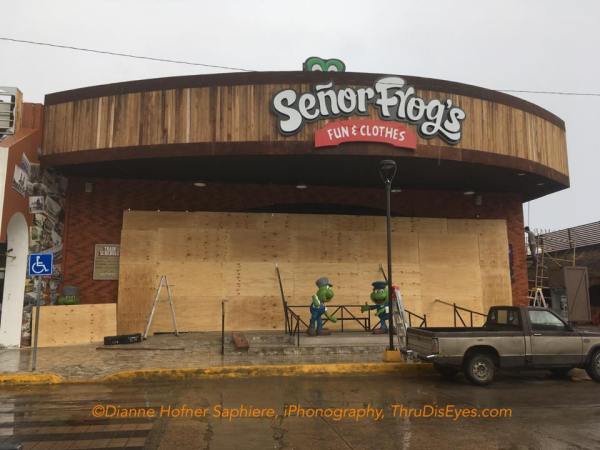
Mazatlán proved itself ready; it was encouraging to see. Businesses and homes boarded themselves up and put sandbags in place. Most everyone taped over windows to try and prevent flying shards of broken glass.
The morning after Hurricane Willa
We lived here during Hurricane Lane (Cat 3, 2006) and Tropical Storm Rick (2009), and remember what I felt was a lack of safety precautions then: people not taking down billboards or boarding up windows, surfers pursuing their passion even during the storm, people unsure of flood areas and where to take shelter. This time around there were maps of potential flood areas and shelters, lists of items to have at the ready, and regular updates regarding the weather and evacuations. We’ve come a long way. Commercial activity was ordered stopped at 2:00 pm on Tuesday (so people could get home to their families), and public transportation to stop at 3:00 pm. Protección Civil evacuated some tourists and residents from flood zones to the Convention Center. Most importantly to me, people took the threat seriously. Of course, Willa quickly became a Cat 5 hurricane, which was extremely intimidating.
Fortunately we in Mazatlán were spared Willa’s wrath; those south of us, in Escuinapa, Teacapán and Agua Verde, were not so lucky and need our aid. And today they are evacuating El Rosario and other places due to potential river flooding. Here we experienced very high tides and incredible beach erosion. There was very little rain or wind, fortunately. Most of the damage I have observed is with the palapas on the beach, and with the beaches themselves. Even without a hurricane our sandy beaches regularly move, so most mazatlecos consider ourselves incredibly blessed. Click on any photo to enlarge it or view a slideshow.
The day after Willa
The day after Willa
The day after Willa
The day after Willa
Clean up post-Willa
Sad loss of property but could be much worse.
These rocks are NOT normal for Mazatlán’s beaches; this is how much sand Willa took with her.
Clean up post-Willa
These rocks are NOT normal for Mazatlán’s beaches; this is how much sand Willa took with her.
Sad loss of property but could be much worse.
Clean up post-Willa
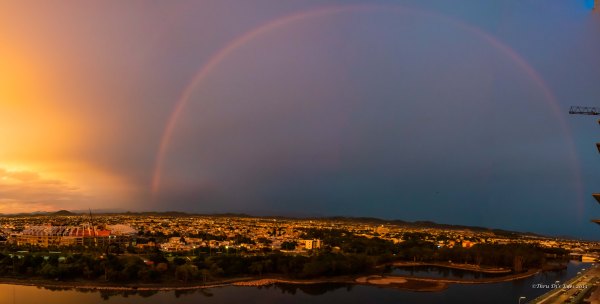
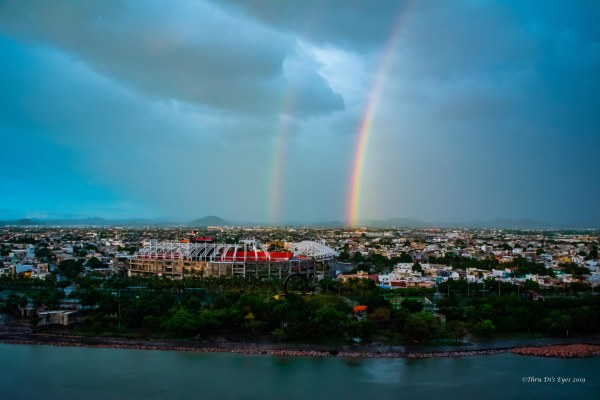
The day before Willa was scheduled to arrive, there was a double rainbow over Mazatlán. The photo below doesn’t show the second one that well, as I did a panoramic of the full rainbow. Of course all the memes circulating said this was God’s way of telling Mazatlán it would be safe.
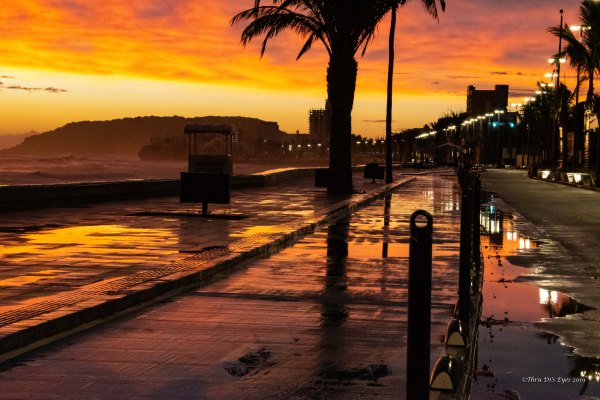
The evening before Willa’s arrival we had one of the most incredible sunsets I’ve seen in my 11 years living here full time. The sky and the ocean were orange for as far as the eye could see. The huge waves crashing with their orange color was a sight to behold!
Sunset over our pool pre-Willa
Sunset over the malecón pre-Willa
7 foot drop off to the water
Sunset Mazatlán-style pre-Willa
Orange waves at sunset pre-Willa
Sunset over the malecón pre-Willa
Orange waves at sunset pre-Willa
Orange waves at sunset pre-Willa
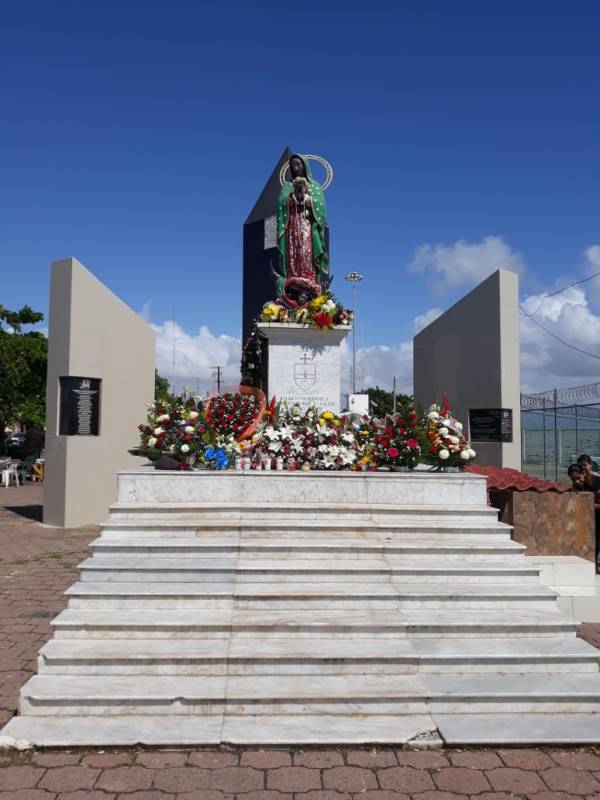
Then, the day Willa was supposed to arrive, Tuesday, there was a second double rainbow. God wanted to be really sure we felt safe. We in Mazatlán are blessed with a bay sheltered both by the Baja Peninsula and by our three islands. There is a legend about how the three islands were formed after the death of three indigenous sisters, and another legend about how we are protected by “Our Lady of the Port.” So, once we dodged the bullet, so to speak, everyone thanked the Virgin of the Port—you can find her in the parking lot of La Puntilla restaurant in Playa Sur, if you’d like to pay your respects.
Thank you, God of the seas and the skies. Thank you, Virgen de la Puntilla. Thank you, three sisters in our bay. Let us use our gratitude to share drinking water, food, toilet paper, moist towels, diapers, toothpaste, flashlights and batteries for our friends to the south. You can drop off your donations at one of the many Centros de Acopio around town, including the Soriana Híper on Rafael Buelna today. And you can also join in a peregrinación of thanksgiving to the virgin today (Wednesday) starting at Hogar San Pablo at 4:00 pm, concluding with a Mass at 5:00. The virgin has already been showered with flowers, as you can see in this photo by my friend Jessica Aviles.
La Virgen de la Puntilla hoy, miércoles, foto tomada por Jessica Aviles
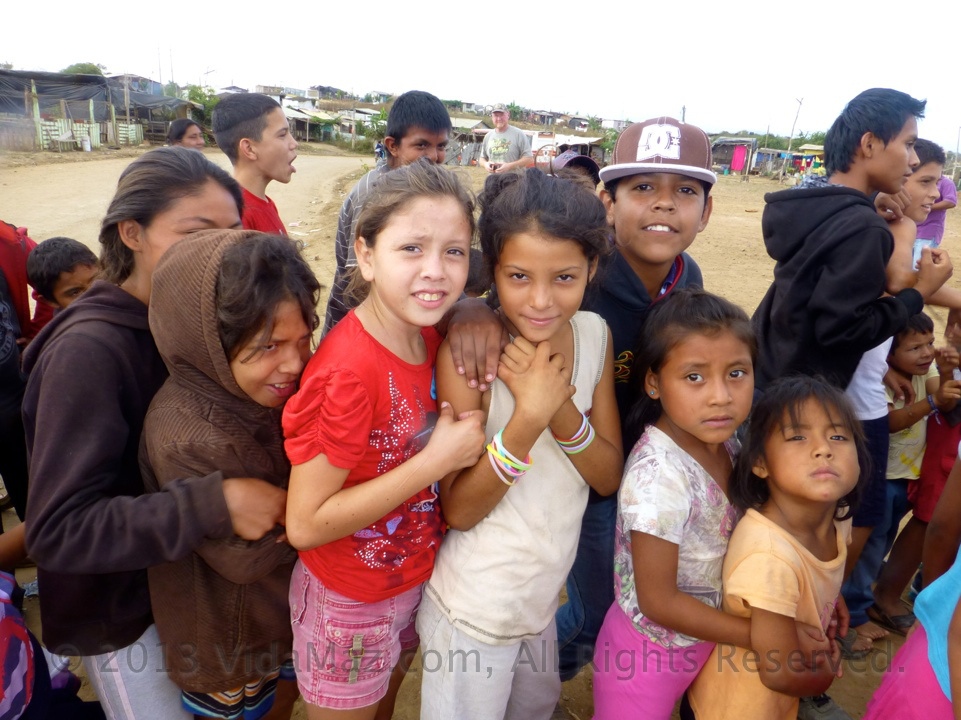
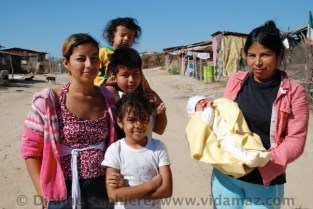
Kids charming the camera woman while they line up for candy!
I’m excited to announce the Chicken Breakfast (Desayuno de los Pollos) for 2018! Mark your calendars now for Saturday, December 8th at the API (cruise ship) dock. Help us feed 2500-300 families for two weeks during the holidays. Tickets are 200 pesos for the full breakfast, Christmas bazaar, bake sale, silent auction and raffles. We’d love it if you’d help us sell breakfast tickets! Contact Yolanda at (669) 431-4529, Jorge at (669) 110-0744, or me (dianne@vidamaz.com). We’d also love you to help collect items for the silent auction. Download a gift certificate for restaurant meals, hotel stays, airfares, or donate your artwork or cool gift item!
Also set aside the morning of December 24th to hand out the food, clothing and toys in Mazatlán’s poorest colonias! Begin collecting your items for donation now—gently used household items, sheets, towels, blankets, coats, shoes, clothes, new toys. You can also donate money, 100% of which goes to help those in need.
More details on the 29th annual event follow.
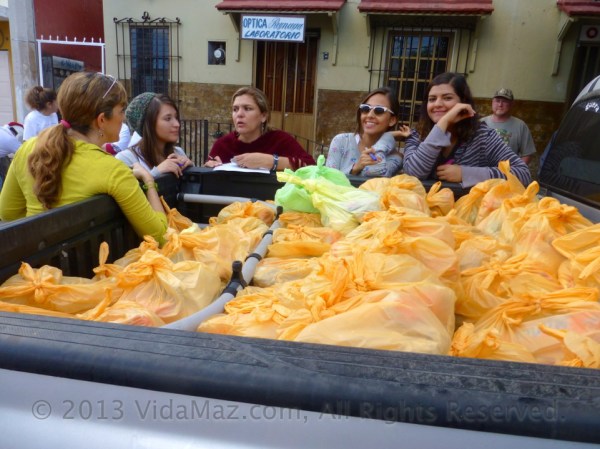
Just some of the despensas—bags of food—ready to deliver in one of the trucks.
What is the “Chicken Breakfast?”
It is a two-step process to feed the neediest in our community.
First is a fundraising breakfast held in early December to raise money to buy one whole chicken and ten days’ worth of food for each family—we buy for as many families as we possibly can.
Second, on Christmas Eve morning (24 December), dozens of us gather together to load trucks and go out to the invasiones, the poorest, “squatter” areas of Mazatlán, to make people happy and hand out the goods! We give the chickens and foodstuffs, plus gently used clothing, linens, shoes, coats, and new toys and candy.
It is important to know that several of us go out to the squatter areas the week before Christmas. There we meet with area leaders and go around with them to hand out tickets, to ensure that those in need receive what they need, and that no one cheats or “double dips.” We especially want to ensure that we get food and clothes to the elderly and the disabled, so we go door to door to make sure everyone knows about the event, and to make plans to get things to those who can’t walk to the delivery site.
The history:
Yolanda Medina’s daughter, María Yolanda, was very sick. She and her husband kept vigil in the hospital, taking care of all their daughter’s needs. As Yoly’s sister-in-law Isa tells the story:
“It was Christmas Eve 1990, and María Yolanda’s days were counted. Yolanda and her late husband, Modesto, were in no mood to eat, let alone have a Christmas Dinner with all the fixings. But that night, a woman knocked on the hospital room door and peeked to see if there was someone with the patient. She came in to hand Yolanda and Modesto a box with a hot Christmas Dinner meal — and told them Merry Christmas and that God was with them. Yolanda never forgot that gesture.
After María Yolanda passed away, Yolanda got us all together and told us what had happened. So, the first couple of years, we had culinary arts students volunteer their time to prepare a Christmas Dinner meal, with donated ingredients from friends and family, and all of us volunteered to fill disposable thermal boxes with the hot dinners, load them into cars and pick-up trucks, and off we went, to hospitals, traffic intersections, parks — wherever we thought we might find people that, for one reason or another, wouldn’t be privy to a nice Christmas Dinner.
However, this was a huge effort, and very expensive, so we couldn’t cover that much ground. So we thought in terms of something more practical, something that could be cooked and prepared at home. This way, we could make sure many more families could have a Christmas Dinner. That’s when we started the Desayuno de los Pollos.”
How to help:
Buy (or sell) tickets for the fundraising breakfast. Contact me at dianne@vidamaz.com, or buy them from anyone selling them around town. Post and Ship in the Golden Zone (beside Dolce Mami, across from FedEx) will have tickets also.
Make crafts or baked goods to be sold at the bazaar during the breakfast.
Donate (or gather) items for the silent auction (download a gift certificate, artwork, restaurant meals, hotel stays, airfares…)
Help set up, cook, serve or clean up after the breakfast.
Donate money (in person or click on the link), gently used clothing, diapers, lightly worn shoes, linens, blankets coats, new toys, or candy. 100% goes to those in need. Post and Ship will be happy to collect items if you drop them off there (beside Dolce Mami, across from FedEx).
Help pack the food into packets—the two weeks before Christmas.
Join us to go out with community leaders to deliver tickets for chickens, to ensure all receive their fair share, the weekend before Christmas.
Help us load the trucks and deliver the goodies on December 24th! This is, of course, the most fun and a terrific tradition with friends and family.
When and where is the breakfast?
It’s usually the first Saturday in December, 8:30-10:30 am in the cruise ship dock/API. In 2018 the breakfast will be on Saturday December 8th. Please join us and bring all your friends! Your ticket includes a full homemade breakfast, coffee and juice, a ticket for the door prize, a ticket for the raffle, and access to the Christmas bazaar. This is a very multicultural affair, with announcements in Spanish and English and hundreds of locals and expats attending.
API dock is on Emilio Barragón nearly across from the new OXXO. Below is a map. If you can’t find it, ask any taxi driver or blue shirt/Tourism Volunteer.
How can I get to Quince Letras on December 24th? Come by 6:30 am if you are driving a truck, 7:00 am if you are helping us load and deliver. We usually finish by 11:30 or noon, but some years it’s taken longer (depends how many routes you participate in).
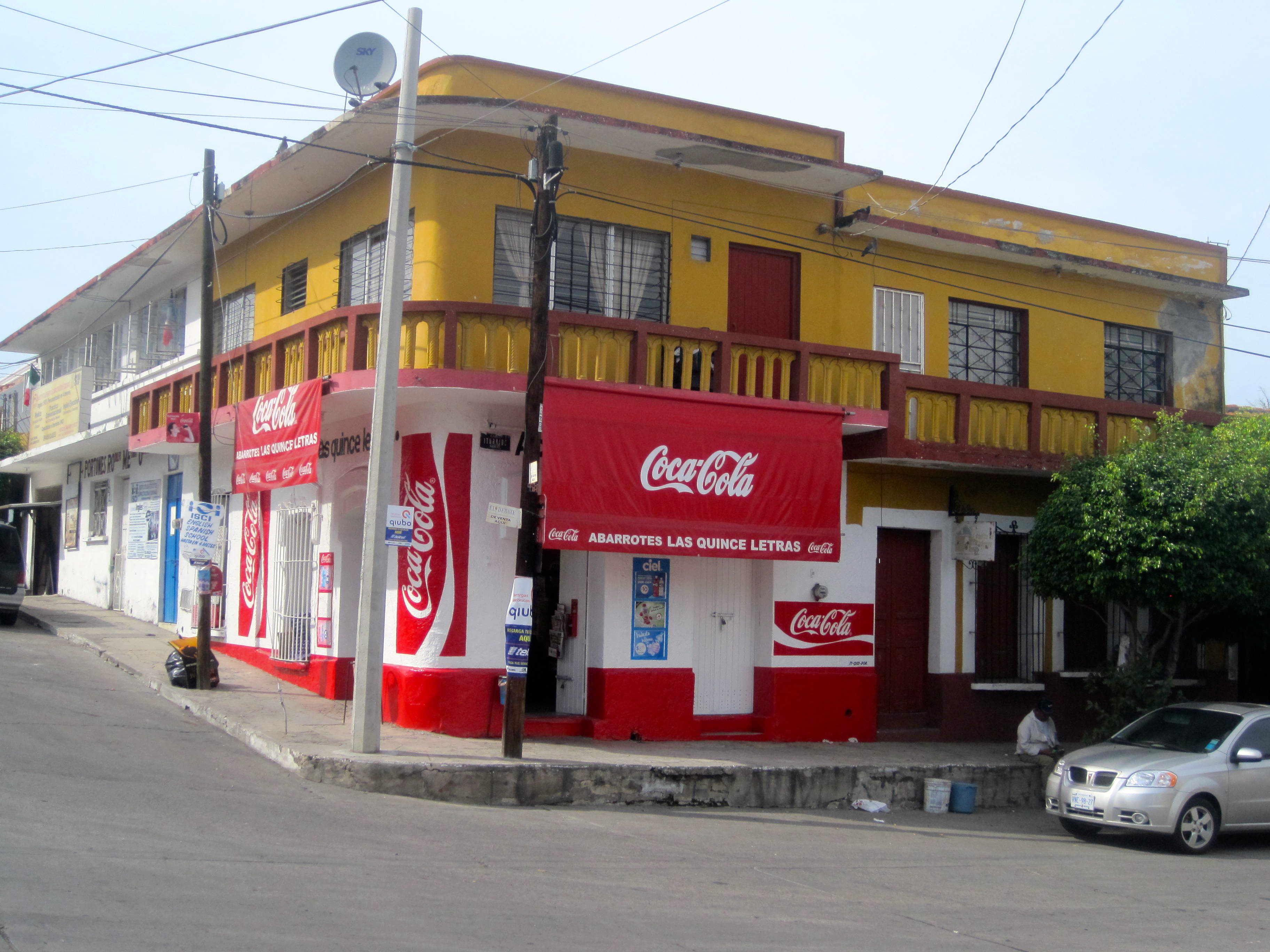
Quince Letras, corner of Tampico and Francisco Villas streets We load from either side of this “Coca Cola” store on the corner
LOCATION: 15 (QUINCE) LETRAS, corner of Francisco Villa and Tampico, just down the hill from the Church of Cristo Rey (Christ the King—photo below).
From Avenida del Mar turn East at the Fisherman’s Monument.
Go to the first light and turn right.
Proceed one block and turn left (Francisco Villa street, just before the Pemex station).
Go two blocks.
If you are NOT driving a truck or transporting supplies, please park in the next block. This will give us room for loading. Once you’ve parked, walk another block down, past the iron works business called “Quince Letras.” On the corner of Francisco Villa and Tampico you will see a small store with a bright red “Coca Cola” hand painted on the outside, across from a tortillería. A door next to the Cocheras Automaticas business will be open. That’s Yolanda’s mother’s house, and it’s from there that we’ll be loading.
If you are driving a truck or transporting supplies, please drive up to Tampico street (the “Coca Cola” store on your right on the corner), turn right, and park. We will be loading right there.
If you can’t find it, just ask someone for “Quince Letras” or “Desayuno de los Pollos/Medina family.” Everyone in the area will know.
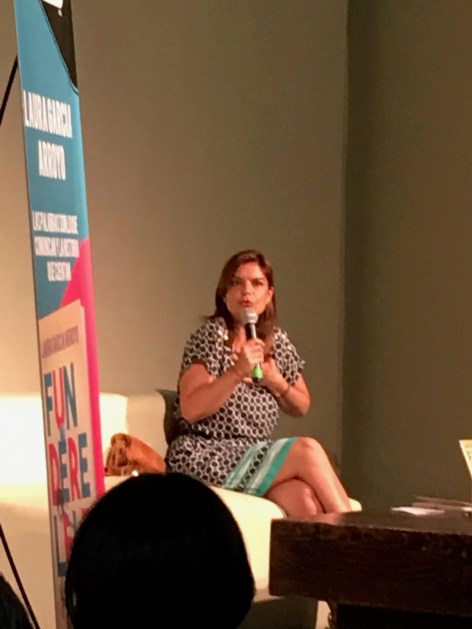
What do you call an ice cream scoop in Spanish? Yes, I know, most people would say cuchara para helado, but that is not its proper name. Specifically, that serving utensil, in Spanish, is called a funderelele, which is the title of Laura García Arroyo’s terrific little book of wonderful-sounding yet rarely-used Spanish terms. Funderelele y más hallazgos de la lengua is her attempt to share her love of words and encourage a more precise use of the Spanish language.
Laura is a Spaniard living in Mexico City who grew up loving words. Her parents would read her to sleep, resulting in a lifelong love of the written word, and everywhere they moved the family’s books joined them; they were members of the family, as well. She is a translator and linguist, and has kept lists over the years of fascinating vocabulary she’s come across. Funderelele is based off that list.
Have you ever picked up a book that had some of its pages uncut, so that they stuck together? That’s called a librointonso. Timar is what two lovers do when they understand one another with just one glance. I suppose that could apply to parents and children as well. The Spanish word for doppelgänger? Sosias. The smell of wet rain? Petricor. Isn’t that a cool word to know? Reminds me of some of the emotion-laden words in my beloved Japanese that have no equitable translation in English. How to say “fake news” in Spanish? Paparrucha. What about that gorgeous red color of the clouds we so often see in Mazatlán at sunset? We can communicate that beauty in just one word: arrebol.
One of my favorites in the book is giste, which refers to beer foam, that which so often remains on your lip as a mustache when you drink. And how do you describe someone who steps on the accelerator as soon as the traffic light turns yellow? Lord knows Mazatlán is full of people doing just that—flavilabando, which is much quicker and easier to say—with the slight downside that no one will understand you.
Most every word in the Funderelele has a two-page spread: a drawing at left with the word’s definition, and a short essay about it on the right. Its 152 pages aren’t meant to be read in one sitting, though that could easily be done. This is a book to have handy to peruse, so that the words insinuate themselves into our vocabulary and bring their history and culture into each of us and our daily lives.
In Laura’s opinion books don’t exist to make us happy, their purpose is to stir us, to move us: to feel, to take action, to think more deeply. She wonders why we spend more time dressing to present ourselves than we do in choosing our words, which she feels can count for much more in communicating our identity to the world. Like me, Laura feels she started to learn her birth language in a meaningful way when she began studying a second language; for her this was French, when she was in elementary school in Belgium.
I heard about Funderelele and Laura García via my book club. I’ve told you about my terrific book club in an earlier post—I am absolutely blessed with intelligent, talented, funny and interesting friends there and enjoy it thoroughly. Starting last year, Laura Medina, our wonderful local natural resource who has owned Casa del Caracol bookstore for the last 14 years, has organized an annual “gathering of the clans,” a reunion of all the registered book clubs in town. This year that included 16 different clubs who met in Casa Hass this Thursday evening.
In preparation, each club chose a minimum of ten books that our members loved, and which we wanted to share with others. Laura would lay the books out on a table during the event, one member from each club would be our representative, and choose new books for our club. It sounded like an interesting way to get some new books in the club library, although I’ll admit it was very painful saying adios to some favorite volumes.
The exchange was fun, and I’m excited about our club’s new books. I enjoyed sharing our favorites. The highlight of the evening was the talk. But, I have to tell you, the food was also wonderful! Oralia Medina makes delicious desserts, most Mazatlecos know that. But I did not know that she also makes some incredible savories: ceviche with coconut milk and mustard and empanadas with pumpkin seeds among my favorites.
Laura (Medina), thank you for your dedication to promoting reading in Mazatlán, and to always being ready to order the book we need or want. Thank you for arranging such a lovely and enjoyable evening for all of us. You are yet one more reason we are blessed to call this port home.

 The new baseball stadium for our nine-time-series-champion












 ¡VidaMaz!