We recently drove from Mazatlán to Morelia, and I ended up taking quite a few photos just of the creative and efficient ways in which people here in Mexico load their vehicles. Nothing if not practical! We can make it work! We can get it all there in one load! Take a look and enjoy the slideshow! If you’d rather see larger photos, click through to SmugMug.
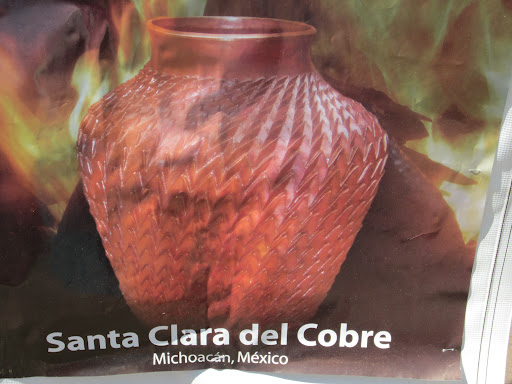
Santa Clara is about an hour’s drive south of Morelia, just south of Patzcuaro. We had intended to spend Easter Sunday here in the city, but after attending Mass at the cathedral, we felt small town life calling us (as usual). We wanted to see copper making, since I grew up with it in Arizona, so off we went.
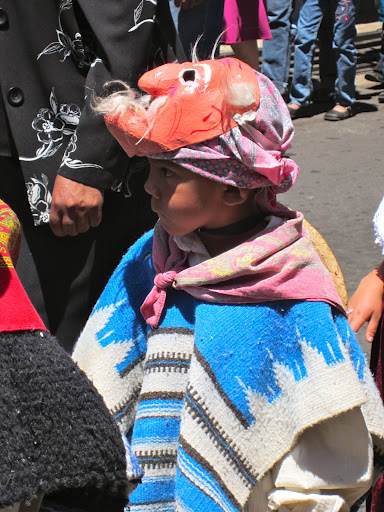
What a charming small town! I absolutely fell in love with the young boys, ages 3-8 or so, who were dressed as typical Michoacán viejitos for the Easter procession. More on them later.
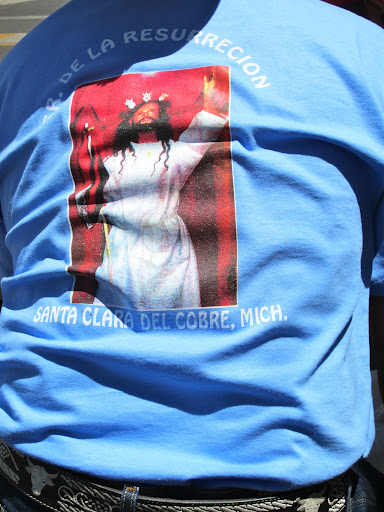
One of the two main churches in town is home to Jesus of the Resurrection, so Easter Sunday is, luckily for us, a big feast day. Later in this post you’ll see video footage of the very community-engaged, charming Easter procession.
We noticed a sign outside the church here that we found so interesting we just had to take a photo of it, left.
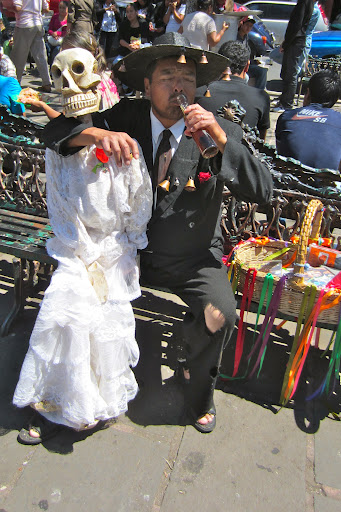
Also, I made a new girlfriend, who was more than happy to pose for a photo for me.
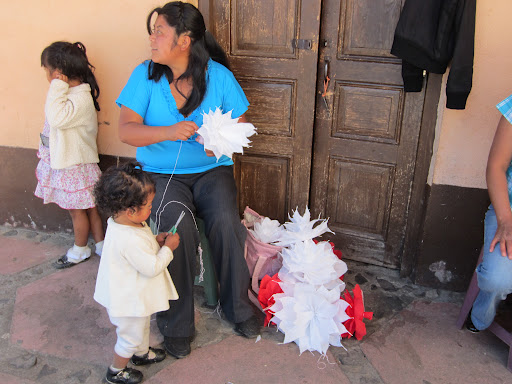
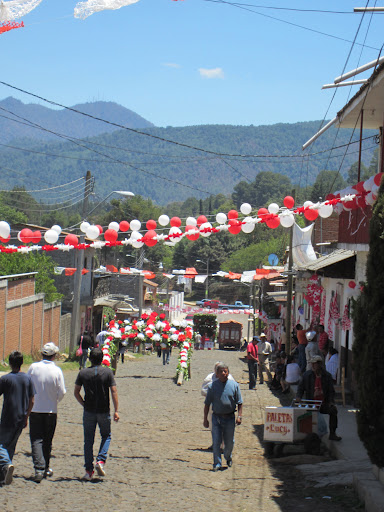
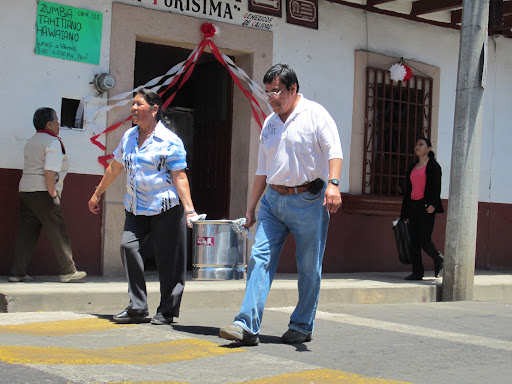
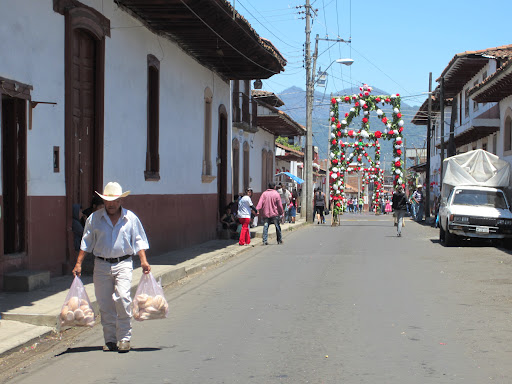
When we arrived in town, about 11:00 am, people were just putting the finishing touches on some decorations. Those included assembling beautiful red-and-white-arches in the center of the street, in front of each of the barrios of Santa Clara del Cobre.
When we asked what they were preparing for, we were told there was going to be a procession. Where? When? “Right here. Ahorita.” Well, we’ve lived here long enough to know that ahorita doesn’t mean “right now” in any gringo sense of that word. So, we knew we had time to check out the town.
The decorations also included crepe paper flowers and streamers in front of nearly every house in town. It was truly a community event, and involved all ages.
We saw a long line in front of the newer church, the one that’s in the plaza. We figured it had something to do with Easter.
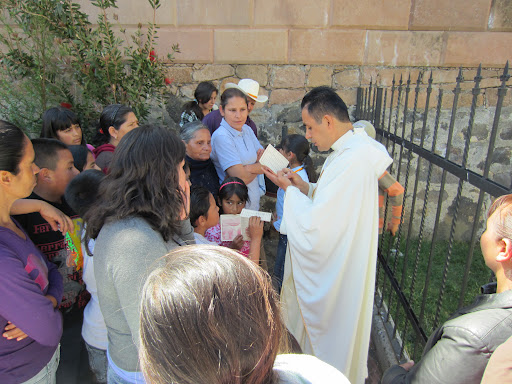
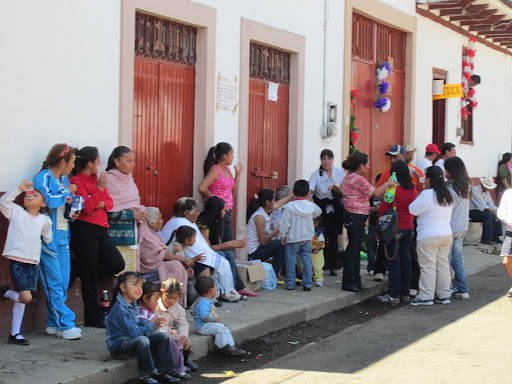
Approaching, we saw the priest signing a booklet for the children in line. Well, that looked all too familiar! In asking, a mother told us that the children who want to receive First Communion this spring had to attend the 9 o’clock Mass on Easter, and they had to have the priest sign their booklets attesting to that fact. Gotta love legalism.
We figured the procession would start after the noon Mass, so we took a look through what appeared to be the old original church. It was gorgeous! Everything here in town was so well cared for.
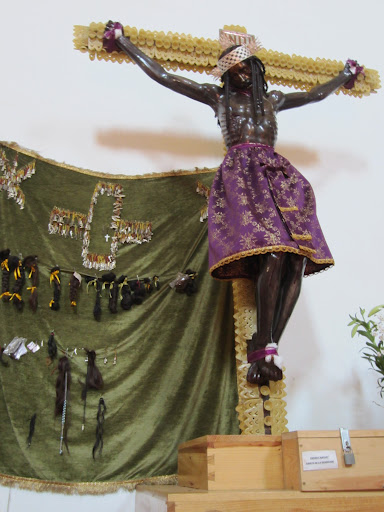
There were quite a few braids of human hair pinned to the cloth behind the crucifix, along with quite a few small milagros.
Every building was occupied, every curb was maintained, there were sidewalks and people sweep them on a daily basis. It was terrific to see.
Beside the old church was what seemed to be a community center. There were obvious party preparations going on, and during the mid-day people kept streaming in with food, food and more food. And music too, of course.
Still no sign of a procession to begin ahorita, we walked through the copper fair that was going on in the main plaza. There we met Pito Pérez, reincarnated, selling DVDs of movies about his life.
Coming back to the other side of the plaza, we saw that the crowd was gathering to view the procession, so we took our place on a curb.
Once the fireworks launchers were in place, we knew it was time. They used really handy iron stands to launch 6-14 bottle rockets in a row. I think Mazatlán needs these!
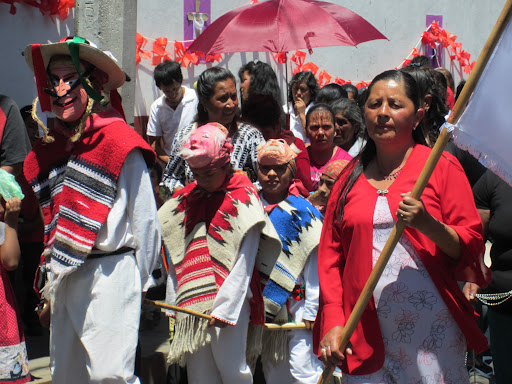
The video above is about three minutes of the procession. It lasted a good 90 minutes or more. It involved so many people, as we’ve witnessed in so many other small Mexican towns during Semana Santa. It included a Santo statue from each of the barrios of the town, I believe, plus the town patron, the Jesus of the Resurrection. This is not a performance so much as a community-wide event, as are our beloved Carnavál parades in Mazatlán.
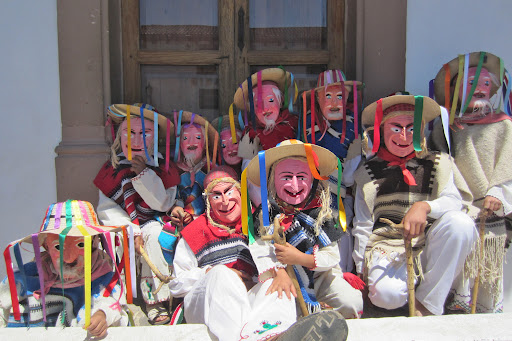
The most charming part of the parade, for me, were the children dressed up as typical Michoacán viejitos, or old people. Normally this is a folk dance, but this time they merely walked in the parade. By the end they were pretty hot and tired.
After the procession I saw a group of four boys sitting in the plaza. They were obviously the viejito boys, though they had removed their hats and masks, and several of them had even taken off their zarapes, because they were hot and tired. They looked so cute. I asked them if I could take their photo, so that of course ruined the spontaneity of the moment. But, marvelously, they called all their friends over, they all got completely re-costumed, and they gleefully posed for me to take their photo. I will post this blog to a few town sites, in hopes that the kids might see themselves. Thank you, niños!
Afterwards people seemed to go into the community center to eat, and to take home the leaves from the arches, and many of them also took home large sugar cane stalks. We hadn’t seen those till now, so I’m not exactly sure where they came from.
Thank you, Santa Clara del Cobre!!! We were very blessed to be able to share our Easter Sunday with you! We appreciate you including us in your festivities.
We very much wanted to see the islands on Lake Patzucuaro, especially the ones that aren’t quite so popular, that are a little more local. Since yesterday we needed to go back to Capula to pick up our Catrina from Juan Carlos and his wife, we decided we’d drive from there along the eastern side of the lake, hope for a view, and try to find a boat launch that didn’t require us to go all the way back into the Semana Santa crowds of Patzcuaro. It sounded rational enough.
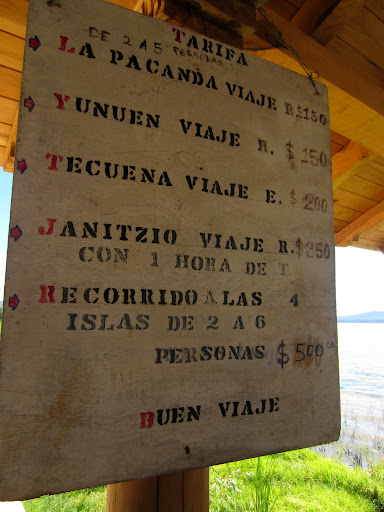
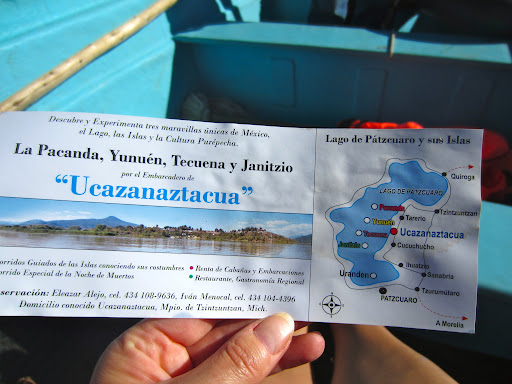
NOTE: the map above, which is very typical, shows the three Urandenes and Jarácuaro as islands. They are now landlocked. The four islands are Pacanda, Yunuén, Tecuena and Janitzio.
The trouble is, in researching on the internet, every site tells you that the only boat launch on the lake is in Patzcuaro. Very hard for me to believe that on that huge lake there would be only one boat launch, or that we wouldn’t be able to find someone with a boat who’d like an extra 500 pesos to take us on a tour, so off we went.
DRIVING THE EAST SIDE OF LAKE PATZCUARO
In Tzintzuntzan we drove toward the lake, then headed south along it. This was a road that was not on any of our maps; it was way closer to the lake than the eastern perimeter road. The views were great. At points south of there the road became very washboard-like. We began to lose faith. Worse, everyone we met said there was no way to get a boat out to the lake other than to go to the launch down in Patzcuaro. So hard to believe….
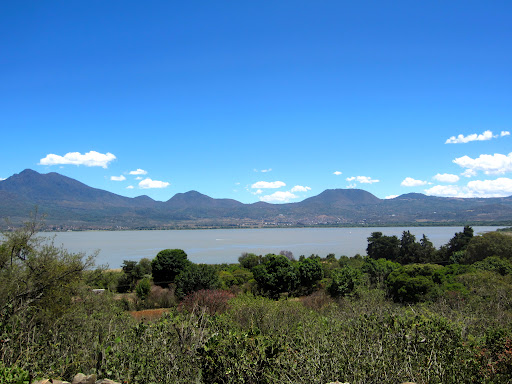
And then, suddenly, pavement appeared. The road was incredible! Smooth, easy; the views along this lakeside road are spectacular! It ran right along the lake, and did not appear on any of our maps nor on our GPS. But, it is most definitely there, and well worth the drive! We were told that the federal government had built the road, the northern portion of it had washed out, and despite the repeated pleas of the local residents to the government, no one has ever returned to repair it. It is passable; just the first 30 minutes of it on the northern end are not exactly easy riding.
UCAZANASTACUA
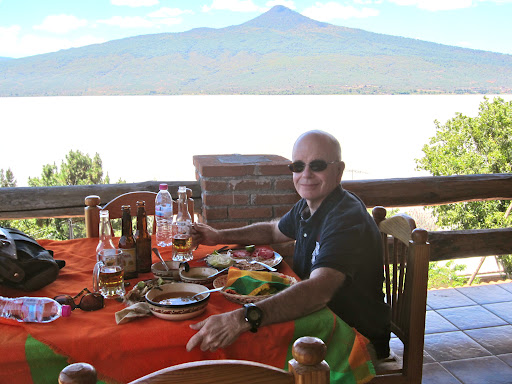
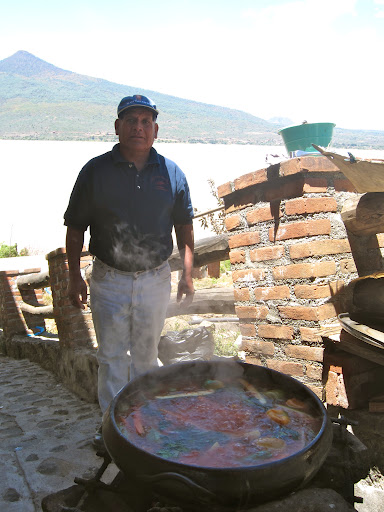
In Ucazanastacua we found a terrific restaurant (Huenan) overlooking the lake, run by a wonderful family who live in several houses down the hill on the lake itself. They had incredible views, fresh caldo de trucha (trout soup), caldo de camarón (shrimp soup), mojarra cooked any way you like it (crappie), corundas (small tamales), a gorgeous rose garden, and some of the most intricately embroidered blouses I’ve seen.
Anyway, everyone we had asked said the only way to get a boat on the lake was to depart from Patzcuaro. We must have had 20 people tell us this. Then, finally, as we were eating lunch, the owner told us that 1-1/2 km south of his restaurant was a boat launch. He advised us to use it.
“You don’t want to go to Patzcuaro; it’s crowded there. You’ll wait in line and they’ll put you on a huge tour boat and rush you over to Janitzio. Take a boat from here. There will be no line, you can take your time and enjoy your day. Plus, the boat launch here benefits our local community. The drivers share the earnings.” Man after my heart! He said to me just what we had been thinking! Yeah!
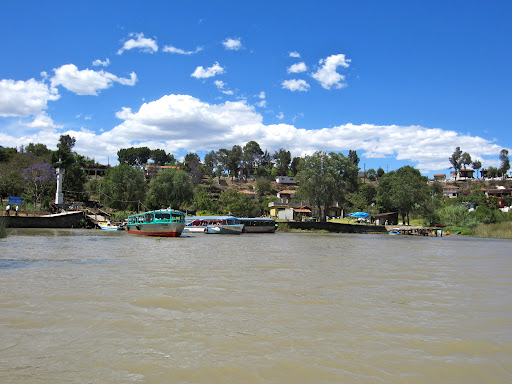
Lo and behold, there was absolutely no wait, no crowds, and we could even rent a private boat and driver! Hooray!
If you, like us, are visiting Patzcuaro during a holiday (Semana Santa, Day of the Dead, etc), and you want to avoid crowds and help a local coop, definitely drive north to the embarcadero/boat launch in Ucazanastacua!
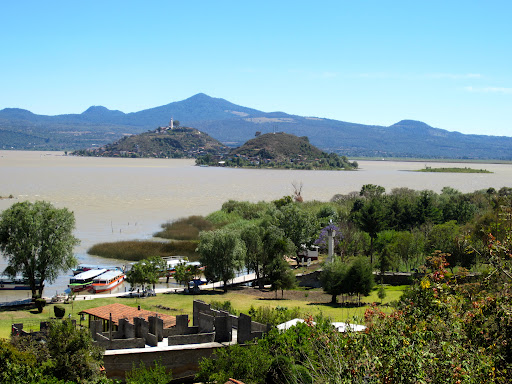
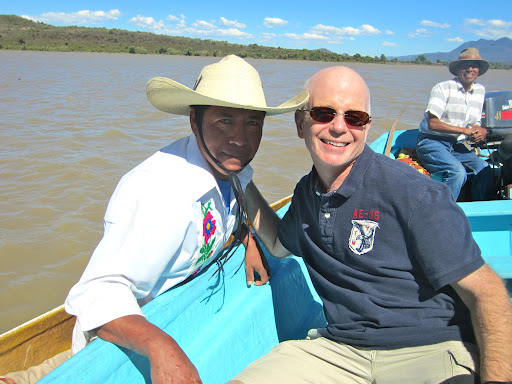
Our boatman was fantastic—Alfredo, the man of the big smile. I’d smile, too, if I had to shuttle these waters amidst this gorgeous scenery every day. We told Alfredo we wanted to cruise around the lake, seeing all the islands, but avoiding the crazy crowds. He told us how there originally were eight or more islands, depending how you counted, but that the lake waters had dropped over 3 1/2 meters, and now there are only four islands in Lake Patzcuaro.
Above you can see a short video taken from the boat.
PACANDA ISLAND
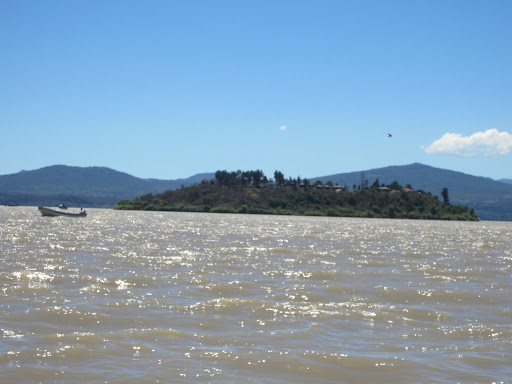
We first drove around Pacanda Island. It was gorgeous—lots of green, plenty of space.
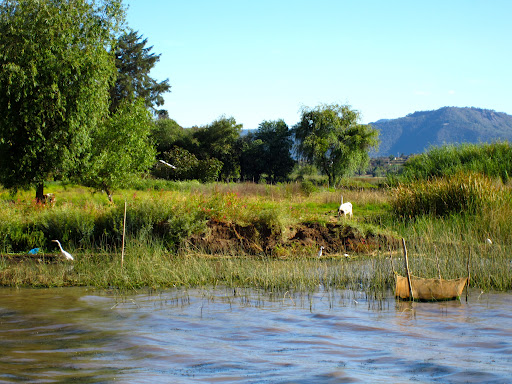
We saw so many cranes! Pacanda was just gorgeous! And so peaceful!
I asked Alfredo about the teleférico/cable car that I’d heard about, that was supposed to connect the islands of Yunuén and Pacanda. He told us that while the comunitarios on Yunuén had wanted it, the comunitarioson Pacanda had refused; they didn’t want to have tourists visit. When he said this, I thought what a shame it was, because a scenic ride between islands would be so beautiful, and surely they could control the tourist influence, no? In a minute you’ll see how wrong I probably was.
YUNUEN ISLAND
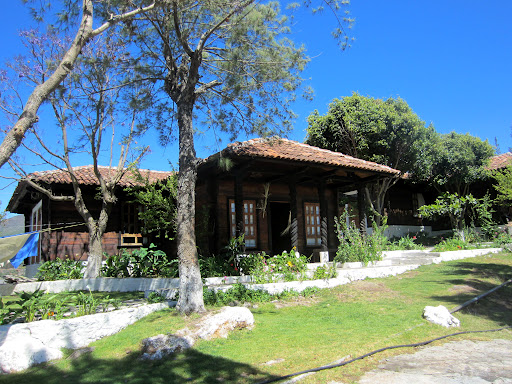
Alfredo next let us off on Yunuén Island, which the comunitarios there have decided to develop slowly, in an eco-friendly fashion. This island was gorgeous as well. There were simple cabañasat the water’s edge, and a more deluxe yet simple development at the top of the hill.
Yes, this is what was possible. These people were developing eco-tourism in a way that was sustainable, pleasurable, that enabled them to keep a lifestyle and a pleasant place to live. Surely Pacanda could do this as well?
The view from the top of the island, overlooking the town and the lake, is spectacular.
The ladies on Yunuén love to embroider, and I absolutely fell in love with their aprons!
Unfortunately I was too cheap to pay the US$100 or so that I was asked to pay for this one. The handwork was so beautiful. This whole trip has amazed me, the intricate embroidery that we have seen!
The cabañas on top of the hill are gorgeous. One for two people rents for 500 pesos per night. The cabañas have baths and bedrooms but no kitchens. There is a shared kitchen, and a restaurant.
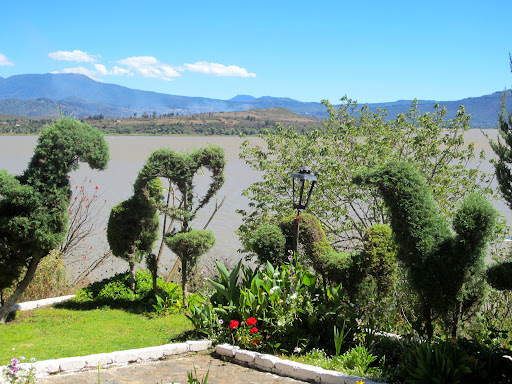
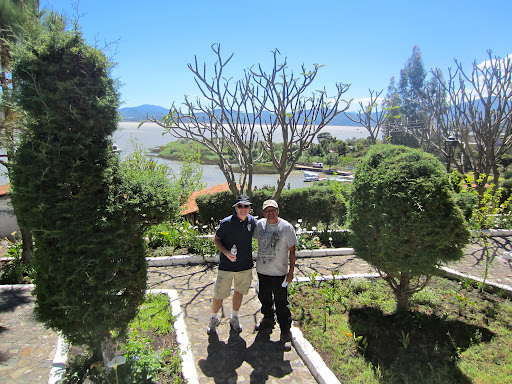
The gardener on the premises has a whole lot of fun, as you can see.
The staff, and the local people, were all very joyful, friendly and hospitable. I would love to come back here, either to stay up top or
in the cabañas down at the lake level.
Yunuén had a good feeling. You could even sense it in the tilework on the sinks!
The comunitarioshere seem to know the value of place, and they are, thank goodness, dedicated to protecting it.
JANITZIO ISLAND
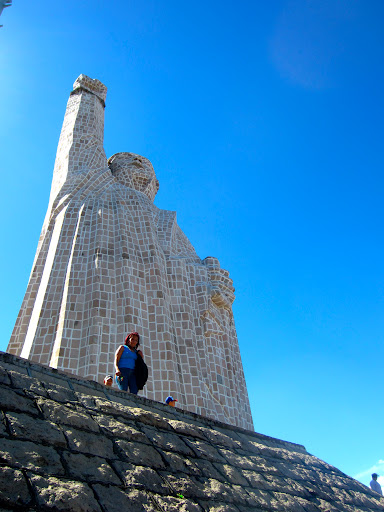
After Yunuén, we rounded Janitzio. It is so gorgeous to look at from the lake; you’ve seen the photos. The large statue of Morelos at the top distinguishes it.
As you get closer, however, you notice just how overbuilt and crowded Janitzio is. There doesn’t appear to be much available space anywhere.
There were tour boats plying the waters back and forth from Patzcuaro to Janitzio, all of them filled with tourists during this Semana Santa holiday.
Once arriving in Janitzio, it was a solid line of tourists walking up and down the hill, as if we were ants going to an anthill. It reminded me of the entrances to some of the major temples in Kyoto, though there when you arrive at the temple proper there is usually calm.
Solid tourist shops, from water’s edge to the top. Houses on top of one another with no room to breathe, no place that I could see to relax. THIS is surely why the people of Pacanda do not want development! Oh so clear! They don’t want their pristine island to turn into this!
At the top, the wait to climb the statue of Morelos was one hour, so while we stood in line for about 20 minutes, we then gave up and left.
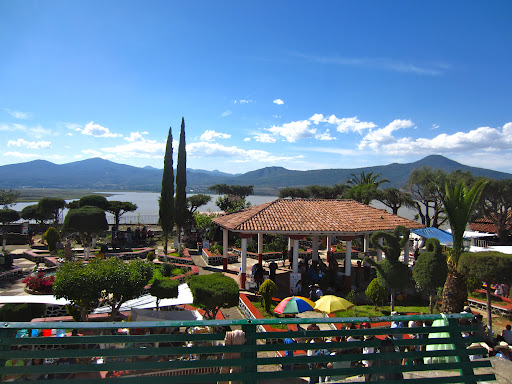
The view from top of Janitzio was very nice.
Though I preferred the view from the winding trail up, if you could get out of the line of traffic, that is!
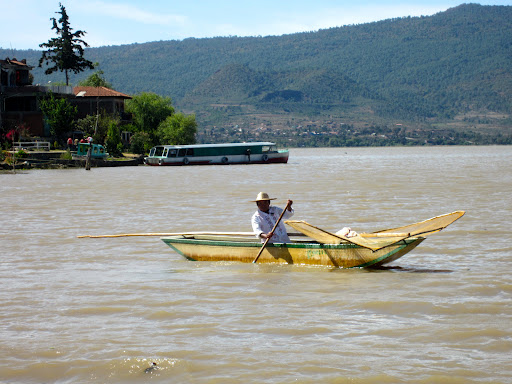
Though Janitzio was not my favorite island, there were two things I loved about it. One was the very cool boathouse, at the far end of the embarcadero, where the pangasput in.
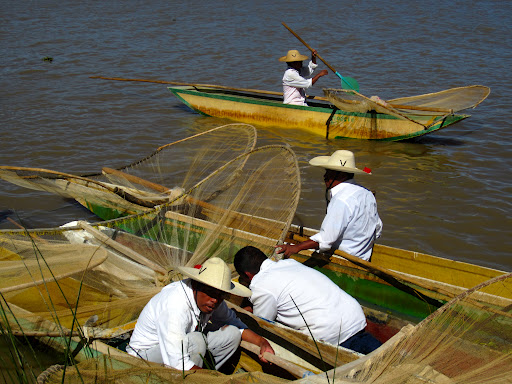
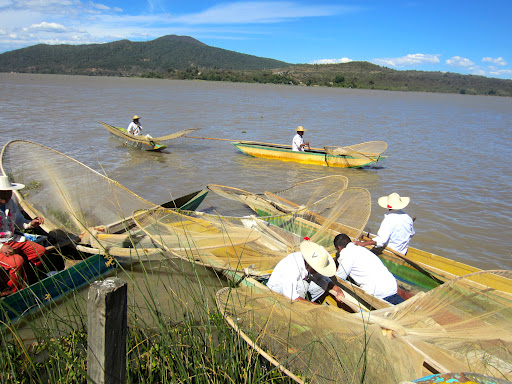
By far my favorite part of Janitzio were the demonstrations by the butterfly-net fishermen.
Above is a short video of the fishermen using their nets. I am so very sad to know that the people in this area no longer really fish this way. Alfredo told us that the lake has been heavily over-fished, and nowadays fishermen don’t really make a living using those beautiful butterfly nets we see in photos. Rather, these days, they put on “exhibitions.” Luck was with us and we were able to see one of these demonstrations up close and personal. Thank goodness the tradition lives on, at least for the tourists!
It was an absolutely gorgeous day on the lake, and we felt extremely blessed. We found our “secret” boat launch, which I most highly recommend; we ate at the best place on the lake, I am sure (the caldo de trucha/trout soup ROCKED); it was sunny and clear; we had the lake’s happiest boat driver; and we got back to Morelia in daylight in plenty of time for the Procession of Silence.
We highly recommend that, if you travel to Morelia, you spend a couple of days on the lake if you can. Visit the many pueblos that line the lake; they each have a style of dress and unique handicrafts in which they specialize. It has been by far our favorite aspect of our time here. Morelia is GORGEOUS, but the Lacustre, the lake region, is a far too hidden treasure!
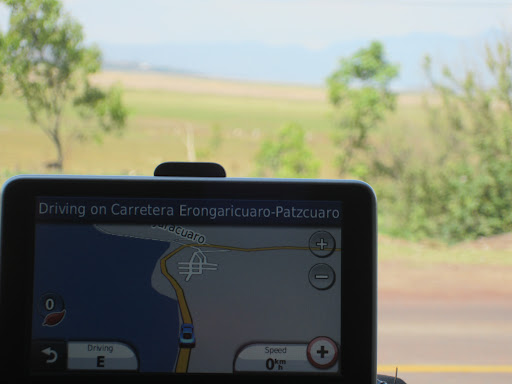
Addition on April 9: we drove around the west side of Lake Patzcuaro today. There is also a boat launch on this side of the lake, making at least a total three. At left is a photo of our GPS, showing that the road we were on used to be lakeside. You can definitely see that it no longer is.
México, the land of mañana, a place where ahorita (“right now”) means “I am aware of it; we will get to it, eventually…” So imagine our shock this afternoon when we walked into a restaurant across the street from our hotel in Guadalajara, and before we could even sit down onto our table appears FRESH food: limes, chopped cilantro and onion, chips and salsa, and hot corn tortillas! A waiter showed up with pen and notepad in hand, smiling, asking us for our order, before we had barely sat down!
“What do you have?” I naïvely asked. “Beef cooked in its juice, small, medium or large.” Easy enough. (They do have quesadillas if you don’t want meat, but not much else.) Our small orders showed up in about 20 seconds. We had been sitting for all of 30 seconds, maybe, and we were eating fresh hot food! The slowest part of the process was us. Had we been experienced diners, it would have been a seamless, fluid transaction.
For us it was quite disconcerting. The place, Karne Garibaldi, is evidently pretty famous in Guadalajara, founded in the 1970s and currently with five different locations throughout the city. Since August 31, 1996, they have held the Guinness World Record for fastest service: 13.5 seconds from kitchen to table! This is not a taco stand; it is huge, comprising what are basically three large dining rooms. We didn’t count, but would guess there are sixty tables and seating for a few hundred people. We normally clocked people getting served their main courses and drinks between 30 and 50 seconds, but that’s still pretty darned amazingly speedy!
Remarkably to me, the staff all worked together like a well-oiled machine and, they were happy doing it! The hostesses seat groups of people and stand at the table with their hands in the air as the guests sit down. The side dishes all show up, and a waiter shows up. The waiter runs (literally) the order ticket to the kitchen, and the food and drinks are served lickety split. Other waiters wander around with fresh guacamole or other side dishes you might want to add to the standard-issue salsa, grilled cebollitas, limes, and their famous frijoles con elote (beans with corn). Waiters who are not busy taking orders or serving clear plates from tables. And boy, can they carry the weight! These are heavy pottery dishes! The entire time we were there, we only small smiles and great examples of team work, so often missing in restaurants today. Someone has done a great job instilling a culture of team work and customer service. Even the manager or crew supervisor was pitching in non-stop. Lots of nonverbal communication and staff member helping staff member; it was really fun and beautiful to watch.
Outside the restaurant in Plaza del Sol a line of cars waited a long way down the street for valets to park them, such is the demand on this place. We personally found the meat in its juice a bit bland, but there was plenty of salsa, lime, cilantro and onion to spice it up. And, thankfully, it was meat, not tripe or ears or eyes or…
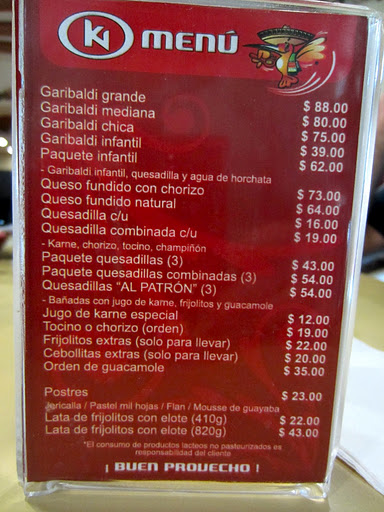
The menu includes a large variety of drinks (including Greg’s beloved Coke Zero in a BOTTLE!) as well as Mexican desserts (jericalla, pastel mil hojas, flan, mousse de guayaba). Prices are reasonable (see menu at left). The small orders were enough for us as we went home very satisfied. It is only a few pesos more for the next sizes up, so a hungry diner won’t go broke. This is a great place to eat and probably a great place to work.
Just remember, next time someone tells you that Mexicans like to take their time… there are exceptions to every tendency!
The road between Mazatlán and Durango (Highway 40) is called “Espinazo del Diablo”, or “Devil’s Backbone,” due to its steep incline, hairpin turns, and sheer drop offs. Originally this spring break trip we had intended to leave Mazatlán and go over the Devil’s Backbone through Durango to Zacatecas. It’s only about 180 miles/300 km, not so far. But, it takes at least five hours, and some have even reported it taking ten hours! Many of our local friends convinced us that we should not do that because it was far too dangerous. Instead, our friends recommended we go around, through Guadalajara, making a big southern circle to get to Zacatecas. We followed advice and were happy we did. Our roundabout route enabled us to spend a few days in Guanajuato.
We intended to return the same route on the way home. Thanks to our friends’ advice, we were now scared about traveling over the reported 3800 curves of the Devil’s Backbone. But, who wants to retrace their steps? We wanted to see new territory, and we’d heard that the drive through the Sierras via Durango was gorgeous. Durango is a city fairly close to Mazatlán, with others being Culiacan or Guadalajara. There are not a lot of big cities nearby our home, and sometimes one craves a city.
What we found today was a gorgeous drive with a much-improved roadway, and some fortunately very responsible drivers. While I wouldn’t want to make this drive often, I would definitely make it again. Neither Greg nor I felt it any worse than the drive to Tahoe or down Cañada Road on the SF Peninsula (N CA), or Oak Creek Canyon in AZ where I grew up. It is, however, much much longer.
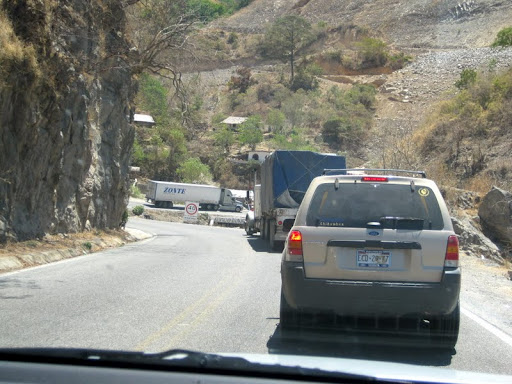
We left Durango about 9 am and arrived in Mazatlán about 3:00, with stops for breakfast and lunch on the way, as well as losing one hour to the time change. That means about a 5 hour drive from Durango to Mazatlán for us today. Over the curves we averaged 30 mph, but when we were stuck behind trucks or a line of cars we frequently progressed at 2 or 5 mph. It is definitely slow going!
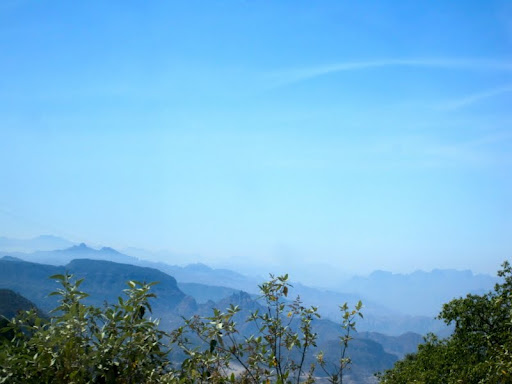
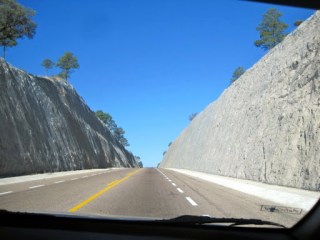
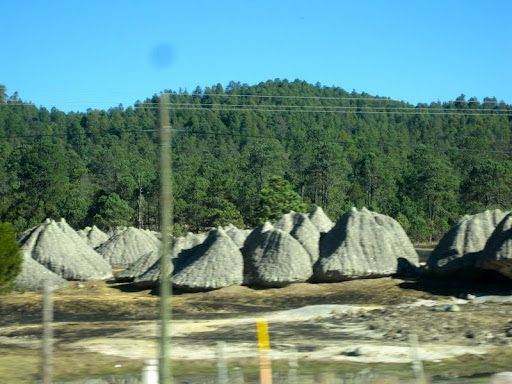
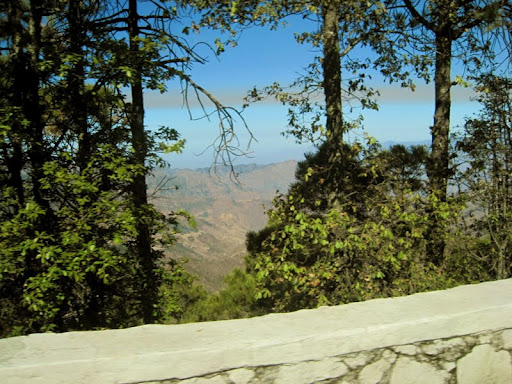
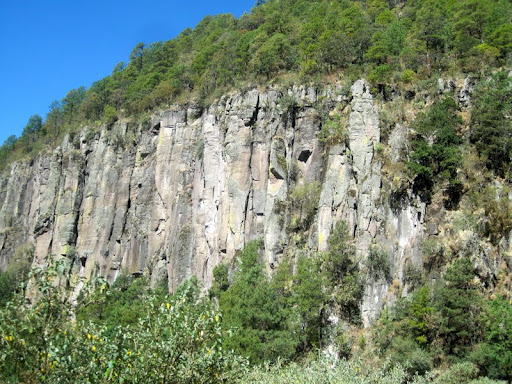
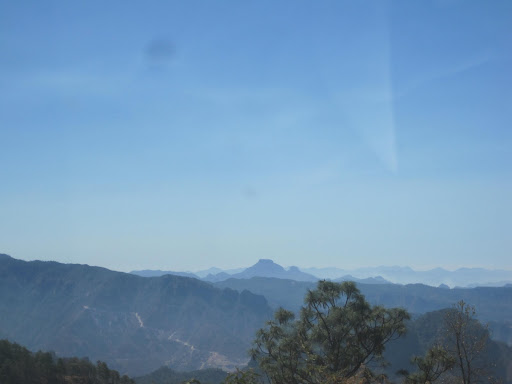
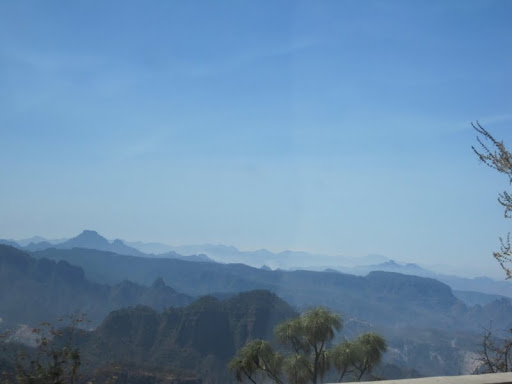
The new portion of the road that is open is terrific—two lanes each way, flat and smooth, clearly marked. The scenery along the route is terrific, with some unusual rock formations and incredible vistas.
John Wayne’s ranch is along this route, as are a couple of national parks, some nature preserves, and several places to rent cabañas. Come summer I think it would be fun to go up there, rent a cabaña, and spend a few days sniffing the pine trees, hiking and mountain biking. It was wonderful to smell pine in the fresh air and to feel the nearly-freezing temperatures of the sunny morning. The highest point, we’ve been told, is 1890 meters/6200 feet, less than Flagstaff AZ where I grew up, and far less than Conifer CO where Danny grew up.
Once the new cuota ended the free road was two lane, with oncoming traffic. The actual “Espinazo del Diablo” or “Devil’s Backbone” of hairpin turns and steep drop offs is only a portion of the road between Durango and Mazatlán, a 2-3 hour portion depending on which big slow trucks you get behind and how kind they are to pull to the right when you want to pass. Greg and I felt it was not nearly as bad a drive as we had been led to believe. With the new highway, it should be great. There were guardrails in most of the places that needed guardrails, something others had mentioned as making this drive so dangerous. Our guess is the rails have been recently installed. The biggest danger is closer to the Mazatlán side, nearing Copala, where the road, at least today, was still two lane and had absolutely no shoulder. If you happen to be making a hairpin curve while some crazy person is passing in oncoming traffic, there is not much you can do. Fortunately, today we only had two small instances, both very manageable. So, as of now we’ve overcome our fear of the Devil’s Spine.
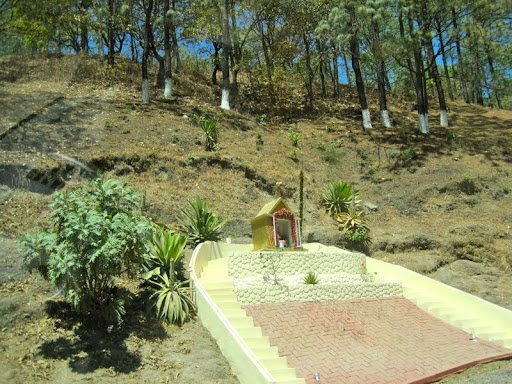
There were lots of cows and horses by the side of the road, free range, and we saw some turkeys as well. It was a very scenic drive. Unfortunately we also saw loads of roadside shrines, dedicated to people who had been killed in car accidents.
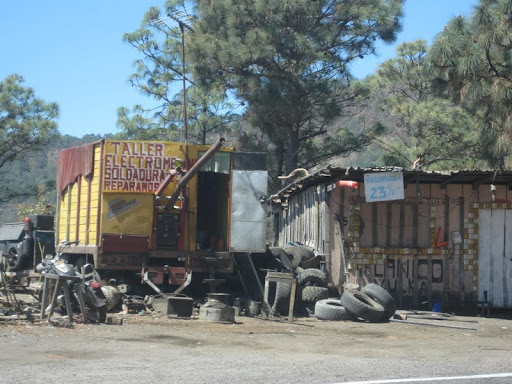
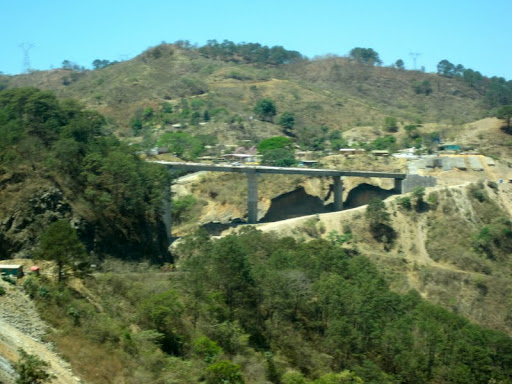
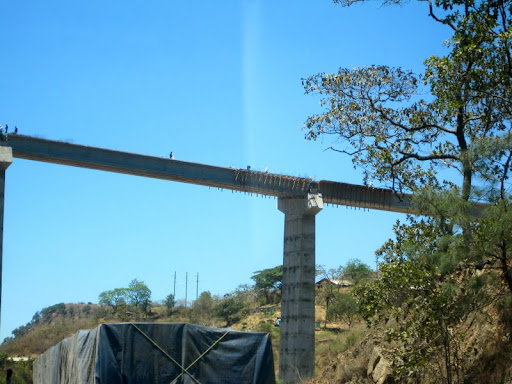
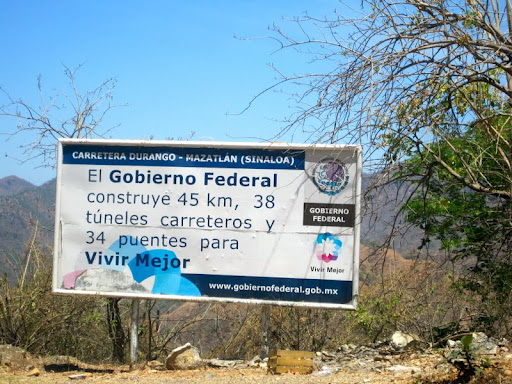
Along the way are many construction sites. Information on the signs varies, but a website for the project indicates that the new road is going to include 63 tunnels along with 8 bridges over 300 feet in length and an assortment of smaller bridges. Along the way there are many makeshift towns that seemed to have arisen so that the road/bridge workers can have somewhere to live. Please visit the website to get a better understanding of the engineering challenge in making this drive safer, quicker and easier.
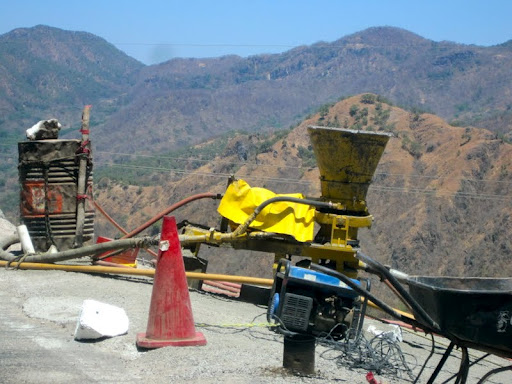
The workers work in incredibly dangerous-looking conditions, with steep drop offs and no safety equipment from what we could see.
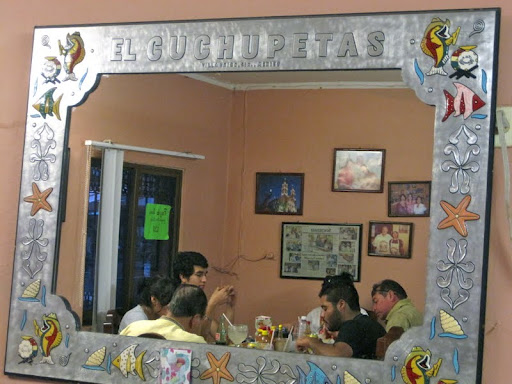
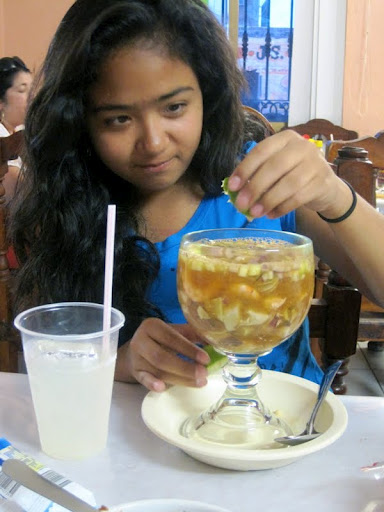
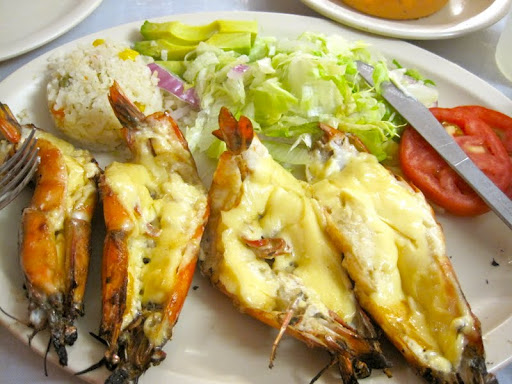
We had our last meal of this spring break holiday together in Villa Unión at Cuchupeta’s, a place we’ve long been planning to visit. We were not disappointed.
















































 ¡VidaMaz!