A Chance to Visit a Mazatlán Organic Farm

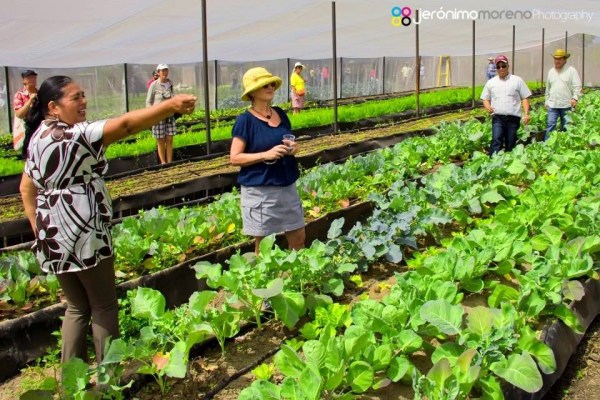
v1Just over four years ago, we had the opportunity to go to the community of Guillermo Prieto on the outskirts of San Ignacio and visit the totally organic and innovative farm of Sacramento, one of the regular vendors at Mazatlán’s Organic Market (or MOM for short).

Now, you all have a chance to do the same thing, coming up on Sunday, March 13. This event is coordinated by Verónica Rico, one of the founders and motivating forces behind MOM. At 8:30 a.m., guests will be taken by bus from Plaza Zaragoza to Guillermo Prieto, where you will be shown up close and personal how Sacramento and her team work, teach, learn and live. Highlights include: the water collection system, creation of compost, worms, and the gardens where they grow their beautiful produce.

Later, you will enjoy lunch / brunch in the fields with organic produce, prepared by Sacramento and her team. The cost is only 380 pesos, including the transportation, tour and lunch. You should be back in Mazatlán around 3:00 p.m. or so. This is a great way to understand the origin of organic produce in a small local farm and the people who grow them!

Here is a link to our tour in 2012. I can only imagine how much they have grown since then. Here are a few shots from a similar tour in 2013:

This slideshow requires JavaScript.

You can write to Verónica Rico at mazmercadoorganico@hotmail.com or give her a call at 6691-48-4010 for any questions. Verónica speaks English fluently. Tickets will be available at the Organic Market in the Plazuela Zaragoza this coming Saturday from 8:00 to noon.

This is an opportunity that does not come along very often and we encourage you to go if you are able.

More information and updates are available on the MOM Facebook page.

My Interview with the Queen of Sinaloan Cooking

©5.DSC_0944

“The Most Extensive Book on Mexican Culinary Arts”: Doña Cuca and her husband, Ernesto, in 1980.

In 2010 UNESCO honored traditional Mexican cuisine as the first and ONLY world cuisine to be named an Intangible World Heritage.* Cooking is part of the cultural identity of a community, and I’m more than happy to sacrifice myself to having to eat traditional Mexican food nearly every day!

Sinaloa, the state in which we live, is the food basket of Mexico—home to thousands of hectares of corn, chile, tomatoes, pork, beef, fish and all the fresh seafood your tastebuds might desire. Leave it to a Sinaloa native, then—Doña Cuca, or María del Refugio Fonseca de Cárdenas—to do us the favor of recording recipes that were traditionally handed down orally into the “most extensive book on Mexican culinary arts,” according to a national Mexican newspaper. Just think… that makes this woman, born in Guasave, who now lives in Mazatlán, author of an authoritative work on the only Intangible World Heritage cuisine!

Doña Cuca has taught thousands of Mexican women the art of cooking; her cookbook is a Bible for newly married women. Just ask your friends—they know her. Dozens if not hundreds of women have opened cocinas económicas using her recipes as their guide, so La Maestra has contributed to Mexico’s growing middle class, as well, enabling women to send their children to school with the money they earn.

I have long wanted to interview Doña Cuca, but she turns down cold most interview requests. She’s been known to say that at 85 “she’s had her day in the sun.” So what were the odds this strange gringa woman could score an interview with the icon of Mexican cooking?

Well, last week, my girlfriend brought the honest-to-goodness-best-pie-in-the-history-of-humanity to my house. I asked her about it, and she explained that she had gotten married at 18 and learned to cook from her mother-in-law; the pie was just one of many recipes she’d learned. Small world, but I found out that my friend Patty is related to Doña Cuca, so arranging to interview the Maestra was easy peasy! (Thank you, hermosa!)

I was intimidated going into our meeting; I had heard Doña Cuca could be a tough interview, and that she is quite the perfectionist. We were invited to her home, so I wanted to take a hostess gift. But I sure as heck wasn’t going to take any homemade snack or baked goods! Flowers, maybe? I settled on a scented candle.

What a joy our afternoon turned out to be! Doña Cuca has such a spark, and my oh my does she have the charm! She welcomed Patty and me into her home where she regaled us with stories that ranged from the ribald to the heartwarming. She brought out photos, clippings, letters, and, of course, some fresh juice and snacks. As if that weren’t enough, she gifted us signed copies of her book, first published in 1980 and now in its 21st printing!

Doña Cuca told me she’s loved cooking since she was seven years old. She was fortunate to learn from her grandmother, her mother, and the wonderful cook at her grandparents’ hacienda in Guasave, which led us to her first earthy story. As a pre-teen, Doña Cuca was jealous of the large bosoms she saw on the cook and her daughters. She asked them how they got such big breasts. “From milling the corn!” they exclaimed. Obviously they were clever women, as their response got Doña Cuca to take over grinding the corn for quite some time before she figured out it didn’t help her breasts grow bigger!

At her grandparents’ hacienda Refugio learned the importance of fresh produce, meat and cheeses, and that simple cooking with quality ingredients is often the best. She got married and had five children. The family lived in Mexico City and Ciudad Obregón, but after serious financial setbacks, they ended up back in Guasave. There Doña Cuca started El Instituto de Seguridad Social: para el bienestar de la familia with two girlfriends. As part of that effort she often taught cooking classes in the ejidos. She remembers that she’d take notes about the many cooking techniques shared by the housewives of the area during her classes. Years later she conducted research in 18 municipalities of Sinaloa, focusing on the traditional recipes. That book, with sets of 100 recipes for seafood, beef, chicken, gourmet food, etc., will be published in January, 2016 under the title, Colache: Para Mis Pequeñas Cocineras.

La Maestra told me her favorite fish is corvina, and she likes it on las brasas: cooked over an open fire. She told me the traditional way to make pescado zarandeado, that emblematic Mazatlecan dish, is to barbecue it over an open fire with only salt. The salsas and the vegetables (tomatoes, onions, green peppers) should be served separately.

Some of the typical Sinaloan dishes that we talked about included chilorio, machaca, and chorizo. I asked if some of these weren’t more typically Sonoran, but she replied that Sinaloa has always had great beef, too, and that many of these recipes date to before statehood, even to prehispanic times. The one that really stood out for me were the enchiladas del suelo—enchiladas of the floor! I read one newspaper account about how these very enchiladas, made by Doña Cuca, had been the hit of a huge society party in Guadalajara, given by the famous enchilada maker La Güera del Mercadito Vizcaíno, thus taking the limelight away from the hostess. Doña Cuca told me that enchiladas del suelo, along with el asado Sinaloense, are very typical, traditional dishes of this region. They were often served at parties (parrandas) and serenades, and were an alternative to menudo at the closing of a dance. She promised to teach me how to make them, and I am sure hoping to hold her to that invitation!

What about one of her heartwarming stories? Like any grandmother, it involves a grandchild; in this case, Ana Carola Cárdenas. Ana took after her grandmother, but in Ana’s case her love of cooking took her to study it in Europe. Grandma proudly showed me Ana Carola’s article, some photos of her culinary arts teacher, and the chair in which her children and grandchildren grew up enjoying her terrific cooking.

I feel honored and very lucky to have met and had the chance to interview this fine woman, and I am also extremely grateful to her for working so hard to keep our traditions alive. I look forward to using her book and doing my part in turn!

Provecho!

*Yes, French gastronomy was honored as well, but it was for the French custom of eating together, the serving of courses, etc.—not for the food itself.

Conselva’s “Nuestro Patrimonio Natural” Dinner

IMG_2585

I sadly missed Mazatlán’s first Holi festival due to my travels, but fortunately returned just in time to attend the Conselva “Nuestro Patrimonio Natural” dinner on Tuesday night. Over 300 people enjoyed the event in Casa Garcia, at which chefs from Cocina!—the community outreach program of local Mazatleco chefs—collaborated on a fundraiser dinner for Conselva: Coasts and Communities. Mayor Felton and First Lady Sylvia, along with many municipal government and business leaders, attended. I was very happy to see that we also had a good expat representation—WTG for supporting environmental sustainability in our region!

Those cooking included Mariana Gomez Rubio from Pedro y Lola; Julián Portugal, from El Parador; Luis and Ignacio Osuna, from Grupo Panamá; Héctor Peniche, from Hector’s Bistro; Diego Becerra, from El Presidio; and Marino Maganda, from Pueblo Bonito. Proceeds from the event were earmarked to purchase highly efficient Patsari wood stoves/comales for families of the Monte Mojino ecological zone. “Patsari” means “the one who takes care of” in the Purhe’pecha language. In addition to conserving wood, the stoves preserve the quality of indoor air.

The Monte Mojino ecological reserve is located in the mountains of southern Sinaloa between Concordia and El Rosario. Its 200,000 hectares of dry tropical and pine forest contain 66% of the fauna found in the state of Sinaloa and 56% of the plant families found here, including 160 species that are endemic to Mexico. According to Conselva, the reserve has a biodiversity richer than that of Costa Rica. Conselva has worked hard to teach the 12,000 residents of the region conservation and eco-tourism, so they can thrive while protecting their natural environment.

The seven chefs welcomed all of us through the doors of the Compañía Minera bar and restaurant portion of Casa Garcia with a selection of terrific fish and seafood ceviches and drinks at the first food station of the evening. Wine and beer were included, but strangely non-alcoholic drinks had an up-charge.

Once inside the large outdoor patio we were entertained during the cocktail hour by a jungle-clad drum and dance troupe, while three dancers made up as jaguars pranced among us. It was delightful.

We were able to see a Patsari stove in action as throughout the evening two ladies from Monte Mojino used one to make tortillas.

Funds raised from the dinner go to buy wood stoves like this one for Monte Mojino residents.

Funds raised from the dinner go to buy wood stoves like this one for Monte Mojino residents.

Seating was throughout the central patio, both downstairs and upstairs. As usual the venue was gorgeous and the weather was perfect. For dinner we were able to enjoy three different food stations. The station downstairs served fish, soup and tamales made from regional products, while another upstairs served delicious meats from the Monte Mojino region. The fourth and final station was inside the cleared El Presidio restaurant, and consisted of about seven different desserts!

Click on any photo to enlarge, or to view a slideshow.

Puzzling to me about the event was that food was served on plastic dinnerware. While more ecologically sound than styrofoam, Greg and I found it very strange that a conservation organization would use plasticware, and particularly for an event that cost 1000 pesos per person. Hopefully the materials were recycled or recyclable. The other unfortunate reality was that seating was extremely awkward, with many people unsure where to sit or having to move after they’d already been seated. With an event of this size, a few hiccups are perhaps to be expected. All in all, the night was quite magical, and very savory!

At the conclusion of the evening everyone attending was given a gift bag of Monte Mojino honey to take home.

I’m very happy we have several organizations in Mazatlán that are dedicated to preserving our natural environment and to educating people about conservation and eco-tourism. It is my most sincere hope that southern Sinaloa can become a champion of environmentally friendly and sustainable tourism before it is too late. We’ve already lost so much. Southern Sinaloa is blessed with an incredibly vibrant biodiversity, and we will be wise to work together to create sustainable ways of making the most of its beauty and riches, for both ourselves and the generations to come.

Be Sure to Plan to Attend!

dsc_0421This post is for all of you who complain that you only hear about things after the fact. Last year, one of the best trips we made was right here in Sinaloa: our visit to El Konti, the Lenten celebrations of the Mayo-Yoreme, which take place in northern Sinaloa and southern Sonora. I wrote extensively about this event last year. The Lenten Konti processions are a fascinating juxtaposition of native Mexican/pre-hispanic tradition, mixed with the Catholicism that came with the Spanish conquistadores. El Konti is a terrific example of a community rescuing its traditions, making conscious, concerted efforts to educate its youth and involve them in community life, rather than losing them to alcohol, drugs or petty crimes.

Well, Ash Wednesday was this past week, the 18th; Easter is April 5th; and every Friday from today till March 27th, the Yoreme communities will be celebrating Konti. Then, on Holy Thursday, Good Friday, and Holy Saturday—the high days of Holy Week—there will be extra special activities to witness. Why don’t you check it out?

I put some of my video footage together into an 11 minute movie, and I’d like to invite you to pour a cup of something, sit back, put it on full screen, and take a look. I find these people such great role models. Watch how they involve and educate their kids, rarely needing to correct them. Most of these kids are dancing for seven to eight hours straight—all day long, under the hot sun. They are wearing hand-carved wooden masks, heavy carrilleras or bamboo skirt-like percussion instruments, and tenabaris or pebble-stuffed butterfly cocoons wrapped around their legs. They wear handprinted or embroidered white manta clothing and cape, and simple huaraches on their feet. Some boys may not have all these things, and may have to improvise: I saw several tenabaris made out of recycled soda cans, for example, and some kids wearing jeans.

You can witness or participate in El Konti any Friday during Lent, or join in Holy Week festivities, in any of the Mayo-Yoreme ceremonial centers. Locations in Sinaloa include:

Municipio de El Fuerte: Mochicahui, Charay, Sivirijoa, Tehueco, Los Capomos, Jahuara II

Municipio de Ahome: Bacorehuis, San Miguel, La Florida, San Isidro, El Colorado, Ohuira, Lazaro Cardenas

Municipio de Choix: San Javier, Baca, Baymena y Choix (Colonia Huites)

Municipio de Sinaloa de Leyva: La Playa

Yoreme mapSan Miguel Zapotitlán is just a four-hour drive north of Mazatlán, 15 km north of Los Mochis on highway 15. It has a large procession bringing together 30 Yoreme communities in the municipality of Ahome. Mochicahui, which we visited, is located at km. 15 on the highway between Los Mochis and El Fuerte. We spent the night there, at a hotel we found right on the highway: the Hotel Doux.
If you’re planning a more extensive trip, you will be right at the starting point of El Chepe train, the transportation through the Copper Canyon. That was the first trip we took once we moved to Mexico, and one I very much want to repeat!

It’s a Horse Parade!

CabalgataDo you love horses? Do you love an excuse to party, and are amenable to doing so before, during and after you ride 25 kilometers on a horse? Do you have kids who enjoy watching horses dance? If so, you ought to join in the Familia Escobar’s cabalgata or cavalcade next year. The cabalgata is held up in Cerritos on the second to last weekend in January every year, and this time 600 horses and riders, from five states of Mexico, participated.

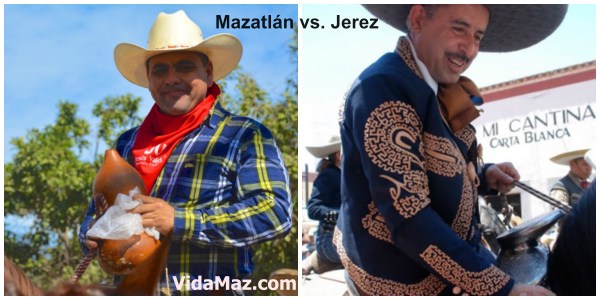
This was so very different from our first cabalgata—in Jerez de Zacatecas, on Holy Saturday of 2011. That one hosted thousands of charros with incredibly beautiful sombreros, tooled leather and embroidered suits. Here in Mazatlán, it’s puro Sinaloa, baby! Most everyone wore a cowboy hat rather than a sombrero, though we did see a few baseball caps as well. Almost everyone had a bandanna around their neck, jeans instead of leather, knee-high leather boots, and either a brightly colored shirt or a plaid shirt instead of an embroidered, fancy mariachi-like top. And, in typical Mazatlán style, we saw one guy without a shirt.

One surprising thing, at least to us: they were drinking a whole lot less here than what we witnessed in Jerez. Amazing? I’m confident they made up for it at the final ranch, or perhaps it’s because this is much more a family event, but we only saw beer, not the quantity of tequila and whiskey that we did in spring 2011 in Zacatecas. I will also say that Mazatlán wins, hands-down, in the friendliness department!

Men, women, children, couples, families, and singles participated. Riders told us there were over 1000 people participating, Tourism reported 600, but at most we saw 250-300 pass by us. We waited on the beach in Delfín for quite a while, significantly north of the bridge. However, the riders must have turned back to the road from the beach quite a ways north of Delfín, because we only saw a few on the beach—the bulk of them we saw on the road to Emerald Bay.

The cabalgata started at Rancho Chuchupira, which is about 14 km north of town. Because the bridge is under construction, the riders this year rested at Oceanica, the drug rehab center in Delfín just north of the wonderful new bridge. There the facility’s staff watered the horses, and guys on 4-wheelers handed out beer and water. The riders continued south along the railroad tracks, turning west for another rest at Rancho El Palomo, and then ate lunch and partied with beer, food and banda music at Rancho Las Habas. Quite a deal for 150 pesos! We met riders from Nayarit, Jalisco, Zacatecas, Durango and the USA, and were struck by how incredibly friendly everyone was. Greg and I both received multiple offers to hop on a horse and join the fun.

If you’ve never witnessed a cabalgata, it’s worthwhile taking the opportunity. Sinaloa is farm country; raising horses is part of one people do on the ranchos here. Cabalgatas are another wonderful cultural opportunity we can avail ourselves of here in Mazatlán. I do, however, recommend you ride rather than just observe. Looks a whole lot more fun!