I have never understood a society, or a city, that doesn’t value its history. How can we here in this gorgeous port city of Mazatlán, with its history of riches, high society from all over the world, such a diverse mix of cultures and trades, and interesting story after exciting story, and not have a historical museum?
We own quite a few books, in Spanish of course, on the history of Mazatlán. They are very good. We’ve attended previous events on the history of Mazatlán at the Archeological Museum. Greg has, for years, collected items (postcards, record albums, tourist flyers, letters) from Mazatlán’s history. Most of them he has purchased on e-bay, and he has a rotating collection displayed on one of our walls. Here’s his latest:
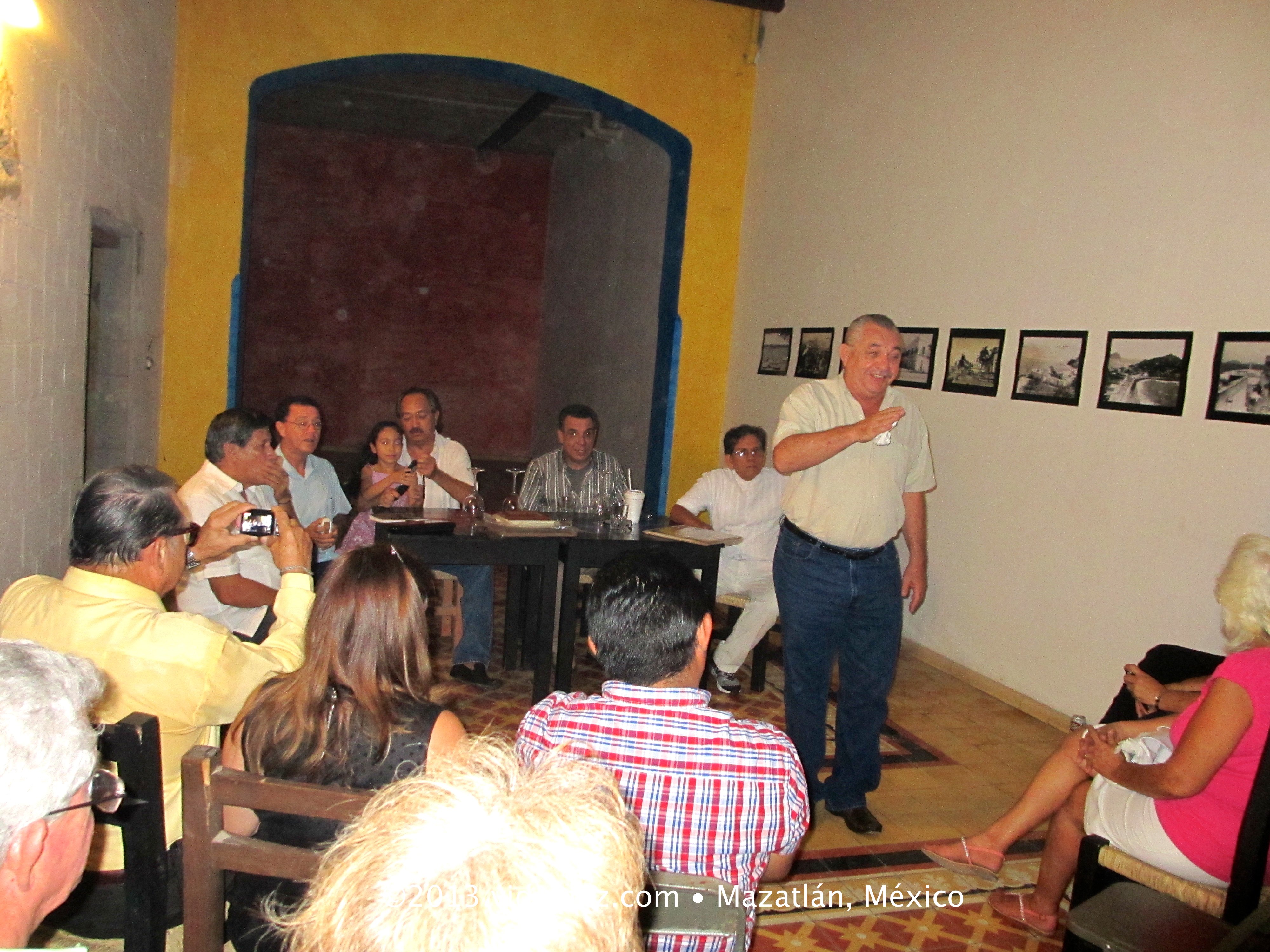
But the Photo Expo last night was especially excellent. Why? The first ingredient was a terrific panel of knowledgable local historians: Mario Martini, Joaquin Hernandez, Luis Antonio Martínez Peña, Fernando Higuera, moderated by Guillermo Osuna. The second ingredient was a series of six photos of Old Mazatlán. As each photo was displayed, members of the panel took turns telling a story or two revolving around something in the photo. The third ingredient was a gorgeous old, very rustic room, with exquisitely tiled flooring and vigas overhead. Oh, there was also free beer, wine, water and soda. The evening was lovely, and the room was packed with interesting people. The evening was quite magical.
This morning we’ve already had several people contact us, asking if the exhibition is ongoing. Sadly, it is not. The grand opening/ribbon cutting was last Friday at SECTUR, and the main event was last night in a rustically beautiful room at the back of La Querencia. We definitely need space to display some of these photos and a bit of the history of our fair city!
Last night, for example, I sat next to a gentleman who I later learned had purchased a certain photo of a group of young women standing in front of a classic car on the malecón in Olas Altas, with the burned-out ruins of Casa Echegurén on the hill in the background. My guess is that the photo includes the grandmother or great-grandmother of the guy who purchased it. How very cool is that?
The organizers of the event last night are a group of people called “Amigos de Mazatlán.” They host a page on Facebook, where Greg and I have long loved seeing the photos shared, and the comments posted by family members, friends, great-grandchildren… sharing memories of our beloved adopted home. We recently met two of the group’s key players, Fernando Higuera and Briza Sánchez, when we went down to Casa Canobbio to buy a CD of photos in support of the group’s efforts to build a photographic museum of old Mazatlán. They are extremely passionate, and a whole lot of fun, so next thing you know, we were helping to sponsor and working in support of last night’s event. I’ll post a few photos below. Click on any of them to enlarge or view a slideshow.
By the way, after the panel discussion, the photos were all put up for sale. And, even cooler than that, the money is going to the victims of the hurricane here in Sinaloa!
Here is the exhibit!
Sweeping and mopping the salón
All clean and shiny
Luring the people to the inside with some photo displays
Double-sided taping of the exhibit photos
Taping, taping…
And more taping.
Ready to go from the outside
Gorgeous old building
Ready to set up chairs and tables
Closeup of the intricately tiled floor
Chairs set up, photos getting displayed.
Ready to go
Happy Dianne
Happy Greg!
A keg of beer, wine, sodas and water
By the end of the night there wasn’t even any standing room left.
The goal is, hopefully, to have a Museum of Old Mazatlán. I trust the dream will become reality. You can help support this effort to preserve and promote the history of Mazatlán in several ways.
If you are in Europe, the US or Canada, Asia, or South America, check out your local photo archives. Many of the historic photos of our city have come from photographers and collections abroad. During the revolution, many of the old photos were packed up and removed along with the wealthy families who populated our city.
You can get involved with the group, helping to plan and conduct efforts to make the dream come true.
Your donations are welcome, and the group is also selling CDs of photos in order to raise money.
Last night, immediately after the big Mayweather-Canelo fight, we headed over to the Banda MS concert in Salón Bacanora. The band was celebrating its tenth anniversary, and we were ready to have a good time!
There were several opening acts leading up to the main event, including Proyecto 5, Banda Legal, and Horacio Placencia.
Banda MS came on stage at exactly midnight, as planned. We were shocked! They looked incredibly sharp in their Independence Day garb. I don’t think I’ve ever before seen colored flies on men’s slacks! You can click on any photo below to enlarge it or scroll through all the photos.
Fireworks over the stage
Pan of the crowd
The entrance with screens for the fight
Last night’s was not the most polished performance we’ve ever seen. Despite being their tenth anniversary, playing en casa/at home, and amongst their friends and families, the band didn’t exactly seem into it, as you can tell from the clips below.
The audience was huge, but very calm. There wasn’t a lot of shouting or singing aloud as we usually experience at a banda concert. There were many couples, and way more groups of women than is usual at such an event. We saw some wonderful pointed tribal-esque boots and rhinestone-bedecked belts, and dancing that made me feel I am never going to get the right banda moves.
We in Mazatlán have experienced SUCH a long drought without banda concerts (other than the annual Coronation of the King of Joy during Carnavál), that even last night’s lackluster performance was still very welcome.
My heart goes out to all the fresh water shrimpers and shrimp farmers in our fair state. As you have no doubt read, “Early Mortality Syndrome” has killed 90%-98% of the estuary shrimp in Sinaloa, robbing so many local families of their livelihoods. It is heartbreaking. This is the same disease that has decimated shrimp populations in much of Southeast Asia (China, Thailand, Vietnam) as well as Sonora and Nayarit.
Sinaloa has a long and proud history of both deep water and estuary shrimping. Our state produced 50 thousand tons of shrimp in 2011, making us the main producer of shellfish in Mexico.
This is not the first time such a disaster has occurred. White Spot Syndrome and Taura Syndrome are two diseases that have previously wiped out the year’s shrimp harvest, and such aquaculture diseases seem to be increasingly common worldwide.
Let’s hope the deep water shrimpers do better! I know we all thoroughly enjoyed the “necklace on the bay” when all the boats headed out to sea on Friday night.
Here’s the original Frasca post:
—
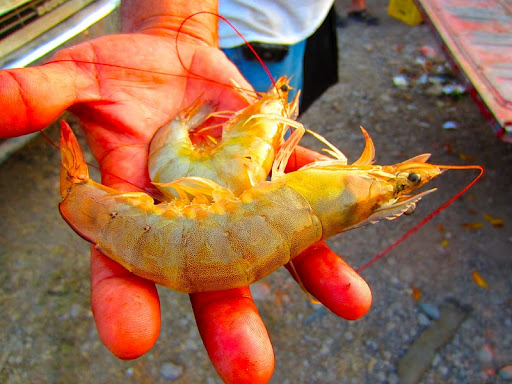
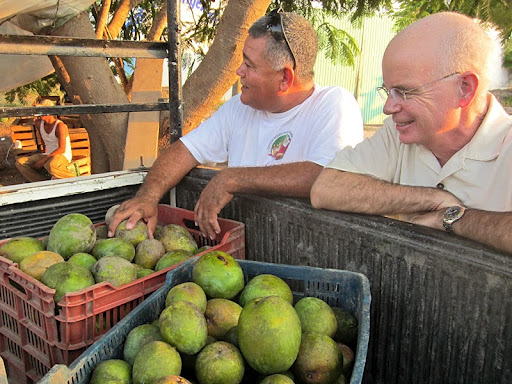
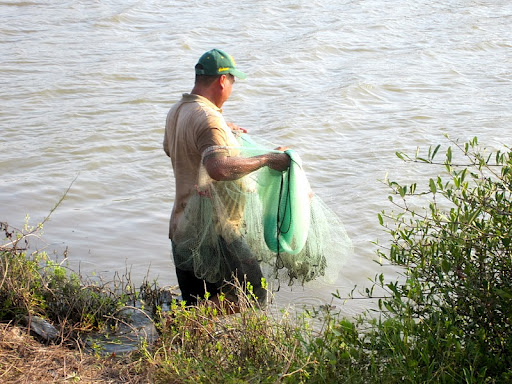
We had a FANTASTIC afternoon and evening learning about shrimping with a cast net/atarraya in the estuaries of Agua Verde, which is between Caimanero and El Rosario. We returned home with heartfelt smiles, new friends, 5 kilos of huge fresh shrimp (for which we paid about 7 bucks), a bunch of fresh crab (which our new fishermen friends gave us for free), and a bucketload of end-of-season mangoes ($4 for a crate full). ¡¡Viva Sinaloa y los Sinaloenses!!!!!!
We set out late Saturday afternoon with our compadres, Jorge and Silvia, to attend the first annual “Festival de la Frasca.” While Jorge told me “frasca” is not a word, and that I surely must be trying to say “zafra” or “open season,” local people tell us it is a southern Sinaloan term meaning “to capture shrimp from the estuary.”
The Festival de la Frasca was supposed to be a food fest with live music. But as usual they were running late setting up, and before we could really get into the party we found much more exciting things calling us.
Just one month ago we had driven this very same road, but shrimp season is now open, and it was an even more wonderful place! I HIGHLY recommend you visit during shrimping season! While the season lasts 6 months, the first few weeks are supposedly the best, as the shrimp and the shrimpers are the most plentiful.
As we drove in we saw men with cast nets (atarrayas) everywhere. Though mango season has finished, it is now the height of the shrimping season, and they have already planted tomatoes. After tomato season will come chile season, and so goes the year here.
Shrimp season is huge. We were told that opening day is like Carnaval—wall-to-wall people everywhere, with families fishing, picnicking and partying all night long. Family members come from all over the region back to Caimanero and Agua Verde to help with the shrimping, and to perform their obligations under the cooperativa(to work a minimum of so many hours and to capture a minimum of so many kilos). Women and children hang out with the fishermen, so it feels like life transfers from town to the estuary during this time.
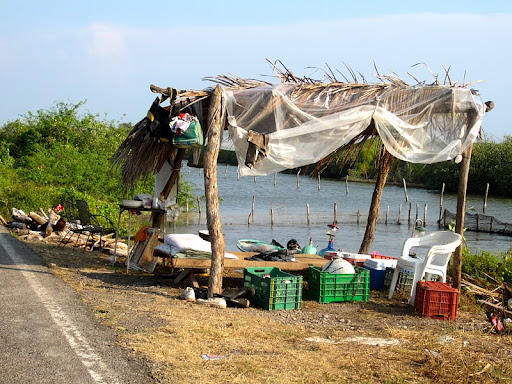
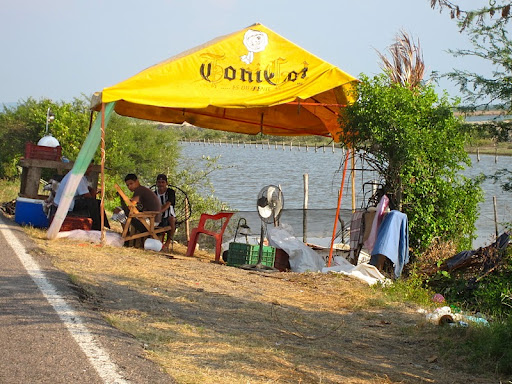
Beside the road that just two weeks ago looked so very different we saw little houses or shelters, many of them housing the shrimpers. A standard shelter like the one shown here has one or two lights powered by a propane tank, a plastic shelter for rain, chairs, a way to cook (usually a fire pit), a radio and a cell phone. As you can see, they sit just off the road. Can you imagine spending the night there with cars, trucks, and motorcycles coming by a few feet away from you all night?
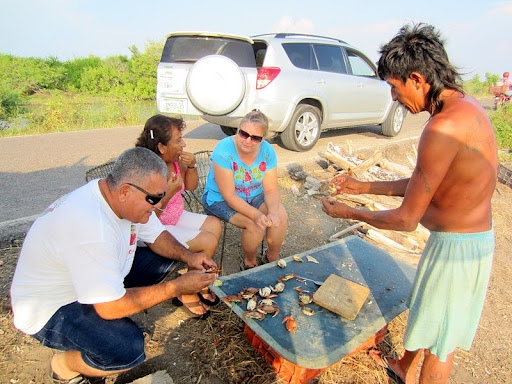
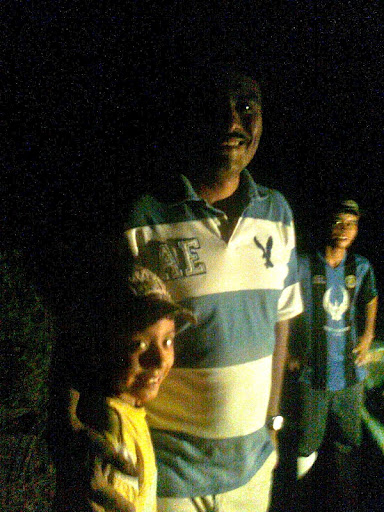
We greeted one of these guys, Rodolfo, at one of the stands, and he urged us to pull over and join him. So we did. The night crew, including Marco (who lives in Mazatlán but returns home for shrimp season), his 8 year old son and his 17 year old nephew, plus one other man, were just pulling up as we arrived.
Rodolfo proceeded to feed us a whole mess of fresh crab and shrimp, beside the road, in the fresh breeze, looking out over the estuary. La vida dura. While I well know, from living in Japan, how to crack open a fresh crab, scrape out the lungs, and eat the juicy brain and meat, this fisherman really enjoyed teaching us, and my comadre, Silvia, really enjoyed learning.
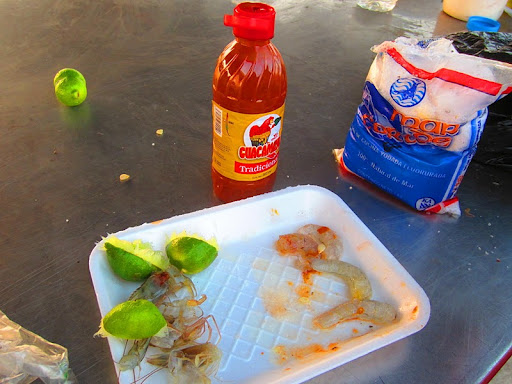
Here we also ate shrimp crudo with salt and lime (my all-time favorite—huge prawns, still wiggling; oh yum!), but he also cooked some for Silvia in a pot of broth.
We stayed here about an hour, chatting, feasting and just generally relaxing. We bought our first few kilos of shrimp, as well as receiving a huge bagful of cooked crab.
There were also many changueros, who we’ve heard about since arriving in Mazatlán, but this was the first time we met a few. They are estuary shrimpers who are not members of a cooperativa. They catch shrimp but legally are not supposed to be doing so. Many of the changueros used purina (shrimp chow) to get the shrimp up to the surface. None of the cooperativa fishermen we met used purina. They were very proud to explain to us that their shrimp were the purest.
Below is a video of one shrimper casting a net, and his wife helping him take out the shrimp and put them into a bucket.
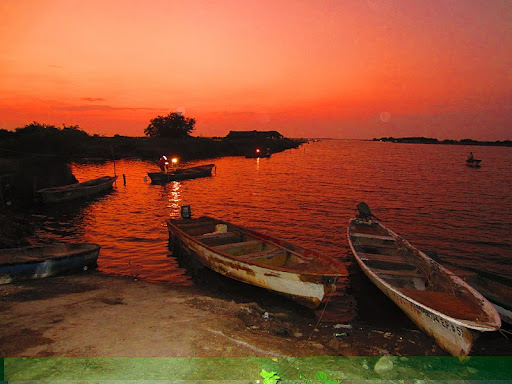
After getting back in the car, we made the rounds of several cooperativas. At the first one the view was spectacular.
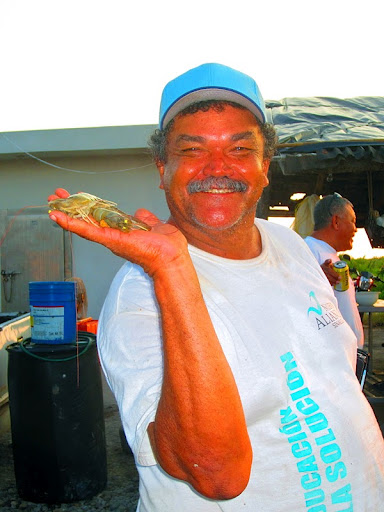
Rodrigo, a man we met there, sold us some more live shrimp. At left is his photo, and below a video of some of the shrimp wishing they could run away.
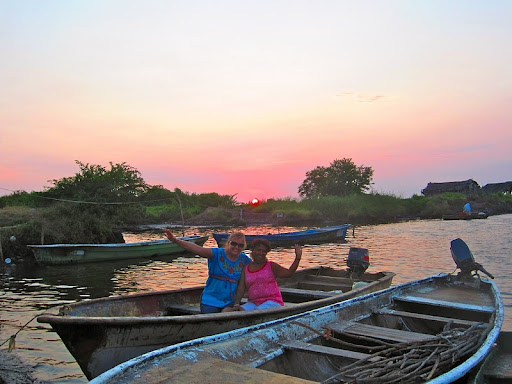
We had arrived here just in time for sunset. The sky and the water glowed. People were all so friendly, open and hospitable that it was amazing. Everyone was eager to talk, to explain this long Sinaloan shrimping tradition, and to share their catch of the day with us. To me this frasca tradition is soooo important; it’s Sinaloa’s history, and the if not some of the best shrimp in the world. And tons of it are harvested BY HAND here each year and shipped worldwide. I know such shrimping used to happen right here in Mazatlán; even next to Hotel Playa was an estuary (no wonder Zona Dorada floods).
The fishermen brought out packets of salt, fresh limes and bottles of salsa, and urged us to eat from their catch to our hearts’ content. Alfresco dining overlooking the estuary with friendly, happy, relaxed, knowledgable people; it was a wonderful afternoon. Every boy we met knew how to cast a net. They seem to start as young as seven or eight.
“Girls just wanna have fun…”
We also sat here for quite a long time, again feasting on raw shrimp (no cooked ones this time), and watching the guys cast their nets in the scenic little harbor.
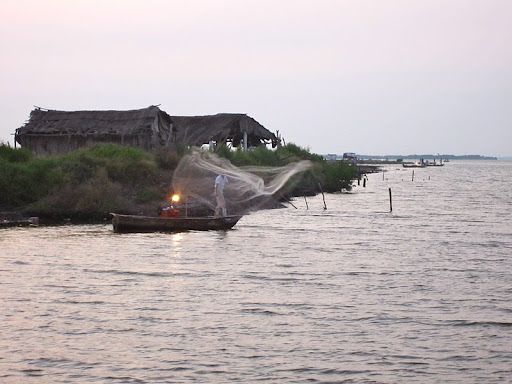
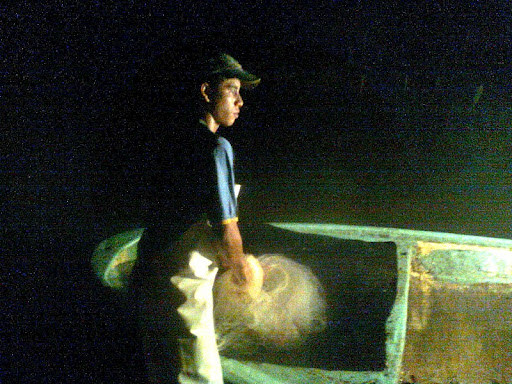
The video below shows a guy casting his net from a panga, so you can see that as well as the earth-bound approach shown above.
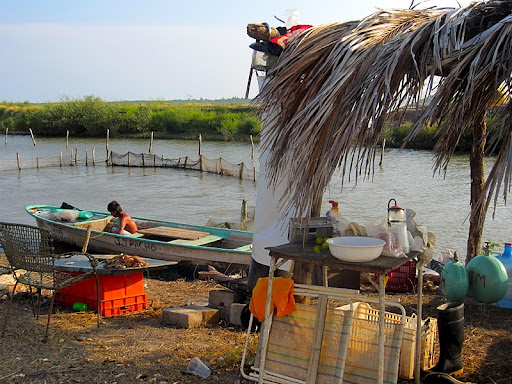
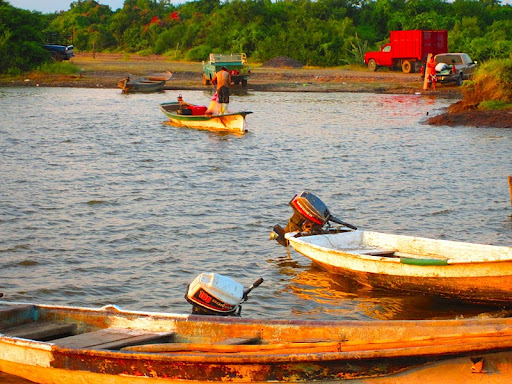
The pangas or small fishing boats go out with two guys normally, one remero or rower, and one atarrayero or net caster. Most of the estuary is only hip- or waist-deep, so the remero carries a long stick or remo and basically pushes the panga along, similar to the movement of the gondolas in Venice.
Below is a short clip of the gentleman at left rowing.
There are various cooperativas to which the shrimpers belong. This drive out to one of them was really something — estuary on either side of the road, with loads of lit pangas all around.
Below is a video, so you can get a better feel for this road-with-water-on-both-sides drive.
After visiting some very cool places and meeting lots of wonderful people, we ended up spending another couple of hours sitting with Marco and his family. It was so peaceful there, and so very pleasant. Excuse the poorer quality of the photos from here on. The batteries on our camera died, so the remaining photos are taken with our phone.
On the way out we stopped at one last cooperative, this one the largest we’d seen. Here they had a large building or warehouse, surrounded by dozens of pangasfishing. Families were sitting and standing everywhere, waiting for their husbands, fathers, boyfriends and brothers to come in with their catch.
A semi-truck full of ice was waiting nearby.
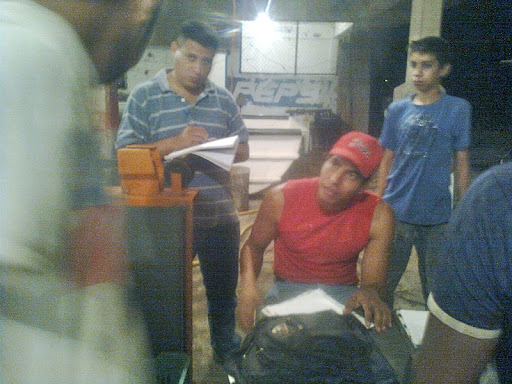
A group of men with a scale and ledgers was registering incoming shrimp.
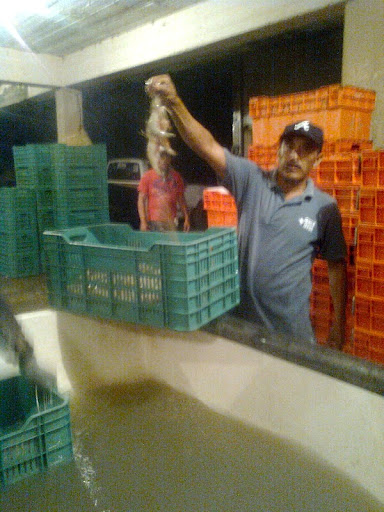
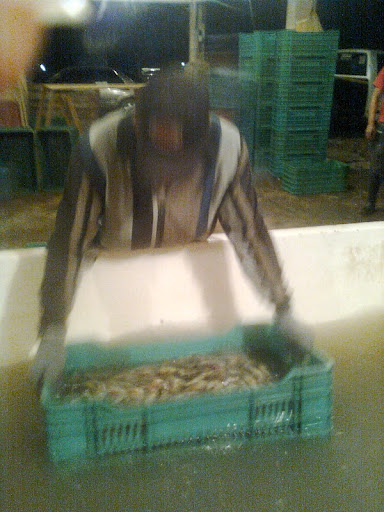
After dipping the bins full of shrimp into ice water, they placed the bins in the refrigerated truck where they are covered with ice and then taken to Mazatlán for sorting, packing and export.
It was at this last cooperative that we also saw our youngest atarrayero, this boy of about eight, at left.
We kept telling our friends that this was an otro mundo, or other world, that most guests in Mazatlán don’t know anything about or understand. We learned a lot about how the cooperativas function and about the life of a shrimper. We all got to eat live shrimp and enjoy some great company. The festival probably happened, but we know we had a lot more fun hanging out with our friends and meeting new ones. We already have plans to go back. We will definitely go opening night next year for the carnaval de cameron, and will head out some month just before the full moon when the really large shrimp are said to be much more plentiful and easier to catch. To be able to find Rodolfo and Marco’s shelter, we put their spot into our GPS and got their cell phone number. Stay tuned.
In a meeting at the Convention Center this morning, the Secretary of Tourism and Banorte-Ixe Group launched a new 200 million peso financing program with the goal of improving the tourist offerings and experience here in Mazatlán.
The program aims to create incentive for the building of 700 new rooms (a 10% increase over existing hotel space), with the ability to serve an additional 400,000 visitors annually. The program will also extend loans with favorable terms to tourist enterprises and small businesses in the hospitality field.
Loans will be from 500,000 to 9.5 million pesos, on credit without collateral, at interest rates of 11%, to be repaid over three years. Applications must be submitted between September and December 2013.
Oh so happy to see our state investing in our local businesses and families! May this money do a world of good!
What a treat we had on Thursday night! 43 of Mazatlán’s best musicians played a Tribute to Maná, in a gorgeously loving effort to raise money for Gaby López, who is battling cancer.
Gaby sat at a center table, in her headscarf, surrounded by about twelve of her girlfriends. It was wonderful to watch all the hugs and well wishes extended to her throughout the evening. How could she not help but feel healed? The event took place at Spectaculare. I always love the lighting there, and Thursday night was no exception.
For a 120 peso entrance fee, we each got two drinks, comfy seats, excellent service and wonderful company at our table, for a show that was very well orchestrated. Band members and singers rotated for pretty much every song, so that by the end of the evening we felt as if we’d experienced dozens of different combinations. Below are some photos of the performers; click on any of them for a larger view.
In between sets, the organizers had slideshows of Gaby, her life, family and friends, as well as video clips containing well wishes from musicians and friends around the country. It was very touching. And especially cool when two members of the real Maná extended their encouragement via video.
It seemed there were several hundred people attending. There were also 300 peso/all-you-could-drink seats down front, but those were sparsely used, unfortunately. I put together a one-minute clip with a taste of some of the performances. You can view it at the bottom of this post. Enjoy!
Gaby, we don’t know you, but we hope you will recover soon: healthy and strong. Thank you for letting us share in this beautiful evening with you. Friends of Gaby: bless you. What a terrific event to orchestrate for a friend!

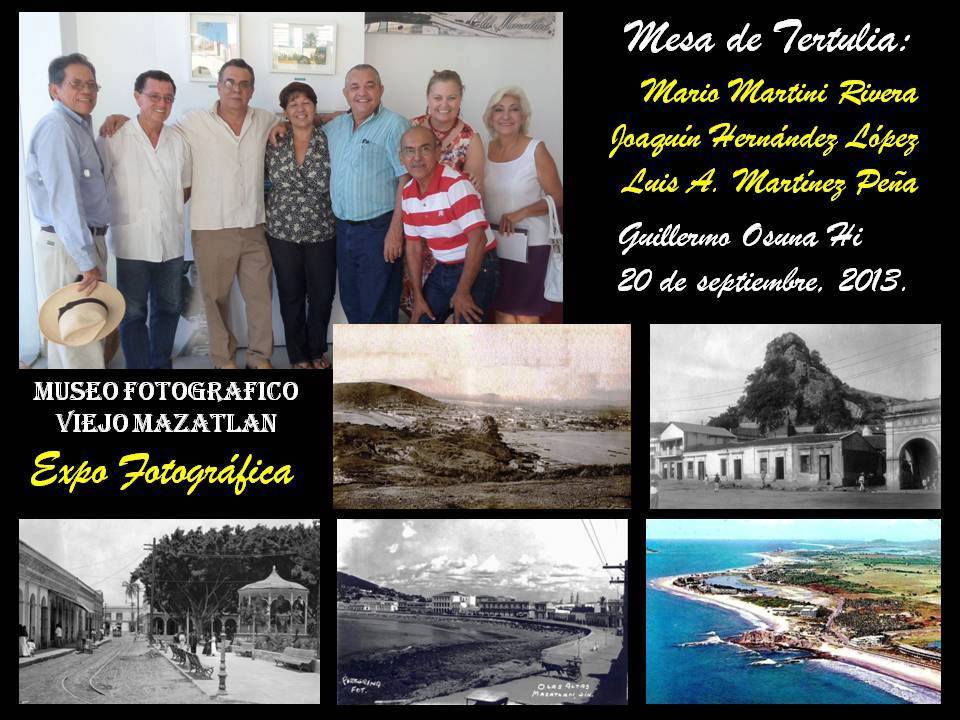 But the Photo Expo last night was especially excellent. Why? The first ingredient was a terrific panel of knowledgable local historians: Mario Martini, Joaquin Hernandez, Luis Antonio Martínez Peña, Fernando Higuera, moderated by Guillermo Osuna. The second ingredient was a series of six photos of Old Mazatlán. As each photo was displayed, members of the panel took turns telling a story or two revolving around something in the photo. The third ingredient was a gorgeous old, very rustic room, with exquisitely tiled flooring and vigas overhead. Oh, there was also free beer, wine, water and soda. The evening was lovely, and the room was packed with interesting people. The evening was quite magical.
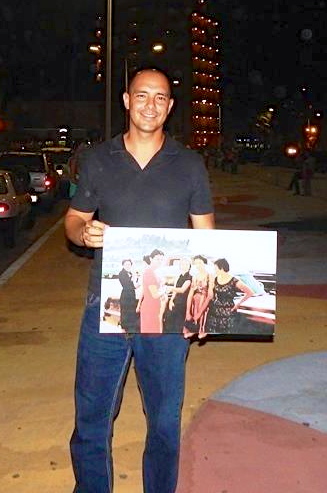 Last night, for example, I sat next to a gentleman who I later learned had purchased a certain photo of a group of young women standing in front of a classic car on the malecón in Olas Altas, with the burned-out ruins of Casa Echegurén on the hill in the background. My guess is that the photo includes the grandmother or great-grandmother of the guy who purchased it. How very cool is that?


















 ¡VidaMaz!