La Reserva Chara Pinta

An easy day trip, as it’s 90 minutes from Mazatlán, I highly recommend that you spend a couple of nights in the very comfortable yet simple cabins/cabañas at the Tufted Jay Preserve on the other side of Concordia. There you can hike, listen to bird song, breathe fresh mountain air, and just generally relax. It’s a great place to go when it’s hot here in Mazatlán, as it’s high in the Sierras.

Most people go to Chara Pinta for the birdwatching. I love birds, but I sure don’t know their names, nor do I have the lens to capture them in the wild. Some day! If nay of you have an 800 mm Nikon lens sitting around that you’d like to sell me cheap, let me know 😉 Below are a few of the warblers and beauties I was able to catch with my 200 mm lens. Click on any photo to enlarge it or view a slideshow.

We saw some tufted jays or charas pintas, the birds for which the reserve is famous, but I’m afraid I was unable to capture them with my camera to share with you. Sorry! They are gorgeous!

We hiked pretty much all day on Saturday when we arrived, and then all Sunday morning as well. I honestly saw the most birds, however, when we stood still. On Sunday I sat in a chair and took most of the photos you see above. Three women talking and giggling (I went with two local friends) while they walk seems not to be the most conducive way to birdwatch!

The views up at the Tufted Jay Preserve are spectacular! There are mountains and valleys, cliffs, a rock outcropping called “The Pyramid,” a clear view to Presa Picachos/Picachos Dam, and views of Mazatlán by day and by night.

Needless to say, sunset and sunrise are gorgeous times of day and not to be missed, nor are the stars! Whoever thinks that stars are white has to rethink things if you visit la Reserva Chara Pinta. The blue, red and white stars blanketed the entire sky; it was amazing! Oh my how we enjoyed our visit! Be sure to enlarge these by clicking on them if you love starry skies!

I have been wanting to go to the Chara Pinta Reserve for a couple of years. My girlfriend Jeanett very much wanted to go, so off we went. We were told we were the first all-female group the ejido has hosted!

We hired Don Santos Vasquez as our guide; he is the President of the Reserve and a member of the local ejido that stewards the land. He took us on hikes up to the mirador/lookout, down in the canyons, and up to the Pyramid. He is a gentle and wise man who really knows this area, its flora and fauna. Santos does not speak English; he charges 100 pesos/hour for his guide services.

The cabins have solar panels so there is light and hot water for showers. There is gas for the stoves, so you can cook. You’ll need to take your own food and a cooler; if you are a group of ten or more you can request a cook who will serve you and your guests in the dining hall. Cabins are of wood, they are gorgeous, beds are comfortable, bathrooms are tiled, and there are barbecue and fire pits outside. The Reserve is a recipe for a wonderful couple of days reconnecting with nature. The caretaker of the property is Javier, another kind and gentle soul, who you can see in some of the photos below. He generously and ably made and tended our fire for us.

There are cabins for two people and cabins for ten people, as well as several sizes in between; all are well constructed and comfortable. Some have fireplaces. Some cabins are grouped together, others are off to themselves for added privacy. The place felt extremely safe, and our hosts were most hospitable.

The hiking trails are fairly easy and vary between jeep and foot trails; some are pretty steep. The vegetation we saw was incredible; such a variety, and all so very robust. We ate blackberries, we found wild cotton, we marveled at peeling bark and every type of fern, we saw dozens of types of pine trees, and thoroughly enjoyed ourselves breathing the fresh mountain air.

I’ll post more pictures of the wonderful stuff we saw below, but for those of you interested in going, let me give you the information.

HOW TO RESERVE AND GET THERE, WHAT TO BRING

To reserve a cabin, call 044 66 9134 0166. You can also have book Don Santos’ guide services via that number. Reserva Chara Pinta is just this side of the small town of El Palmito. Take the toll road towards Durango, and exit at pretty much the only exit there is—towards El Salto. You’ll go about 15-20 minutes on the old highway, and then just before you reach El Palmito, you’ll see a sign for the Reserve on your left. The final 10 minutes are on a dirt road up a steep climb. I recommend a 4WD or at least an SUV. If you prefer, there are also cabañas in town; they are definitely not as picturesque, but they do have easier access.

We were told that the best time to go is in June, when the guacamayas/macaws can be viewed, and in July, when the tufted jays are nesting. All year round is good, however, as we were told it doesn’t snow at Chara Pinta, nor does it get that cold (we used light jackets).

Bring a towel, soap and toiletries, water, and any food you want to cook or eat as well as a cooler. Bring a flashlight if you want to walk outside at night, and charcoal if you want to barbecue; they have plenty of wood for a fire. We also brought extra blankets, but you don’t need them; the reserve supplies sheets, pillows, blankets and toilet paper. Also don’t forget the sunscreen.

Okay, so on to the rest of the flora. I used to live in Colorado, so I know and love bromeliads, otherwise called air plants. Chara Pinta is absolutely filled with them!

And where there are air plants, there is usually moss. In Chara Pinta there is loads of it:

We marveled at the gorgeous flowers as well. Wild mountain flowers are always so colorful and often so very dainty:

Perhaps my favorite aspect of the flora in the Sierras are the textures: bark, dried plants, leaves, pine cones of all varieties, peeled bark, curly ferns, pine needles three feet deep and joyously comfortable to lay on…

Finally, I really enjoyed the leaves of all colors and types. There were fresh green leaves, leaves with the trail remnants of some insect, leaves in silver and gold, and leaves in red and brown.

We absolutely loved our trip and will be going back in June or July. I highly recommend you make the trip if you haven’t already!

Saturday Morning Beach Scene/Happy Mothers’ Day!

We had a Mother’s Day breakfast for my zumba group today, and it allowed me the opportunity to be at the beach in the Golden Zone fairly early this morning. I was very happy to see that even at 9:00 am the beach was beginning to hop, and there were numerous catamarans, sailboats, banana boats and kayaks out in the water. It was a beautiful morning, sunny with cloud cover and a gentle breeze. Click on any photo to view it larger or see a slideshow.

Isn’t it wonderful that Mexican Mothers’ Day (May 10th) and US Mothers’ Day (2nd Sunday in May) coincide this year? Happy Mothers’ Day to all you wonderful mothers out there!

Molcajete Loco: Something a Bit Different

IMG_2746

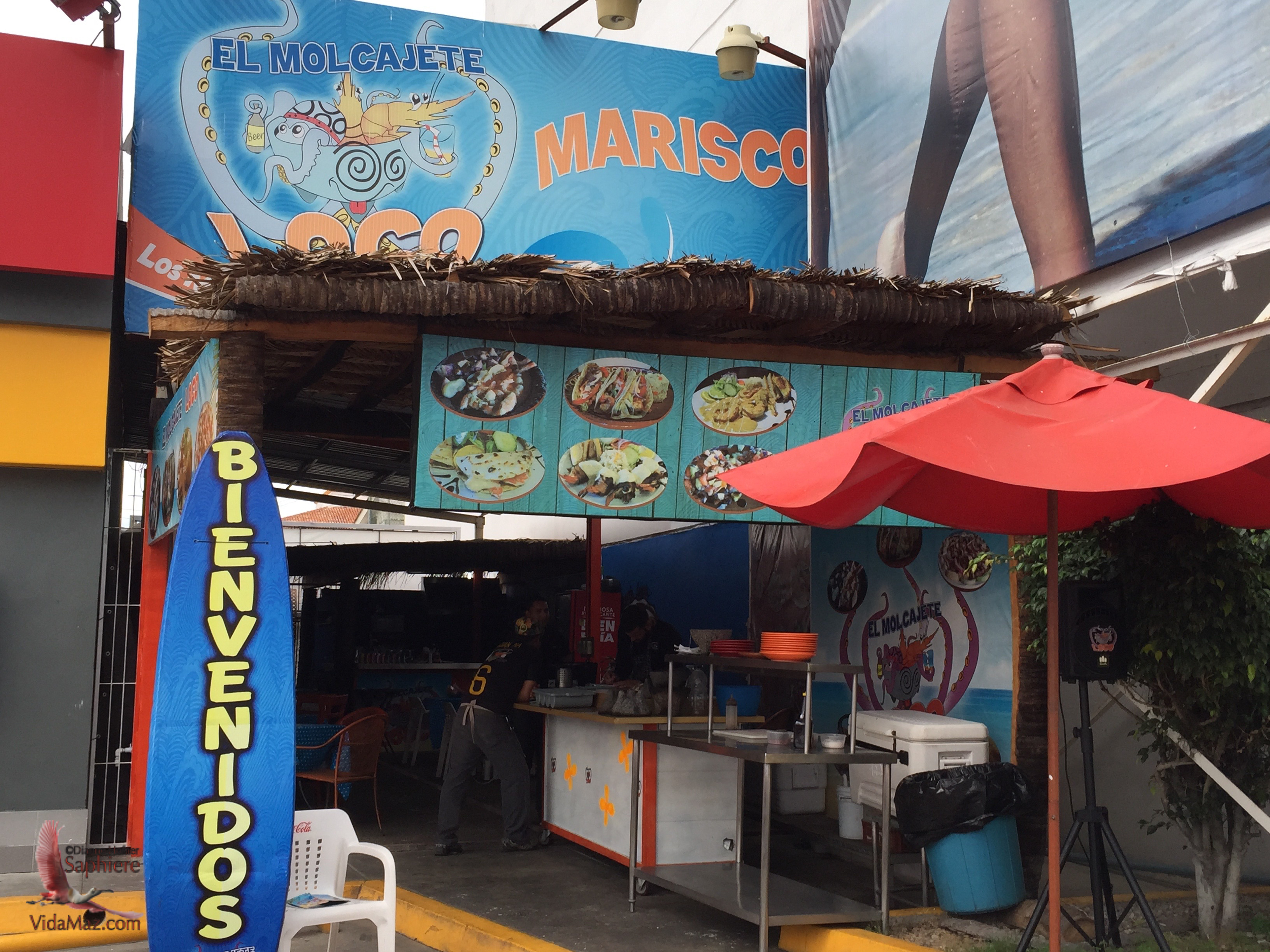
Greg and I were looking for a simple, local place yesterday, as it was a bit too cloudy for our traditional “Palapa Friday” on the beach. Greg had run errands in the Golden Zone the day before, and a very energetic abuelita had invited him into her restaurant. The place looked interesting and seemed to have a great menu, but he had just eaten. So he promised the lady he’d be back.

We went today, and the place is called El Molcajete Loco. It is located right next to the Oxxo on the northbound side of Camarón Sábalo, across the street from the Cinemas Gaviotas movie theater near Valentino’s. They have a raw bar street side with all the seafood you might expect (scallops, oysters, clams, shrimp, octopus), the expected local seafood dishes (ceviches, aguachiles, cokteles), cold and hot molcajetes (served in lava rock/pumice), plus they’ve got a cooked menu that offers some unique and very tasty items. Click on any image to enlarge it or view a slideshow.

We sampled two things we’d be hard-pressed to find elsewhere. Greg had dorado/mahi mahi served over a grilled pineapple slice and covered with poblano sauce, and I had a dorado filet covered with seafood and a coconut cream curry. There was so much food that I ended up bringing half home with me, but never ate it for cena as I was still full!

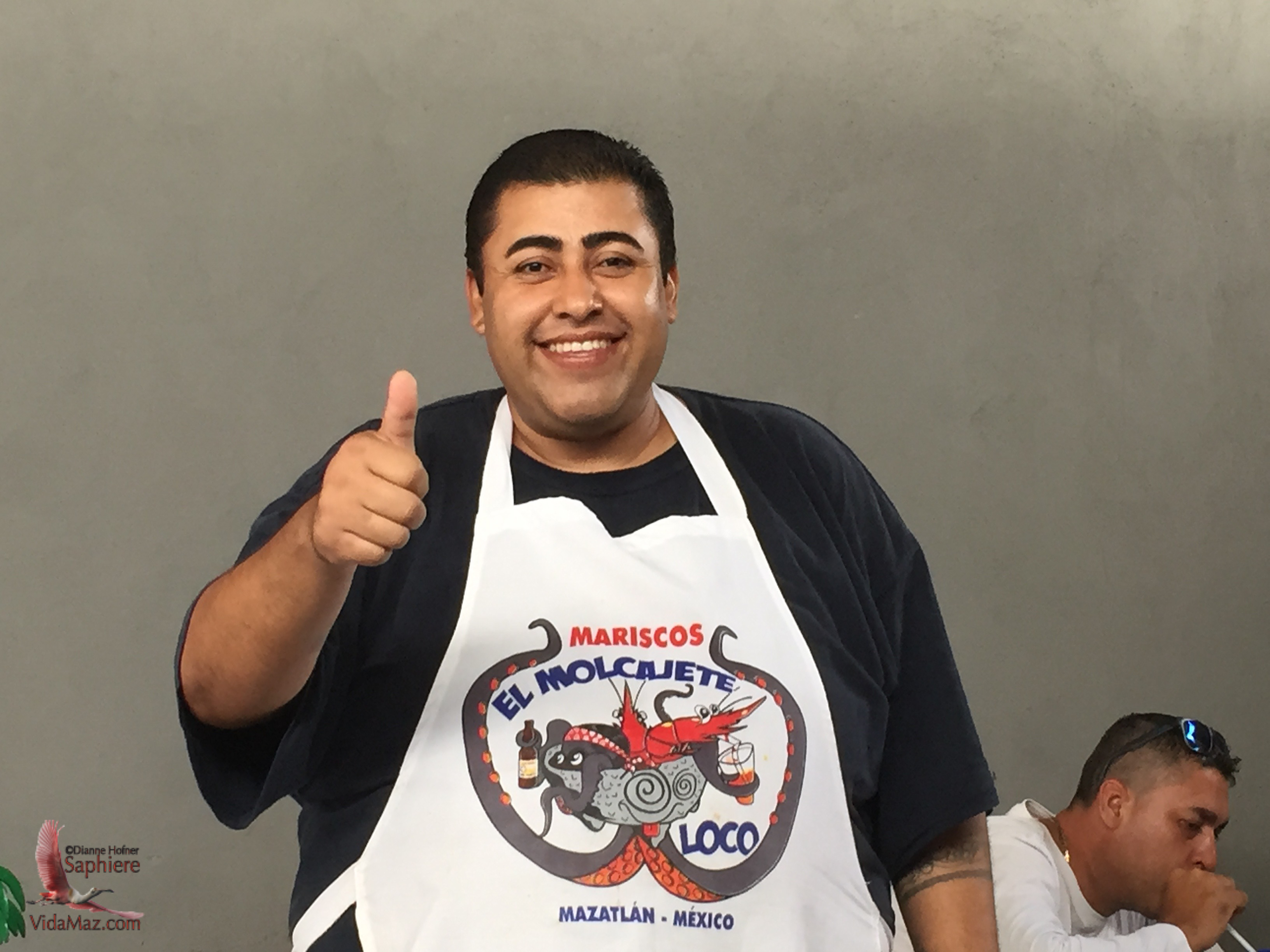
Christian is the chef. He told us he worked in a restaurant in Bakersfield, California; when he returned to Mazatlán he worked at Señor Frog’s, and then came to the Molcajete Loco. He obviously knows how to make sauces! There were three young men waiting tables, plus the lady Greg had met the day before who keeps things clean, and we were attended like royalty.  The owner was not around during our visit.

IMG_2741

Chef Christian


If you like local, simple places with good food and value, El Molcajete Loco is a solid choice. It is open-air, rustic, with the kitchen at the rear. In addition to beer they offer a good selection of non-alcoholic drinks, including agua de jamaica, horchatapiñadasnaranjadas, congas, and limonadas.

National Recognition for Local Handicrafts

barcinas

Beautifully handcrafted barcinas, which traditionally hold dried shrimp

I am very excited that reporters from eight respected national publications will tour Mazatlán and southern Sinaloa from May 7-10, to learn about, report on, and photograph our regional artesanía and artesanos. The tour is coordinated by Turismo Mazatlán and Turismo Sinaloa, as well as by the Association of Hotels and Tourist Enterprises of Mazatlán.

If you are regular readers of VidaMaz.com, you know that we are big proponents of culture, particularly the preservation of local, regional and indigenous traditions. We also support sustainable tourism, ecotourism, religious and cultural tourism. Thus, we are extremely happy to know that tourism officials are taking action to help promote “the little guy,” those who add so much to our communities by producing the gorgeous handiwork we enjoy.

Most traditional handicraft is beautiful and also utilitarian. It reflects the culture, the environment, the people, and the daily life of the place where it is made. Preserving it, helping it thrive and develop, creates pathways out of poverty, builds healthy communities, and prevents delinquency and violence. Just look at the increased success, popularity and value of Native American handicrafts and music over our lifetimes, and the improvement in the quality of what is produced! We can create such a success story here in Mexico as well. Sinaloa is smart to diversify beyond heavy eco-footprint industries like cruise ships. Cultural tourism can help preserve our heritage and the gorgeous natural environment with which we are blessed, and it can help build strong, vital, resilient communities. It attracts a more savvy brand of tourist, one that is increasingly wealthier and more committed to the welfare of local communities. Kudos to all involved!

Publications participating in the upcoming tour include my personal favorite, México Desconocido; the Reforma newspaper’s De Viaje supplement; the Destinos section of El UniversalConceptos Turísticos magazine; Travelers Guide to MéxicoViaja Bonito magazine; Reportour 98.5 FM; and the magazine, Tiempo Libre.

Here in Mazatlán the group will visit:

  • The museum at Seashell City, to view handcrafted items such as lamps, boxes, crosses, Christmas ornaments, and picture frames made of shells.
  • Onilikan in the Golden Zone, to savor their fruit-flavored liqueurs and aguardiente, distilled in that gorgeous copper kiln.
  • Suaves downtown, makers of the world’s best marshmallows, to meet María Clara and experience the process of creating our much-loved local pride, coconut-flavored marshmallows.

I would like to politely suggest that the group visit a few of our terrific local seamstresses such as Sodelva Rios de Garcia, to showcase our long local tradition of sewing Carnavál costumes and royal dresses. They should also tour some of the terrific art and artisan galleries around town. And even though they won’t be active this time of year, I would recommend the official visit include the talleres/workshops for the carrozas or floats of Carnavál, or at least a slideshow presentation showcasing how important, inclusive and wonderful Carnavál is for our local community, and how many terrific artisans contribute to making it a success. Maybe another trip, so they can see monigotes or giant statues being created as well.

Outside Mazatlán, reporters will visit our neighboring communities including:

  • La Noria, where they’ll tour the gorgeous, award-winning Los Osuna distillery as well as visit the leather makers.
  • El Tablón Viejo in El Rosario, where they’ll learn about handicrafts made from gourds by the Larreta Medrano family.
  • Escuinapa, where they’ll watch barcinas, as in the photo at the top of this post, being made. I would also suggest they visit Ernesto at Productos Rivera, so they can watch the wonders the crafty ladies there do with fresh and dried mango.
  • Malpica, Concordia, where they’ll witness mosaic-making.
  • El Rodeo, Cosalá, and the traditional method of making conserva de Papaya. The last time we visited El Rodeo, Saboreando Ando was visiting there as well. Click through to see photos and video of the making of the conserva.

If you have not already visited the places above, or if it has been a while, now is a good time to go! The weather is perfect, national tourists have not yet arrived en masse, and local handicrafts-men and -women are eager to earn your patronage!

Carpa Olivera Ocean-fed Pool Positions Mazatlán Among World’s Elite

IMG_3319

Carpa Olivera Pool, Mazatlán, México • May 1, 2015

The renovation to Mazatlán’s historic Carpa Olivera—the ocean-fed public swimming pool in Olas Altas—positions the destination among a very elite group of cities worldwide with scenic ocean-fed swimming pools. Most such pools are steeped in history, as is ours, built in 1914 by Chilean chef Antonio Olivera, but most of them are NOT free of charge and open to the public, as ours is.

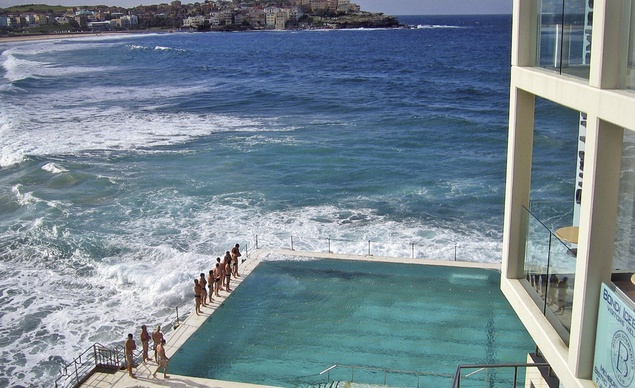
The Bondi Baths in Australia, for example, have been around for over 100 years. Costing $6.50/person or $18/family to enter, Bondi hosts swim clubs, oceanside yoga, a gym and restaurant. Its facilities are also a gorgeous location for weddings and events. From where I sit, Bondi looks better than Carpa Olivera. But, Australia is quite a ways away!

Bondi Beach, Australia

Bondi Beach, Australia

Ocean water pools are quite popular down under. In addition to the Bondi Baths, Sydney has quite a few ocean water swimming pools, and Balmain harbor is home to Australia’s oldest tidal-fed swimming pool, the Dawn Fraser Baths, built in the 1880s. Dawn Fraser offers a snack shop and hot showers. I’m confident Carpa Olivera’s showers won’t have hot water. But, then, we don’t really need it, either—especially not in the summer.

a8fd8367-88a0-4e55-8ec8-b64dd0261900-620x372

Dawn Fraser Baths, Australia

It’s said that New South Wales has over 100 ocean-fed pools. A humpback whale was even found dead in one of the pools in Sydney; see the video below. Outside of Australia, however, ocean water pools are few and far between. That’s what makes Carpa Olivera so unique—a touristic feature we should tout loudly! The Carpa Olivera restoration, in my opinion, puts Mazatlán ahead of leading tourist destinations such as San Francisco—where I’ve long wondered why someone doesn’t restore the historic Sutro baths, and Honolulu—where the Waikiki Natatorium remains a ruin. Especially a shame, since the natatorium was built as a war memorial in 1927! Click on a photo below to enlarge it or view a slideshow.

England has a long tradition of sea-fed swimming pools; my guess is they probably gave the idea to the Aussies who then ran, er, swam with it. The community-supported Shoalstone Pool near Devon, England, built in 1896, remains a gorgeous place—and entry is free! Just like Carpa Olivera, its water is refreshed every time there’s a high tide. There’s also the Sea Pool at Bude, built under the cliffs on the north Cornwall coast in the 1930s.

The tidal pool outside the fortress city of Saint-Malo, France, is home to the largest tides in Europe—26 feet between high and low tides! At high tide, only the dive platform of the pool is visible, but at low tide, the entire swimming pool emerges. It was built in 1937, and is covered with algae much like Carpa Olivera was before the new remodel.

They say that Chef Olivera got the idea for building Carpa Olivera here in Mazatlán after seeing similar pools in Portugal. Perhaps he had visited the natural lava pools in the Azores, on Bizcoitos, Terceira Island? Or maybe he fell in love with Doca do Cavacas in Madeira?

Capetown, South Africa, also has an ocean water pool with a killer view, though the water is pumped in rather than tidal fed. It’s called Sea Point Swimming Pool., and they bill it as “the most breathtaking public swimming pool in the world.” I beg to differ, as I much prefer Mazatlán’s Carpa Olivera view and more natural, rustic nature.

My favorite seawater pool is perhaps the Blue Lagoon in Reykjavík, with its thermal waters and killer views. It is, however, more of a spa than a swimming pool, and costs minimum 35 Euros to get in. Of course, you can pay extra to get a massage, facial, sauna, etc.

Copenhagen has the Kastrup Sea Bath,  which looks more like diving boards and interesting architecture in the ocean, rather than a swimming pool.

1107poolskastrup1-7122011_horiz-large

Kastrup Pool, Copenhagen

Canada has a couple of ocean water swimming pools, including Kitsilano Pool in Vancouver and another in New Brunswick’s Fundy National Park. Both are filled with ocean water, but rather than being fed naturally by the tide, the water is pumped in.

Coral Gables, Florida has the very cool public pool, the Venetian, built in a coral rock quarry. It’s been around since 1923, but it is filled from an aquifer rather than from the ocean.

Venetian Pool in Coral Gables

Venetian Pool in Coral Gables

Have you visited a cool ocean-fed pool? Share with us your favorite!

How did I end up researching ocean-fed pools this May Day? Well, back in December we told you about several exciting, high-profile development plans for Mazatlán. We’ve recently heard from several sources that the renovation of the historic (built in 1916) balneario/ocean water swimming pool in Olas Altas—called Carpa Olivera—is scheduled to open in May. That is in plenty of time for the summer enjoyment of local and national tourist families! Ahead of schedule, really. Could it be true?

Having photographed Carpa Olivera just four short months ago when it was completely torn apart (see photos below), and knowing how many projects in town are so often chronically behind schedule and over budget (are we EVER going to see a new shark tank?), I wondered whether such good news could really be factual. The construction is hidden behind large tarps/lonas, and we don’t often walk along that portion of the malecón, so we didn’t know.

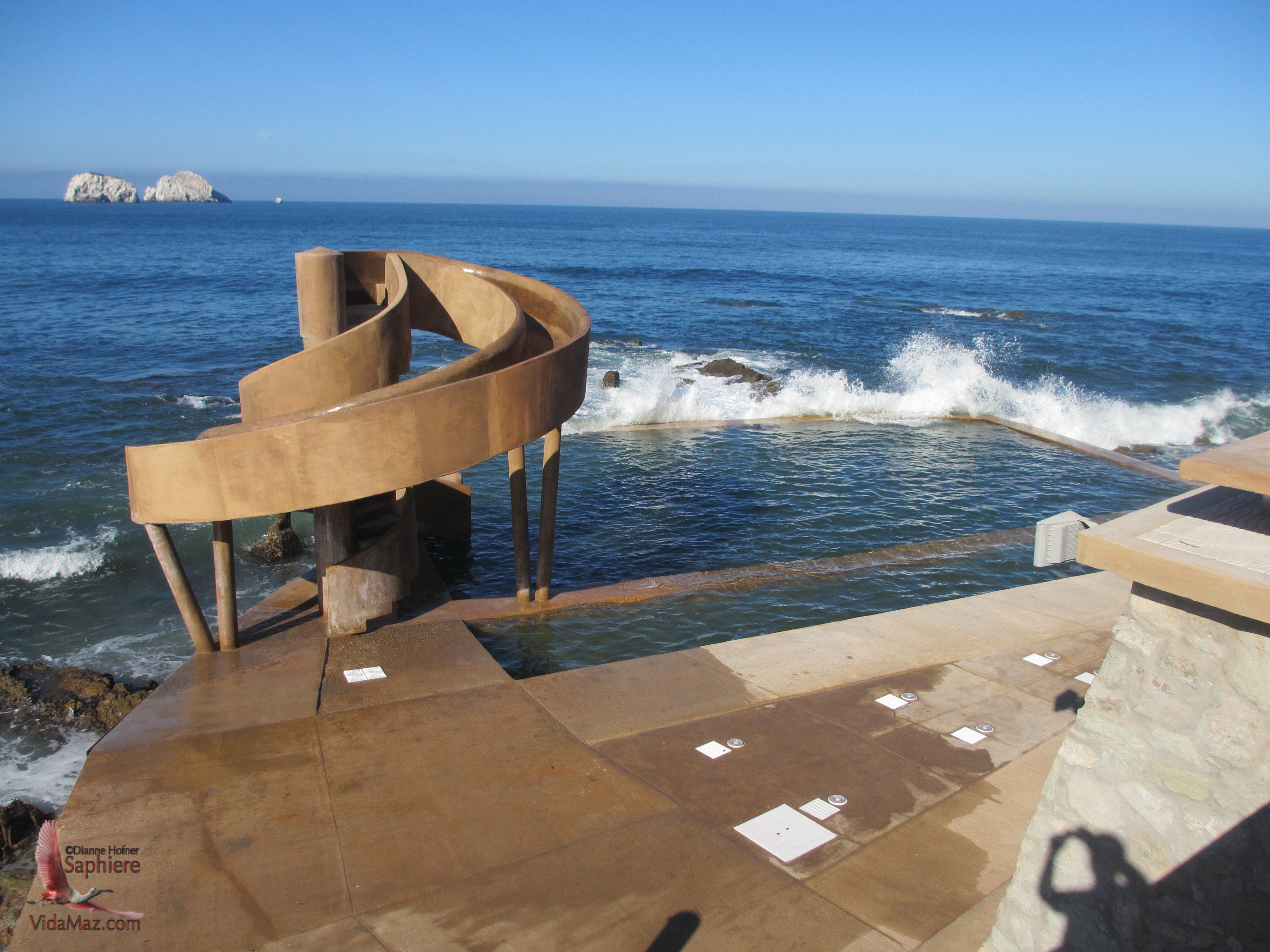
Today after we hiked the lighthouse we decided to check out progress, and the workers kindly gave us a tour. Progress is incredible! And, I’m very pleased to report that reality closely parallels, for a change, architectural renderings!

The view from the top level over the pool and out to the bay is incredible. That top terrace is lined with benches, so it’s sure to become a popular resting spot for families enjoying the views from our oceanside promenade. A second level down towards the ocean includes another large terrace and a snack shop, while the ocean level houses the bathrooms, water fountains for playing, the water slide, and the pools. The wood on the walkways and ramp as pictured in the renderings appears to have been changed to decorative/3-dimensional concrete, which seems much smarter to me.

Today, workers were chipping away at hardened concrete to give walkways traction/make them less slippery, as well as to give them more visual appeal. The ramps make the pool area completely wheelchair accessible, though of course if I were physically challenged I wouldn’t want to get into the pool itself. It’ll be nice for accompanying one’s family and friends, however. The cool-looking spiral water slide is in place, as it has been for some time. It is still missing the fountain that goes on top.

With the high waves coming in this morning, the pool looked very exciting, indeed! It has been refaced, so is much cleaner and more appealing than it used to be. The ocean splashes most of the lower level terrace at high tide or in rough waters, so bathers will still need to be attentive. But, that’s part of the attraction of an ocean-fed public pool! Click on any photo to enlarge it or view a slide show.

Bathrooms are fully plumbed, tiled, and nearly ready to go. The modern, molded concrete sinks are in place; toilets and faucets have yet to be installed. One worry: there is only one toilet stall and one shower nozzle in each of the bathrooms, men’s and women’s—woefully inadequate for the amount of use the place will surely get.

The walls that are finished have a much lighter rock face than in the architectural drawings (see the photo above of the snack bar). I don’t like it nearly as much. The walls along the ramp and terraces have not been finished, so it wasn’t clear to us if they will have a darker/richer rock facing of the type we’ve been expecting; we sure hope so, as it would add so much visual appeal to the facility. My guess is the facing will be identical to what’s already been installed.

Improvements like the new and improved Carpa Olivera make me proud of our city and the current administration. The renovations are coming in on time and on budget, as far as I know. We asked the workers if entrance to the pools would be free or if there would be a fee, but they didn’t know the answer, and I have yet to ask someone who’d know. Whether there’s a fee, or whether it’s free, Carpa Olivera puts Mazatlán front and center as home to one of the world’s most scenic and exciting ocean-fed swimming pools!

Link to the history of Carpa Olivera pool.

Link to a Noroeste article on the inauguration of the renovation on June 29, 2015.

— This post is part of the #MyGlobalLife linkup.