El Faro/The Lighthouse

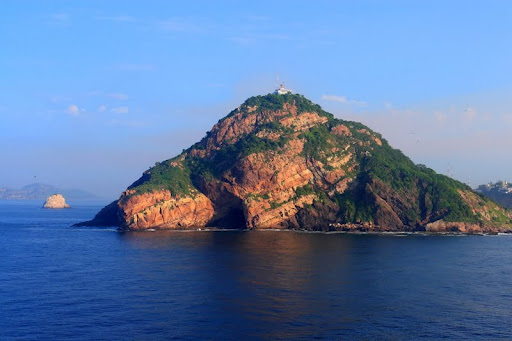
At 160 meters above sea level, the El Faro de Mazatlán is said to be the highest naturally located lighthouse in the world. I don’t know for sure that this is true, but neither can I find evidence to contradict it (see my notes on Gibraltar at the end of this post). What I do know is that a hike up our beloved El Faro hill is WELL worth it. In every season of the year it is gorgeous!

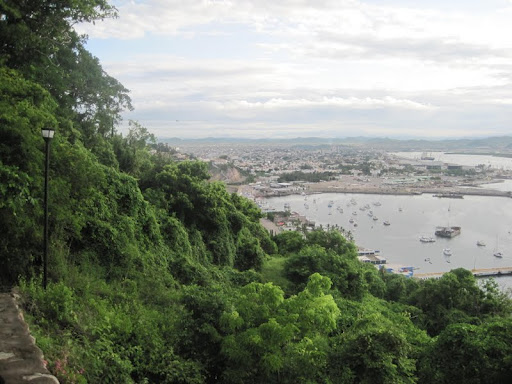
The view from the top of the hill is of course SPECTACULAR. You can look west to the Sierras, out over the city and waterways of Mazatlán, or east to the vast expanse of the Pacific. It’s a great place to sit and have a picnic, and take some panoramic photos of the pristine beaches of Isla de la Piedra while they remain undeveloped.
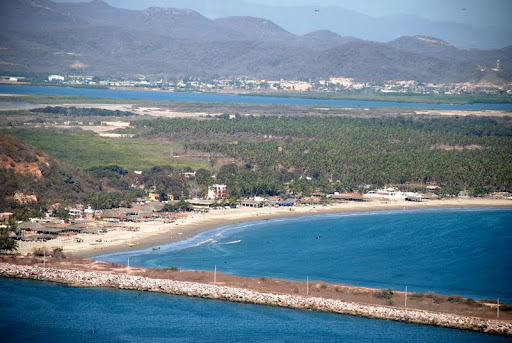
Your hike up the hill will only take 15-20 minutes. There are plenty of people who run the route. It starts out as a dirt path, and higher up turns into about 300 concrete steps which wind their way around a few switchbacks. Each turn and each elevation provides you a different vantage, and all are delightful. It’s as pretty on a clear day as on the rare cloudy or rainy one.
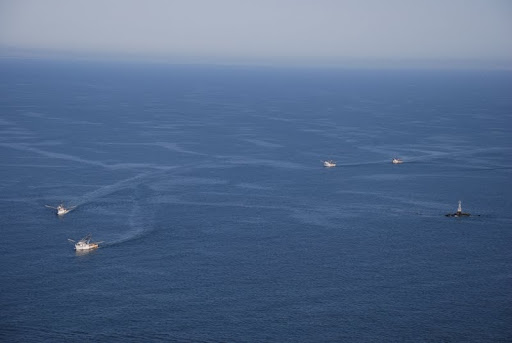
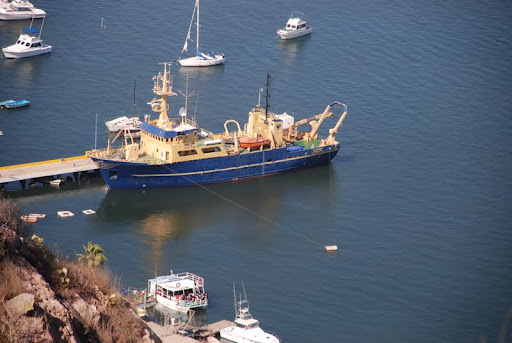
You’ll see ferries, cargo ships, shrimping boats, fishing boats, party boats, sailboats, and pangas.
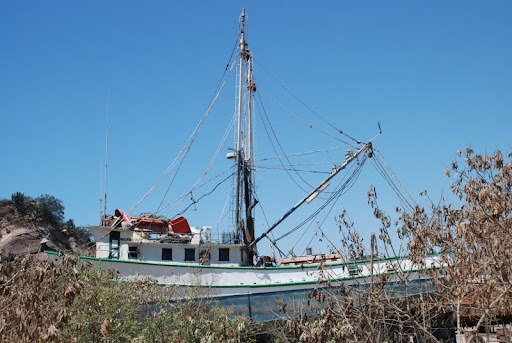
You start your hike on the east side of the port. This is where many of the fishing excursions and party boats load their passengers, and there are a few dry docks and boat repair facilities to catch your interest.
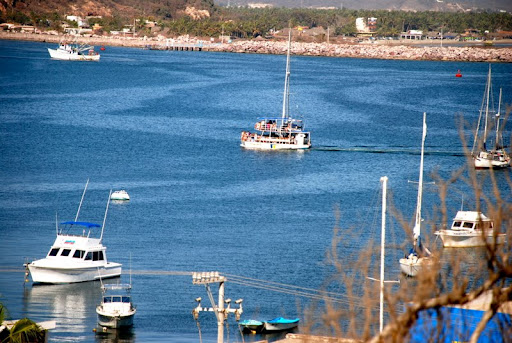
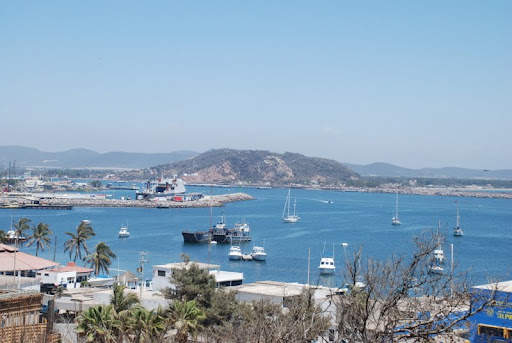
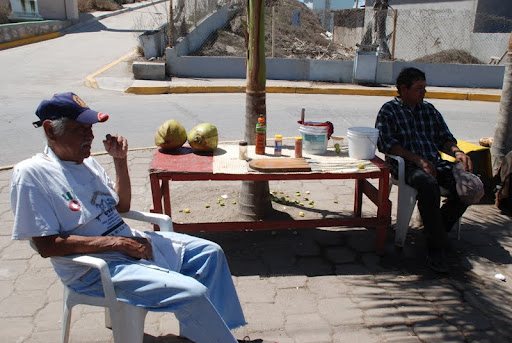
At the entrance to the lighthouse walk, at the base in front of the port, is a coconut seller. You might want to join him for some refreshment on the way up or down.

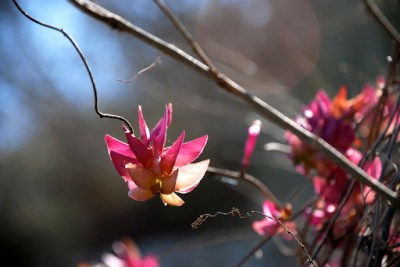
The flora and fauna on your hike will delight your senses. In the early spring the cacti bloom. The green contrasting with the brilliant blue of the ocean will make you so glad you came! In just about any season of the year you’ll see something flowering.


We climb the lighthouse hill at least once a week, we enjoy it that much. Two weeks ago I told everyone we were “Wasting Away Again in I-gu-a-na-ville,” because we saw at least eight different iguanas sunning themselves during our climb to the top. We saw lime green, deep green, yellow, orange, brown and black iguanas.

This week I had to change that to “Arañaville,” as the spiders were out spinning their webs in whatever direction you cared to look. It was incredibly gorgeous!

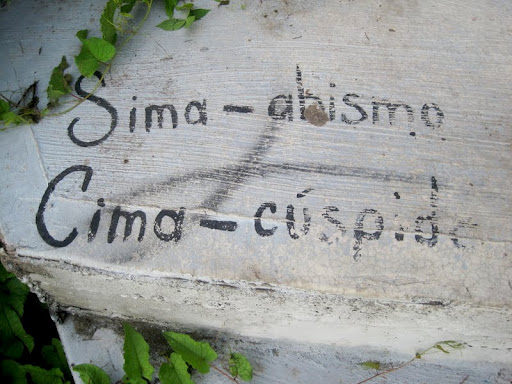
Along the route people have graffitied the stairs. Near the top of the stairs is one of my favorites: a Spanish lesson. It teaches the difference between “top” and “abyss,” which sound similar in Spanish (or at least the Mexican version of the language).
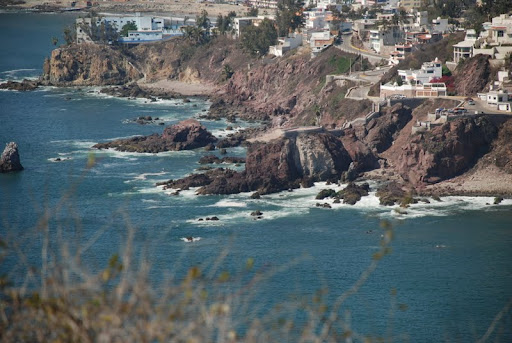
Once you reach the top, and after you take in the view to your heart’s desire, there is also a trail that takes you down behind the lighthouse, on the other side. There are several resting places, and a steep climb involving rope at one point that leads down to the water.

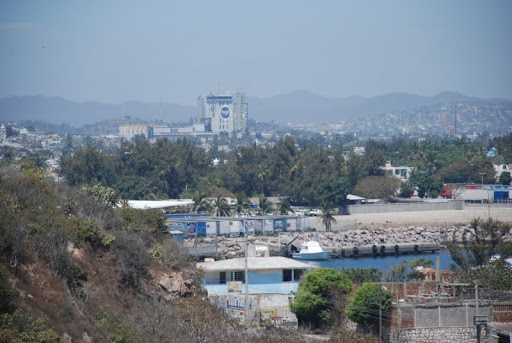
Here you can see our much-worshipped cervecería, the Modelo beer brewery, from lighthouse hill.

NOTE: The highest lighthouse in the world, some have told me, is the Europa Point lighthouse on Gibraltar. However, though the Rock of Gibraltar is 426 meters high, the lighthouse is located on the waterfront, not the top. There is only an aviation beacon at the top of the Rock of Gibraltar. Thus, I’m not sure how our local El Faro ranks globally. It may indeed be the highest.

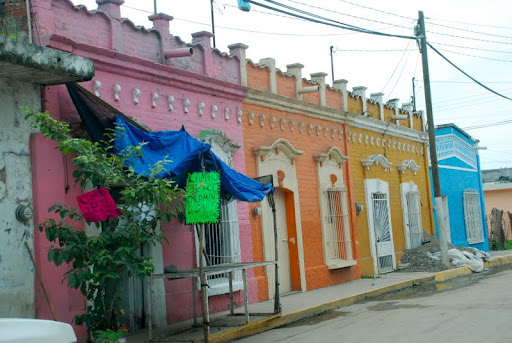
Caimanero & Walamo: Day Trip from Mazatlán

Though Danny’s been in school a week already, tomorrow is the “official” first day of school. He took off with a bunch of friends to Isla de la Piedra, so Greg and I figured we should head out for a day trip as well. Where to go? We’ve been wanting to get back to Cosalá, but since it was already late by the time we were ready to leave that seemed too far to go.

We hadn’t been to Caimanero in a while. How about some zarandeado? Yeah! Even in the heat of summer, the beach has a nice breeze, so as long as we’d be under a palapa at one of our favorite restaurants, fresh fish, a gorgeous drive and an incredible view sounded great!!!!The drive to Caimanero is super easy and very scenic. You basically only make one turn, through Walamo, to get to Caimanero from Mazatlán. The drive is very relaxing, with lots of rural vistas and small town scenes. Estuaries with waterfowl (cranes, storks…), beaches and palm trees, mountains, and aguaculture farms (both shrimp and fish).

We left at 11:30, we were home by 6:00, we stopped a dozen or more times, and we ate a very leisurely and delicious lunch that only cost us 250 pesos with tip for two people with beer. Get your day trip gear on and take a trip, people! Enjoy! Be sure to watch the slideshow below to see just how incredibly lucky we are to live in Mazatlán, with so much to offer in the city and nearby.

Names and Apellidos

Phone calls are rarely easy in a new language or culture. I remember calling a friend, Arnoldo, shortly after we’d moved here. The person who answered yelled out for “Lalo” to come to the phone! What’s up with that? “Lalo” is short for “Eduardo,” not “Arnoldo!” Had they misheard me? Was my pronunciation that bad? I didn’t want to speak with someone I didn’t know…

A few months later I received a call from a friend who told me she was “Bertalicia,” a rather long name with the emphasis on the “Alicia” ending. I couldn’t figure out who she was, even though she repeated herself several times. It was embarrassing. Eventually she had to explain to me who she was. Why? Because I knew her as “Bertha.”

Then, I’ve called a home to ask for someone, only to be asked “which one?” It is a very common practice to name daughters after their mothers, and sons after their fathers. So, they could be asking whether I want to speak to the parent or the child. But, at least in this part of México, it is also common for several (or all) children to share the same first name!!!! We know one family of girls named María Ana, María José, and María de la Luz, and María de Pilar. Through experiences like these I’ve come to learn that particularly “José” and “María” are more like placeholders or titles rather than names; the commonly used name would be the composite or, often, just the second name.

“María” and “José” are obviously very, very common names in Spanish. Want to complicate matters a bit more? A man can have the name “María,”as in “José María.” Likewise, a woman can have the name “José,” as in “María José.”

And, we all know that Mexicans LOVE apodos or nicknames! There are the “standard” versions for men and women, such as when Jesús become Chuy, Mercedes becomes Meche, or Francisco becomes Pancho or Paco. In the above case, Ms. María Jose might be called Pepa, Pepita, Josefa, or even José, so be careful about gendering! Likewise, “Lupe” or “Guadalupe” can be male or female. There are also the individual nicknames, most often referring to a physical feature (flaco, pelón, negro) or personal characteristic (loco).

The stereotype, of course, is that Spanish speakers all have llllloooooooonnnnngggg names. How many movies have we seen where, women particularly, spend several minutes rattling off their multiple names? But what I have found most surprising and confusing is that people are called differently by different people. What should I call people? Ok, my Dad was called “Charlie” by people who grew up with him, and “Chuck” by those who knew him as an adult. But names here are more complicated than that. We know one guy who told us his name was “Victor.” Most everyone else we know calls him “Lorenzo.” At work, however, he is called “Toby,” a nickname taken from a television show about a boys’ club. I hate to ask him what his family calls him.

Remember back in high school Spanish classes, when they taught us the “rules” around names in Spanish? Here’s what I remember learning way back then:

  • People have a first or given name (e.g., Ana or Juan).
  • Sometimes they also have a second name (e.g., María or Pedro). In this case, their given name is a composite: Ana María or Juan Pedro. They may be called by one or both names.
  • It is also rather frequent for people to use a confirmation name (e.g., Teresa or Antonio). These often are not used on a daily basis, but can form part of a person’s complete name.
  • These given names are followed by apellidos or family/surnames: their father’s family name first (e.g., Ana María Teresa Pérez, or Juan Pedro Antonio Lizárraga), followed
  • By their mother’s family name (e.g., Ana María Pérez Fernández, or Juan Pedro Antonio Lizárraga Castro).
  • When a woman marries (e.g., the two people named above), she maintains rather than changes her family name and, in some situations, adds “de” and the family name of her new spouse (spouse’s father’s name) (e.g., Ana María Pérez de Lizárraga or Ana María Pérez Fernández de Lizárraga).
  • Their children’s names would follow the same rules, so in the case above the children’s last names would be Lizárraga Pérez, with “Lizárraga” being the main apellido.

That’s all fine and good, but I’ve come to find out there are national, regional, ethnic, socio-economic and familial variations on naming, as well as LOADS of exceptions to these rules. I know one family, for example, where each son in the family fortunately uses only one given name, but they have THREE surnames: de Alba Rulfo de Jimenez. Huh? Two Moms? Children of divorce? What the heck??? No, I’ve come to find out that there are also composite last names! Such composite surnames may be connected by “de” or by a hyphen. Sometimes only one of these is used, though officially it should be both (or all). And we can all see what happens when someone with a composite surname marries another person with a composite surname! Bring on the funny movie clips!

And if you, like us, have “gringo” names or, worse yet, a spouse with ONLY ONE given name, Lord help you when people try to enter your name into a computerized form down here. Most programs seem to require a second surname, and many also request a second given name. Thus our son ends up having to use his middle name, which he very much dislikes.

As with English names (hyphenated family names, for example), there are modern-day variations on naming practices in Spanish. In Spain, for example, the traditional order of surnames can be reversed under current gender equity laws, so that children use the mother’s surname first, followed by the father’s. There also seem to increasingly be more women who do not use their husband’s names. Maybe they established themselves professionally before marriage, or they hold professional licenses in their maiden names.

One final confusion I’d note is that, in writing, people often abbreviate names, whether given names or surnames. Thus, “María” becomes “Ma” and “Agustín” become “Ag.” It might be worthwhile to familiarize yourself with a few of the more common abbreviations.

I eagerly look forward to your teaching me more, or correcting my errors!!!! Thanks!

Have fun!

Saludos,

Dianne, Diana, or Di

Three Years in Mexico with a Junior High School Student


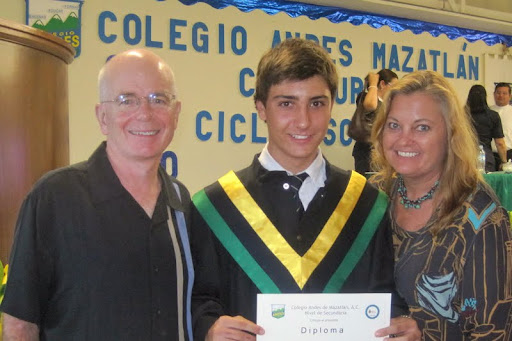
We moved here three years ago. Today our son graduated from secundaria/junior high/middle school. He has gained enormously by living here, as have we.

When we moved here our son didn’t speak much Spanish; now he pretty much passes for Mazatleco if Mom and Dad aren’t around. Bilingualism is way better than speaking only one tongue, for sure. After 3 years our 15 year old is not yet grammatically perfect in Spanish, but then, he isn’t really in English, either 🙂  Key for me is he is now extremely comfortable speaking Spanish or English, one on one, in a group, public speaking, in a formal meeting with adults. He can lead his peers, he can motivate, he can tell jokes and stories and crack people up, in both languages. Three years well invested, and at least three more to go.

When we left the US, our son’s mind was on our neighborhood, city and maybe the state in which we lived. He didn’t think about much beyond that in the world, and he didn’t like languages or cultures. He was a science, history and math guy. Now, three years on, he knows what it’s like to live as a minority member of society. He has gained confidence making new friends, going into new situations and figuring out how to get along. Not much intimidates him.

He now loves languages and thinks he’s good at learning them, anxious to try out Italian and French. He’s gone from wanting to see movies dubbed into English to wanting to see movies in their original language, with subtitles if needed. He gets that the original provides the most honest portrayal and feeling. He is keenly interested in international affairs, environmental concerns. He can recite to you UN resolutions and the rights of women, children and people worldwide.  He still loves history, and likes science and math. He talks of going to university in, well, South America, Italy… he now sees that there is a whole world out there. This is the primary reason we moved here: to provide him a broader worldview, and I thank goodness that he has done such a terrific job in this regard.

As our son graduates to high school (or preparatoria), he looks forward to a new adventure in a larger school with only a few of his current classmates. Being in a small private school now, there is a bit of a reshuffling as students decide where to study for the next three years. His graduating class of about forty will be spread out across various schools in town, breaking up this close knit bunch of kids who entered and experienced the hardest years of adolescence together. This is in sharp contrast to the normal trek in the United States, of elementary schools merging into middle schools and middle schools merging into high schools, where groups of friends remain intact and take on new friends. With this new school, he will enter as a Spanish speaker and a bit of a “local.” There will be close to 275 kids in his grade, so the huge size increase may be the biggest adaptation he has to make.

Before we moved, our son gave us strict instructions that he didn’t want to live in Mexico like some “rich gringo.” While of course the average wage in Mexico is much lower than that of the US, which he was speaking to, his eyes have been opened to just how rich the rich can be in a country like Mexico, where there are huge gaps between rich and “middle class.” He is able to describe class differences, their customs and values. He has become a “blended culture” person in the sense that he now knows what he likes and dislikes, personally, about the various cultures with whom he has contact. He doesn’t judge, knowing every worldview is “right,” but he doesn’t let himself get lost, either. I’m proud of him for that.

Thank you, Mazatlán. Thank you to his teachers, tutors, mentors, Scout leaders and friends.

And to you friends, many of whom we now love, too: best of luck in prepa! Remember to maintain these precious existing friendships!

Other posts on this blog about schools:
High Schools and Foreign Residents in Mazatlán
Inauguration of Soccer Season
Moving to Mexico (Mazatlán) with School Kids


Oh What a Night! • Día de la Música 2011


Oh what a night! One of our favorite events all year, this year was fantastic as usual. The winning combination?

  • Five open-air stages with 20 bands performing throughout the night
  • A sixth open-air venue, this one where we could watch visual artists create
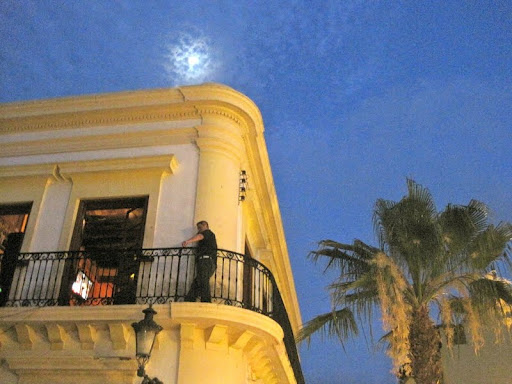
  • Perfect weather, including a gorgeous moon
  • Mazatlán’s beautiful architecture and the ocean waves as a backdrop
  • The fun-loving, joyous, quick to laugh and dance-till-they-drop Mazatlecos
  • Enough of a crowd to feel the pulsating energy, yet uncrowded enough that you can find a good seat, a terrific view, and enjoy a good drink, cena or botanas…

I have not danced, sweated and laughed so much in a while. Thank you, Mazatlán! Below is my two-minute highlight of the evening. After you click “play” you can toggle to view in HD.

Twenty musical groups performed last evening between 7 pm and about 1 am. Those performing on Escenario Paseo Olas Altas (Banda y Tropical):

  1. Ensamble de percusiones
  2. Banda la Mazatleca
  3. Grupo Fussion (my personal favorite of the evening)

Performing on the Escenario Machado:

  1. Coro Guillermo Sarabia
  2. Camerata Mazatlán
  3. Pumcayo
  4. The Sconek-T
  5. Klezmerson
Performing on Calle Niños Heroes and Mariano Escobedo, the Escenario Rock y Tendencias:
  1. Venus Rex Machina
  2. Claussen
  3. Carlitos Ojos Rojos
  4. Los Insensatos
  5. Dapuntobeat
Performing on Calle Venustiano Carranza, in front of the Art Museum (Música del Recuerdo):
  1. Suncai Gitano (they were very good also)
  2. Grupo Fussion (they performed on two stages)
  3. La Negra, La Blanca y La Redonda
  4. Zarzuela al Piano
On Calle Venus, entre Constitución y Sixto Osuna (Escenario Fusión), were:
  1. Chadoma Social Club
  2. The Lori Davidson Group
  3. Radio 3
  4. Belle et Fou Texas
Visual artists at A la Vuelta de Venus:
  1. Carlos Olvera
  2. Ster Aguirre
  3. Dave Gamez
  4. Hello Sobre
  5. Iván Lizarraga
  6. Rodolfo Loaiza
  7. Iván Mayorquín
  8. Nava One
  9. Bacse
  10. Mayk Silvas C.
  11. Angelferd
  12. Salomon Cusehr
  13. Ferruco
  14. Norte 23
  15. Alex Knives
  16. Julio Montero
  17. Pablo Llamas
  18. Crisarth
  19. Paulina Rueda
  20. El Dante
  21. Roberto Vásquez
  22. Braulio Armenta
Link to our friend Nancy’s blog entry on last night’s events. She has some very nice quality video.