AeroFest Mazatlán

I want a paramotor!!!

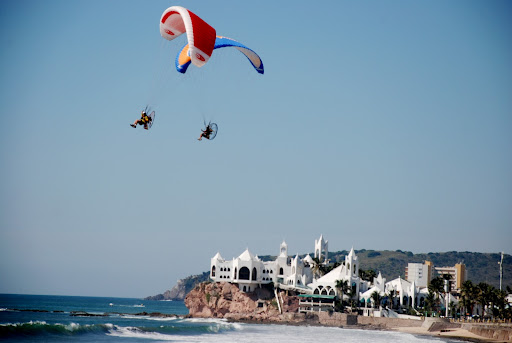
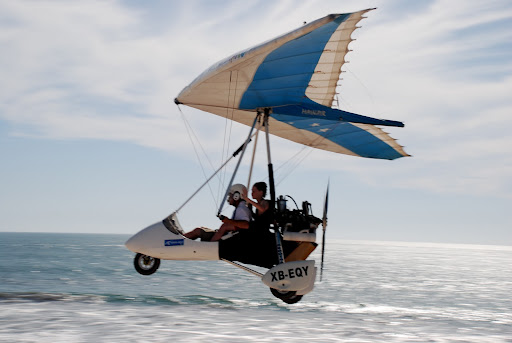
This past weekend (November 12-13, 2010) was an incredibly wonderful event which took place right in front of our house and highlighted the incredible beauty of our area : AeroFest. The weather was absolutely perfect, the sky blue and nearly cloudless, the tide out so there was plenty of beach on which to land.

Here is incredible footage taken FROM a hang glider, looking down.
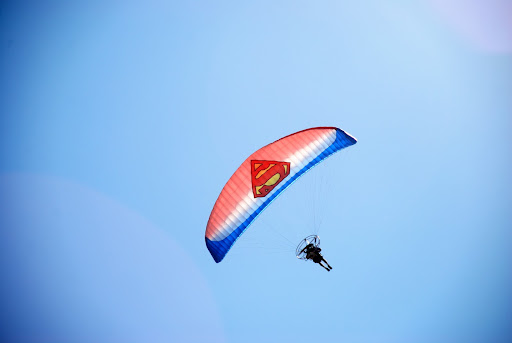
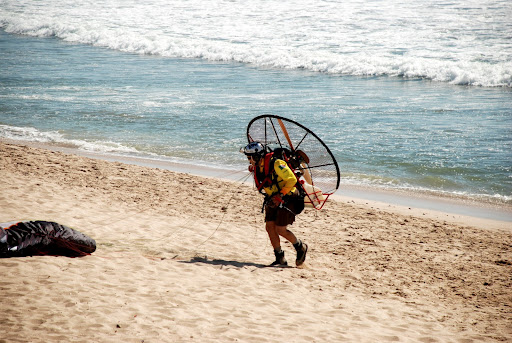
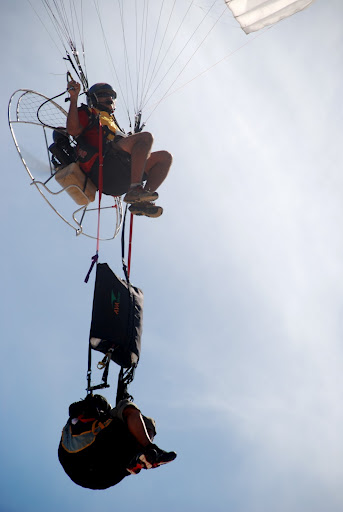
The event was held on the malecón between Valentino’s and Avenida Insurgentes, and sponsored by the Tres Islas Hotel and Motel Association to promote tourism to Mazatlán. This year it included the national championship for Paramotors (powered paragliders). These incredible devices were new to me. They include a parachute and, strapped to the rider like a backpack, a two-stroke motor (looks like a garden blower) that powers a propeller. The riders look like something out of Star Wars.


And, oh, they have soooo much fun! They can go high in the sky, they can turn corkscrews, they can swing, they can drag their feet in the surf. I’m told they cost about US$12,000, and require a week’s worth of classes to be able to pilot. I will be saving my pesos!

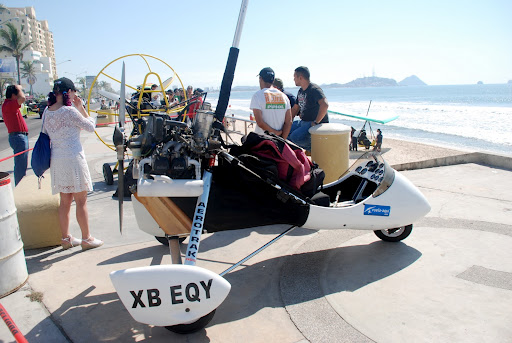
Also participating were ultralights, paragliders, and parachute jumpers. Pilots came from Venezuela and the USA as well as from throughout Mexico: Tijuana, Mérida, Cancún, Acapulco, Mexico City, Valle de Bravo, and Guadalajara. I have attended the Milwaukee Air Show the past couple of summers. It is much larger and really awesome: stealth bombers, Blue Angels. But the quiet, simple beauty and pure joy of this event, in such a gorgeous setting, left me thrilled. Thank you, Mazatlán!


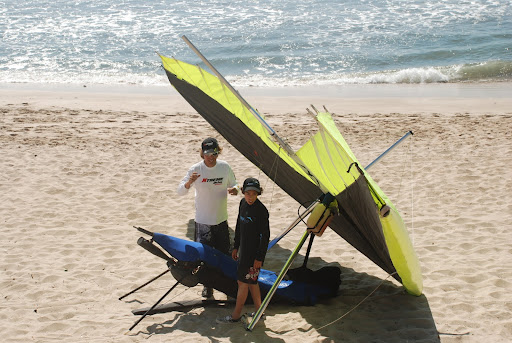
On Friday the 20 or so pilots practiced, beginning around noon. It was an incredible afternoon. Both the beach and the malecón were empty. We were able to see the pilots assemble their vehicles (is that what you call them?) and launch them.


To launch a paramotor, you appear to hook yourself up to the parachute and to your motorized propeller backpack, run a few steps, take a little jump, and you’re off! They zoomed around and came in so close we could almost touch them, waving to us with their hands as well as with their feet. Oh it was fun!

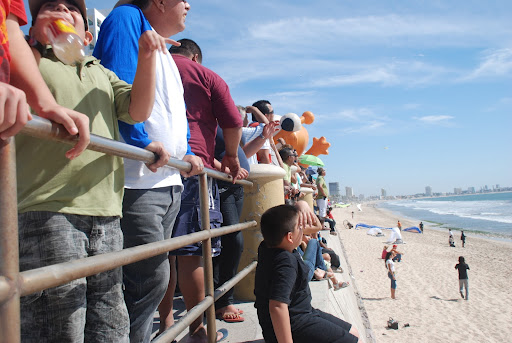
Saturday was the competition. There were many more people both on the beach and along the malecón, and several vendors selling ceviches, ice cream and fruit. There seemed to be more skydivers than on Friday, including a guy in a webbed suit.

There were gliders with two riders, some riding side by side, front and back, and one even top and underneath his partner.

All the pilots sadly appeared to be men; gotta get some women into this! And, there were gliders trailing ribbons behind them, which looked really cool.

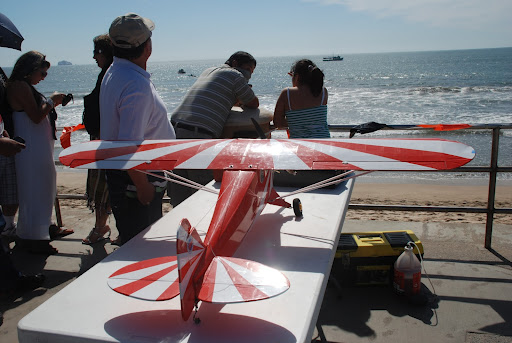
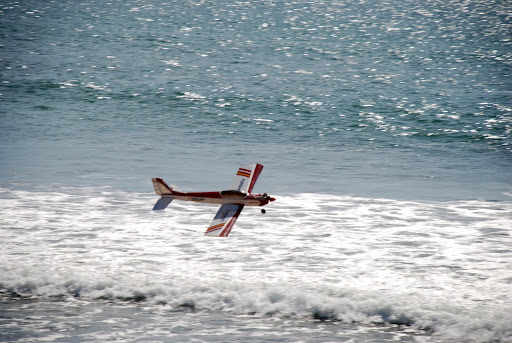
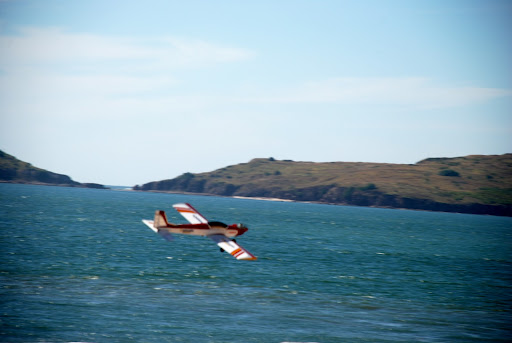
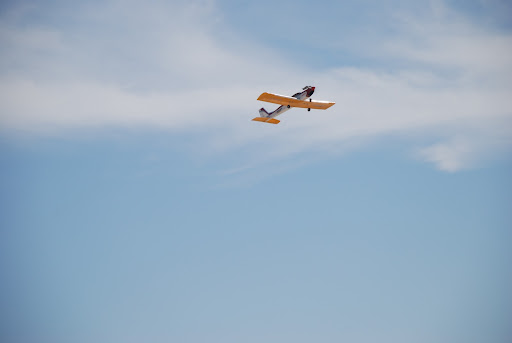
The big addition on Saturday was the remote controlled airplanes, which the kids especially loved.


El Bicentenario de México, en Guadalajara Jalisco

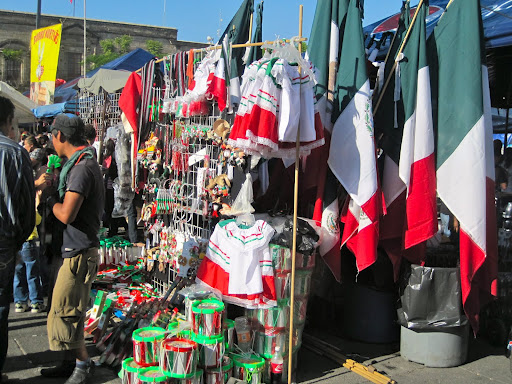
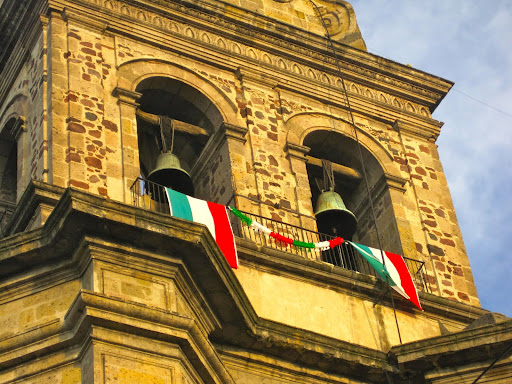
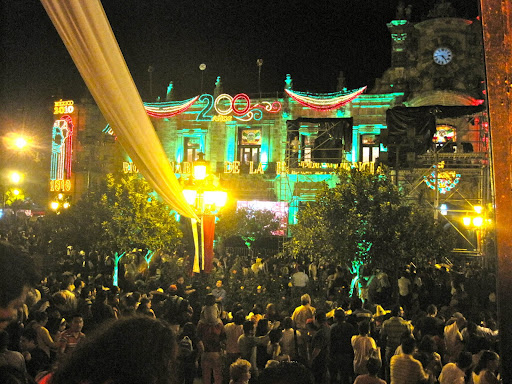
Celebrating 200 Years of Mexican Independence, and 100 Years since the Revolution, 15 September, 2010. We traveled to Guadalajara, Jalisco, in order to pick up my computer from the repair shop. Our trip fortunately coincided with the Bicentennial festivities. Be sure to click this link to see the video, as I can’t get it to load to Blogger directly.
Read an alternative history of the Mexican Independence movement.

Rigo Lewis, Maestro De Carnaval

We LOVE Carnavál de Mazatlán, as you know. It is the third largest (and best 🙂 ) in the world. We’ve done several blog posts about the two annual parades (see 2010 parade photos here), as well as the
crownings (this one links to crowning my favorite Banda, El Recodo, King of Joy) and wonderful pre-events.

Carnavál in Mazatlán has some of, if not the best, carrozas alegóricas or floats of any Mardi Gras parade anywhere. And, the man behind most of that has been Maestro Rigoberto Lewis.

This afternoon luck was with us. It’s hot out. We dropped Danny off at Scouts, and we had eaten lunch downtown. We were going to stop by Mati for a paleta. It’s a wonderful, historic ice cream maker here in town.

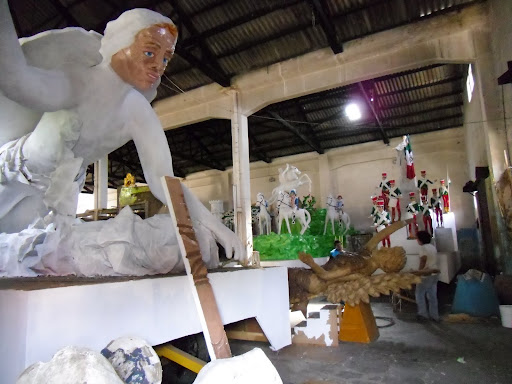
Well, as we got out of the car to walk over to buy our paletas, we noticed a big door open to our right, and, lo and behold, carrozas alegóricas!!! We were so excited! El tallér! But, even better than that, there were a few people putting the finishing touches on the frontispiece of a statue, and who was supervising but… Maestro Lewis!

Maestro Rigo has made the carrozas for over fifty years (he started as a sophomore in high school), as well as designed most of the royal costumes (starting in 1961). He was born during a Carnavál, on February 14. He is a Valentine’s baby, but the fact that he was born during Carnaval has been a much more defining fact of his life.
He very graciously invited us in. We watched them work for a bit, and then he proceeded to tell us a few stories about the plans for next week’s defile carnavalero for Independence Day, as well as his current thoughts about life. He showed us the floats he created originally for Culiacán, but which those of us here in Mazatlán will be fortunate enough to enjoy instead. He allowed Greg to take the picture of him with me that you can see above.

We talked for a while, we watched, we looked around, we went across the street to buy ice cream and bring some back for Maestro Rigo and his workers, and we delighted in our good fortune.

This is a photo of El Maestro that I took as he walked in the Carnavál parade No 1 earlier this year, 2010. I have some great footage of him straightening the queen’s dress as she mounts the float, too. The second parade was marred, unfortunately, by mass panic. The first parade was perfect.

This photo of Maestro Rigoberto is taken from the Carnavál de Mazatlán site.

Some other articles on Rigoberto Lewis and his history of float-making:

El Sol de Mazatlán, 2008
Pacific Pearl, in English, 2001
El Noroeste, 2009

Soy Monumento/Recreating a Historic Building

We are blessed in this city with a wealth of incredible artists and other professionals. Last night was just one example of the wonderful events they share with us.

Recrea got together with architects and architectural students to present a multimedia spectacular just down the street from the Plazuela, on the corner of Constitución and Belisario Dominguez. It was called Soy Monumento. Take a look:

Or you can view it at:
http://gallery.me.com/diannesaphiere/100000

Holy Week and Easter in Mazatlán/Semana Santa y Pascua en Mazatlán

If you say “Semana Santa” and “Mazatlán” in the same sentence, most people think of masses of national tourists crowding the beaches, partying in the clubs, and enjoying banda music.

We took a couple of videos of the banda Las Brisas on the beach at Inn at Mazatlán, if you’d like to see.

But this, the first Holy Week that we’ve actually stayed in Mazatlán, turned out to be quite a sacred event as well, thanks in large part to the young people of Pajuma, the Catholic youth group. This group of young people assembled behind us, in the stadium, from Thursday through Saturday to celebrate Holy Week and to pray for peace.

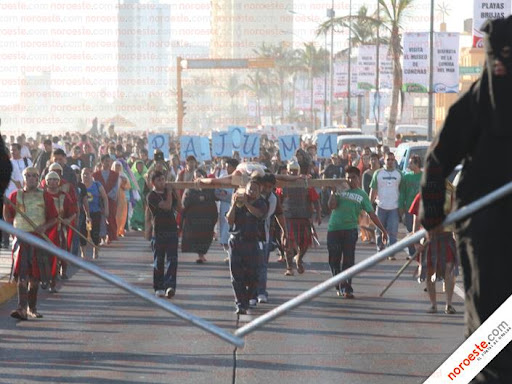
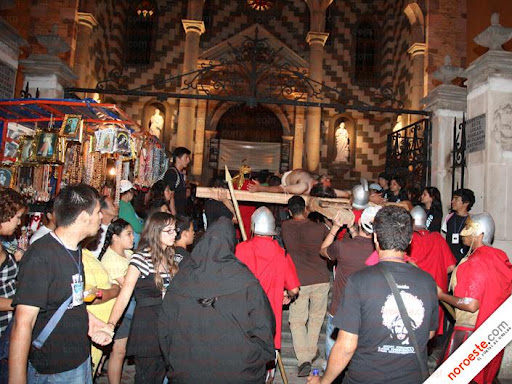
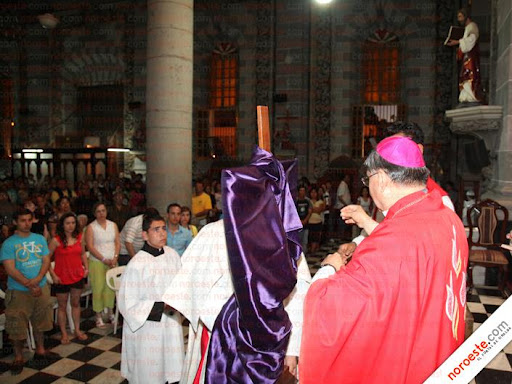
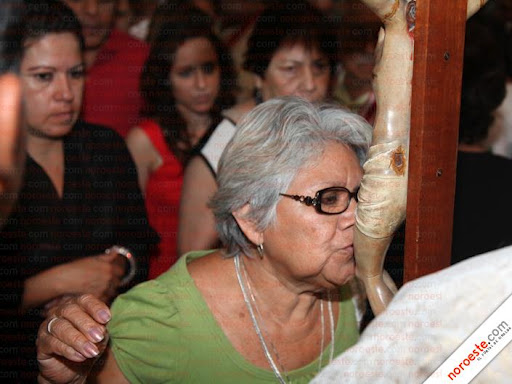
Most of the photos in this blog post are from the local newspaper, as I didn’t take any photos in church, and didn’t have my camera ready for many of the events.

PALM SUNDAY/DOMINGO DE RAMOS
Palm Sunday surprised me, as we showed up at church to find an entire marketplace of palm frond braiders selling their wares in the little plaza in front of the church. There was quite a variety of these beautiful folk art pieces, many of them very detailed, and very reasonably priced.

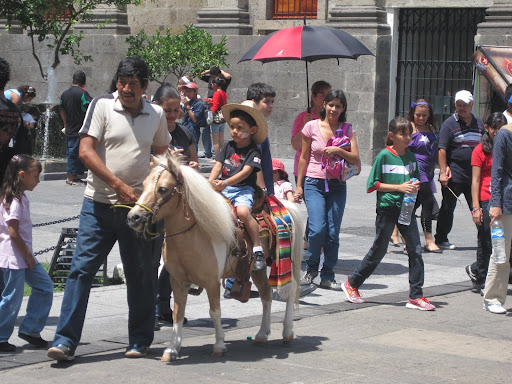
Most parishes in Mazatlán seem to conduct a reenactment of Jesus’ procession into Jerusalem. Actors dress up as Jesus on a donkey, as well as as the Apostles. Observers carry their palm fronds and cheer as Jesus comes into Jerusalem. These are some photos from the procession downtown, conducted by the Pajuma kids. They left the Templo de San José to proceed to the Catedral, and then after mass to go on to the statue of the Virgin of Guadalupe down at La Puntilla.


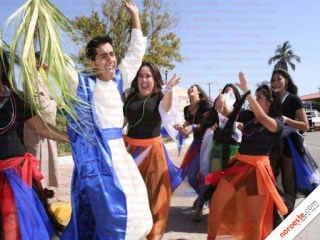


MAUNDY THURSDAY/JUEVES SANTO
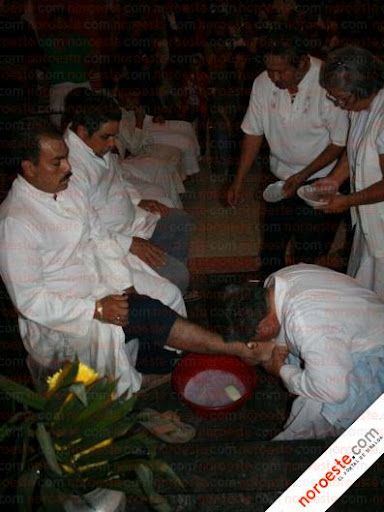
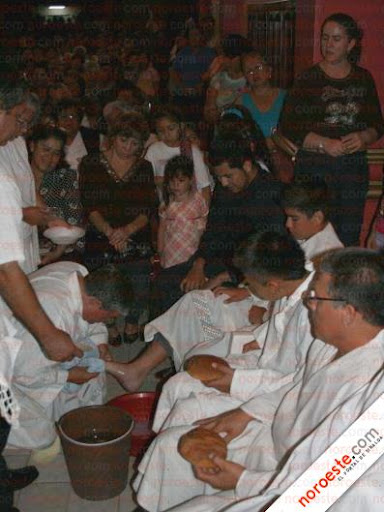
Masses on Thursday usually include the traditional washing of the feet. This is of course the night of Passover, Jesus’ last supper with his Apostles. At that Passover celebration, the Bible tells us Jesus washed the feet of his friends. The humility inherent in washing someone else’s feet makes Maundy Thursday one of my favorite religious celebrations. Here, however, they wash feet a bit differently than what I’m used to in the States (I’m used to us parishioners either getting our feet washed or being able to wash the feet of others). Here the priest washes the feet of 12 men from the parish, representing the 12 Apostles, who are seated in front of the altar.

At the end of mass the altar is stripped and communion is stored away until we can celebrate Jesus’ resurrection. Parishioners exit Mass in silence, or stay in the church for the Easter Vigil (Adoración al Santísimo), accompanying Jesus during his night of prayer in the Garden of Gethsemene.

This mass, for me, was quite awkward. We were all inside, meditating on the impending sacrifice of Our Lord. Outside, pulmonías (open-air taxis) were going by, music blaring on giant speakers, filled with drunken revelers hooting and hollering. While I felt happy for Mazatlán that people were filled with joy, and that much-needed money was flowing into the local economy, it poignantly captured the “life separate and apart” from larger society that Christians are exhorted to follow.

GOOD FRIDAY/VIERNES SANTO
One of the holiest days in the Christian calendar, today commemorates the day on which Christ died on the cross. Many parishes in Mazatlán conduct a Vía Crucis, or the way of the cross, reenacting Christ’s carrying of his cross to Calvary and, sometimes, his hanging and death. These reenactments can get painfully graphic.
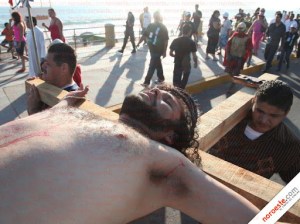
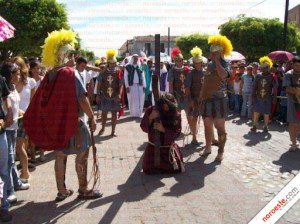
The Vía Crucis usually culminates with a mass, during which parishioners kiss the feet of Jesus on the cross. Again, this is one of my favorite religious ceremonies of the year. Here in Mazatlán they stand and kiss the cross. In the US I was used to kneeling to kiss the feet of Jesus, on a larger cross than what is the custom here.


HOLY SATURDAY/SABADO DE GLORIA
Culminating Holy Week for many Catholics, Saturday evening is the lighting of the pascal fire, or the “fuego nuevo.” I always love this night, because the church is completely dark. Every parishioner brings a candle, which are, in Mexico, conveniently sold in front of the church on Holy Saturday. Fire is brought in from a bonfire outside, and used to light parishioners’ candles. The fire is passed from parishioner to parishioner, and the church is gradually filled with light and hope. It’s a gorgeous sight. A few Easter hymns are sung, during which the lights of the church are gradually turned on as well, and we can again sing “Aleluya,” because Christ is risen.

It is at this mass that we renew our baptismal covenant, renouncing evil and professing our faith. Holy water and sacred images are blessed. We can all go home and eat what we want, because the penance you’ve observed for the 40 days of Lent is complete. Unless, of course, you wait till Easter Sunday to attend mass 🙂