Las Luminarias: Monigotes of Carnavál Mazatlán 2013

After my last post, many of you who are not here in Mazatán have written to ask if I’d post photos of all the monigotes this year. Marilyn Monroe is still not up, and I’m not sure if she will be even though we saw her being made. (UPDATE: Marilyn is now added to the slideshow below).

This slideshow requires JavaScript.

Above you can see these eight-meter/26 foot tall statues, starting from the north at Playa Camarón (La Tongolele) and going in order to the south (Al Jolson), in the Machado.

Behind the Scenes of Carnavál: The Making of a Giant Statue

marcel

This year’s Carnavál de Mazatlán statue of Marcel Marceau

Every pata salada loves the monigotes, those super-sized statues that go up along the malecón and in the Plazuela Machado each year in the weeks prior to Carnavál. The tradition began in 2005, with Maestro Jorge González Neri’s replicas of the work of Antonio López Sáenz, Mazatlán’s illustrious painter and sculptor. Last year, for Festival de los Imperios, we had gigantic warriors from major world civilizations protecting our fair city. And we all loved it! Excited to see them go up, rather heartbroken to see them taken down, it is a terrific tradition.

Every year we wonder and guess, what will the monigotes be this year? On Saturday we were driving down Avenida del Mar and happened to see them putting up the first statue: the mime Marcel Marceau. Ah, the excitement! This year, with the theme of La Linterna Mágica, we are privileged to enjoy eight-meter tall likenesses of international film stars — Las Luminarias de Neri.

Neri

Maestro Jorge González Neri in his taller

Marlon Brando, my beloved comic actor Cantinflas, the pachuco Tin Tan, actor and luchador El SantoPedro Infante, and Al Jolson were erected over the last few days. Marlene Dietrich went up this morning at Playa Norte. Just this afternoon we watched them put Charlie Chaplin up in front of our home. Oh, the thrill! The rumbera from the Golden Age of Mexican cinema, La Tongolele (Yolanda Montez), went up late this afternoon. We watched it leave the taller after final painting and varnishing. Towards the end of the week the final monigote, of Marilyn Monroe, should make her appearance. We watched her head being carved today (see video and slideshows below), and her body being welded. Maestro Jorge González Neri himself told me that, yes, her skirt will be flying up in that iconic pose of hers.

So, how do you make one of those giant statues for Carnavál de Mazatlán? Well, the Maestro is a set designer who creates pieces for the stage as well as for public events. He is based in Monterrey, so there is a lot of sending of drawings and designs back and forth, between Monterrey and CULTURA here in Mazatlán, as they agree on what the monigotes will look like each year. It sounded to me like Neri himself is a bit astounded at how large they’ve become — the bar higher every year.

Once designs are agreed on, the staff of his taller begin working. Finished parts and parts in process are shipped to Mazatlán. A month or so prior to Carnavál, the Maestro travels here with a crew of 15 of his people from Monterrey. They hire papier maché people here locally, people who have now been doing this for years.

And, in an incredible open-air artistic assembly line, they create magic!

STEP ONE: WELD THE METAL FORM

This slideshow requires JavaScript.

STEP TWO: COVER THE FORM WITH FABRIC/MANTA

This slideshow requires JavaScript.

STEP THREE: COVER THAT WITH PAPER

This slideshow requires JavaScript.

STEP FOUR: CARVE THE HANDS AND FEET OUT OF STYROFOAM AND ATTACH TO THE BODY

This slideshow requires JavaScript.

Below is a very short video clip of one of the artists carving Marilyn’s face:

STEP FIVE: PAINT THE MONIGOTE & SEAL IT WITH VARNISH

This slideshow requires JavaScript.

Below is a very short  clip of the artists lowering La Tongolele (from vertical to horizontal) so they can paint her shoulders:

STEP SIX: WRESTLE THE STATUE ONTO A TRUCK. TAKE A CRANE, FIGHT THE OCEAN WINDS, AND PUT THE MONIGOTE ON DISPLAY

This slideshow requires JavaScript.

Below is footage of the workers loading the huge statue onto the truck for transport.

Below is a clip of the crane workers installing Charlie Chaplin in front of our building. They stake the monigote to the beach, and counterbalance the stand with sandbags.

As you can see, it’s a bit like making a piñata, or one of the papier maché projects we all did as children. But, not really. It’s nothing like that! What an incredible dream to make magic in this way, don’t you think?

Click here for a slideshow of all the 2013 Carnavál de Mazatlán statues. Thank you, Maestro and crew, as well as CULTURA and all involved! This year’s “Luminarias” rock!

Are you curious to learn more? A couple of years ago we visited Maestro Rigo Lewis in his taller, as he and his crews worked on the parade floats or carrozas for Carnavál royalty. He was born during Carnavál and the event and its magic run in his veins. Need a schedule of events? It’s posted on CULTURA’s Carnavál site. The inside scoop of what to attend and how it all works? Check that out here.

Thank You, Colonia San Antonio & Familia Medina, for Making Our Christmas So Special

We had a WONDERFUL and blessed time this December 24th, thanks to soooo so many good people. This post will tell you a bit about why. (NOTE: MANY thanks to terrific photographer and friend, Brian Samore, for sharing many of the photos below.)

This slideshow requires JavaScript.

Since 2007 (see photos of 12-year old Danny, above) we have been participating in the Desayuno de los Pollos or “Breakfast of the Chickens.” It has come to define our Christmas each year; a completely, utterly delightful tradition. If you’re a regular reader here, you know that each year over 2000 whole chickens, a week’s worth of kitchen essentials (despensas including beans, flour, coffee, oil…), gently used clothes, new toys and candy are handed out to people who could most use the help in Mazatlán.
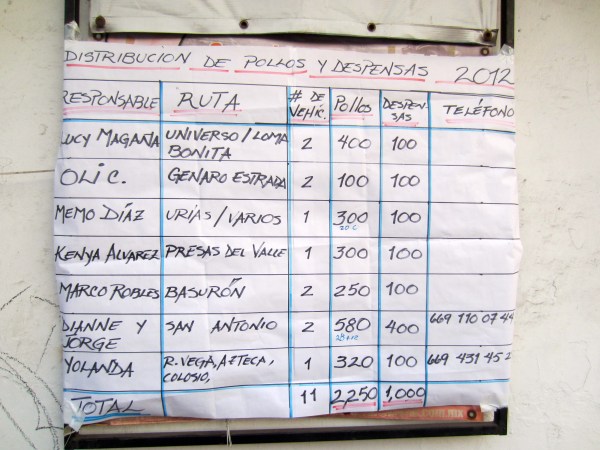
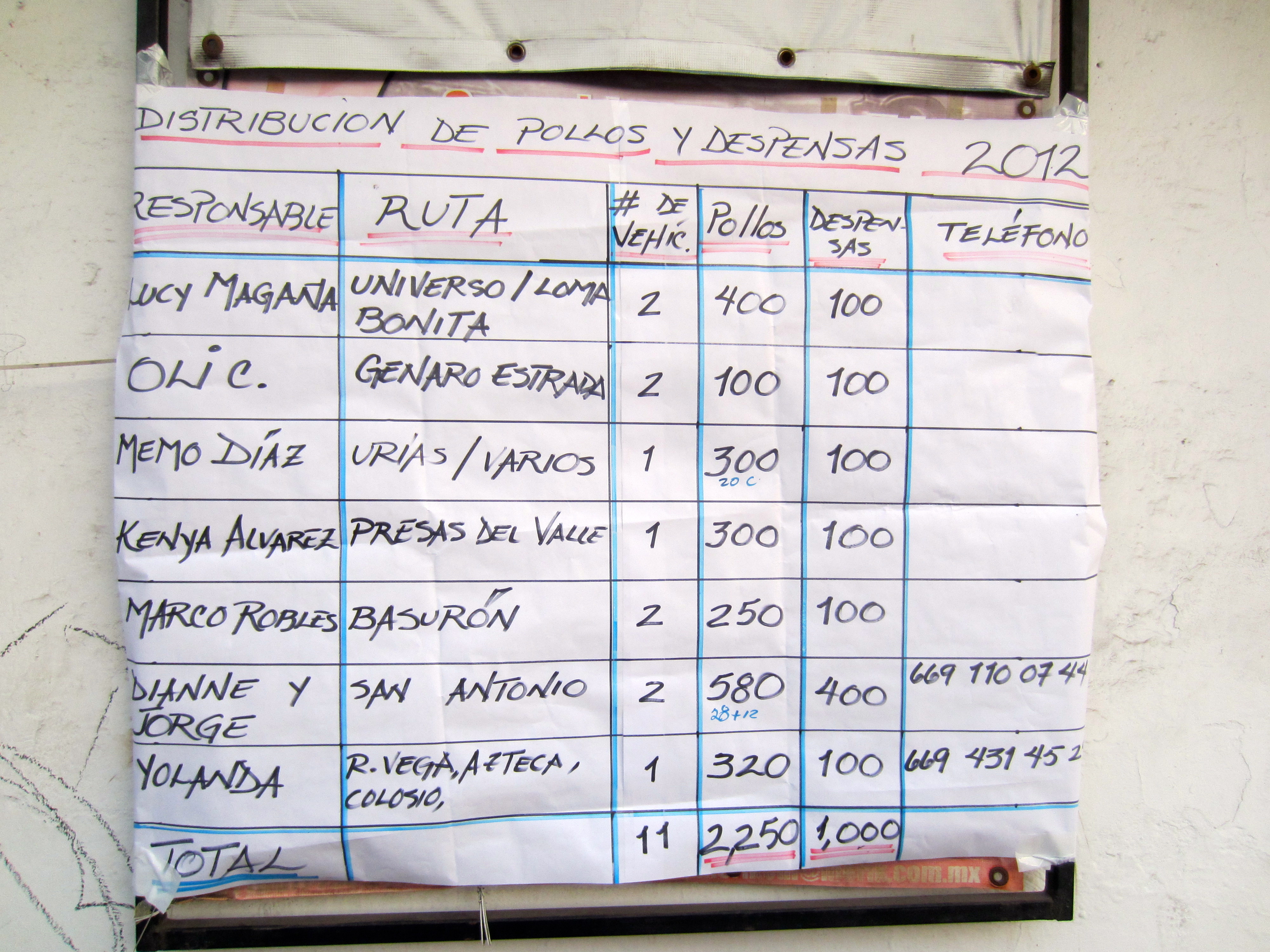
routes

This year’s routes

This year was very special for us for a few reasons.

  1. First, I was able to participate in handing out the tickets for the pollos and despensas, prior to the “big day.” This meant that I was able to meet the community leaders as well as at least one representative of many of the families we’d be sharing with, including visiting with them in their homes. It was a WONDERFUL day that I will never, ever forget. Thank you, Yolanda, for including me, and thank you to all the people in San Antonio who so graciously let us into your homes!
  2. I was invited to lead a group on the morning of December 24th for the first time. Due to family illness and travel schedules, some of the regular leaders were not able to attend this year. So, I was asked to step in. I learned a lot and loved every second.
  3. Thirdly and also incredibly awesomely, we had the good fortune and privilege to be joined by quite a few new friends and blog readers on this terrific day, as well as friends who’ve now made this effort part of their family’s Christmas tradition! Thank you all!

This slideshow requires JavaScript.

Normally we travel out to the edge of town, where there are no paved roads. Until this year, there has been no electricity, no gas, no water. This year, we went to Colonia San Antonio. This neighborhood is only two years old and is already home to 750 families! It is growing so very quickly. And, thanks to the community and to the proactivity of one woman in particular (La Maestra, in slideshow above), this area has electricity, many have propane tanks, and there are several large water tanks or tinacos on site.

This slideshow requires JavaScript.

So, where to start? Photos of the wonderful people with whom we shared Christmas?

This slideshow requires JavaScript.

Photos of their homes, reminding us how lucky most who read this blog are, and our duty to help build a more inclusive, respectful, equitable world?

This slideshow requires JavaScript.

How about photos of the incredible gardens some of the people in this community have planted, to provide themselves sustenance, greenery, and a pleasant pastime?

This slideshow requires JavaScript.

Or, similarly, photos of the crafts I had the pleasure of enjoying, mostly made out of recycled materials? These are items that allow people to connect with their creativity, bring some brightness to their days. To me, the gardens and crafts are signs of the strength of the human spirit.

On the day we handed out tickets, I told a lady how gorgeous her bracelet was. Sure enough, the day we handed out chickens, she had made one special for me, God bless her soul.

This slideshow requires JavaScript.

I so appreciate all the people who donate, who show up to load the trucks, Yolanda Medina who started all this, her family and friends who work hard for months (most of the year, actually) to make this all possible.

This slideshow requires JavaScript.

The best part is handing things out, seeing the worry on people’s faces transform into joy, as they receive their chicken, items of clothing, a toy, even a piece of candy.

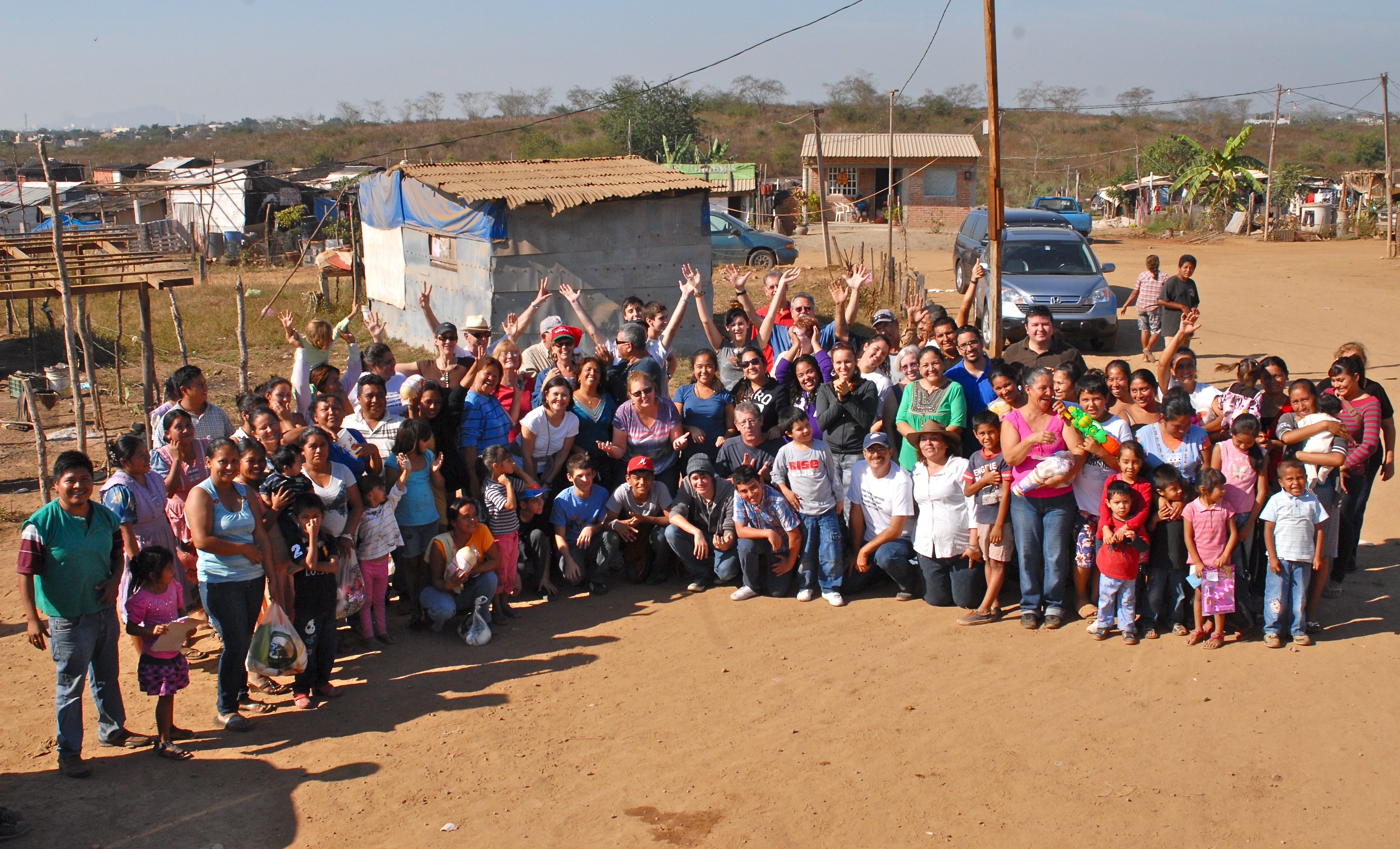
group

Group members who hung out till the very end

This slideshow requires JavaScript.

While in 2010 we ran out of chickens and had to go on a shopping spree, this year we actually had a surplus and were able to stop by Ciudad de los Niños on the way home, to share chickens, despensas, clothes, toys and candy with them.

If you are in Mazatlán next year, I do hope you’ll join us! While this post is mainly about our efforts on December 24th, there are many ways to help.

  • The primary fundraiser is a breakfast held two to three weeks before—in late November or early December. That event requires help with ticket sales; donations of food, tables, chairs, coffee pots; logistics; set up, waiting tables and clean up; as well as people to collect raffle prizes, silent auction items, and make goods to be sold at the bazaar.
  • The despensas need to get calculated, funded, ordered and portioned out in the days and week before the 24th.
  • Clothes needs to be collected and sorted along with toys and candy.

Any one person can make a huge difference. In 2007 when we started, we came as three people just wanting to do what we could. This year, we brought 17 other people (and TWO much-needed trucks) with us — some newbies, some on their second or third year. All of them will come again and bring some new people with them. Together this can grow and help even more families. Thank you to everyone who helped or joined in this year!

What Do Mexican Nativity Sets Have That Mine Doesn’t Have?

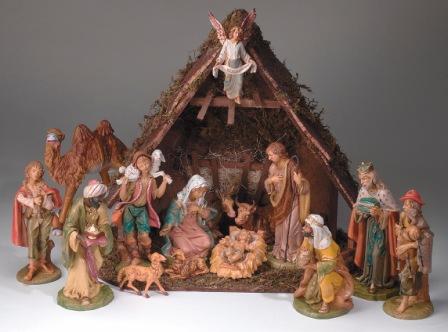
my nativityGrowing up in Wisconsin, our nativity set looked a lot like the one at left.

In Mazatlán, most of the nativities (nacimientos) do include these basic items that I grew up with — Mary and Joseph, the baby Jesus, shepherd and sheep, 3 kings, a camel, a donkey, an angel. But they also include a WHOLE lot more!

Here, nativities always seem to have turkeys. Why? Because we eat pavo on Christmas? Mazatleco nacimientos also seem to always have chickens.

This slideshow requires JavaScript.

And a well. Almost every Mazatleco nativity we’ve seen has a well. Again, why? Because Jesus asked a lady for water at a well, like, 30 years AFTER he was born? The wells are pretty. People did need to drink.

This slideshow requires JavaScript.

The nativities I grew up with had pine trees. I always thought that was a little weird. As a kid I imagined that where Jesus lived, maybe palm trees would have grown, but pine trees? Well, Mazatleco nativities have cacti. Lots of different kinds of cacti.

This slideshow requires JavaScript.

The shepherds in Mazatlecan nativities often wear sombreros. And they may carry tropical fruits. Or beans. Traditional Christmas foods. They may be miners. Or carry really heavy loads.

This slideshow requires JavaScript.

Mary and Jesus may have a comal alongside the manger, for cooking fresh tortillas for all those visiting kings.comal

There are usually a lot of tropical birds in a Mazatleco nativity, and often times a waterfall or water feature. We do live on the ocean, after all. And we are blessed with loads of gorgeous water fowl.

This slideshow requires JavaScript.

A nativity here might not be complete without a burro carrying beer, or a lady handing out avocados. Christmas is a cause for getting together with family and friends and celebrating, that’s for sure.

This slideshow requires JavaScript.

There are often barnyard animals in a nativity here, including cows, pigs, and geese.

This slideshow requires JavaScript.

And, usually, the nativity includes a devil. Sometimes one, sometimes quite a few. The nativities I grew up with included lots of angels, but never, ever a devil.

This slideshow requires JavaScript.

Nativity sets here grow so large, over several generations, that many of them become small cities filled with people doing all sorts of different things. Nacimientos are yet another reason to LOVE Mazatlán! 😉

Entrega de los Pollos/Handing out Chickens — Where/What Time

IMG_0670

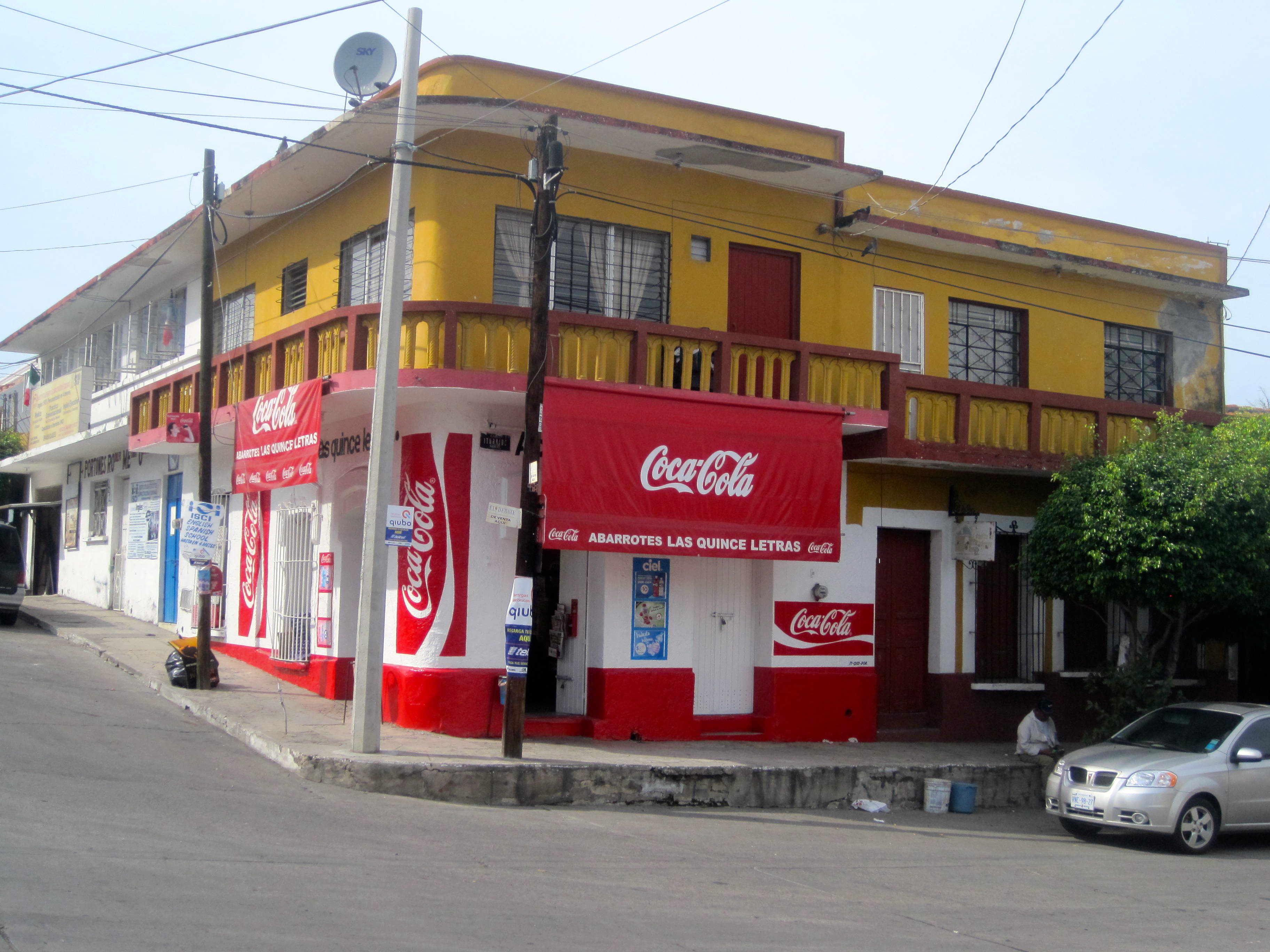
Quince Letras, corner of Tampico and Francisco Villas streets
We load from either side of this “Coca Cola” store on the corner

Many, many thanks to all of you who attended the Desayuno de los Pollos/Breakfast of the Chickens earlier this month, who have donated money, collected clothing and toys, and who have worked hard this week packing up rice, beans, coffee, tomatoe paste, pasta, etc. Your kindness and efforts will help improve the lives of over 2000 families in Mazatlán who are less economically fortunate than ourselves.

I was over at Yolanda’s today, and they need a few more pickup trucks or even larger trucks to help us haul the frozen whole chickens. Please, if you have access to a truck and are willing to drive it on December 24th, would you contact Jorge Medina on his cell at 669-110-07-44 and let him know? Thank you! Please pass this request on to anyone you know with a truck. All who are driving: please have your trucks at Quince Letras downtown by 6:30 am on the 24th, latest by 7:00 am.

Several of you have asked us what time to show up on the morning of December 24th in order to help load the trucks and deliver the goodies out to the colonias. Those who have worked in the past and know the drill, please plan to show up about 6:30 am. Those of you who are first-timers, coming by about 7:00 am will put you there just in time to help us load. We make lines of people to pass the foodstuffs/despensas into the truck, and able-bodied guys load the boxes of frozen chickens.

That morning, please bring any additional used clothing in good condition that you have assembled (it’s best to take clothing over to Yolanda’s for sorting before that morning, if possible), any candy or toys you have for the kids. Donations that morning will also be welcome, as Yolanda has signed for some of the food on credit/faith.

DATE: December 24th

TIME: 6:30 am if you are driving a truck, 7:00 am if you are helping us load and deliver

LOCATION: 15 (QUINCE) LETRAS, corner of Francisco Villa and Tampico, just down the hill from the Church of Cristo Rey (Christ the King)

  1. Turn East at the Fisherman’s Monument.
  2. Go to the first light and turn right.
  3. Proceed one block and turn left (Francisco Villa street, just before the Pemex station).
  4. Go two blocks.
  5. If you are NOT driving a truck or transporting supplies, please park in the next block. This will give us room for loading. Once you’ve parked, walk another block down, past the iron works business called “Quince Letras.” On the corner of Francisco Villa and Tampico you will see a small store with a bright red “Coca Cola” hand painted on the outside, across from a tortillería. A door next to the Cocheras Automaticas business will be open. That’s Yolanda’s mother’s house, and it’s from there that we’ll be loading.
  6. If you ARE driving a truck or transporting supplies, please drive up to Tampico street (the “Coca Cola” store on your right on the corner), turn right, and park. We will be loading right there.

IMG_0669If you can’t find it, just ask someone for “Quince Letras” or “Desayuno de los Pollos/Medina family.” Everyone in the area will know. It is just down the hill from the Cristo Rey Church (photo at left).