Amazing Bird Watching in the Heart of Mazatlán

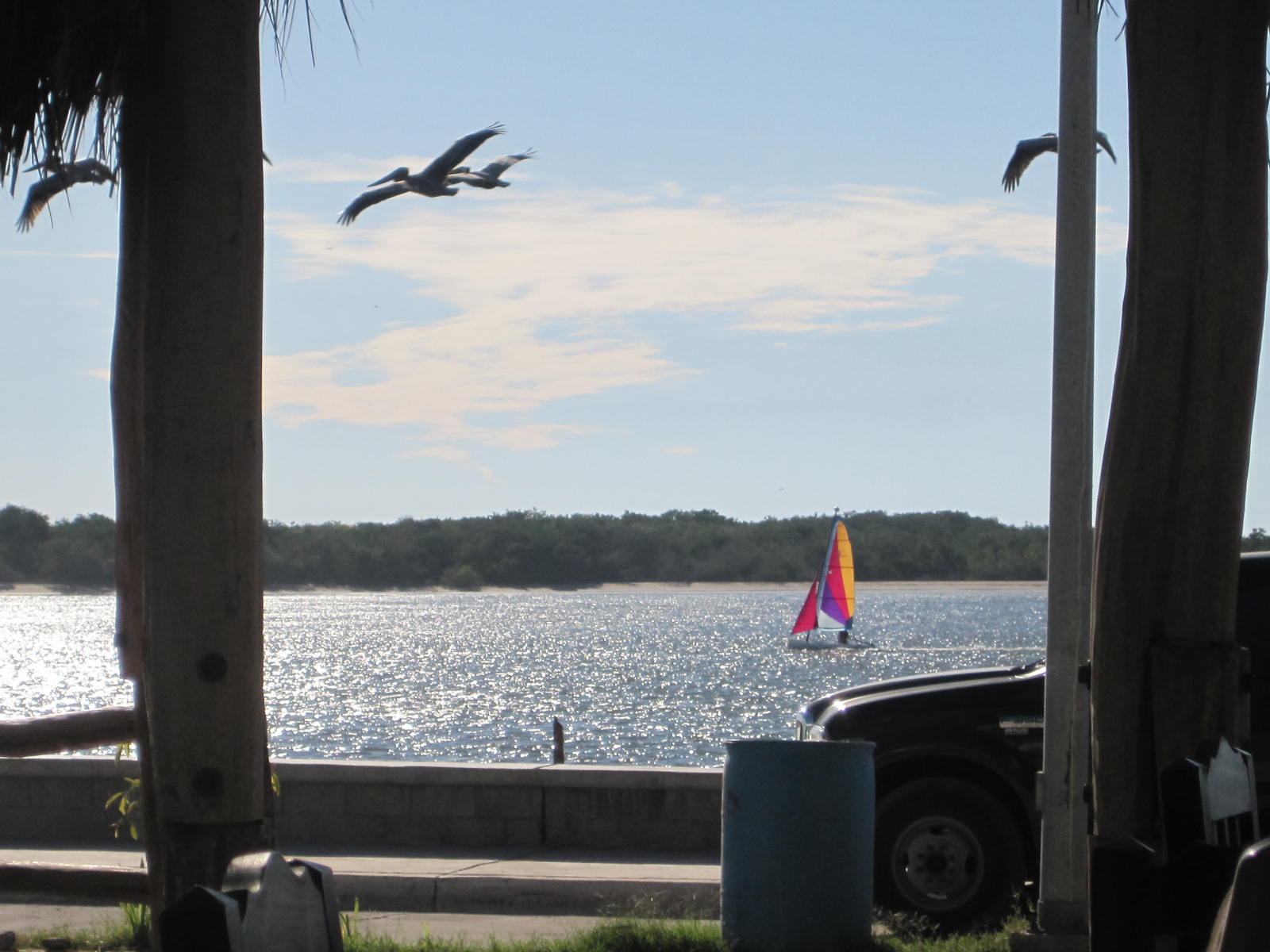
DSC_0118Birdwatching here in the center of town is so very incredible. It never ceases to astound me how, amidst the traffic and pedestrians, and despite the bulldozers that are currently working full blast, the lagoon fills with every kind of gorgeous water fowl: ibis, cranes, herons, storks, ducks, bobos, spoonbills… It makes for a splendid sight, and wonderful sounds as well!

Estero del Camarón is arguably the heart of our city, located as it is halfway between the historic downtown and the delightful marina area, next to the Gran Plaza shopping center, just south of the Golden Zone, one block off the malecón, and one block north of city park/El Bosque de la Ciudad. The estuary, or “laguna” as most Mazatlecos call it, is representative of the brackish waters that dotted all of Mazatlán back in the day, when anyone could cast a tarraya net and bring in enough shrimp or fish to feed their family.

Today, instead of heading over to zumba, I enjoyed a peaceful morning taking pictures of some of those delightful sights in Estero del Camarón. By the looks of all the fish these birds were catching, food is plentiful and the water fowl are hungry! Click on any photo to enlarge it or to view a slideshow.

Today there were two guys fishing in the estuary; you can see them in one of the photos above. I also met Salvador, who was wading through the lagoon shirtless and barefoot, removing the litter that mindless passersby throw into this wildlife sanctuary. Thank you, Salvador! I met another man who told me he stops here every morning to sit for half an hour before work; what a wonderful way to start his day! I’ve previously done an article on the restaurant here, which is currently offering 40 peso breakfasts. I HIGHLY recommend you join them, and bring your binoculars 😉

They’re Back!

Version 2

Second nest-maker of 2015

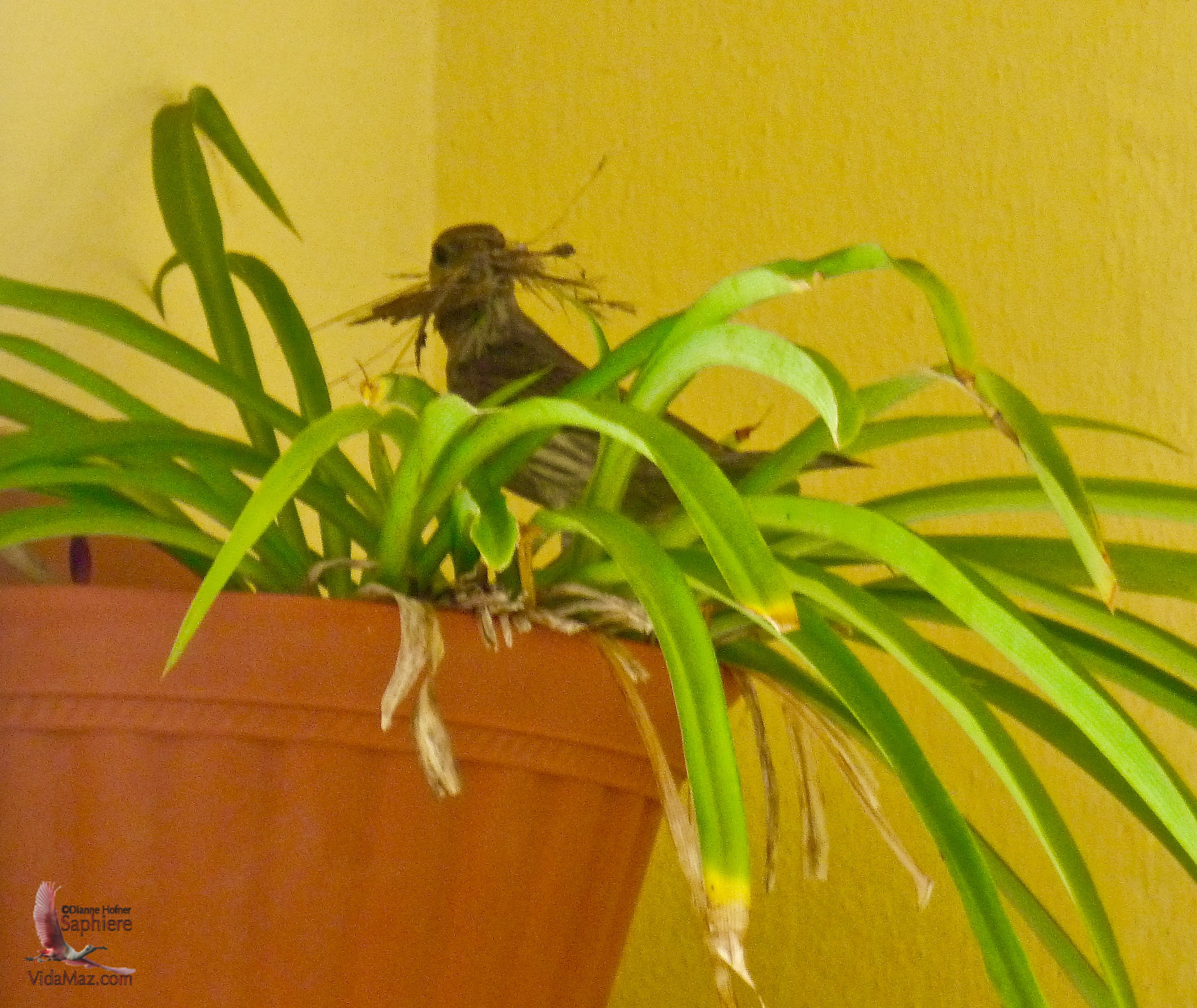
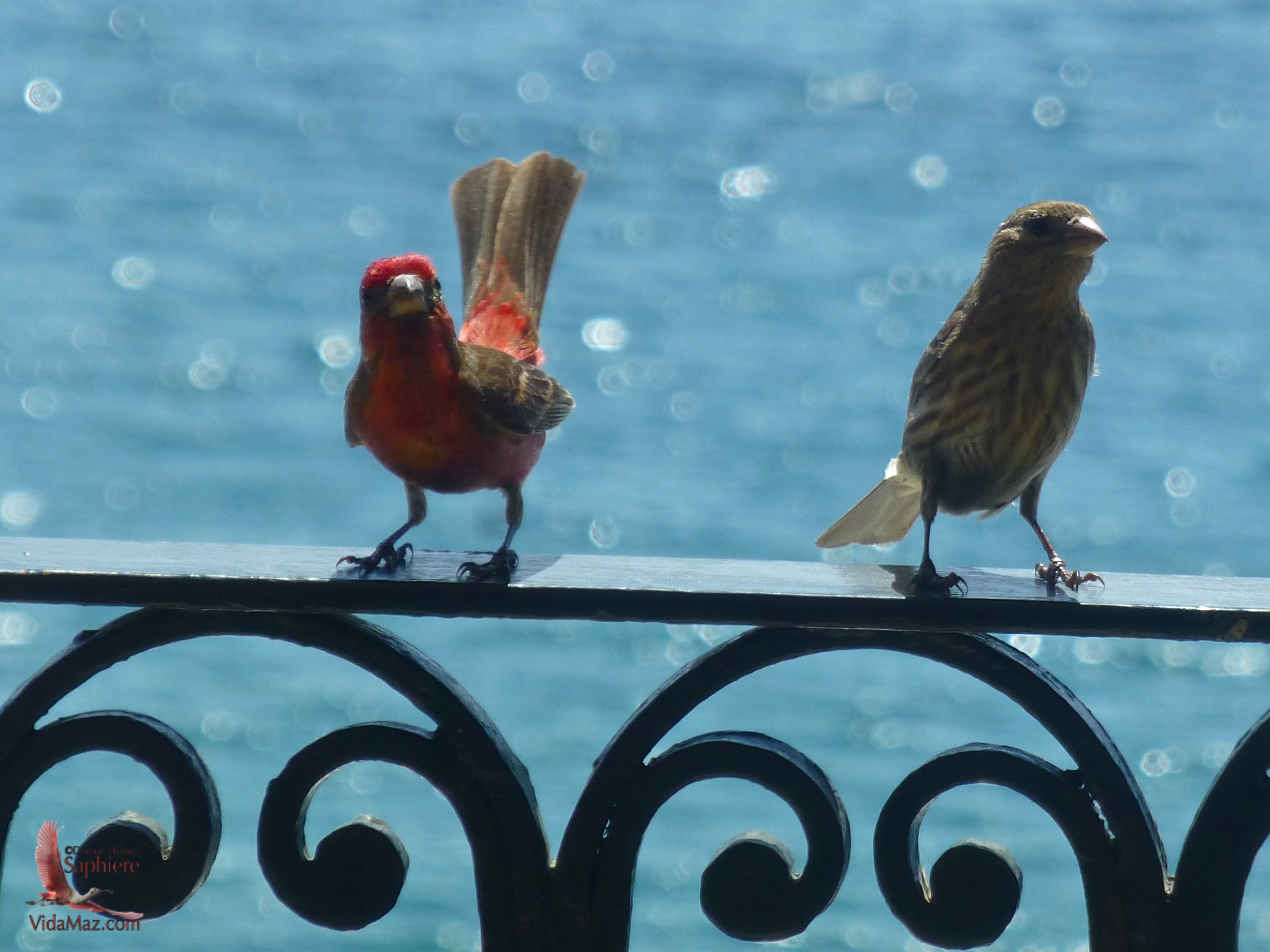
You followed our rosy finch family, and you know the eggs hatched, the babies flew the coop, and we were once again empty nesters. Well, a new family of finches showed up this weekend!

I caught the one in the photo above with nest-building material in its beak, in yet another spider plant on the terrace. They sure work fast.

Mom and Dad

Mom and Dad, 1st nest 2015

Maybe we should start charging rent?

I’m so so happy to again have birdsong on our 11th floor terrace! I’m not sure if there is a shortage of good nesting places around here (we are in front of the Bosque, so I doubt it), or if the finches just like the vibe, but, WELCOME! Our terrace is your terrace 😉

Teacapan, Sinaloa

Teacapan, Sinaloa

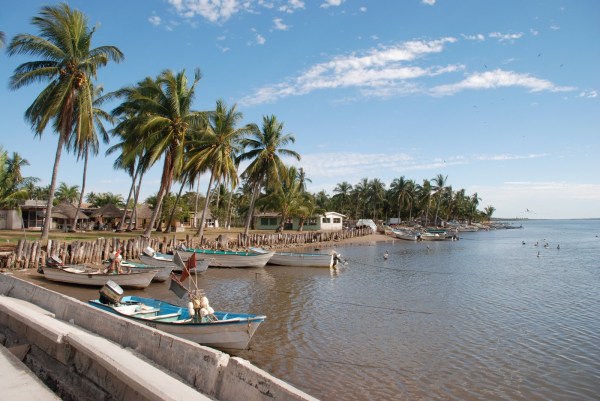
We visited the peaceful fishing village of Teacapán this past weekend, a beautiful place for bird watching, kayaking, fishing or just relaxing that is located a couple of hours south of Mazatlán. The biodiversity of the mangrove forest and estuary were breathtaking.

The area between Escuinapa and Teacapán is scheduled by FONATUR for major development. In a few decades the Mexican government plans for this charming and pristine area, teeming with wildlife, to look a lot like Cancún.

This of course breaks our hearts, but it seemed to be excellently good news to most of the locals with whom we spoke. Development for them means jobs, income, food, and a better quality of life. To us, it means destruction of the incredible mangrove ecosystem, estuary and bird habitat, very similar, no doubt, to how Mazatlán’s Golden Zone looked in the 1950s, before the estuary here was filled in, the mangroves destroyed, and the hotels built. The estuary or lago as those in Teacapán called it, is filled with fish, oysters, crab, and shrimp.

Getting There
The drive from Mazatlán to Teacapán is very easy. You take Highway 15  (toll or free road) south through Villa Unión to Escuinapa (88 km from Mazatlán), then turn onto Highway 1 along the coast to Teacapán (another 40 km). The latter highway has its share of potholes. The vista on the journey is excellent. We made a very quick trip, arriving on Sunday afternoon and returning on Monday evening due to the holiday.

The Town
We were told Teacapán has 6000 inhabitants. It lies right on the border between the states of Sinaloa and Nayarit, though it is part of Sinaloa. It is built around a central plaza which has the traditional band stand and a quaint church.

It is right on the coast, but faces a long peninsula that the locals call “el otro lado.” Yes, that’s usually the term used to refer to the United States, “the other side,” but in Teacapán it refers to the “island” (it’s a peninsula but is called isla by the locals) offshore, covered in mangrove trees, the other side of which is supposedly an incredibly gorgeous beach. Trouble is, you need a lllloooooonnnngg drive to get to that beach! There is also a place on the island called “Texas.”

Looking from town, you can see what looks like an inlet/outlet to the ocean, but mostly you look at the calm lago (which is really a 30 mile long estuary) and beyond that the island. Thus, you don’t hear crashing waves as you would on a more usual bay.

The valley is rimmed with mountains, so it’s a very gorgeous view. One of the main mountaintops is said to look like a man’s face. The locals say it looks like George Washington.

Lodging and Food
Our hotel (María Fernanda) was clean, bright, affordable, had two pools and a restaurant, and the shower had hot water. It was located right on the water with beautiful views. There was wireless internet in the lobby but not in the room.

Teacapan, Sinaloa
The town seemed to have very few formal restaurants. We ate in the hotel; there was another restaurant run by a Canadian right next door (Wayne’s), and a family-owned palapa restaurant was just down the malecón. We saw was a cocina económica on the plaza, and various more informal eateries and botaneros on the main road into town.

We ate a wonderful pescado zarandeado for dinner the day we arrived, and there were crab, prawns, and scallops galore. We bought some fresh prawns and crab meat to bring home with us for dinner; yum!

Mangroves and Wildlife
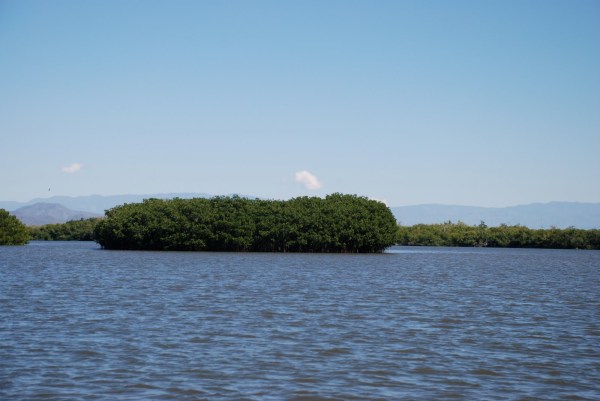
The mangroves of Teacapán are a famous bird watching area, home to 250 species of birds. The Marismas Nacionales are the largest coastal mangrove area on Mexico’s Pacific coast. We saw great herons, and little blue herons, white herons, cranes, lots of osprey, roseated spoonbills, cormorants, a fairly unusual bird called a boot-billed heron (I believe), flycatchers, and a host of other birds big and small, including the usual gulls, pelicans and frigate birds.

(You bird lovers may like to read my “Crane Convention” blog post, which took place in Mazatlán last year.) 

We found a terrific guide, Victor Méndez Denis (tel 695-954-5386). He told us he is licensed by the federal Department of Tourism as an ecotour guide, the only one in town. He has a very nice, clean, covered boat with a very quiet motor that holds about 15 people. When he told us he could talk to the birds we thought he was joking; we laughed and called him Dr. Doolittle. But, indeed, Victor called quite a few birds, and seems quite adept at calling. I’m confident most birders would be thrilled.

He took us on a cruise out to “the other side,” Bird Island and a few other places, and we found him to be very knowledgeable. He explained to us that four out of the seven kinds of mangroves in the world can be found in Teacapan: black, white, red and button. The red mangroves are especially plentiful, extending their roots down into the water to form a “reef” in a very similar manner to the way in which coral grows. This reef teems with wildlife: birds in the tree branches, crabs and all sorts of aquatic animals among the tree roots. We were told there are cayman in the water, but we did see quite a few people snorkeling, either oystering or spearfishing.

In quite a few areas along the “other side,” the island, there are oyster shell mounds, said to be the remains of oysters harvested by native people over 4000 years ago. Some say they are burial grounds. The mounds are extensive.

Teacapan, Sinaloa

Fishing
There are loads of oysters to be found in the fresh water here. They are easy to harvest, too; not like the rock oysters in the ocean off Mazatlán, which require the divers to hammer and chisel. The Teacapán oyster divers that we saw only used their hands. Our guide, Victor, bought 10 kilos of fresh oysters for 150 pesos. Quite a great deal, we thought. He tells us they are much sweeter and better than the rock oysters.

The fishing tours advertise fishing for snook, red snapper, grouper, sea bass, trigger fish, jack crevalle.


Next Time
Next time we go, we’d like to tour the estuary at low tide. Victor told us many of the islands in the estuary actually become connected at low tide, and the birds come out from the mangroves to eat on the sand bars. Would definitely like to see that!
Teacapan, Sinaloa
Would also like to rent a kayak and glide through the mangroves; it would be gorgeous. I’d like to get out to the beach. Seems to me you should be able to take a boat out around the peninsula and access the beach that way, rather than making the long drive. But, as we didn’t do that, I am not sure.

Isla Isabel is a couple of hours boat ride from Teacapán. We could also go from Mazatlán. I have long wanted to go to this national park to see the blue-footed boobies. People call it a miniature Galapagos, nearby here in the Islas Marias. It is one of the main seabird nesting areas in the Pacific, with 92 bird species recorded. There is also good snorkeling. Due to CONANP protection, a visit means you must be accompanied by a licensed guide, and I believe you have to camp if you want to stay overnight.

Whale Watching

We went whale watching today, one of our Christmas gifts to each other. It was an INCREDIBLE day!!!!

This slideshow requires JavaScript.

We were told we’d go out 3-5 miles to see the whales, but we were barely on the outer edge of the bay when we saw two whales:

All of a sudden there were three:

Before we knew it there were four…

We’d be with a pod of whales, and then we’d see another off to the right, and yet another off to the left. We were surrounded by humpbacks! We were told humpbacks often travel alone, or maybe in twos (most often 2 males or a male and female), but we were so fortunate today and saw several groups. By the end of the day, we way lost count of how many whales we saw.
Below is some video that Greg took of the whales, to give you an idea of 45 seconds of our day. It starts out a bit blurry but gets much better. Or,  click here to view the video in higher def.

Oscar and Belen from Onca Exploraciones RoCK!!! If you haven’t gone out with them yet, you definitely need to. I have gone whale watching about eight times in my life, I’ve seen much bigger whales (blue whales vs. humpbacks, for example), and Danny and I even spent ten days at a marine biology camp, but this was really special. The boat, Oscar, and Belen are pictured below (Belen is in the middle in the photo on the right; Oscar’s photo is blurry because he’s always moving and speaks with passion—surely no photographer error, lol):


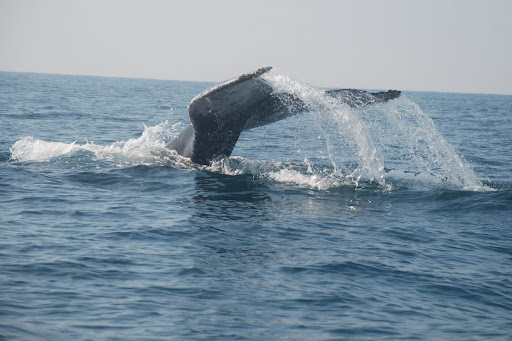
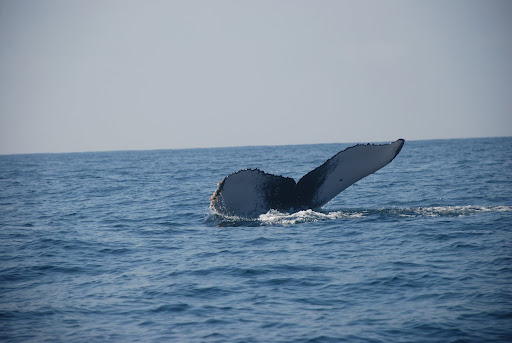
Oscar and Belen are both marine biologists. Oscar is working on his PhD research, a project to photo-ID the whales that frequent the waters of Mazatlán. Amazingly, to date this has not been done. Over the past three years, Oscar has photo-identified 174 different whales. Like human fingerprints, whales have unique visual identifiers, often the underside of their tail fins, sometimes also the scars they bear, and this is what they track. I post a couple of photos of flukes below, so you can see the uniqueness, as well as a close-up of some scarring, to give you an idea of how they ID the whales. Oscar, if I’m wrong about this, let me know and I’ll correct this wording. Below you can see:

  1. The first tail has white spots all along the edge.
  2. The second has barnacles or something stuck to the edge of the tail.
  3. The third has specks of white on the outside, becoming more fully white in the center underside of the tail.
  4. The fourth has white on either side, but a black triangle in the center underside of its tail.
  5. The last photo below shows some typical scarring, which can also help identify the whales.


So, anyway, their goal is to take photos of the whales and give each of them a name or identification, so that they can then be tracked and their patterns learned. The good thing for us is we get to ride along. It is a small boat—maximum six passengers, so we were able to get very close to the whales. We were able to get so close that we felt we could almost reach out and touch the gorgeous creatures. Danny and our neighbor Brian wanted to jump out of the boat and swim with the cetaceans.


Oscar gave us a pre-trip briefing on whales, particularly humpbacks. We learned a lot both before departure and during the cruise. For example, humpbacks are balleen whales. There are three main northern Pacific groups: those that migrate from the Arctic to Japan, those that go from Alaska to Hawaii, and the whales we see here, that migrate along the coast of North America. The humpbacks have striations on their stomachs, the wrinkles we have all seen in pictures. We learned these are like stretch marks (my analogy :)), so that the whales’ stomachs can stretch out when they suck in a bunch of plankton and water, and so that the stomachs resize themselves to normal when the whales push out all that extra water. We learned that when the humpbacks are up north, in the summer, they eat and eat and eat, storing up blubber. Then, when they come south, they don’t eat for four months or more! Down south here is their breeding ground, where they have their babies. The adult males are busy showing off for the adult females, since there seem to be MANY more males than females, and great demand to win the honor of partnering with a lady whale. The men sing to attract the women; the longer the song, the stronger his lungs. The men also fight to attract the women, or at least to establish their ranking in the whale hierarchy and be the first in line to collect their winnings… We saw whales thrashing around a lot. Typical me, I delighted in the fact that they were playing. No, Oscar told me, they are actually fighting with each other–hitting one another with their fins, and we even saw some jumping on top of one another as if they were wrestling. A slide show is below:

Whales Fighting

This slideshow requires JavaScript.

Today was the first day of Christmas break, so of course Danny was NOT excited when he had to wake up for a 7:30 am rendezvous in the marina:

But, after a few whales, here’s what the teenager had to say about the day:

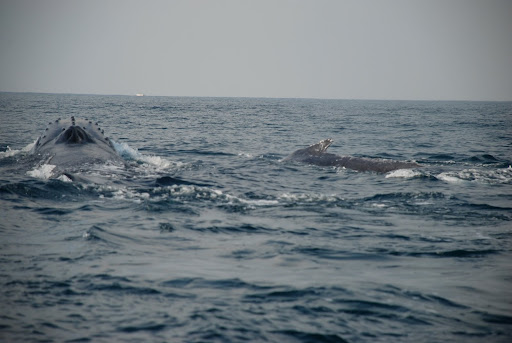
The thing that made this trip so different for me was the SOUND. It is quiet out there, with the motor off and only a few people on board the boat. If you’ve been out in a sailboat, you know the feeling. But, when you are in the midst of so many whales, what you hear is silence plus, suddenly, the whales breeching, or blowing; you can even hear them breathing…. it is sooooo beautiful! The first photo below you can see a whale’s blowhole, on the whale on the left. The second photo below shows a humpback’s head.
 
National Geographic Traveler highlighted whale watching in Mazatlán as one of the great adventures on our planet. 🙂


Whales Diving

Finally, let me conclude this blog post with one last slideshow, of a humpback taking a dive. Merry Christmas and happy new year!

This slideshow requires JavaScript.

Tortugas Marinas/Sea Turtles

One of the many fortunate aspects about living on the beach in Mazatlán is that often, whether we’re walking the beach or the malecón, or sitting on the beach eating lunch or dinner, a marine turtle may suddenly crawl up to shore to lay her eggs. It is always cause for joy. It is such a gorgeous miracle to witness, and one we can easily take for granted.

The season starts in September each year, and yesterday I saw my third sea turtle so far this year. The turtle is usually fairly strong as she crawls up onto the beach. She is obviously made for the water, and struggles in the sand, but she crawls up to well above the high-tide line. She settles on a nesting spot, and then begins to dig a hole in the sand.


The turtle then buries her backside in the sand, above the hole, and lays her eggs. They lay a LOT of eggs at once. After she lays her eggs, the turtle usually rests for a few moments, but she is also usually very eager to get herself back into the ocean, where she is more mobile and less at risk of harm. It is so very heart wrenching to watch the mother sea turtle make her way back over the sand and into the ocean. She has no energy left, she is so very tired, and she just struggles something awful. Most people who watch tend to start cheering her on from a distance. It’s a nice community-building event.

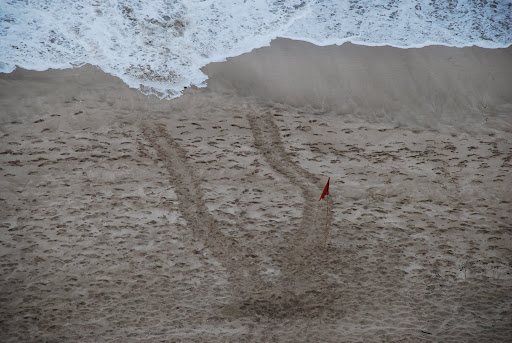
Here is a photo taken from our terrace of a turtle’s tracks, in and out, to lay her eggs. You can see the spot in the sand where she laid her eggs. This photo was taken after the Aquarium official had already removed the eggs for safe-keeping.

Sea turtle eggs unfortunately fetch a high price on the black market. I think people eat them as an aphrodisiac. Some people also kill the endangered turtles; “caguama” is a beloved, though black market, dish for many Mazatlecos, sadly. People use turtle hide to make things, and they use the oils in skin lotions and creams. Years ago I remember seeing a lot of turtle lotions and items for sale in the beach areas of Mexico. Fortunately these days we see a lot less.

I am no naturalist, but in doing some research on the internet, it seems we have three primary species that nest here on the east coast of the Sea of Cortés, Green Sea Turtles, Hawksbills, and Kemp’s Ridley Sea Turtles: http://www.greenpacks.org/2008/08/25/sea-turtles-endangered-marine-life

The sea turtles are endangered:
http://www.panda.org/what_we_do/endangered_species/marine_turtles/
There are signs everywhere on the beach that if you see a turtle, please call the police or the aquarium immediately, as they will come to keep the people away (so that the turtle can lay her eggs in peace), and they will make sure no one steals the eggs.

Despite the best efforts of most people, who keep a respectful distance away, there seem to be plenty of idiots who try to “help” the turtle by getting in her face and crowding her. Just what any birthing mother wants, right? Watch this YouTube for an example of some people’s heartbreaking behavior:
http://www.youtube.com/watch?v=WXka-FQJvsQ&feature=related

The turtle eggs are taken to one of three local spots that I know of for hatching, the Mazatlan Aquarium (click on Mazatlan on the map): http://www.grupotortuguero.org/imap.php?l=1

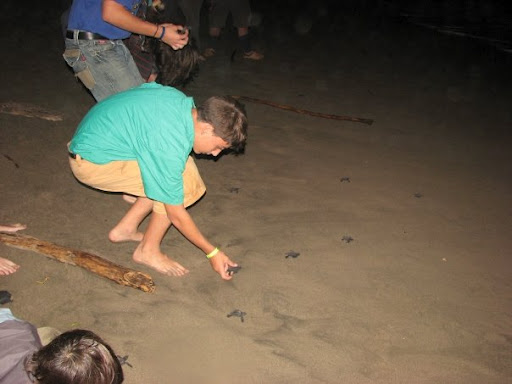
Down south to Estrella del Mar (a golf resort that has a sea turtle hatching facility), and up north in Marmol. They regularly hold baby sea turtle “release” events, where the babies are released into the ocean. Danny’s been fortunate enough to release baby turtles several times, including with the Scouts. Each year his troop hikes north on the beach for 6-7 hours or so, releases baby turtles, then camps overnight and celebrates with a huge bonfire on the beach. Below are some photos:

And there is a YouTube video of a baby turtle’s quest for the open waters:
http://www.youtube.com/watch?v=xthy69jHKOQ