Sunrise Hike

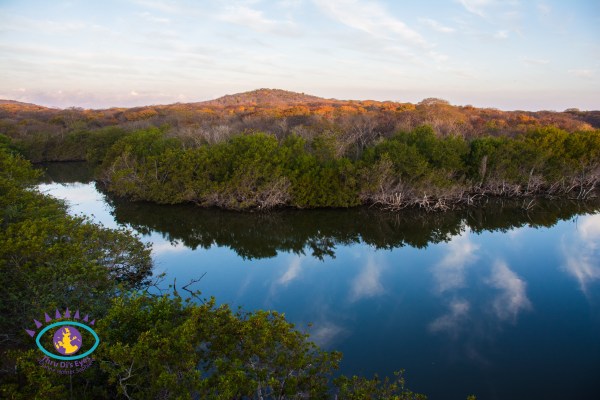
dsc_0569I am not a morning person, but with the thought of sunrise over the lagoon at Estero del Yugo in my mind, I got out of bed at 5:15 Saturday morning to make the trek north, so I’d be there and ready by sunrise at 6:00. The guard was ready for me, and I hiked right in and was able to enjoy the pink colors of sunrise over the lagoon.

We are blessed with wildlife in Mazatlán, and this Nature Interpretation Center is another gem for locals, expats and tourists, a non-profit center aimed at conservation through environmental education. It’s a photographer’s dream. Entrance to Estero del Yugo is straight across the street from the Hotel Riu on Avenida Sábalo-Cerritos. The area has a brackish estuary and a fresh water lagoon, an extensive forest, and is great for bird watching: great and snowy egrets, roseate spoonbills, great and little blue herons, black and yellow crowned night herons, bitterns, ibis, wood storks, anhingas, cormorants, crested caracaras, black necked stilts, kingfishers, swallows, ruddy ducks, blue winged teals… Click on any photo to enlarge it or view a slideshow.

My friend John saw a lynx there the other day (his photo below)—the lynx is actually the mascot of Estero del Yugo—and you can sometimes see crocodiles and snakes, as well as iguanas, raccoons and the other usual local suspects. I saw tracks this morning for several other mammals. There are loads of huge termite nests throughout the area; the old, broken-up ones are so very cool!

dsc_0103b

The Estero del Yugo CIAD (Centro de Investigación en Alimentación y Desarrollo, A.C., or Scientific Research Institute on Food and Development) is a non-profit civil association, so if you go PLEASE give generously to help support their efforts. They request US$5 per person to enter without a guide. If you make a reservation, a guide will take you around, help you spot birds and plants, flora and fauna, and know what they are. For a guide the requested donation is US$7 per person. What a bargain! They also have weekly and monthly passes.

This year is their 20th anniversary! The guard is on location 24/7, but  you’ll need to get a pass at the park office, which is open 8am-4pm. You can call them at (669) 989-8700, or email emurua@ciad.mx. Please don’t remove any plant or animal life from the area, and remove any trash you bring in. There is a small gift shop, also.

Estero del Yugo.jpg

I had not been in quite a while, and I was disappointed to see that the walkway out over the closest lagoon, along with the lookout hut, has been disassembled. Eunice assures me, however, that it’s all just under reconstruction. The bird-watching hut on the estuary was padlocked shut, and the boards over the muddy areas on many of the walkways are in disarray. Even the 3-story metal lookout platform has seen better days.

The hike around Estero del Yugo is about 4km; the paths are fairly clear and well-marked. The trail takes you behind MazAgua Water Park, then winds around and back to where you started. On two sides you have busy roads: the street to Cerritos and the road past Emerald Bay out to the highway. Inside the park, however, all is peaceful. People also frequently bicycle through the reserve.

There were loads of birds but I didn’t have the greatest luck capturing them through my camera lens. I love a few of the photos I took of the scenery, and the one above of the tree. Below you’ll see a couple of bird shots, plus the twisted plant they call “the screw.” There weren’t many flowers in bloom this time of year, but the yellow one below was gorgeous.

My muse spoke to me more in non-birding ways on Saturday. As usual, I was mesmerized by the numerous reflections. In some of them, it’s hard to distinguish between what is real and what is reflection!

Textures fascinate me, also. Here are some of my favorite Estero del Yugo textures from the morning’s walk; can you identify what all of them are?

There are so many trees in the forest here, and such a variety, yet somehow on this day it was the cacti that caught my eye. Here are a few pics:

If you go to Estero del Yugo be sure to wear sturdy hiking boots or shoes, take a hat and some water. In the summer when bugs are out and about be prepared!

3 Dead Turtles On The Malecón

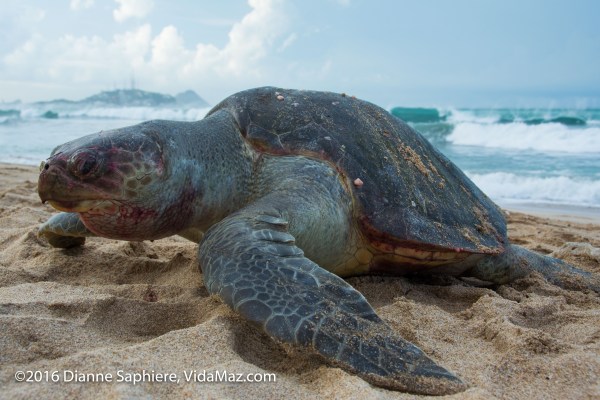
dsc_0074In front of our home today was a gorgeous large sea turtle. I ran down with my camera because I thought she was going to lay her eggs.

Upon approaching, however, she stunk. She was bleeding. And her eyes were very, very dead.

Heartbreak. Click on any photo to enlarge or view a slideshow.

Carlos, from PROFEPA, was there making sure no one touched her. He told me he was not officially authorized to move the turtle, and he was waiting for his boss to give him instruction. But, he said, the turtle I saw was the THIRD one found dead on the malecón this morning! Carlos assured me all three would be examined to determine the cause of death.

Are You My Mother?

51Zu5zbzWDL

You have read of the lovely rosy finch families that have nested on our deck the past 5-6 years. First it was one family, then two, and now up to three families nest on our eleventh floor terrace each spring. We love it! Click on any photo to enlarge it or view a slideshow.

Every year we are blessed to wake up to their bird song, and to hear it throughout the day. We watch as the mother and father make their nest, then as they feed their babies. They zoom in and out the windows, they dance on the railing, and they poop a LOT. The family below had three babies this year. Aren’t they cute? They climb on top of each other in order to peer out. Once in a while one or the other will get his feathers stuck on the edge. They grow so very quickly.

Then, suddenly, one day, the nest is empty. We hear no more singing, and we are sad. In the process, we usually lose one of our plants, because we stop watering it while the birds are nesting.

DSC_0728©

This year, however, two unusual things have happened. First, one family of nesters left an egg that never hatched. How very sad! It is so, so tiny, and oh-so-precious!

Then, last night, Greg was awoken at 2 a.m. One of the small birds in the second set of nesters had either fallen or flown from the nest. He was standing on the tile floor right in front of our sliding glass door, looking in at us, and chirping his heart out! “Are you my Mommy,” he seemed to be asking.

Greg googled at 2 a.m. to read that the parents were no doubt nearby, and would take care of the bird; that we shouldn’t worry. We should just leave him alone. So we did. And he chirped all night long. Well into the morning.

Just before I left for church, we read on the Internet that it’s a wive’s tale that birds will abandon their young if humans pick them up and return them to the nest. The article cautioned, however, that young birds have parasites and germs, so it’s best to pick them up and move them with a container.

I used an old yoghurt container to gently take our baby bird and replace him in his nest. Twenty minutes later, he was down again, this time inside a pot of aloe. Again, he was chirping his heart out. I went to church, and Greg went running.

By the time we returned, our young friend was again out on the deck, looking in at us and crying. We were worried. It would appear his mother had died; we hadn’t seen her since yesterday. Then, miraculously, Daddy showed up!

DSC_0118©

Our guess is that Mom has, sadly, disappeared. Thank goodness that this father isn’t an absentee Dad! He seems to be taking good care of the two remaining in the nest and, the one hyper-active child who keeps thinking he can fly before he’s ready.

Ballenas Jorobadas: Whale Watching in Mazatlán

©2.DSC_0552-EditDo you know that only two types of whales sing? Lucky for us, the humpbacks that frequent the waters of Mazatlán are most definitely singers! The males are the ones that sing, and they do it to attract a mate. They invent new sounds in order to get noticed, and then, just like humans, other whales then copy their innovations.

Our family goes whale watching at least once each year (lots more info and pics in my posts from 2015, the trip with thousands of manta rays, swimming with dolphins in 2013, and a trip back in 2009 in which the whales approached nearly close enough to touch, and engaged in a lot of slapping and wrestling). We go out with Onca Expeditions, and they have a cute little gizmo (amplifier) they stick into the water to allow all of us on the boat to hear the whales’ singing. It’s awesome!

©1.DSC_0434.jpg

Not only do the humpbacks sing, they also love to do acrobatics. Often you will see them curling up out of the water and then diving down, tail raised into the air. When they’re competing for mates you can watch them slapping each other around. The humpbacks will breach, often with their full body in the air above the water, in an attempt to impress a female. Once couples pair off, the acrobatics tend to die down as well; lovers in love are more gentle than that. Often times mothers arrive here with their calves, which is gorgeous to watch. Click on any photo to enlarge it or to view a slideshow.

Whale watching season here is during the winter, and it is one of the activities I most highly recommend for you to do here in Mazatlán. Onca’s guides are marine biologists who are actively engaged in researching the cetaceans that frequent our waters. According to Jesús, who took us out this time, Onca has catalogued 420 whales since Oscar Guzón started his research in our waters, but they’ve only gotten through 2010 data. Jesús told me he believes they have photos and data on 1100 unique tails!

While I’ve been told humpbacks live to be about 50 years old, Jesús said they can live to be 80 or 100. He told me the age of a whale is determined via DNA testing and sometimes via photo ID. They’ve also found whales with bone harpoons stuck in them—sort of reminiscent of Moby Dick, don’t you think?

The official viewing distance for whale watching is 16 meters; no boat in our waters should approach closer than that, although if the whales approach your boat, lucky for you. I was told the humpbacks swim about 10 knots per hour, and the babies drink eight liters of milk per day.

Do not miss your chance to see these magnificent creatures in their natural habitat! We do it every year, and never tire of the experience.


La Reserva Chara Pinta

An easy day trip, as it’s 90 minutes from Mazatlán, I highly recommend that you spend a couple of nights in the very comfortable yet simple cabins/cabañas at the Tufted Jay Preserve on the other side of Concordia. There you can hike, listen to bird song, breathe fresh mountain air, and just generally relax. It’s a great place to go when it’s hot here in Mazatlán, as it’s high in the Sierras.

Most people go to Chara Pinta for the birdwatching. I love birds, but I sure don’t know their names, nor do I have the lens to capture them in the wild. Some day! If nay of you have an 800 mm Nikon lens sitting around that you’d like to sell me cheap, let me know 😉 Below are a few of the warblers and beauties I was able to catch with my 200 mm lens. Click on any photo to enlarge it or view a slideshow.

We saw some tufted jays or charas pintas, the birds for which the reserve is famous, but I’m afraid I was unable to capture them with my camera to share with you. Sorry! They are gorgeous!

We hiked pretty much all day on Saturday when we arrived, and then all Sunday morning as well. I honestly saw the most birds, however, when we stood still. On Sunday I sat in a chair and took most of the photos you see above. Three women talking and giggling (I went with two local friends) while they walk seems not to be the most conducive way to birdwatch!

The views up at the Tufted Jay Preserve are spectacular! There are mountains and valleys, cliffs, a rock outcropping called “The Pyramid,” a clear view to Presa Picachos/Picachos Dam, and views of Mazatlán by day and by night.

Needless to say, sunset and sunrise are gorgeous times of day and not to be missed, nor are the stars! Whoever thinks that stars are white has to rethink things if you visit la Reserva Chara Pinta. The blue, red and white stars blanketed the entire sky; it was amazing! Oh my how we enjoyed our visit! Be sure to enlarge these by clicking on them if you love starry skies!

I have been wanting to go to the Chara Pinta Reserve for a couple of years. My girlfriend Jeanett very much wanted to go, so off we went. We were told we were the first all-female group the ejido has hosted!

We hired Don Santos Vasquez as our guide; he is the President of the Reserve and a member of the local ejido that stewards the land. He took us on hikes up to the mirador/lookout, down in the canyons, and up to the Pyramid. He is a gentle and wise man who really knows this area, its flora and fauna. Santos does not speak English; he charges 100 pesos/hour for his guide services.

The cabins have solar panels so there is light and hot water for showers. There is gas for the stoves, so you can cook. You’ll need to take your own food and a cooler; if you are a group of ten or more you can request a cook who will serve you and your guests in the dining hall. Cabins are of wood, they are gorgeous, beds are comfortable, bathrooms are tiled, and there are barbecue and fire pits outside. The Reserve is a recipe for a wonderful couple of days reconnecting with nature. The caretaker of the property is Javier, another kind and gentle soul, who you can see in some of the photos below. He generously and ably made and tended our fire for us.

There are cabins for two people and cabins for ten people, as well as several sizes in between; all are well constructed and comfortable. Some have fireplaces. Some cabins are grouped together, others are off to themselves for added privacy. The place felt extremely safe, and our hosts were most hospitable.

The hiking trails are fairly easy and vary between jeep and foot trails; some are pretty steep. The vegetation we saw was incredible; such a variety, and all so very robust. We ate blackberries, we found wild cotton, we marveled at peeling bark and every type of fern, we saw dozens of types of pine trees, and thoroughly enjoyed ourselves breathing the fresh mountain air.

I’ll post more pictures of the wonderful stuff we saw below, but for those of you interested in going, let me give you the information.

HOW TO RESERVE AND GET THERE, WHAT TO BRING

To reserve a cabin, call 044 66 9134 0166. You can also have book Don Santos’ guide services via that number. Reserva Chara Pinta is just this side of the small town of El Palmito. Take the toll road towards Durango, and exit at pretty much the only exit there is—towards El Salto. You’ll go about 15-20 minutes on the old highway, and then just before you reach El Palmito, you’ll see a sign for the Reserve on your left. The final 10 minutes are on a dirt road up a steep climb. I recommend a 4WD or at least an SUV. If you prefer, there are also cabañas in town; they are definitely not as picturesque, but they do have easier access.

We were told that the best time to go is in June, when the guacamayas/macaws can be viewed, and in July, when the tufted jays are nesting. All year round is good, however, as we were told it doesn’t snow at Chara Pinta, nor does it get that cold (we used light jackets).

Bring a towel, soap and toiletries, water, and any food you want to cook or eat as well as a cooler. Bring a flashlight if you want to walk outside at night, and charcoal if you want to barbecue; they have plenty of wood for a fire. We also brought extra blankets, but you don’t need them; the reserve supplies sheets, pillows, blankets and toilet paper. Also don’t forget the sunscreen.

Okay, so on to the rest of the flora. I used to live in Colorado, so I know and love bromeliads, otherwise called air plants. Chara Pinta is absolutely filled with them!

And where there are air plants, there is usually moss. In Chara Pinta there is loads of it:

We marveled at the gorgeous flowers as well. Wild mountain flowers are always so colorful and often so very dainty:

Perhaps my favorite aspect of the flora in the Sierras are the textures: bark, dried plants, leaves, pine cones of all varieties, peeled bark, curly ferns, pine needles three feet deep and joyously comfortable to lay on…

Finally, I really enjoyed the leaves of all colors and types. There were fresh green leaves, leaves with the trail remnants of some insect, leaves in silver and gold, and leaves in red and brown.

We absolutely loved our trip and will be going back in June or July. I highly recommend you make the trip if you haven’t already!