Behind the Chamber: Meeting the Maestro and His Wife

DSC_0212

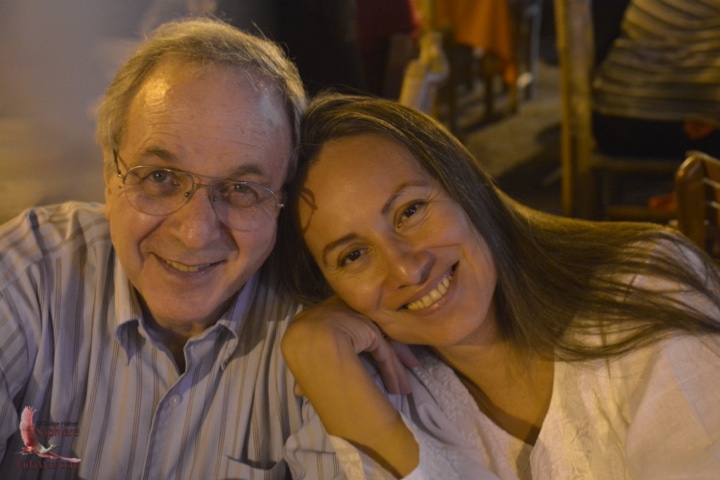
Maestro Gordon Campbell and his wife and collaborator, Guianeya Román

I’ve long wanted to meet Maestro Gordon Campbell, the Midwestern US-born director and conductor of the Orquesta Sinfónica Sinaloa de las Artes. I’ve been curious about how he manages such an internationally, interculturally diverse group of talented professionals, and how it is for him living and working in Mexico.

I know, you would be more interested in hearing about the incredible musical events he puts on—in his inimitable, down-to-earth and accessible manner. It’s a nice contrast to the pomp and circumstance of our other terrifically talented resident conductor.

I am interested in the music and the season, too, but I really have wanted to gain a bit of insight into the man and his interesting life. Come to find out, like me, he has lived most of his life outside the USA—primarily in Latin America, with a stint in Israel for good measure.
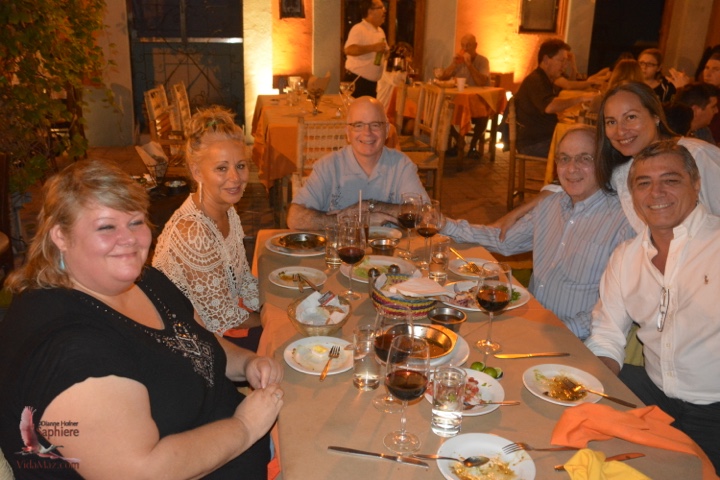
DSC_0206How did I find that out? Well, watch what you wish for, because this weekend we got a call from the Maestro himself, inviting us to join him for dinner—he wanted to brainstorm with us. Joining us at the table were Janet Blaser from M! Magazine, and Lisa Lankins from MazatlanMyCity. We were included thanks to Alfredo Gomez Rubio, of the Proyecto Centro Histórico Association and Pedro y Lola. And a beautiful dinner it was, on a crystal clear, warm and moon-filled late December evening.

It turns out that Gordon joined the Peace Corps back in the late 60s, primarily as an alternative to the Vietnam War draft. He was sent to Paraguay, where he played French horn in the national symphony and also secured 60 instruments to start a band at a school in Asunción. How? There were kids who wanted to play and couldn’t afford instruments. On his Christmas break, this young man returned to Ohio and asked his hometown friends and family to share their used instruments. They did, and the Phi Mu Alpha professional music fraternity at Youngstown State even refurbished and tuned what they received. The instruments were shipped to Paraguay, and a new band was born! Quite a difference one person can make!

As kind gestures tend to do, his grew. The band has since continued on, developed, and even toured internationally. Gordon was able to return to Paraguay in 2002, and by sheer fortuitousness met the band’s current director and attended one of their performances.

What is very cool is how this one small gesture had repercussions that will last multiple lifetimes. And, it inspired other, similar efforts. Gordon had a former Mexican student (he has lived and worked throughout Mexico, including Director of the Symphony in Aguas Calientes) who was moving to the USA with his wife. The wife was panicked: what would she do there as a “trailing spouse?” Gordon told her about a student band in Oaxaca that was in desperate need of instruments, and shared his Paraguay story with her. Perhaps she could help with that during her stay in the USA? Inspired, the woman embarked on the project and obtained instruments for the band in Oaxaca.

You can hear Gordon telling these stories and more in his own voice in the video below. Be sure to also listen to one of their very cool future plans for the Camerata—it could involve you!

The maestro is married to a beautiful and very intelligent journalist, Guianeya Román. It turns out that she is actively involved in promoting the Symphony, involved in the Culiacán Community Chorus, and collaborates with Gordon on special events such as the upcoming Mozart and His Women, with Angélica Aragón, the famous film and telenovela actress.

Gordon told us how in Mexico City (where he’s also worked) and other major cities in Latin America, Sundays at noon is “concert time.” People love knowing that every Sunday at noon there will be a concert; they easily schedule this into their week and enjoy an interlude of quality music before lunch and relaxation with the family. He thought such a series might be a terrific addition to the Mazatlán music scene, and the Camerata Gordon Campbell is now in its fourth year.

And does he have a fantastic season planned for us! They have gotten us so excited! Gordon and Guianeya ended up joining us at our home the afternoon after we met them, and there we recorded a video interview. I’ll share excerpts of that interview with you in several installments, under the title, “Behind the Chamber.”

I trust you’ll enjoy getting to know a bit about this incredibly talented expat, and hopefully you’ll get as excited as we are about the January 4-March 1 season. You can get tickets at the Angela Peralta box office, or online (though personally we can never get the online function to work). It is amazing what a man with passion, lifelong connections, and a shoestring budget can do! Thank goodness that we here in Sinaloa, and especially here in Mazatlán, are able to enjoy the fruits of Gordon’s passion.

Of great interest to me is that Gordon, this lived-his-whole-life-in-Latin-America director, knows Luis Szarán—the guy who started the Landfillharmonic that has become so hugely popular. I was beyond excited to hear that! He plans to visit Luis soon, and has hope that he will be visiting us here in Mazatlán! I am most definitely crossing my fingers and toes! Learn some of Luis’ background as Maestro Campbell tells the story, below (video is a bit blurry at points; sorry about that):

During our dinner we brainstormed about all kinds of things. I told Gordon how much I loved watching live symphony, opera, dance or theater in major world historical monuments, such as the Parthenon in Athens or the Coliseum in Rome. He shared with us that he has done similar things in Mexico, performing not just AT, but ON a pyramid. Personally I’d love to attend an outdoor concert at Las Labradas or a historic hacienda, such as Las Moras or Los Osuna. We talked about getting more Mazatlecos involved in the Chamber series, perhaps by reaching out to the students’ families at the Centro Municipal de las Artes.

It’s exciting to know that such a successful team, with such a great track record, is passionate about remaining innovative and accessible. If you have some ideas for the symphony or the Camerata series, send them to us or comment below! I believe all ideas are welcome; you never know what we’ll be hearing or seeing next!

And, now through March 1st, count on Sunday matinee concerts of international caliber, right here in Mazatlán!

How to Climb a Palm Tree

5.IMG_0161I love how people worldwide do the same things in so many different ways. For example, climbing palm trees. How many ways do YOU know to climb a palm tree?

Where I was born, the mainland USA, people who climb palm trees tend to use the proper equipment: gloves, spiked/spurred boots, and, always safety conscious, a harness and a rope or “flip line.”

In many places that I’ve witnessed worldwide, palm tree climbers do the job au naturale, using no equipment—not even shoes. They use only their bare hands and feet. One technique is to actually walk up the palmera, using the scars from dropped fronds for leverage:

The most popular equipment-less way that I’ve seen worldwide to climb a palm tree, however, is using one’s thighs as vices:

This gentleman uses natural “rope” that he puts around his feet to aid his climb, a technique somewhere between using and not using equipment, I’d say:

Here’s a guy who climbed a palmera with a GoPro, so we get a climbers’-eye view:

This morning, on a lazy, warm, post-Christmas/pre-New Year’s day, we spent some time during our morning walk to watch as the CFE workers climbed the new palm trees on the malecón to install the beautiful new lighting, now that the electric cabling is in place.

We are excited to have lighting on the new palm trees along the malecón in front of our house—they say the lights should get turned on Monday or Tuesday in front of where we live. Of course, they’ve been on for a while now from Valentino’s southward to Insurgentes.

3.IMG_0159The CFE workers are using a combination of the above methods. They have ropes that they have braided into a loop on each end: one larger and one smaller loop. The rope is passed around the tree trunk and through the large loop, to act as a harness. The other, smaller loop goes on the guy’s foot or thigh, like a stirrup. Each worker had two double-looped ropes: one for each leg (see photo above). Each worker moves one of the foot ropes that’s wound around the tree up with his hands, as he steps up. Then, he rolls the other rope up along the truck, and steps up with the other foot. Some workers kept the loop on their feet and walked up, others, less nimble I suppose, put the second harness around their thigh to walk up.

Either way, the leg/foot harnesses appeared to make it much easier to climb the tree than just bare feet. Plus, if they lost their footing, their foot braces would act as a harness. No spurred boots, no gloves, but they did also use a safety harness. Sorry about the quality of the photos; we only had a cell phone with us.

How does the whole process work? A truck drops off a bunch of the light fixtures in one central location for that day’s work. To us, this looked dangerous: easy pickings for someone in a pickup truck to steal. One of the CFE workers has a bicycle, and bikes back to the fixture stockpile, bringing one light at a time to the workers who do the installation.

Two workers climb each tree to install the lights, one light on each side. The malecón, as you well know, has already been jackhammered a couple of times, and conduit and cabling installed. Conduit (metal pipe) has also been fastened along the ocean side of each of the palmeras/palm trees. Each piece of conduit has a guide wire placed through it. (Click on any photo to view it larger or see a slideshow.)

The workers climb the tree, the electrician going first. He has a rope hanging from his waist. Once the two workers are in position at the top of the tree, a third worker down below ties a light fixture to the rope, and the electrician pulls it up. The two workers use temporary wire to fasten the fixture to the tree, and the electrician then connects the wiring. They put in the second fixture the same way, then install the metal bands that will hold the fixtures up permanently. The electrician throws the two electrical cables, one from each fixture, to the third worker on the malecón (he holds onto the top end of the cables). The guy below braids these two cables together, fastening the ends with electrical tape. The electrician pulls the braid back up, and fastens it to the guide wire. Finally, he feeds it into the conduit, and the guy on the bottom pulls it down through the tube.

There is plenty of extra cabling, so that the palm tree can grow without rewiring the lights. This extra cabling is buried at the base of the tree.

Nothing earth shattering, but a fun show to watch on a Saturday morning. And, several steps closer to having lights on the palmeras in front of our house!

The People You Touch

DSC_0808 Faces and Places of Colonia San Antonio

Every year we are privileged to be able to help the Medina family and all the others who help out with Desayuno de los Pollos. This year, thanks to help from so many of YOU, we have already been able to purchase 2500 whole chickens and pack up 1500 packs of despensas, or 10 days worth of food. This should feed about 13,000 families this year. We also take gently used clothes, toys and candy to share. In the slideshow below are photos of just a few of the people you touch. And, of course, they are people who very much touch us back in turn, making our holidays bright. (Click the arrows in the slideshow below to view photos more quickly. Please let me know what you think of these portraits! Thanks!)

This slideshow requires JavaScript.

Yesterday I went out, as usual, with Yolanda and Jorge, to meet with community leaders of Colonia San Antonio. We handed out about 900 (!) tickets for food to members of the community. Why is this important? Because Colonia San Antonio, as so many other colonias on the outskirts of town (we give out food along 7-9 routes every year; San Antonio is just one of them), is an invasión. This means that the land on which the houses are built is privately owned, and the people living there are squatters. Normal procedure in these circumstances is that poor people move in, “squat” on the land, build homes out of pallets, recycled tarp, or even cardboard or metal. Eventually they band together and string electrical wire for themselves, and lay pipes for water. They have now done this in Colonia San Antonio.

Five or so years ago, when we first started going there to hand out chickens, they had neither water nor electricity. Now they do. I don’t see any transformers or breakers or anything, pretty much just a very long extension cord running from house to house. But, they do have electricity. Once the community grows large and successful enough, the city, or municipio, decides to access the colonia. The city pays the landowner for the land, and the people living in the invasión are required to start paying taxes.

The good news is, the squatters get to own their land and their homes. Some of the people who occupy the land in these invasiones, however, do not live there full time. Some come out to visit the homes they have only on the weekend, like a (very basic) country house. Others farm the land, but live in town. They basically squat as a way of making (a bit of) money, eventually, when the city decides to give the squatters a deed to the land they occupy.

Yolanda, Jorge and I go out here to meet with community leaders, so that they can take us around, home to home. They can tell us who lives here full time, and who only happens to be here once in a while. The community leaders tell us which families are most in need (maybe they need two chickens or packs of food, or extra clothing), and which are doing better than others. In this way, we can be as equitable as possible in what we hand out. This week, we were there from about 10 am till 2:00 pm.

It is one of my favorite days of the year. I am able to meet with incredible community leaders, people who themselves have fallen on hard times, don’t have much in the way of money, but who have the caring and the fortitude, the vision and the sense of justice, to better their communities. I also have the privilege to meet the people I’ve met with over the past five or so years that we’ve been going to Colonia San Antonio. I get to visit with people we know, and get a glimpse into how people there live.

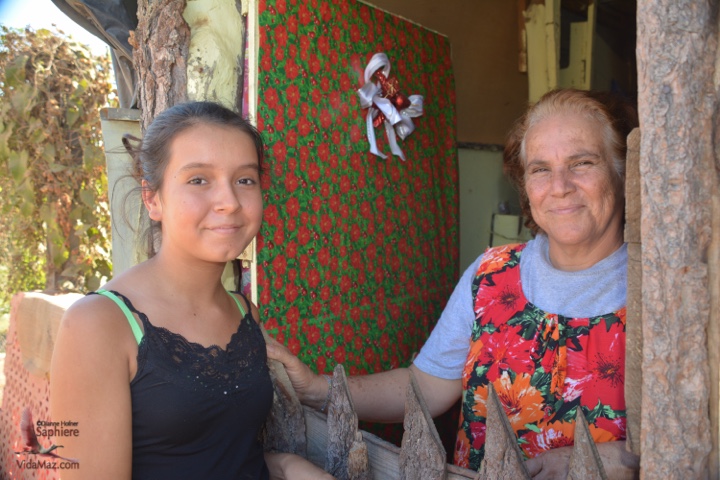
This year, I made a point of taking photos of two things: the faces and the places of Colonia San Antonio. The first slide show, above, is of some of the faces of this invasión. You can see the joy, the dignity, and the difficulty these people experience every day. I have so very much to learn from so many of these people. I am so grateful to be able to meet with them and, hopefully, share with them a bit of joy and ease their burden just a bit.

The second slide show, below, is of the places: the homes, stores, and plazas of this colonia. It amazes me how simply people here live, how hard they work for what they have, yet how clean they keep their homes, the care and love they bestow on their children. How, despite the dust EVERYWHERE, most everyone has clean clothes and skin and hair. Nearly every home is decorated for the holidays, and many of them have beautiful demonstrations of religiosity as well, especially for the Virgen de Guadalupe. (Click on the arrows in the slideshow below to view all photos more quickly.)

This slideshow requires JavaScript.

You are most welcome to join us on Christmas Eve morning, Wednesday this week, to caravan out to the 7-9 routes we’ll go on and hand out chickens, food, clothes, toys and candy. We’ll meet at Quince Letras downtown, 6:30 am if you have a pickup truck, 7:00 am if you are coming to help out. We should be finished by noon. Merry Christmas and see you Wednesday morning!

Part of the #MyGlobalLife Link-Up.

Where and When to Hand Out Chickens

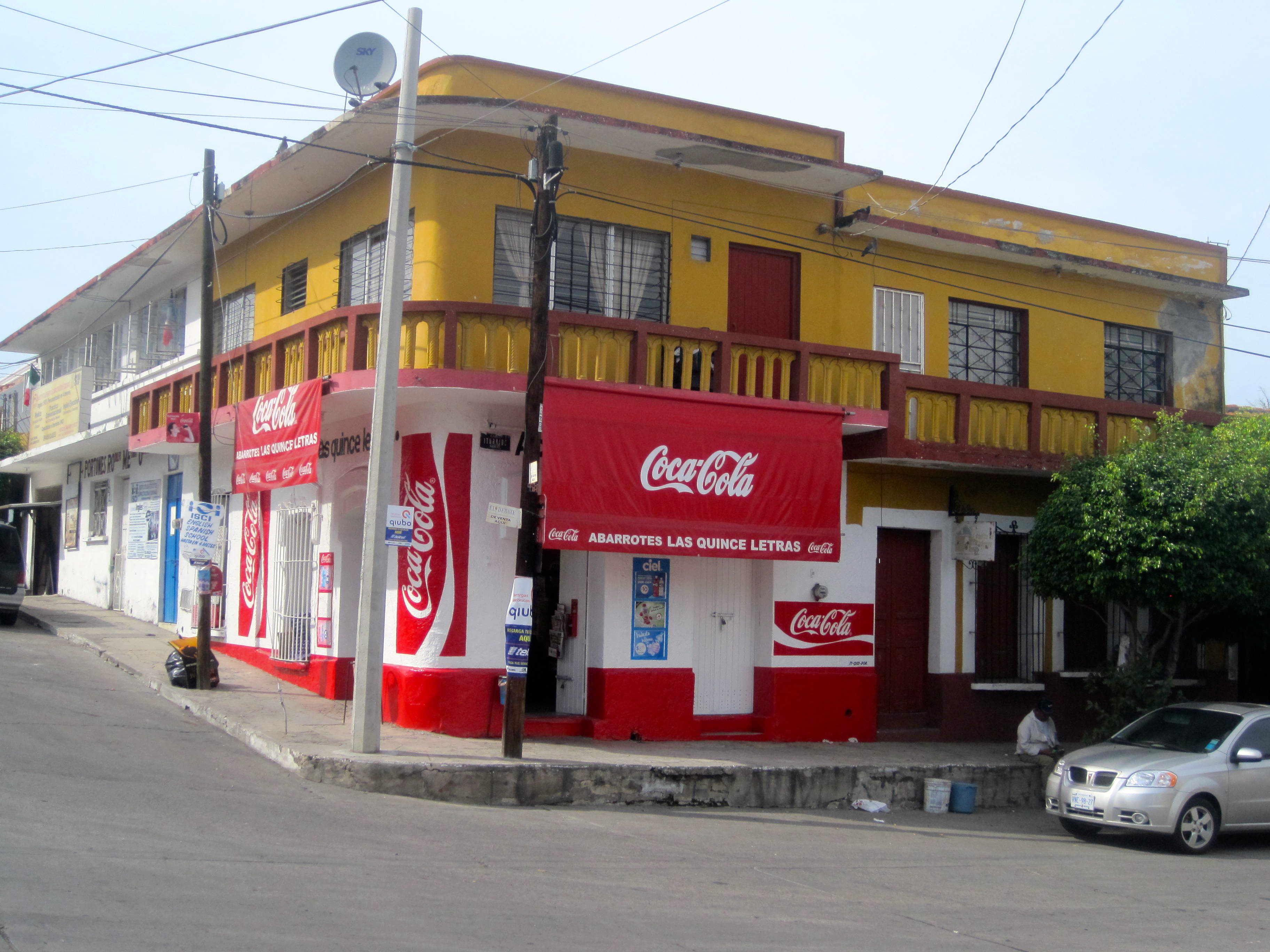
Quince Letras, corner of Tampico and Francisco Villas streets We load from either side of this "Coca Cola" store on the corner

Quince Letras, corner of Tampico and Francisco Villas streets
We load from either side of this “Coca Cola” store on the corner

THANK YOU all for joining us on the 24th of December, the morning of Christmas Eve day, to hand out chickens, food, clothing, toys and candy! It’s a terrific event and very, very memorable. It has been a family tradition of ours for many years now; even our son very much looks forward to it.

Don’t worry if you don’t speak Spanish; we’ll pair you up with a group that has someone bilingual. Please bring your pickup truck or large vehicle if you have one. Also, wear your Santa hats and Desayuno de los Pollos t-shirts if you have them!

Are you wondering what time to show up on the morning of December 24th in order to help load the trucks and deliver the goodies out to the invasiones? Those who have worked in the past and know the drill, please plan to show up about 6:30 am. Those of you who are first-timers, coming by about 7:00 am will put you there just in time to help us load. We make lines of people to pass the foodstuffs/despensas into the truck, and able-bodied guys load the boxes of frozen chickens.

If you have used clothing, toys or candy that you want to be sure gets handed out, please take it over to the Medina family this week so we can get it sorted. Any donations you have will also be appreciated in advance, so we can buy more chickens! Just take whatever you have to the wrought iron shop where Jorge works. It’s open every work day.

DATE: December 24th

TIME: 6:30 am if you are driving a truck, 7:00 am if you are helping us load and deliver. We usually finish by 11:30 or noon, but some years it’s taken longer (depends how many routes you participate in).

LOCATION: 15 (QUINCE) LETRAS, corner of Francisco Villa and Tampico, just down the hill from the Church of Cristo Rey (Christ the King)

  1. Turn East at the Fisherman’s Monument.
  2. Go to the first light and turn right.
  3. Proceed one block and turn left (Francisco Villa street, just before the Pemex station).
  4. Go two blocks.
  5. If you are NOT driving a truck or transporting supplies, please park in the next block. This will give us room for loading. Once you’ve parked, walk another block down, past the iron works business called “Quince Letras.” On the corner of Francisco Villa and Tampico you will see a small store with a bright red “Coca Cola” hand painted on the outside, across from a tortillería. A door next to the Cocheras Automaticas business will be open. That’s Yolanda’s mother’s house, and it’s from there that we’ll be loading.
  6. If you ARE driving a truck or transporting supplies, please drive up to Tampico street (the “Coca Cola” store on your right on the corner), turn right, and park. We will be loading right there.

IMG_0669If you can’t find it, just ask someone for “Quince Letras” or “Desayuno de los Pollos/Medina family.” Everyone in the area will know. It is just down the hill from the Cristo Rey Church (photo at left).

Merry Christmas to all! And see you there!

Santa’s Here Early!

1.P1220988I know many of you wonder why we live on the malecón. Isn’t it noisy? Yes, it is! And we love it! We get a parade at least once, sometimes several times a week. It is wonderful. Certain seasons of the year, we get several parades every day.

This evening, just as we were winding down from work, who should show up but Santa himself? I guess he got cold at the North Pole! It was a few Pepsi trucks, and Santa and his elves were handing out soda to those along the malecón. Now I hate that sugary sodas are causing diabetes and obesity in this country, but it sure was making everyone happy to see the jolly old man, and it sure was a nice transition from the work day to the evening for Greg and me. Bless you, Santa!

By the way, have you been wondering where the city will be holding the Feria de Navidad/Christmas Fair that they’ve held the last few years in the Bosque/city park? It will be December 19th through January 6th, 6:00-11:00 pm, at Salon Bacanora on Rafael Buelna. Entry, all rides (10 child rides, 9 family rides, and 3 “extreme” rides) and artistic presentations are completely free of charge. Refreshments will be available. Take the kids and grandkids! It’s always been a lot of fun.