Yo Soy Fuereña Nací de Aquí Muy Lejos/I was born a long way away from here

It took a man from Hidalgo, José Alfredo Jiménez, to write these words that echo in my head on an almost daily basis. The words of the song that most often echo through my heart though are tienen todos ustedes un orgullo, el gran orgullo de ser de Mazatlán — “you all have the pride, the great pride to be from Mazatlán.”

And this week Jimenez’ words from the Corrido de Mazatlán rang especially true for me. Let me tell you the top five reasons why. Want to listen to the Corrido while you read this post? Click here.

1. Compañia Danza Ballet de Mazatlán

Late last year our already-wonderful Mazatlán was blessed once again with the formation of a brand new professional ballet company, Compañia Danza Ballet de Mazatlán. How many small cities boast their own ballet company? Makes me so proud.

This week Danny and I had the good fortune to watch them in action at the historic and gorgeous Angela Peralta Theater, in a performance of Don Quixote. We sat in the sixth row center for a perfect view, at a cost of US$25 per seat, and witnessed Cuban ballerina Mariem Valdez Martinez dance the role of Kitry splendidly. Other hits in our opinion were Javier Diáz Dalannais in the role of Gamache (just looking at him with his flaming red curls and painted clown face was delightful; but add to that his buffoon antics and it counter-balanced the artistry brilliantly) and Jorge Gorostiza in the tile role of the elderly Don.

Thanks to Ustream and CULTURA, you can view the entire performance online. They have now unfortunately added commercials for upcoming events to the video, so you’ll have to wait through those to see it. I felt our local dance company did a much better job than the Russian State Ballet that visited last month, and at less than half the cost. Kudos to the directors, Zoila Fernández and Guillermo Carrillo! The dancing was solid, the sets and the costumes were outstanding, and the entire performance charmed the heck out of the standing-ovation audience.

2. Concurso Internacional de Canto/International Opera Singing Contest

World-renowned orchestra director/conductor and our neighbor, Enrique Patrón de Rueda, first organized this contest four years ago. It has become the premier contest of its kind in Mexico and perhaps in Latin America. Another pride. It is sponsored by the Sinaloan Institute of Culture, and is designed to encourage young singers (ages 18-33) in their opera careers. This year it will give out US$16,500 in prize money; pretty incredible considering that enrollment in world-class singing classes at the Centro Municipal de Arte costs about US$250/month!

Last night we were privileged to hear ten arias sung by ten incredible young soloists from Mazatlán, other parts of Mexico, Guatemala and Chile. It was an informal event, designed to give the performers experience in front of an audience prior to the official contest events. The arias were incredible, and what added to the experience was that we were able to witness Maestro Enrique interrupting the singers to correct them, and the singers responding by raising the caliber of their performances. What an education! And what a true delight! And, as with the affordable ballet tickets, tickets to this event were 100 pesos (about US$9). Note: Addition from Sunday 22 April: Today’s paper has an article about this event, if you’d like to read it.

3. Neblina/Fog

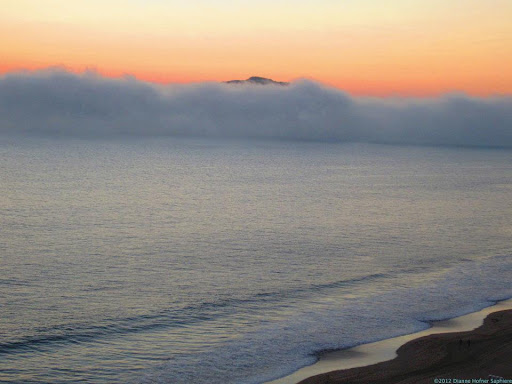
We are spoiled with wonderful weather here. My son tells me that my “zone of tolerance” is now about two degrees Centrigrade; otherwise I get too cold or too hot. Untrue; remember he’s 16 and is prone to exaggeration. Anyway, almost every day we have killer sunsets (you can view a few on our “Viva Mazatlán” channel on YouTube), gorgeous clear blue skies, views to the ocean and the islands, whales, turtles, dolphins, cranes, egrets, spoonbills and pelicans, and consistently hospitable weather (ok, summer gets sticky). This time of year brings a change of pace, however. The change of seasons means the cold air over the ocean mixes with the warm air over the land, causing heavy morning fog. It is so beautiful to see! Watching the islands do a striptease is quite a pleasure! That’s the photo leading this post.

4. Our Film Debut

If you read this blog, you know we love living here. That’s what this whole post is about. So what fun it was to this week receive copies of videos in which members of our family appear, talking about this place we call home! Please check it out and let us know what you think. Be sure to hang on to the end to see the joven:

The second video in the series, this one a bit different, and just as packed with what we love about Mazatlán:

The third and final video features Danny at the 2:00 minute mark:

5. Great Triathlon of the Pacific

We are also blessed with loads of special events and athletic activities here in Mazatlán, including the international marathon and the annual Travesía, where swim club members swim out to the island. This week was the triathlon, which is awesome because kids as well as adults compete, and we get to see them out in the ocean swimming, as well as biking and running up and down Avenida del Mar. This year there seemed to me to be more children than normal participating, which I find incredibly encouraging. And the adult winners included Mexican but also an Austrian, a Canadian, a Czech!

Come on! Tell us why you love Mazatlán!


Lenten Program at School


Danny’s now gone to two different Catholic schools here in Mazatlán, and they both have required parents to attend meetings or retreats in order for the kids to get a better grade in religion class. I have trouble with that, but that’s not what this post is about. I do see that it motivates parents to attend and to learn.

I am a Christian and I love this time of Lent. This year I’m doing some social justice meditations along with Bible reading.

But, tonight as I was heading to school to the first of THREE required Lenten meetings, I was not in the best frame of mind. I also have a horrible cold, and am at the point where a tissue needs to constantly be in my hand, and a lozenge in my throat, so I felt very sorry for my neighbors sitting near me.

Anyway, tonight ended up being really interesting. I am so glad I went. There were four married couples on stage, all different ages, from married 8 years with young children to married 36 years with grandkids. The theme of the evening was “weathering economic crisis in your marriage.” The couples each took turns answering a series of three questions on the topic.

Each of the four women said that, when they married, they expected to not have to work. And the husbands all said they expected to be the family provider. All four of them then went on to describe that times have changed from our parents’ days, and nowadays both spouses need to work to maintain a family; it’s the reality and most everyone has to learn to adapt. The couples all told poignant stories about the emotions they went through, and the blame or judgment they heaped on each other, as they worked through to the reality that they would both need to work.

The answers to the first question were pretty astounding to me. I have a couple of girlfriends here who work, and both of them keep their money separate from their husband’s money. The idea seems to be that the man’s duty is to provide for the family, and any money the women makes is her to use as she pleases: things for herself, special items for the kids, etc. But, I’d always figured my friends were exceptions to the rule. Greg and I have always pooled our money, and I figured most Mexicans must, too.

All four of the couples who spoke this evening, however, shared that same perspective as my local girlfriends: that the wife’s income should be for “extras” and the man’s income for the basics. The men want to be the breadwinners; the women want to be provided for. This shocked me. Though I know it’s true in a lot of places, to experience it so blatantly and close to home, when it’s so completely different than the assumptions I grew up with, was interesting for me.

Then, three out of the four couples proceeded to explain that this solution of keeping incomes separate was not a sustainable or constructive one, that pooling the two incomes was better. The fourth couple had actually pooled their money for a while, and then decided to go in the reverse direction, to the “Dad pays for the necessities and I pay for the extras” route, so that the wife could still feel that her husband was “taking care of” them, and so that Daddy could feel he was doing the bread (or tortilla) winning.

The other questions involved how the couples had weathered unemployment, and whether they had ever lived beyond their means and how they’d gotten “out from under” if they had.

The beautiful thing, for me, was that these couples all spoke from the heart. They shared the anger and doubt they’d gone through, they shared that they’d made poor decisions, they put themselves in a vulnerable position in front of hundreds of other parents, many of whom they know. It was so powerful, and so moving.

Just a little reflection and personal anecdote on a Tuesday night.


Carnaval Parade Preparations

Carnavál de Mazatlán is such a major community event. I love how it brings people together. And not just from Mazatlán and the surrounding communities, but it brings in people from all over Mexico (this year we met a great 80-piece band from Puebla, for example) and Latin America (the visiting queens).

The best-kept secret of Carnavál, however, is the PRE-parade, just prior to the second parade. That’s when all the dancers, royalty and performers have already paraded once. They have had their coronations, things are winding down. They are relaxed, happy. They know what they’re doing, they know what to expect.

And, they are lined up along the malecón, getting dressed, putting on makeup, eating something to tide them over for the next few hours of dancing. They are laughing and talking, relaxing, and posing for the tourists. It has honestly become one of my absolute favorite Carnavál activities, though of course I have lots of “favorites” this time of year!

Below is a video I put together tonight, highlighting some of what happened during pre-parade today. I hope you will get a taste of why I love the pre-parade. Thanks for viewing!

Rite of Passage


Rites of passage. What images does that phrase bring to mind? Masai warrior rituals? Debutante balls? Walkabouts? Bar mitzvahs? Uros Indian boys knitting hats so tightly that water won’t leak through? Menstruation? Graduation? Marriage?

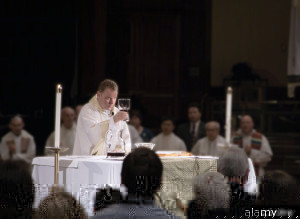
We moved to Mazatlán four years ago. Since that time, Danny and I have attended church every Sunday. Same church each week. Same Mass each week. Same people we see there each week. Four years. I love Sunday Mass. Love to sing. Love communal prayer. Love the people we celebrate with each week.

During that time, we have gotten to know the priest. We greet the greeters: those women at the entrance handing out bulletins. We sit in the same pew, pretty much, every week, too. There are about three women who will sit in our pew and greet us. I like them. They help me feel human, not just gringa. There are lots of other people who will sit in our pew and act as if they’ve never seen us before, even though of course they have seen us every Sunday the past four years. And, there are loads of people who avoid sitting anywhere near us. Maybe they’re afraid we won’t speak Spanish, or know the rules, or…

Now, it’s a Catholic church, and anyone who knows Catholicism will tell you that good Catholics don’t fraternize at Sunday services (written tongue in cheek, but true). You come, you pray, you leave. No small talk. The priests basically have to order us to shake hands with the person beside us in the pew.

Well, a few weeks ago we had something going on in the morning, and we went to the Sunday evening service instead. Lo and behold, the altar guild lady asked me if I’d do the collection! Wow! A rite of passage! I had never been asked to take up the collection before. I was becoming a regular part of the parish after all!

But this was not “my” Mass. It was the evening Mass, which I rarely attend. It was a welcome invitation, for sure. Now, in the parish’s defense, I have made no effort to get involved in the church outside of Sunday Mass. My schedule right now doesn’t allow it, my preferences right now aren’t prioritizing it. There are people who attend our Mass that I know outside of church. They of course greet us.

Well, unwittingly this am, as Danny and I knelt in prayer before the service started, the altar guild/greeter lady at OUR service, our church, came to our pew, and asked us if we would be so kind as to take up the gifts! “Would you take up the wine, and your Mami take up the bread,” she asked Danny.

Wow! How cool is that!

As if that wasn’t cool enough, one of the “friendly” ladies sat down beside us. She actually KISSED me during the giving of the peace.

Four years, people, but we feel included. We have received our rite of passage.

I will say I attended church in Tokyo and in the US longer than we’ve been here, and was never ad-hoc included in this way.

Now the Episcopal Church, where Danny used to serve Mass every Sunday morning, and I was the greeter, that’s a different story… 🙂


Counterfeiting and Scalping, Teenage-Style 2012 (llegar de colado)


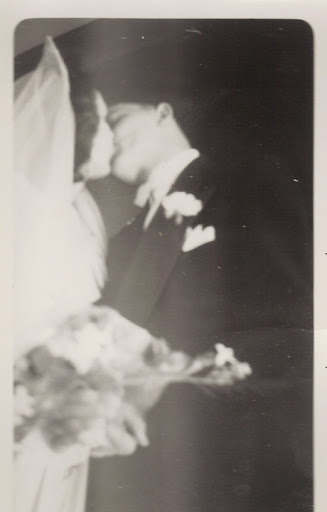
My parents met one night when they both crashed a wedding reception. Neither one of them had been invited to the party. Neither one of them even knew the people getting married!

They lived in small towns near each other, and told me that in the day it was common to show up to drink and dance whenever anyone nearby got married or had a party with a band. According to them, the hosts didn’t mind. They expected uninvited guests to “crash.”

They fell in love after meeting as uninvited guests, a love that lasted nearly 60 years.

Fast forward to four years ago, when we moved to Mazatlán from Kansas City. One of my son’s cultural adjustments was that early on he just could not bring himself to go to a party to which, in his words, he “wasn’t invited.” Which to him, a good US American, meant that the host of the party had not personally invited him. “But here in Mexico, baby, if your friend is invited, and the friend invites you, you are usually welcome if not expected to join.” No, he just couldn’t do it.

The day after such a party, his friends would say, “Hey, Danny, where were you last night? We missed you!” Sometimes even the host of the party would say it to him. So, he learned a more inclusive approach to party-going. He learned he usually didn’t need a personal or direct verbal invitation; friends are always welcome.

But, this “open invitation” approach to parties obviously can get out of hand, especially when kids attend a huge school, when they have a wide circle of friends, or, as with teenagers anywhere, “the word gets out” and there aren’t a lot of other parties that same night. Two weeks ago there was just such a “small” quinceañera to which 300 or so kids showed up! Parents, who pay the bills for the parties, wisely want to limit attendance. But how? It bucks cultural norms.

In order to bridge cultural norms and economic realities, the wrist bracelet was invented. Parents can say, “We are only paying for 100 people for your party. We’ll invite 20 of our friends, and you can invite 80.” Then the parent gives the kid 80 personalized party invitation bracelets to hand out. If you have a bracelet, you can enter the party. No bracelet, no dancing.

Seems clear enough to me.

Well, the other night I learned that kids COUNTERFEIT the bracelets! One of our son’s friends proudly showed me the pulsera he had purchased blank, and how he had taken a Sharpie and carefully and competently copied the personalized text so that he could get into the party. I of course dutifully scolded the kid, and threatened my son with what horrible things would become of him if he ever were to do such a thing. But, in the process I’ve learned that such counterfeiting, and even scalping, of party entrance bracelets is common these days.

The kids told me about a boy at school who has a whole counterfeiting operation. He goes to a party place and buys a bunch of the identical bracelets for that weekend’s party (bracelets come in all colors and many foil or reflective designs as well). He has a counterfeiting “kit” with 3 kinds of Sharpies plus Q-tips and alcohol to clean up any erroneous strokes that occur while making the fake bracelets. He sells the blank bracelets for 25 pesos (they must cost a few pesos at most at the shop, but hey, he delivers right to you at school). Buying a bracelet complete with the counterfeited markings costs 40 pesos (15 pesos for his copying prowess).

If you don’t want to participate in counterfeiting, you can buy a pulsera from someone who was “legally” invited to the party but can’t or doesn’t want to go. These “scalped” bracelets sell for 100 pesos. Who says young kids nowadays aren’t enterprising! Capitalism is alive and well among teenagers in Mazatlán.

Thank goodness that these bracelets didn’t exist in the 1940s. My parents may never have met, and I wouldn’t be here!