Update on Bicycling in Mazatlán

In June I wrote a post updating everyone in English about the planning for ciclovías/bike paths in town and the CicloNoches/night bike tours in this gorgeous port of ours.

I’m very happy to report that since that post, the city has joined so many other cities in Mexico and abroad, and has begun closing the southbound lanes of Avenida del Mar on Sunday mornings. Today was the second such Sunday.

Last week, opening week, we were joined by Governor Malova and Mayor Higuera, as can be seen in the video above.

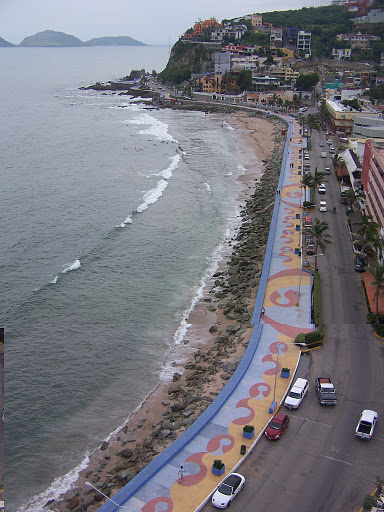
The road is closed from Insurgentes to Monos Bichis, the Fishermen’s Monument. It gets closed about 8 am (though they’ve announced it’s from 6 am), and stays closed until about 10:30 or 11 am (though, again, it’s announced to stay closed till noon). Southbound traffic is routed to one lane, as is northbound traffic, both using the inland side of the Avenue. Thus, drivers are able to continue using the Avenida, and the bikers, skaters and skateboarders are safe in the oceanside lanes.

This is a wonderful chance to get out with the whole family, or with your friends and neighbors. Please take advantage of it! We definitely want to show the city how important this privilege is to us by having a good turnout. Hopefully this practice will continue long enough for citizens to learn about it and develop the habit of Sunday morning cycling, though we weren’t that lucky last time.

Something wonderful this morning was that police were loaning out, free of charge, 80 beautiful bicycles for people to use! Those wanting to borrow a bicycle were asked to leave their credenciál or identification card, in order to ensure they’d return the bike.

Regarding CicloNoches, they are now scheduled for the first Thursday of every month. September 6 will be the third such event. Meet in front of the Aquarium at 7:30 pm, for an 8:00 pm start. The plan this time is to ride down to the Escudo/the shield down in Olas Altas and back. It is a wonderful feeling pedaling the Avenida del Mar in the dark, looking out at the lights around the bay.

As in prior events, the road will not be closed for this event, but we should have a police escort and a wonderful turnout. We will be guided by a leader, and will be asked to stay only in the rightmost lane of the Avenida. You can see the rules here in the photo at the left. This is a group event, so participants are asked not to pass each other and not to go out into the left-hand lane, in order to protect everyone’s safety and enjoyment, and ensure that drivers can get by smoothly.


Expat Lifestyles in Mazatlán: Cathy and Bill

One of the cool things about foreigners who move to Mazatlán is the variety of lifestyles they can adopt here. While the vast majority are retirees, more and more we see families and working people relocating to Mazatlán.

At one end of the continuum we meet extranjeros who live very Mexican lives, adopting the culture, speaking the language and, perhaps, obtaining citizenship.

On the other hand we meet those who have little desire (or sometimes ability) to learn Spanish, who socialize primarily or exclusively with non-Mexicans, and who in many ways have replicated their lives from NOB (north of the border). People at both extremes seem to live happy and fulfilling lives here, which is great to see.

And, of course, there are lifestyles representing every combination in between these two extremes, including many who volunteer ceaselessly and selflessly and many who party and sunbathe daily, living the retirement life they always dreamed of. We have artists, lifelong students, those who start small businesses, and those who remodel and restore historic homes.

Amidst so much diversity, Cathy and Bill stand out. They don’t fit into the most common expat categories, and they are one of the most interesting couples I’ve met here. Both in their fifties, Bill has recently retired and Cathy is nearing retirement. They originate from the US east coast. A few years ago they vacationed in Mazatlán, fell in love, and bought a house on their very first trip here: on a whim, so to speak. The home they bought is in a typical, centrally located Mexican neighborhood. No modern marina area or Centro Histórico, areas in which many other expats live and where perhaps things might be easier for them. Ok, plenty of other foreigners live in neighborhoods with few foreigners. But, neither Cathy nor Bill spoke Spanish when they bought their home, though they are taking lessons and learning quickly. Talk about jumping into the pool rather than checking the temperature first with your toes!

They are not like some retirees who live in the typical neighborhoods because there they can live on social security and a small pension because life is cheaper. Nor do they live in a gated community with killer views. Cathy and Bill live in a nice home a block from the beach, in a mixed-use neighborhood of small homes and businesses.

What’s remarkable to me about Cathy and Bill is how completely open they are to the culture and the people here, despite their initial lack of language and experience with Mexico. To me as an interculturalist, getting to know them has been a breath of fresh air. We witness a lot of unfortunate cross-cultural misunderstanding and negative judgment in our daily lives here, and we ourselves are not immune to it as we create our community here. But Cathy and Bill are excellent role models of how to be open minded, and how to jump into a new community wholeheartedly.

They have befriended their neighbor, an air conditioner repair guy, who has “taken them under his wing,” so to speak. He has welcomed Cathy and Bill as a member of the family and local community. Thus, the couple is invited to the kids’ baseball games, school performances, and every extended family party and event. And Cathy and Bill go. They don’t let the lack of language or cultural understanding stop them; they see these as an opportunity to learn, to build friendships, and to build community. Their circle of friends here keeps growing exponentially, as they learn local slang, how to make ceviche, or how to rehab a car Mazatleco-style.

We first got to know them in the way we first connect with many of the foreigners we know here in town: online. Greg probably answered a few questions they had about living here. He happened to mention our plans to attend a Banda El Recodo concert with our neighbors. They asked us to buy tickets for them to attend as well. The first time we met them was when we delivered the tickets to their house.

We have not had the good fortune to get to know a lot of foreigners in town who attend bandaconcerts, though I know they exist. In fact, among the thousands of people attending that concert, I honestly believe we were about the only foreigners at the event. Cathy and Bill’s excitement about attending this concert paralleled our own. They didn’t stress, as so many new immigrants would, about the hours and hours we waited for the main event to commence. Concerns about safety or violence didn’t prevent their attendance, as it does so many others. They danced and hooted with everyone else, taking photos and videotaping with sheer delight. They ate and drank the local food, with no concern about getting sick. They looked around with us to try and figure out how people were getting chairs to sit on, and together we found the way and happily sat. Till the band came on, of course! It was really refreshing to witness in someone new to town; the differences seemed to energize them rather than intimidate them.

I can count on these two for a funny, self-deprecating story. They were recently invited to a “nephew’s” birthday party. Their friends explained and explained the location of the party to them. They drew them a map. The children attempted to explain in their best school kid English. But Cathy and Bill were still confused. But they’re committed. They drove around in circles, trying to find the location, until they finally found their friends waving at them: from Burger King! Yes, they hadn’t understood the Spanish pronunciation of those well-known words, but it didn’t hinder them from enjoying the party with their friends or from making the most of the story afterwards!

It so happens that in front of where Cathy and Bill live is a large empty lot. When they bought the house, they wondered about it: whether and when it would be developed, mostly. Little did they know that this lot becomes home to major city-wide events a few times a year. While the crowds, litter, noise till all hours of the morning, and dust might bother a lot of people, instead of complaining Cathy and Bill embrace the excitement. “What a great location we have the good fortune to live in,” they say!

Their open-mindedness and enthusiasm are supplemented with a real desire to thank those they feel have made their new home such a joy to them. Each fall for the past few years, when Cathy and Bill drive south to their winter home, they pack their vehicle to the brim with bicycles and sports equipment to give to local kids, and a few adults who are now able to get to work much more easily.

It’s people like Cathy and Bill who make me really proud to be an American. Thank you, friends.

Readers, I first wrote this post a year and a half ago. Somehow the file became corrupted, and this was never posted. Now that I’ve figured out how to “rescue” the file, I’d like to give you a short update.

Cathy and Bill drive down to Mazatlán every year. They spend their summers up in the US going to garage sales and second-hand stores, buying used baseball equipment, bicycles, baby swings — you name it, but things that people here might find useful and hard to find the extra money to purchase. They fill their truck and haul it all down here every fall. They spend the first month they are here finding good homes for all these items.Parties at their home have now become an annual tradition. The neighbors block traffic on the street, one neighbor cooks tacos, another provides the DJ service, Cathy and Bill provide the tables, chairs, paper ware and beer, and fun is had by all. Last time we went there had to be 150 people there; and the four of us the only foreigners! They have far more patience, perseverance, and tolerance for ambiguity than I could ever hope to have. They give so selflessly and so joyously, and their love is returned to them multiplied many times over.

They spend every weekend cheering on their local friends’ kids at the kids’ baseball games, and they’ve been invited to many, many homes and parties. Even though they are here part-time, their lives are so intertwined and important to their Mazatleco friends. It is really wonderful to see how loved they are. Just last night, their friends here hosted a surprise going-away party for these two. Over fifty people attended.

Way to go, Cathy and Bill! Thank you for helping keep Mazatlán the multicultural mix it has always been! And for helping make our world a better place. Enjoy your NOB summer! We will miss you!


Lenten Program at School


Danny’s now gone to two different Catholic schools here in Mazatlán, and they both have required parents to attend meetings or retreats in order for the kids to get a better grade in religion class. I have trouble with that, but that’s not what this post is about. I do see that it motivates parents to attend and to learn.

I am a Christian and I love this time of Lent. This year I’m doing some social justice meditations along with Bible reading.

But, tonight as I was heading to school to the first of THREE required Lenten meetings, I was not in the best frame of mind. I also have a horrible cold, and am at the point where a tissue needs to constantly be in my hand, and a lozenge in my throat, so I felt very sorry for my neighbors sitting near me.

Anyway, tonight ended up being really interesting. I am so glad I went. There were four married couples on stage, all different ages, from married 8 years with young children to married 36 years with grandkids. The theme of the evening was “weathering economic crisis in your marriage.” The couples each took turns answering a series of three questions on the topic.

Each of the four women said that, when they married, they expected to not have to work. And the husbands all said they expected to be the family provider. All four of them then went on to describe that times have changed from our parents’ days, and nowadays both spouses need to work to maintain a family; it’s the reality and most everyone has to learn to adapt. The couples all told poignant stories about the emotions they went through, and the blame or judgment they heaped on each other, as they worked through to the reality that they would both need to work.

The answers to the first question were pretty astounding to me. I have a couple of girlfriends here who work, and both of them keep their money separate from their husband’s money. The idea seems to be that the man’s duty is to provide for the family, and any money the women makes is her to use as she pleases: things for herself, special items for the kids, etc. But, I’d always figured my friends were exceptions to the rule. Greg and I have always pooled our money, and I figured most Mexicans must, too.

All four of the couples who spoke this evening, however, shared that same perspective as my local girlfriends: that the wife’s income should be for “extras” and the man’s income for the basics. The men want to be the breadwinners; the women want to be provided for. This shocked me. Though I know it’s true in a lot of places, to experience it so blatantly and close to home, when it’s so completely different than the assumptions I grew up with, was interesting for me.

Then, three out of the four couples proceeded to explain that this solution of keeping incomes separate was not a sustainable or constructive one, that pooling the two incomes was better. The fourth couple had actually pooled their money for a while, and then decided to go in the reverse direction, to the “Dad pays for the necessities and I pay for the extras” route, so that the wife could still feel that her husband was “taking care of” them, and so that Daddy could feel he was doing the bread (or tortilla) winning.

The other questions involved how the couples had weathered unemployment, and whether they had ever lived beyond their means and how they’d gotten “out from under” if they had.

The beautiful thing, for me, was that these couples all spoke from the heart. They shared the anger and doubt they’d gone through, they shared that they’d made poor decisions, they put themselves in a vulnerable position in front of hundreds of other parents, many of whom they know. It was so powerful, and so moving.

Just a little reflection and personal anecdote on a Tuesday night.


Counterfeiting and Scalping, Teenage-Style 2012 (llegar de colado)


My parents met one night when they both crashed a wedding reception. Neither one of them had been invited to the party. Neither one of them even knew the people getting married!

They lived in small towns near each other, and told me that in the day it was common to show up to drink and dance whenever anyone nearby got married or had a party with a band. According to them, the hosts didn’t mind. They expected uninvited guests to “crash.”

They fell in love after meeting as uninvited guests, a love that lasted nearly 60 years.

Fast forward to four years ago, when we moved to Mazatlán from Kansas City. One of my son’s cultural adjustments was that early on he just could not bring himself to go to a party to which, in his words, he “wasn’t invited.” Which to him, a good US American, meant that the host of the party had not personally invited him. “But here in Mexico, baby, if your friend is invited, and the friend invites you, you are usually welcome if not expected to join.” No, he just couldn’t do it.

The day after such a party, his friends would say, “Hey, Danny, where were you last night? We missed you!” Sometimes even the host of the party would say it to him. So, he learned a more inclusive approach to party-going. He learned he usually didn’t need a personal or direct verbal invitation; friends are always welcome.

But, this “open invitation” approach to parties obviously can get out of hand, especially when kids attend a huge school, when they have a wide circle of friends, or, as with teenagers anywhere, “the word gets out” and there aren’t a lot of other parties that same night. Two weeks ago there was just such a “small” quinceañera to which 300 or so kids showed up! Parents, who pay the bills for the parties, wisely want to limit attendance. But how? It bucks cultural norms.

In order to bridge cultural norms and economic realities, the wrist bracelet was invented. Parents can say, “We are only paying for 100 people for your party. We’ll invite 20 of our friends, and you can invite 80.” Then the parent gives the kid 80 personalized party invitation bracelets to hand out. If you have a bracelet, you can enter the party. No bracelet, no dancing.

Seems clear enough to me.

Well, the other night I learned that kids COUNTERFEIT the bracelets! One of our son’s friends proudly showed me the pulsera he had purchased blank, and how he had taken a Sharpie and carefully and competently copied the personalized text so that he could get into the party. I of course dutifully scolded the kid, and threatened my son with what horrible things would become of him if he ever were to do such a thing. But, in the process I’ve learned that such counterfeiting, and even scalping, of party entrance bracelets is common these days.

The kids told me about a boy at school who has a whole counterfeiting operation. He goes to a party place and buys a bunch of the identical bracelets for that weekend’s party (bracelets come in all colors and many foil or reflective designs as well). He has a counterfeiting “kit” with 3 kinds of Sharpies plus Q-tips and alcohol to clean up any erroneous strokes that occur while making the fake bracelets. He sells the blank bracelets for 25 pesos (they must cost a few pesos at most at the shop, but hey, he delivers right to you at school). Buying a bracelet complete with the counterfeited markings costs 40 pesos (15 pesos for his copying prowess).

If you don’t want to participate in counterfeiting, you can buy a pulsera from someone who was “legally” invited to the party but can’t or doesn’t want to go. These “scalped” bracelets sell for 100 pesos. Who says young kids nowadays aren’t enterprising! Capitalism is alive and well among teenagers in Mazatlán.

Thank goodness that these bracelets didn’t exist in the 1940s. My parents may never have met, and I wouldn’t be here!


Cultural Change on the Malecón: A Case Study

Ok, the title of this post sounds a little too “professional” for our family blog. But it’s about dear friends, Mexican society and our beloved malecón, so I think it belongs here. It is really the story of the power of one.

Our dear friend, Guy, retired from a career as an air traffic controller in Canada and relocated to Mazatlán about five years ago. He loves the “blue:” the ocean, the sky, the outdoors, the views. He is a passionate athlete. He started out running the malecón many times a day, and has evolved to roller blading it. He is a French speaker who also speaks English, and he has actively sought to learn Spanish since living here. Guy is very outgoing, optimistic and friendly. He loves coffee, and makes a great pot of cappuccino every morning, sharing it with those friends lucky enough to be nearby when it’s ready. Guy has become a city icon. Everyone knows the bald guy dressed in black who can be seen skating along the oceanside promenade nearly any time, day or night. To see him is to be reminded to enjoy this beautiful city in which we live—not to get lost in work or daily drudgery, but to take a look around and a deep breath, and to get out and move our bodies before we lose the ability to move them.

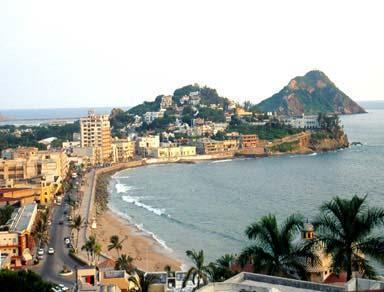
We also love walking and biking the malecón every day; it’s one of the best things about Mazatlán. In our opinion it’s the best oceanside promenade in the world, with 4+ miles of paved, gorgeous walkway between Valentino’s and Pedro Infante. We imagine that everyone would enjoy using the malecón. Thus, we have been repeatedly surprised by friends, mostly locals, who tell us they prefer to exercise at home or in a gym. I’ve had girlfriends tell me their husbands won’t “permit” them to use the malecón if they’re not with them. Girlfriends tell me they don’t use it because they don’t want to be out in the sun; it causes wrinkles and spots on their fair skin. Others say the malecón is dangerous; that you’re looking to get robbed.

And, honestly, I know very well that many people don’t use it because it’s beneath them. That is a side of society, any society, that I very much dislike. Beach vendors, people who can’t afford gym memberships, people whose only mode of transport is a bicycle or public bus, even beggars and homeless people, use the malecón. “I have more money than them. I was born higher class than them. I need to maintain my status by not associating with them.” No one in polite society says it directly, but it’s there; it’s palpable. And this is a side of any society that I’d love to change.

There are loads of Canadians and US Americans who come here and desire to make a mark on this gorgeous city, to help make our city better. They often wreak havoc on themselves and others despite their good intentions, because they come on like gangbusters and try to “change” or “fix” something they don’t yet understand, something that is much larger than they are (a culture, a society). I know this well; I’ve seen it worldwide; it’s my profession.

Guy didn’t set out to change anything. By setting out to enjoy himself and stay in shape, he has inspired many people to get out and move: to bike, run, walk, rollerblade… People from all walks of life started coming to Guy, asking him to teach them to rollerblade, to help them get started, to give him advice. They told him they’d pay him for his lessons. “No,” he’d say. “I’ll teach you for free, but you must pay it forward and in turn do something helpful for somebody else.” Thus his “entourage” was born, including a running group and a roller blading group, as well as, now, people who hang out at the coconut stand to share good conversation and homemade ceviche.

Guy has made a wide circle of friends from all different parts of society: government, big and small business, housewives and young singles, wealthy and humble. I am sooooo so so so happy to see the gatherings of people around him. It crosses socio-economic lines. There are people roller blading now who, personally, told me the malecón was no place for them! I have had friends who previously refused to use the malecón for the reasons above ask me if they could walk with us, bicycle with us. It’s because, I believe, they see these other people, “society” people, out there, exercising. Not just with Guy, of course. Kelly and his bicycling tours and groups, other running, roller blading and bike groups…. The culture is shifting. I’ve seen a huge shift towards egalitarianism and inter-mixing of the social classes on the malecón in the four short years I’ve lived here. Bravo!!! Long live culture change! Let’s keep it up! We aren’t there yet, but… Just the other day a friend asked another friend, aghast, “You have the coco guy’s phone number in your cellular?” Well, she did. And proudly so.

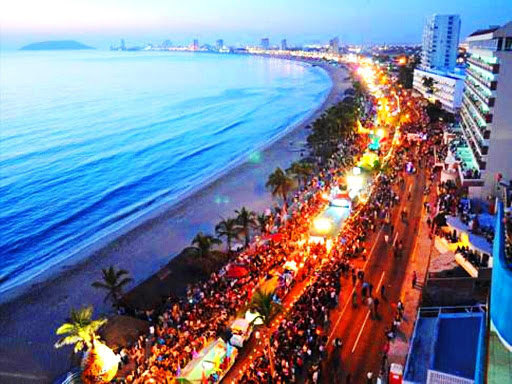
One last photo: this one of the malecón during Carnavál. Forbes Magazineranks our Carnavál/Mardi Gras one of the world’s top three. I will just add that it is VERY family-oriented. Come join us!