Deer Dances in Las Labradas on the Spring Equinox

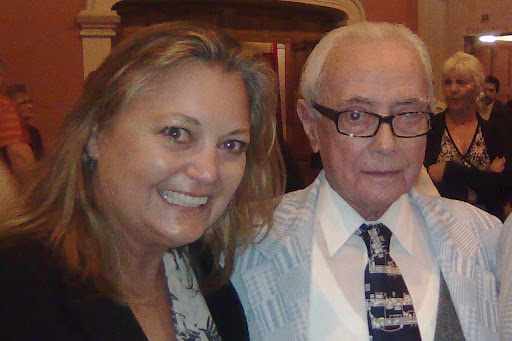
The two gentlemen in the photo above very kindly explained
a bit about the dance to me, and walked me through the ceremony.
They live in a pueblo between Guasave and Los Mochis.

Last year we were privileged to welcome spring with the famous Deer Dance (danza del venado), conducted in the scenic oceanside setting of Las Labradas petroglyph park, a 30 minute drive north of Mazatlán. The dance was conducted by the Yeu Matchue, a traditional dance group of Mayo or Yoreme Indians.

The dance will be conducted again this coming Wednesday, March 21 in the same location, as part of Mazatlán’s International Friendship Week. Be sure not to miss this event!

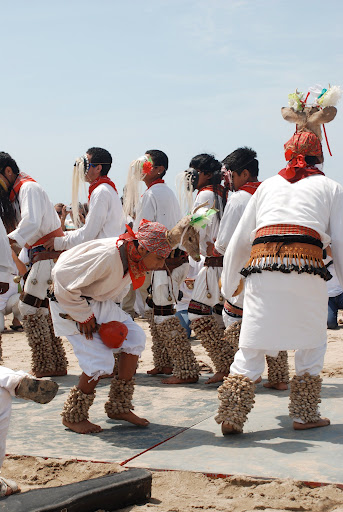
The Mayo are considered to have the purest native blood in Mexico. While centuries ago they performed the Danza del Venado in full deerskin clothing with a bow and arrow (it’s the dance of the hunt, and I am Dianne, the goddess of the hunt, ha ha), to welcome the spring solstice at Las Labradas they wore white cotton manta (symbolizing purity), leather belts with deer hooves and bells, they wrapped their shins in leggings made of shells (representing snakes entangled in the deer’s legs), red bandanas (to honor the deer’s sacrifice of its blood), and sonajas or wrist and ankle bands made of nuts and shells. They carry red gourd maracas or shakers.

I grew up in northern Arizona, spending many weekends as a child in the 70s with my friends on the Hopi mesas. I was able to witness the Snake Dance, eat my fill of piki bread spread by hand over a hot rock, and play with the Mudheads. The deer dances soooo reminded me of the Kachina dances! Amazing similarities in dress, adornment, line dancing, movement, underlying beliefs of harmony with the environment, even the music and chanting. The noise makers (shells, gourds) were reminiscent of artisan rattles worldwide, whether from Africa, Asia, Oceania…

There were at least two dancers who wore taxidermic deer heads decorated with flowers, fastened to their heads with leather straps. They pranced, twitched, paused and sniffed, incredibly evoking the sense that we were watching a deer move through a clearing. It was eerie and beautiful to watch.
It was gratifying to see so many young people involved in the ceremony. It is obvious the young Mayo/Yoreme are eager to carry on the traditions of their elders and ancestors.
Above is a minute or so of video of the dance.
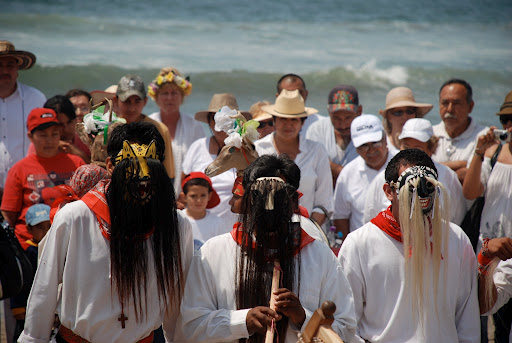
In addition to the boys with the headdresses, there were quite a few others dressed similarly but wearing masks. The masks were made of torote or poplar wood, both very sacred, and painted with smiling faces as well as Christian crosses, with long hair. Again, the long hair reminded me of the kachinas.

The musicians included a couple of fiddlers who sat in wooden chairs as they played, a large harp (played standing), gourds (sonatas de bule), jiruquias, and various drummers including a water drum.
The shaman had an altar or offering of fresh fruit, as well as a container of incense that he used for purification during the ceremony as well as to purify or bless the spectators afterwards. The purification ritual was very similar to what I’ve experienced at Teotihucán on the solstice, or in Mexico City nowadays on the street corners.
The dance was an interesting mix of indigenous and Christian ceremony, in the Mayo language and rhythms. When we arrived we saw several flags or banners with crosses on them on the beach. Beside these were placed the deer headdresses and rattles.

During the ceremony, the dancers made the Catholic sign of the cross and held their hands in prayer. It was evident that the Jesuits of the 16th century had much influence on these indigenous rituals.

As with almost any special event I’ve attended in Mexico, the Deer Dance ceremony also included fireworks.

An exhibition of the ancient ball game of ulama was also part of last year’s Spring Equinox events. It took place just outside the museum. A game is on the schedule for this year.

Las Labradas is a UNESCO World Heritage site. The oceanside petroglyphs, mystical figures carved into the rocks, are dated by INAH at 1000-1500 years old and of Toltec origin. There is a small museum at the site.

Mazatlán is named after the deer, which in the Náhuatl language is Mazatl (Tlaloc in the Aztec).
If you’d like to attend this event next week you can drive north of Mazatlán on Highway 15, exiting at Km. 51 where you’ll see the large petroglyph marker on the west side of the maxipista. It is a dirt road after you leave the highway, through Chicayota to Las Labradas. Alternatively you can take one of the buses that the Sinaloa State Tourism Office has arranged, to depart from la Mujer Mazatleca monument in Olas Altas at 9:00 am. To reserve your spot contact mazatlanturismocultural@gmail.com, or telephone 191-2005. Be sure to wear white clothing.

Update May 26, 2012: Today the Noroeste ran an article about these dances, including some of the dancers photographed above. It’s in honor of Festival de la Juventud.

Los Tigres del Norte Banned in Chihuahua

Los Tigres del Norte, one of my favorite (and one of the world’s most popular) bands, was banned yesterday from playing in the city of Chihuahua. They were banned for playing a very popular narco-corrido based on a soap opera and book, La Reina del Sur (the city of Chihuahua has banned narco-corridos).<.div>

The Mexican press, and most Mexican people, are upset about and vocal in objecting to this cavalier censorship.

I value free speech, and do not believe in censorship. It is interesting, though, that this ban occurred because Chihuahua city is trying to change its culture. It is trying to take the narco culture out of norteña culture, to stop the glamorization of criminal activity, to restore responsibility and good citizenship to its citizens.

Northern Mexican norteña culture has become closely mixed with narco culture. That cultural mix includes a style of dress (one extreme is those tippy-toed guarachero boots), a unique vocabulary and style of speech, songs (narco-corridos are songs that glorify the life of the outlaw), and even a patron saint whose image, likeness and altars can be found in most any colonía (Jesús Malverde, so-called patron saint of the drug lords and lost causes).

Mexico is a large country, as is northern Mexico, and norteña culture as influenced by narco culture has a diversity within it. There is also spillover; many people who have nothing to do with the drug trade may build an altar or light a candle to Malverde (unwed mothers may pray to him, for example, as might people who have lost their jobs) or have his face emblazoned on the window of their pickup truck. And, MANY of them listen to what can be called narco-corridos. The particular song for which my Tigres were banned, ironically, ends with the outlaw (a woman) being punished for her crimes.

Chihuahua’s ban is personally ironic to me because last year, I posted on the Facebook page of another favorite band of mine, la Banda El Recodo, sharing with them my disappointment that they had released a song so far below the respect and esteem with which they are held by the public (the song talks about guns, arms, bulletproof vests; it encourages people to get drunk and shoot bullets into the air; the official video involves non-stop drinking, high-priced cars and watches, and ends with the lead singer pretending to shoot the viewer). In hindsight, was I censoring? I know my motivations were the same as those of the city of Chihuahua: El Recodo is at the top of their craft; people respect them. I love them, and I love Mexico. I wanted them to stand for and promote what is good about Mexico, help make it a better place, not glorify and feed the worst of our local culture.

What do you all think?

Lenten Program at School


Danny’s now gone to two different Catholic schools here in Mazatlán, and they both have required parents to attend meetings or retreats in order for the kids to get a better grade in religion class. I have trouble with that, but that’s not what this post is about. I do see that it motivates parents to attend and to learn.

I am a Christian and I love this time of Lent. This year I’m doing some social justice meditations along with Bible reading.

But, tonight as I was heading to school to the first of THREE required Lenten meetings, I was not in the best frame of mind. I also have a horrible cold, and am at the point where a tissue needs to constantly be in my hand, and a lozenge in my throat, so I felt very sorry for my neighbors sitting near me.

Anyway, tonight ended up being really interesting. I am so glad I went. There were four married couples on stage, all different ages, from married 8 years with young children to married 36 years with grandkids. The theme of the evening was “weathering economic crisis in your marriage.” The couples each took turns answering a series of three questions on the topic.

Each of the four women said that, when they married, they expected to not have to work. And the husbands all said they expected to be the family provider. All four of them then went on to describe that times have changed from our parents’ days, and nowadays both spouses need to work to maintain a family; it’s the reality and most everyone has to learn to adapt. The couples all told poignant stories about the emotions they went through, and the blame or judgment they heaped on each other, as they worked through to the reality that they would both need to work.

The answers to the first question were pretty astounding to me. I have a couple of girlfriends here who work, and both of them keep their money separate from their husband’s money. The idea seems to be that the man’s duty is to provide for the family, and any money the women makes is her to use as she pleases: things for herself, special items for the kids, etc. But, I’d always figured my friends were exceptions to the rule. Greg and I have always pooled our money, and I figured most Mexicans must, too.

All four of the couples who spoke this evening, however, shared that same perspective as my local girlfriends: that the wife’s income should be for “extras” and the man’s income for the basics. The men want to be the breadwinners; the women want to be provided for. This shocked me. Though I know it’s true in a lot of places, to experience it so blatantly and close to home, when it’s so completely different than the assumptions I grew up with, was interesting for me.

Then, three out of the four couples proceeded to explain that this solution of keeping incomes separate was not a sustainable or constructive one, that pooling the two incomes was better. The fourth couple had actually pooled their money for a while, and then decided to go in the reverse direction, to the “Dad pays for the necessities and I pay for the extras” route, so that the wife could still feel that her husband was “taking care of” them, and so that Daddy could feel he was doing the bread (or tortilla) winning.

The other questions involved how the couples had weathered unemployment, and whether they had ever lived beyond their means and how they’d gotten “out from under” if they had.

The beautiful thing, for me, was that these couples all spoke from the heart. They shared the anger and doubt they’d gone through, they shared that they’d made poor decisions, they put themselves in a vulnerable position in front of hundreds of other parents, many of whom they know. It was so powerful, and so moving.

Just a little reflection and personal anecdote on a Tuesday night.


Ferrusquilla: "That statue of a composer…"

Mazatlán is privileged to have a strong and vibrant expatriate community, many of whom volunteer long hours to help make our city a better place in which to live. Many in the foreign resident community have of course grown up and lived most of our lives elsewhere. We love our adopted home, but we often lack basic “cultural literacy” about our adopted homeland. I put myself in that category, of course. Every day, many times a day, I learn something new. It’s part of why I love living here.

Last week, I noticed the below comment on one of the local expat discussion groups:

“It is located across the Malecon between two statues: the Deer, Mazatlan’s symbol; and a Sinaloa composer holding his guitar and sombrero.”

The note surprised me, because I figured everyone who lives here knows our beloved Ferrusquilla! But, of course, we don’t “all” know anything; we all have different pieces of information. I see Don Ferrusquilla once in a while, dining around town or taking a walk, and I loved his INCREDIBLE acceptance speech at the Premios Oye! last month (drag the play bar to 6:46 to skip the homage and hear the original poem he wrote just for the occasion, full of love for our fair city).

But, of course, we all hold differing pieces of knowledge, so I thought I’d share a bit of what I know about this “Sinaloa composer holding his guitar and sombrero” in the statue. Maestro José Angel Espinoza Aragón, “Ferrusquilla,” is a national cultural icon, famous throughout all of Latin America and Spain, and one of the greatest orgullos of Mazatlán. The United Nations awarded him the the Medal of Peace in 1976, the University of Sinaloa presented him with an honorary doctorate just a few years ago, in 2008, and he’s received many other distinguished awards during his career.

His “master work” is the composition “Echame a mí la culpa,” sung by most every well-known Spanish-language singer (here it’s sung by Amalia Mendoza, “La Tariacuri;” or this one sung by Javier Solís). The song inspired a Spanish movie of the same name, and decades later (in 1980) was still so popular that it won “song of the year” in Spain, as sung by Englishman Albert Hammond. Ferrusquilla has acted in 80 motion pictures alongside actors that expats will recognize such as John Wayne, Clint Eastwood, Dean Martin, Boris Karloff, Richard Burton, Anthony Quinn, Brigitte Bardot, and Robert Mitchum, and has composed, to the best of my research, 97 songs.

José Angel Espinoza Aragón was born in Choix, Sinaloa on October 2, 1919. After his mother died his father moved the family to El Guayabo and then Los Mochis, where his father remarried. In 1935, after finishing junior high, his family sent José to study in Mazatlán. In 1937 he got on a train headed to Mexico City, to study medicine, but life didn’t quite work out according to plan.

According to one interview, in 1938 the young José was working a side-job at a radio station, one that broadcasted the popular late-afternoon children’s show “Fifirafas el Valoroso.” The role of “Captain Ferrusquilla” on the show was originally played by the head technician, Carlos Contel, brother of the station manager. After Carlos’ brother told him to choose whether to be a voice actor or a technician, the show was left without a Ferrusquilla. José had the good fortune to be present in the studio when the director, panicked, asked around for a male who could read the part. Thus, by fate, the “man of a thousand voices” with the nickname “Ferrusquilla” was born.

Ferrusquilla fell in love with the female lead of the radio show, Blanca Estela (María Blanca Estela Pavón Vasconcelos). According to this same interview, the two lived in New York for a year, dubbing the voices of actors such as Ingrid Bergman, Elizabeth Taylor, and Mickey Rooney. Blanca died tragically in a plane accident in 1949. After her death Ferrusquilla decided to commit himself to music, and composed his first song in 1951.

Ferrusquilla married and had two daughters with Sonya Stransky Echeverría in the 1950s (the marriage lasted five years). He tragically lost another loved one, his daughter Vindia, in a car accident in Mexico City in 2008. His daughter Angélica is a successful actress. He has said that his daughters have been the joy of his life.

By the way, the statue of Ferrusquilla, on the malecón in Olas Altas, made by artist Carlos Espino, was unveiled in time for Ferrusquilla’s birthday, in October of 2007.

Fellow foreign residents of Mazatlán: let’s all, proudly, be sure to call this landmark the “statue of Ferrusquilla”!!!! And, Mazatlecos and fans of Ferrusquilla: please teach all of us more about this incredible gentleman, sharing your life memories of the legacy he’s given us!

Note/Update: Jackie Peterson wrote an article on Ferrusquilla in the Pacific Pearl last year. Somehow I missed seeing it, but you can check it out here. And one of my friends has given me the Maestro’s number and asked me to give Ferrusquilla a call, to let him know about this post, so I will do that as well.

Update #2, March 5th: I met Maestro Ferrusquilla tonight. What a great man! He told me that in his younger years, he played for a year with Banda El Recodo, in the Cruz Lizarraga days, before he went to Mexico City and did the radio show. Cool trivia! He is a really nice and VERY interesting man and his English is GREAT! It felt very good to finally get up the courage to talk to him, and to have the honor of finally meeting him.

Carnaval Parade Preparations

Carnavál de Mazatlán is such a major community event. I love how it brings people together. And not just from Mazatlán and the surrounding communities, but it brings in people from all over Mexico (this year we met a great 80-piece band from Puebla, for example) and Latin America (the visiting queens).

The best-kept secret of Carnavál, however, is the PRE-parade, just prior to the second parade. That’s when all the dancers, royalty and performers have already paraded once. They have had their coronations, things are winding down. They are relaxed, happy. They know what they’re doing, they know what to expect.

And, they are lined up along the malecón, getting dressed, putting on makeup, eating something to tide them over for the next few hours of dancing. They are laughing and talking, relaxing, and posing for the tourists. It has honestly become one of my absolute favorite Carnavál activities, though of course I have lots of “favorites” this time of year!

Below is a video I put together tonight, highlighting some of what happened during pre-parade today. I hope you will get a taste of why I love the pre-parade. Thanks for viewing!