HoliFest Mazatlán 2017

17492362_1914048385496522_7744330507028052607_oYou will remember the “oohs” and “aahs,” the wonderment and joy, and the expressions of “it was so incredible!” from HoliFest Mazatlán last year. Kirana Yoga‘s Karina Barcena has, in three short years, grown Mazatlán as Mexico’s largest and best-attended HoliFest, out of the 19 such festivals held on the same day, at the same time, throughout the country.

HoliFest Mazatlán is a family-friendly cultural festival and a WHOLE lot of fun! It is also free of charge! Participating last year were groups of friends and work colleagues, extended families including grandparents and toddlers, able-bodied and people in wheel chairs; Mazatlecos, nationals from the interior, expats, snowbirds and tourists—all united in hope, love, equality and peace. We celebrated life, spring and our desire to bring a healthy lifestyle and sane values to our community.

Save the date!

Sunday, 23rd April from 4-8:30 pm
On the lawn in front of the giant mosaic
At the Mazatlán International Center (Convention Center)
Free admission

Please wear comfortable clothing so you can move and meditate easily.
Come early to get settled and enable things to start on time.

The tradition of Holi—the Festival of Colors or the Festival of Love—is grounded in Hindu legend, though which legend seems to vary by geography. I had always heard that Holi represents the triumph of good over evil; the story involves Vishnu-workshipping Prahlad’s triumph over his father, the demon-king Hiranyakashyap, and his evil aunt. That story is dark, however, and I much prefer the version Karina shared with us.

She told us how Lord Krishna and his lover, Radha Rani, painted one another in colors so they would look alike. The message of Holi then becomes, “I am you and you are me,” we are all one. Artwork of these two lovers, along with a song, can be seen in the video below.

Today Holi is celebrated worldwide as an expression of love, unity and respect. I am thrilled that Mazatlán is part of this international event, and encouraged that HoliFest is one more way we can build community, health and safety, fighting isolation, depression, anger and anxiety.

The colored powders will be sold at the event site. They are organic, non-toxic, non-irritating and washable; have no fear that they’ll be staining your clothing. Basically, they seem to be colored sugar. But throwing them over one another in a field of nearly 2000 people—that is a most wonderfully exciting, celebratory and love-filled feeling!

This year we can look forward to entertainment by Jazzpango—a world-renowned musical group that fuses huapango with jazz. Martin Zarate from Sadhak Yoga in Monterrey and Daniel Mesino from the Buddhist Center of Mexico City will join event organizer Karina Barcena in a yoga class as well as a group meditation. The event is inclusive of all physical abilities and all levels of practice; don’t worry, you are welcome! Dancers from two local dance schools, Dance World Center (Linda Lydia Chang) and Danzabel (Sergio Burgueño), will also provide entertainment. And there will be surprises! I am told that one of them will be tightrope walking!

2017 HoliFest Mazatlán Schedule

4:00      Welcome (please come early so you can have your space and be settled)

4:30      Jazzpango (music)

5:00      Group meditation

5:30      Yoga sequence

6:30       Countdown to the powder throwing, followed by more music and celebration

8:00 or 8:30 Closure. Please plan to stay and socialize with the community! We have over 10,000 square meters of lawn on which to enjoy ourselves.

The Convention Center lawn will be lined with booths, as it was last year; food and drink will be available for sale or you can bring your own (no alcohol please). You are welcome to bring a yoga mat, blanket or beach towel on which to sit in meditation and practice yoga. This year there will be a photo booth, plus a variety of local enterprises will showcase their offerings. A photo contest will be conducted in conjunction with the event, so look forward to seeing an exhibition of the 25 best photos when you attend.

I encourage you to let schools know about this event; children and their families should definitely attend. Groups of seniors would enjoy this event, as would any groups of athletes, artists or friends. Pass the word and let’s build positivity and connection in Mazatlán!

HoliFest Mazatlán 2017 is still accepting sponsors, so if you are interested in supporting this incredible community effort, please contact Karina at kbarcena@hotmail.com.
Disrespected Beauty

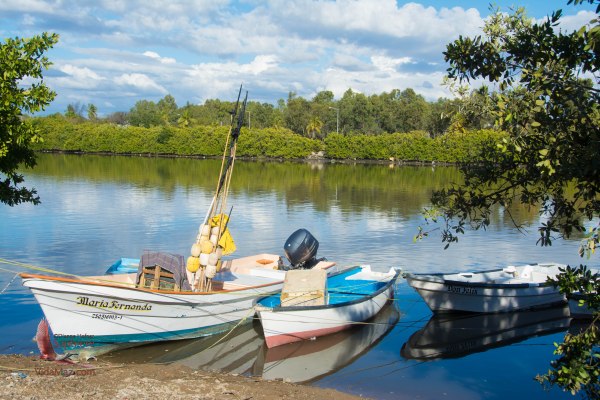
dsc_0107Mazatlán is blessed with estuaries, lagoons, the ocean, rivers, and all the water fowl and marine life that go with it. Everyday we see glistening fishing boats casting their reflections in the water, and we are blessed to eat the delicious product of their labors.

Perhaps because we are so spoiled by all the natural beauty surrounding us, Mazatlecos all too often seem to take it for granted. Without thinking, seemingly, people throw trash on the beach or the coastline, and that trash ends up in our waterways and all too often into the stomachs of our marine life, murdering them. Especially harmful are fishing nets, lines and plastics, as they entangle marine life and kill them.

One of the saddest of such beautiful places in Mazatlán for me is Estero del Infiernillo. It’s the body of water to the north of Avenida Gabriel Leyva as you go over the bridge, between Avenida Juan Pablo II and Avenida General Pesqueira. I love this place! It is gorgeous! Yet, it is horribly, heart-wrenchingly awful. The photos in this post were taken from where the star is on the map below.

infiernillo2

I know the area fairly well, because our son was a Scout. The Scouts went out to Estero del Infiernillo about once a month for years and years to clean up the garbage. We, and mostly they, would pack dozens and dozens of trash bags full of garbage and remove them from the estuary. It would feel so good! Nature had a chance to shine again after our cleanups! Alas, the following month, you’d never known we had done a clean up, as the trash had somehow always reappeared. Click on any photo to enlarge it or view a slideshow.

People in the neighborhood tell us that Mazatlecos come to the estuary specifically to dump their trash. The city has a big sign posted, warning that there should be no dumping of garbage here. The sign is obviously widely ignored. There are many fishing pangas that anchor here, making the area all the more scenic. It’s my guess that these fishermen, also, frequently throw entrails and other trash onto the shore, making the area stinky and unsightly.

Estero del Infiernillo is gorgeous! It has good views of the military school hill and the faro/lighthouse, and in the other direction great views to the cranes of Parque Bonfil/the port. Despite the trash strewn everywhere there are loads of water fowl, and on a sunny clear day the muddy, brackish water looks blue.

A couple of years ago the Municipio put in a nice park at the estero: a basketball court and soccer field combination, jungle gym and swings. Later, they added in one of the gyms we are fortunate to have all over town. At the time they built the park, there were plans for the city to clean up the area and to have kayak rentals in the estuary; plans that have never come true. Now it’s still usable but pretty run-down; the most remarkable thing are the many shoes hanging from the wires.

Kayaking in the area would be absolutely beautiful, even with the trash, but if we as community members could find a way to come together and re-educate ourselves, so that Estero del Infiernillo, and other waterways in town, stayed free of trash, how much better all our lives would be! I shudder to imagine anyone eating fish caught amidst all the garbage flung in that estuary, yet fish there they do.

Mexican Bobcat

dsc_0103bThe below is a guest post by John Childress, a birder and naturalist whom I have the pleasure of calling friend and photography colleague, building on earlier post here about Estero del Yugo.

The Estero del Yugo is a small estuary in the northern part of Mazatlan. It is not very well known by residents or tourists. There is a small inlet to the ocean on the west side and two lagoons to the east, on the other side of Avenida Sábalo Cerritos. The water flows from the inlet to the lagoon via a tunnel under the Avenida and is dependent on the tides.

The area to the east of the Avenida is controlled by the Centro de Investigacion En Alimentacion Y Desarollo, A.C. (CIAD)  which is an organization, in part, dedicated to studies “of the socio-economic impact of the processes of economic development and international integration.” There is a gate with very friendly guards who collect a 100 peso fee to enter and enjoy the area around the lagoons. The paths around the lagoon are very obvious and it would be difficult to get lost. There are also paths that go quite a distance into a semi-arid environment. Bicycle tours are also possible.

The morning of 2.13.17 started off very foggy. By 8:30am I had walked almost all the way around the lagoon and the fog was lifting. I was at the Estero del Yugo to take pictures of birds and I had my camera in my hand (Nikon D3300 with a 70 – 300mm  lens). As I walked around a curve I saw something run across the path. I walked back around the curve and saw an animal running towards me. I saw that it was a cat and thought it was possibly someone’s pet. But then I saw that it was at least twice the size of a normal cat. I immediately started taking pictures of it. As the cat turned to run off I saw that his tail was very short and I thought to myself, “Aha, I know what you are.”

This is the second time in my life that I have taken a picture of a bobcat, but the first time that I have seen the Mexican bobcat. This cat stopped in his move to flee and looked back curiously. The picture included here was taken at this moment. I had a way to go before I got to the entry, but I stopped looking for birds. I was very excited to show someone the pictures and hurried to share it with the guard and the biologists working at the center.

Wikipedia states that the Mexican bobcat (Lynx rufus escuinapae) is a “solitary, nocturnal animal, and are rarely seen by humans.” Que suerte!

Sunrise Hike

dsc_0569I am not a morning person, but with the thought of sunrise over the lagoon at Estero del Yugo in my mind, I got out of bed at 5:15 Saturday morning to make the trek north, so I’d be there and ready by sunrise at 6:00. The guard was ready for me, and I hiked right in and was able to enjoy the pink colors of sunrise over the lagoon.

We are blessed with wildlife in Mazatlán, and this Nature Interpretation Center is another gem for locals, expats and tourists, a non-profit center aimed at conservation through environmental education. It’s a photographer’s dream. Entrance to Estero del Yugo is straight across the street from the Hotel Riu on Avenida Sábalo-Cerritos. The area has a brackish estuary and a fresh water lagoon, an extensive forest, and is great for bird watching: great and snowy egrets, roseate spoonbills, great and little blue herons, black and yellow crowned night herons, bitterns, ibis, wood storks, anhingas, cormorants, crested caracaras, black necked stilts, kingfishers, swallows, ruddy ducks, blue winged teals… Click on any photo to enlarge it or view a slideshow.

My friend John saw a lynx there the other day (his photo below)—the lynx is actually the mascot of Estero del Yugo—and you can sometimes see crocodiles and snakes, as well as iguanas, raccoons and the other usual local suspects. I saw tracks this morning for several other mammals. There are loads of huge termite nests throughout the area; the old, broken-up ones are so very cool!

dsc_0103b

The Estero del Yugo CIAD (Centro de Investigación en Alimentación y Desarrollo, A.C., or Scientific Research Institute on Food and Development) is a non-profit civil association, so if you go PLEASE give generously to help support their efforts. They request US$5 per person to enter without a guide. If you make a reservation, a guide will take you around, help you spot birds and plants, flora and fauna, and know what they are. For a guide the requested donation is US$7 per person. What a bargain! They also have weekly and monthly passes.

This year is their 20th anniversary! The guard is on location 24/7, but  you’ll need to get a pass at the park office, which is open 8am-4pm. You can call them at (669) 989-8700, or email emurua@ciad.mx. Please don’t remove any plant or animal life from the area, and remove any trash you bring in. There is a small gift shop, also.

Estero del Yugo.jpg

I had not been in quite a while, and I was disappointed to see that the walkway out over the closest lagoon, along with the lookout hut, has been disassembled. Eunice assures me, however, that it’s all just under reconstruction. The bird-watching hut on the estuary was padlocked shut, and the boards over the muddy areas on many of the walkways are in disarray. Even the 3-story metal lookout platform has seen better days.

The hike around Estero del Yugo is about 4km; the paths are fairly clear and well-marked. The trail takes you behind MazAgua Water Park, then winds around and back to where you started. On two sides you have busy roads: the street to Cerritos and the road past Emerald Bay out to the highway. Inside the park, however, all is peaceful. People also frequently bicycle through the reserve.

There were loads of birds but I didn’t have the greatest luck capturing them through my camera lens. I love a few of the photos I took of the scenery, and the one above of the tree. Below you’ll see a couple of bird shots, plus the twisted plant they call “the screw.” There weren’t many flowers in bloom this time of year, but the yellow one below was gorgeous.

My muse spoke to me more in non-birding ways on Saturday. As usual, I was mesmerized by the numerous reflections. In some of them, it’s hard to distinguish between what is real and what is reflection!

Textures fascinate me, also. Here are some of my favorite Estero del Yugo textures from the morning’s walk; can you identify what all of them are?

There are so many trees in the forest here, and such a variety, yet somehow on this day it was the cacti that caught my eye. Here are a few pics:

If you go to Estero del Yugo be sure to wear sturdy hiking boots or shoes, take a hat and some water. In the summer when bugs are out and about be prepared!

A Morning in the Botanic Garden

Yesterday morning a photographer friend and I went to the botanic garden on Stone Island to see if we could capture a few pictures. It was a clear pleasant day and so very enjoyable! We saw a LOT of birds, and while my friend knows the names of most of them, I do not. Here I’ll share a few photos though.

I also really enjoy bees and butterflies. Sometimes these photos turn out well, and sometimes they don’t, as I don’t have a macro lens per se. I just zoom in on them and do my best to get good focus.

Since I last went to the garden, Amaitlán has built a whole new section. It’s not yet finished, but it looks to have three new ponds. The colors of the flowers, accompanied by the green of the trees and the water, sure delights the soul. Reflections also fascinate me, so I’ve always got to take a few of those as well.

After our photo safari we stopped to get a drink and have a few snacks. I couldn’t resist a few pics of the dive-bombing pelicans and the island in the bay, which is the reason Stone Island got its name.

On the way back to Mazatlán in the water taxi, I had to get the requisite shot of the two cruise ships in port with the lighthouse in the background. And the brewery 😉

Thanks for the beautiful morning, John!