Fishing for Jellyfish


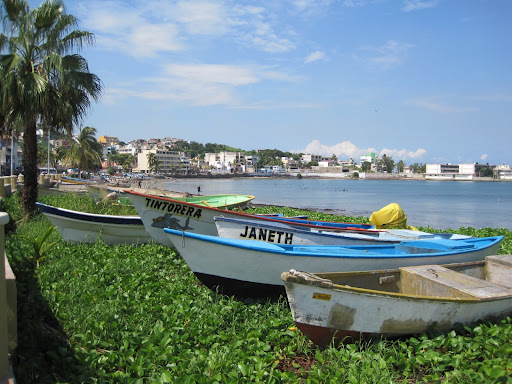
We walk the malecón nearly every morning, and at least 2-3 times a week we stop to buy fresh-caught fish. Most local panga fishermen, as fishermen worldwide, seem to have a very difficult life. They work through the night and make very little profit on their catches. Shrimpers have also had a difficult time in recent years, with fewer shrimp to be found, smaller sizes, and lower prices.

This morning in the paper I read that one new fishing market is to catch jellyfish. There have been three new permits issued in Sinaloa state, each permitting the catching of two tons of jellyfish per day. Now, having lived for so many years in Japan, I love jellyfish, and have eaten a lot of it. But I have never heard of a Mexican eating a jellyfish, so the article caught my eye. Sure enough, local fishermen are harvesting jellyfish in order to sell them to the Asian market.

They are fishing for cannonball jellyfish, the same species that US fishermen harvest off the southern Atlantic coast and the Gulf of Mexico.

Jellyfish have been eaten in Asia for over a thousand years. They are a huge market; Japan alone annually imports over $25 million worth of jellyfish, and that’s in addition to what they harvest locally! Jellyfish have a high nutritional value. They contain lots of collagen and protein and no cholesterol; it’s believed jellyfish rejuvenate cells and restore one’s youthful appearance.

There is a very short (two months or so) fishing season for jellyfish. It seems local shrimpers caught cannonball jellies in their nets, and found out that they could market them to Japan rather than throw them back. While many species of fish and shrimp suffer from overfishing, this same overfishing has caused an overpopulation of jellyfish. For years Japanese have created new ways to use and eat jellyfish, since they were in such over-supply.

What has no heart, bones, eyes or brain, is made up of 95% water, and yet is still a remarkably efficient ocean predator? You guessed it! Eat up now!

Some jellyfish recipes
Jellyfish salad
Stir-fried chicken with jellyfish
Jellyfish silk
From Australia
Jellyfish BURGERS????!!!
Jellyfish ice cream
Jellyfish shooter (not really jellyfish, but looks cool!)

Couldn’t resist concluding this post with a jellyfish photo from this year’s Carnaval parade, lol!


Via Crucis/Climb to Calvary (up the hill to El Faro)

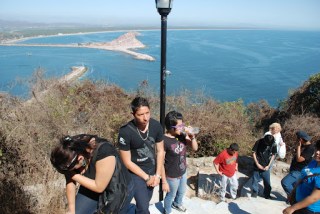
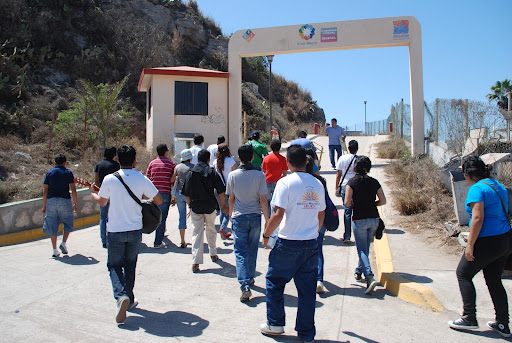
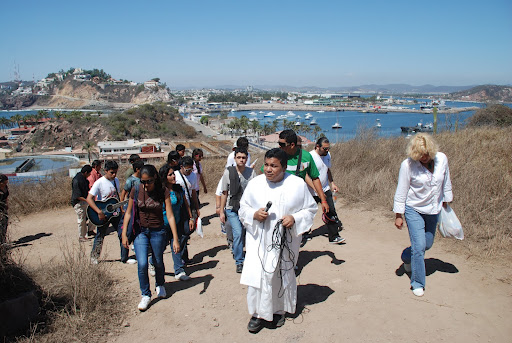
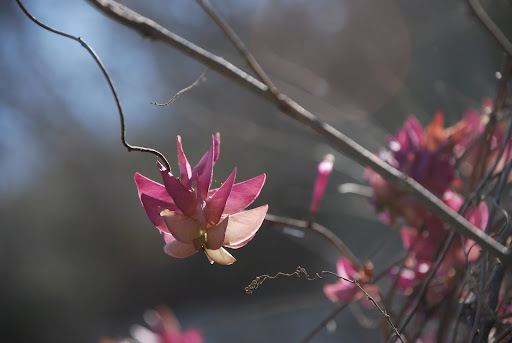
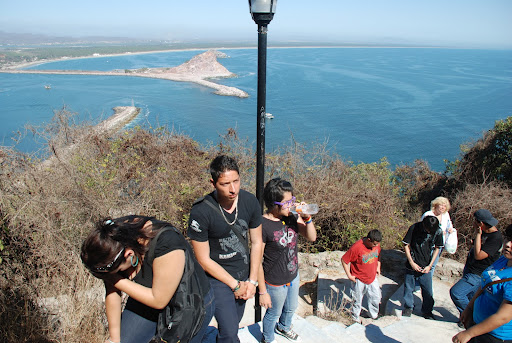
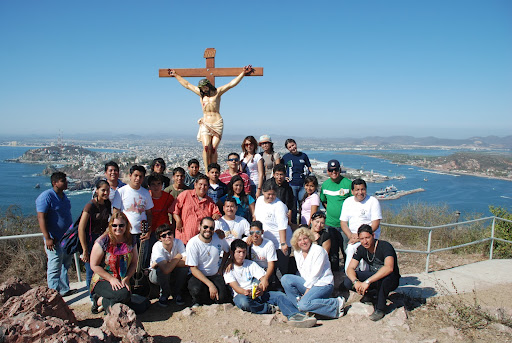
We were very, very fortunate today to be able to join a group of terrific young Mazatlecos, climbing up the hill to the lighthouse. It was a warm, clear, glorious day, with flowers in full spring bloom.

A few weeks ago a gentleman named Pepe Zataraín had commented on our blog, telling us about PAJUMA Mazatlán (Pascua Juveníl de Mazatlán) and inviting Danny to join him. We joined their Facebook group, and from there we ended up at the blog of the Diocesís de Mazatlán, which is written by Father Francisco Javier Huizar Ibarra. At this blog we saw that there was a Vía Crucis at 1:00 today, Saturday. We were not sure what to expect: a costumed reenactment, a lot of older ladies from the Diocese climbing El Faro hill? We were curious, so, we dropped Danny off for his Scout event at the Red Cross Hospital and Greg and I went over to the lighthouse, not quite knowing what to expect.


We arrived about 12:40, and took a seat at the foot of the path. We climbed up the path a bit and found a hand-painted canvas: the first Station of the Cross. That was reassuring. We walked up to find a second, and then back down to wait for others to arrive. Two separate groups of young people showed up, gathered around the coconut seller and the taco cart, and we figured they were there for the Via Crucis. But there was no priest, no apparent adult leader. Hmmm… Then, about 1:30 or so, down the hill come walking (and sweating) our neighbor Judith with Father Francisco. They had been hanging the canvases and setting things up for our journey. They both seemed very pleased to see us, and eager to have us join the group. Judith was especially happy to see that I had brought a camera, so I primarily do this blog so quickly for her.

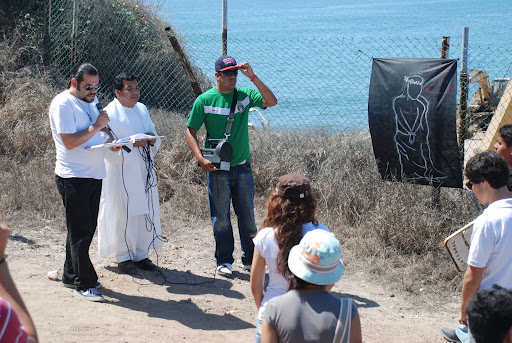
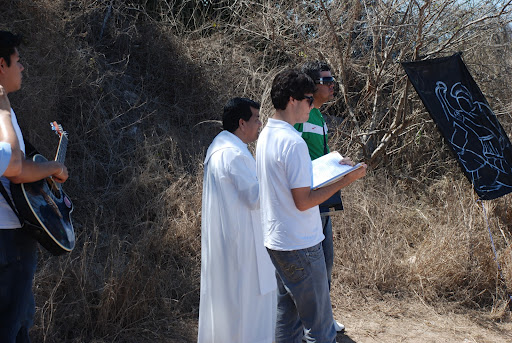
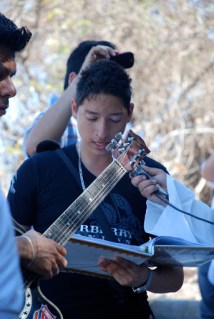
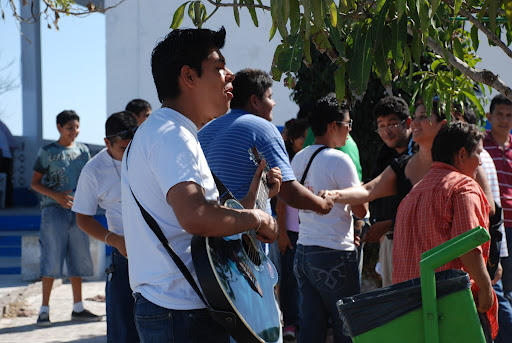
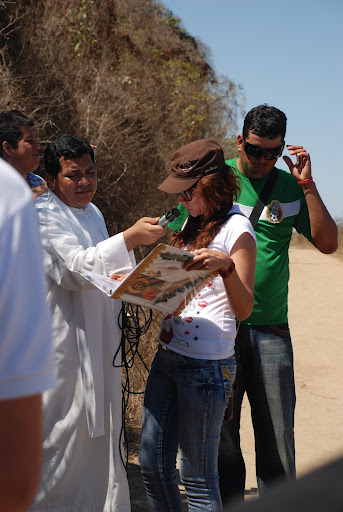
We all gathered by the coconut seller’s at the base of the hill for a commencement prayer and a song. One young man had a battery-powered acoustic guitar, and Father Francisco had a battery-powered microphone with speaker. Immediately we felt blessed, as Fr. Francisco’s prayers were so topical and practical: promoting peace in society, strengthening our families, treating others with dignity and respect. We began with an Act of Contrition.

Regardless of your religion, or (this is for you, Eric) even if you feel religion is the root of most all evil, it was a sacred journey in which we were able to join. It was also a peek into a side of society and culture here that is not as visible as I would like: the people in our community who are constantly behind the scenes doing good. Not as sensational as violence, but definitely more constructive.

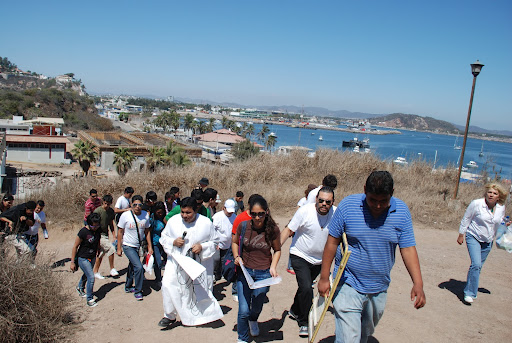
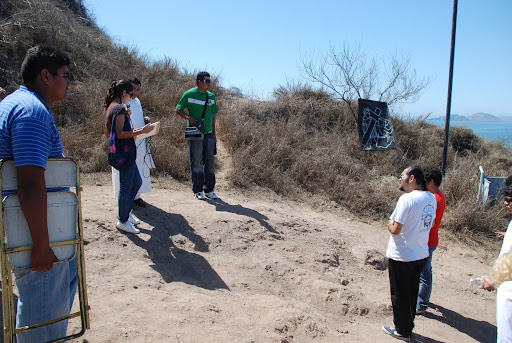
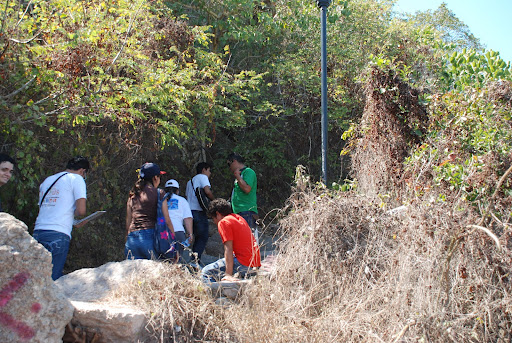
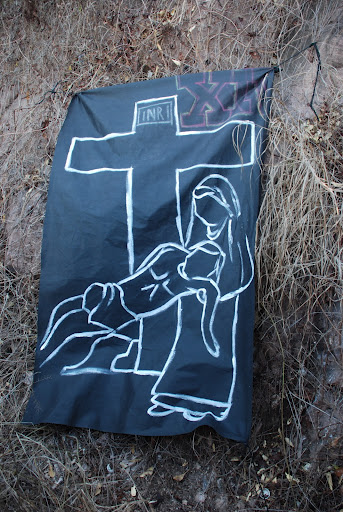
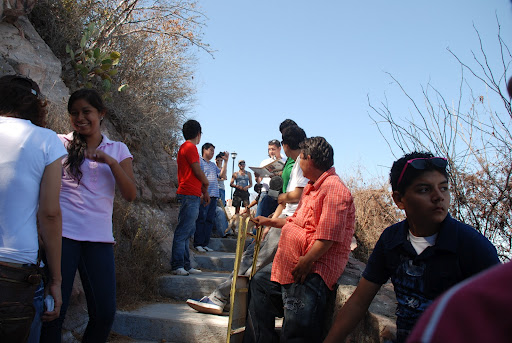
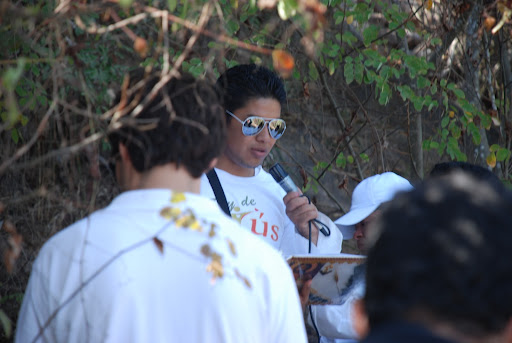
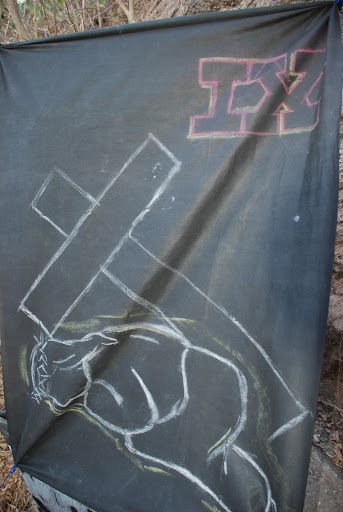
We began our climb. It turns out this was an event for the team of young adults that organizes and conducts the PAJUMA. They had hand-painted the Stations of the Cross the previous week. Members of the group took turns reading the prayers at each Station. After each Station’s prayer Father Francisco gave us a short sermon, which were all quite powerful. Then we would repeat the pattern of saying several prayers: the Our Father, Hail Mary, Glory Be, and Hail Holy Queen. Then between Stations we meditated as we walked.

Station #1: Jesus is Condemned to Death
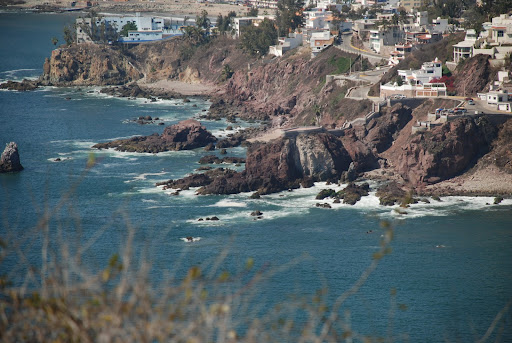
This station was positioned inside the archway, at the first turn in the path. Basically we were overlooking the water treatment facility, but also Olas Altas rocks and the port. For those of you who have not climbed to the lighthouse before, I trust my photo log will give you an idea of the climb, from near sea level to high on the hill overlooking the city.


Station #2: Jesus is Given his Cross
In this photo you can see on the right that the ocean is getting a little farther away…

Station #3: Jesus Falls the First Time
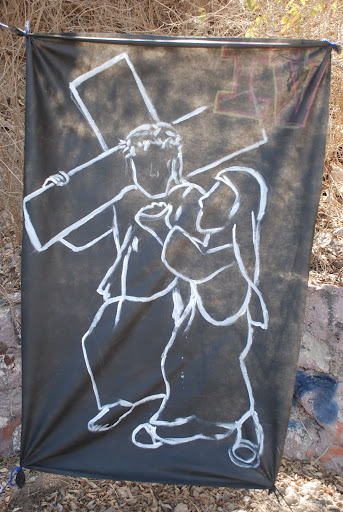
The paintings the young people had done were simple but quite powerful, I felt. It felt so good to be making this journey with young adults who were so passionate, and who we know will be devoting a week of their lives to teaching younger kids during Semana Santa in the stadium. If you have children and you are going to be here during Holy Week, be sure to sign your kids up to attend!

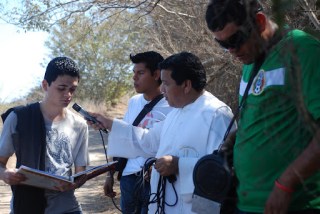
Station #4:  Jesus Meets His Mother
Here the short sermon was about how we treat our parents, and how that is the fundamental relationship in society. The idea that if we maintain the strength of families it echoes out in waves strengthening the rest of society.


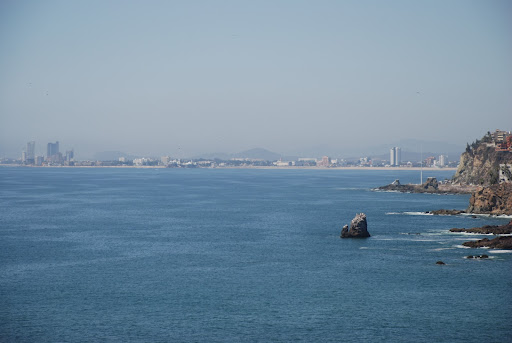
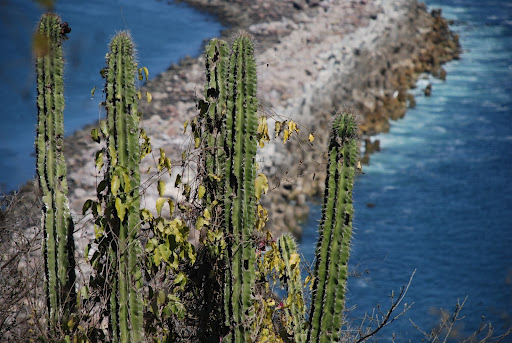
Many of the cactuses were in full bloom, and their green contrasted so beautifully with the blue of the ocean. It was definitely an afternoon filled with awe and wonder.

Station #5:  Simon of Cyrene Carries the Cross
Here the short sermon was about how we help others; when do we take it upon ourselves to do what is not required of us, to reach out and love others, show them mercy?


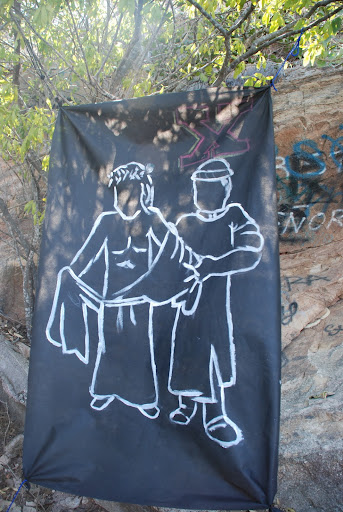
Station #6:  Veronica Wipes the Face of Jesus
Building on the idea of random acts of kindness, we reflected on when we reach out to wipe the brow of another, to lessen or ease their load.


Station #7: Jesus Falls the Second Time
You can see how the vegetation has changed, indicating the change in elevation already. We started with cactus, and now we see trees.

Station #8: Jesus Meets the Daughters of Jerusalem

Station #9: Jesus Falls the Third Time

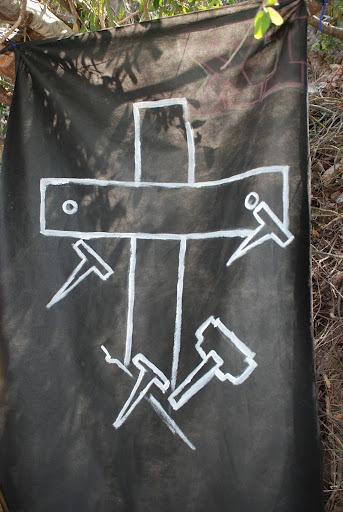
Station #10: Jesus is Stripped of His Garments
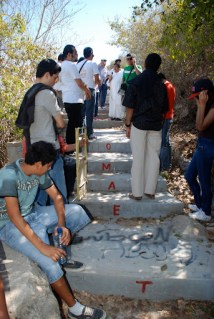
Station #11: Crucifixion: Jesus is Nailed to the Cross

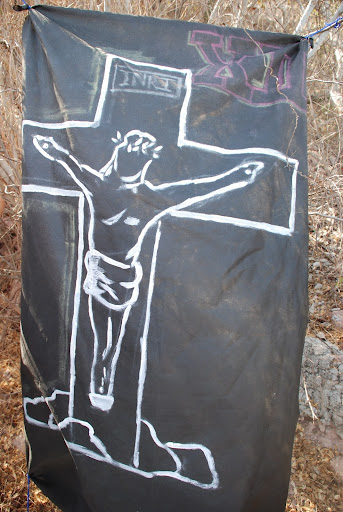
Station #12: Jesus Dies on the Cross


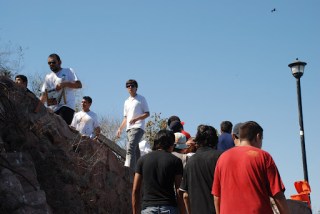
The climb gets steeper and steeper. In most places it’s just dirt with rocks peeking through, but in a few of the steeper places there are stairs, or cement, and thankfully a rock wall beside you against the drop off.

Station #13: Jesus’ body is removed from the cross (Deposition or Lamentation)


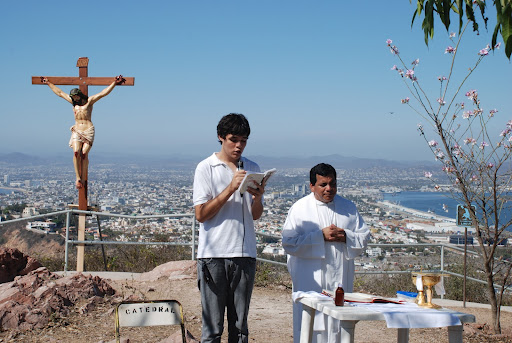
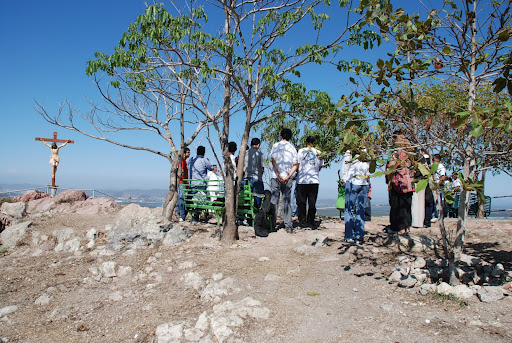
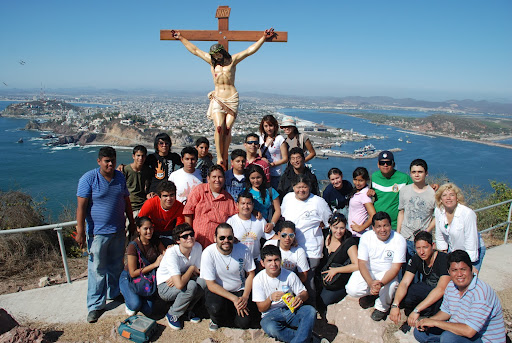
Station #14: Jesus is laid in the tomb and covered in incense. We entered the upper gate, nearing the lighthouse proper. As we walked into the open space where the view is so beautiful, we saw an incredibly gorgeous sight: a very large handcarved and painted crucifix, mounted looking over our city of Mazatlán.

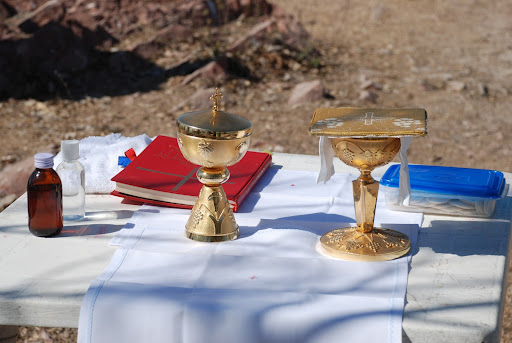
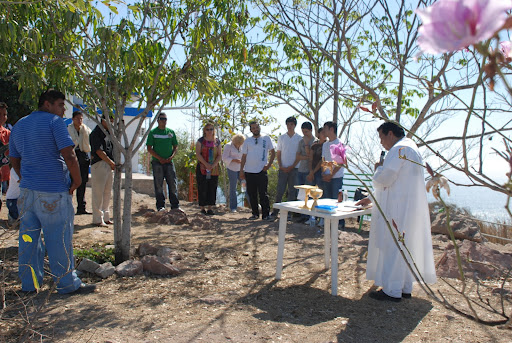
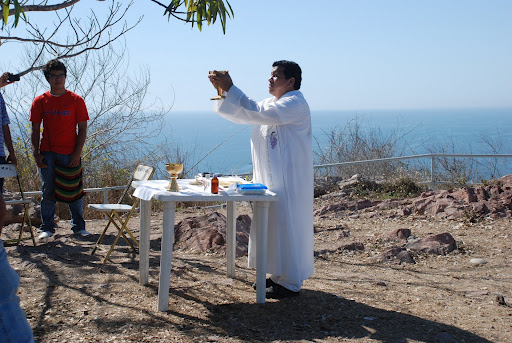
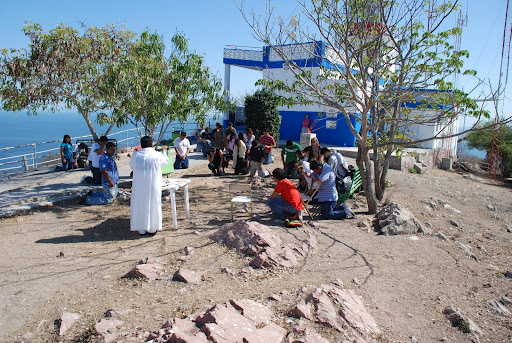
For this Station we celebrated the Eucharist. It was such an honor and a thrill to be able to celebrate a Mass in the open air, and particularly on such a gorgeous day, with a spectacular view, in the presence of so many incredible young people. An added bonus for us was that as we waited at the top a few minutes for Fr. Francisco to finish preparing for Mass, our friend Trini showed up. It seems she climbs the lighthouse every week for exercise and relaxation. So, she was able to join in the Mass as well. There were quite a few tourists at the top, and one young boy about seven who was just fascinated with everything going on.

The first reading.

The second reading.

The Gospel.
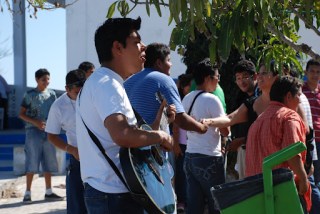

 
The sign of the peace.


Talk with State Secretary of Tourism, 18 Feb 2011

Since I do not run a business here in Mazatlán, I don’t get out and around to many business or chamber-type meetings. Yet, I am a business person, and this is my community. So occasionally, when I do get a chance to attend such a meeting, I tend to get really jazzed. Such was the case last November with the Sergio Fajardo event that I blogged about, and such was the case last Friday when I had breakfast with Oralia Rice Rodríguez, our Sinaloa State Secretary of Tourism, along with about 65 local business leaders.

It is wonderful to get a glimpse into how business and politics are conducted here. I learn a lot about conversational and discussion styles, meet some cool local movers and shakers, and improve my Spanish. And, at least this week, I got a heads-up on some major news prior to it being released publicly (at least, I hadn’t yet heard about it!). Thank you to all who attended and were gracious enough to help me feel welcome!

Please know that any errors in my reporting below are due to inadequate notes or my lack of comprehension. I continue learning about my new home and its people. I post to this blog with the intent to share information in English, not as an expert, but as a resident. I welcome your (helpful  :)) corrections.

So, what happened that was of interest? The big stuff has since the meeting been reported in the press:

  1. Our beloved Las Labradas archeological zone (petroglyphs) will be named a UNESCO World Heritage site. WONDERFUL to hear about that in a venue such as this! I was amazed there was not an outpouring of enthusiasm when Secretary Rice said it; perhaps the others present already knew? The official naming will take place next November.
  2. They are trying to organize a major concert to commemorate the above event, and have invited Andrea Bocelli. This, again, was terrific news, and came out in response to a comment from one of the participants, who suggested that Mazatlán should start hosting world-class, big-name stars on a more regular basis, to resurrect our “golden age.”

In addition to the big news, a couple of trivia pieces that I found of interest: Sec. Rice told us that “Escuinapa” means “Queen of Love” in the Chametla language, and “Teacapán” means “Where love grows.” I did not know Chametla was a language. I googled both of these, but I couldn’t find the details; eager to hear my readers’ insights!

Humberto Rice kicked off the morning by introducing his sister, and then Oralia talked for 15 minutes or so. She seemed to know the majority of the people in the room, and appeared to be very comfortable speaking informally and conversationally to us. She told us:

  • Despite the travails our port and state have been through the past couple of years, hotel room occupancy is actually up about 4%.
  • Mazatlán is in sixth place in Mexico as a tourist destination.
  • The story about the cruise ship tourist who reported her purse stolen, and the homeless man who returned it to the port when he found it sitting beside a bench in the plaza (ALL its contents including ID papers, credit cards and cash intact). We do have terrific people who live in this town! (She did not mention the collection our local foreign residents took up to help and thank the homeless man.)
  • This administration wants a very inclusive and open government; that the shield of Sinaloa belongs “to everyone.”
  • When Malova called her and asked her to be Secretary of Tourism, she asked him why. He told her, “because I want to make Sinaloa the best place in which to live.”
  • She has an open office and any of us are welcome to come to visit her without an appointment. Very surprising to me, she even gave out her cell phone number!
  • At some length about the damage that has been done to our local economy by the US travel warning issued last year that includes Sinaloa and Mazatlán. She said Governor Malova has met with the US State Department, and many state officials have had meetings at the US Embassy in Mexico City, to push for the repeal of this bulletin.
  • She would like to hear how we would like Sinaloa to be six years from now, when the governor finishes his term. That they would like the public and private sectors to work together, to be congruent. That they have or can find the resources, but what they desire are proposals from the local community about how to develop our city going forward.
  • That we have a whole lot of room for development, saying there are 44,000 hotel rooms in Cancún and only 10,000 in Mazatlán, and that she’d be meeting that afternoon at 4:00 to discuss the strategic plan.
  • About the big project in the Historic Center, a pedestrian street along Constitución leading from the cruise ship dock to the Plazuela Machado, into which 6 million pesos will be invested this year.
  • She shared a vision for Mazatlán: To make our Pearl of the Pacific the number one destination for beach and culture in Mexico. I heard several people in the audience murmur that it already is.
  • She encouraged investment into textile plants, including tablecloths and uniforms. Maybe my Spanish comprehension fell apart here, but I wasn’t quite sure how this point fit into the overall theme.
  • The affluence of Sinaloa had risen 8.8% over prior year, despite the economic crisis, and that the numbers of tourists in various categories (cruise ship, national, international) were up 20-30%. This data sure hit me by surprise; I will say that living here, I do not feel an increase in tourism or affluence around me.
  • That TV Azteca would be broadcasting the Carnavál de Mazatlán events live, and that some local hotels are already reporting 100% booking for that period.
  • She shared another vision for Mazatlán: To make our city the “Barcelona of Mexico” and the Angela Peralta “La Scala of Mexico.”
  • Though there was a lot of talk about cruise ships, she also twice to my memory mentioned the importance (very happily to me) of ecologically sound development, and mentioned the upcoming (April 7-10) Congreso de Turismo de Naturaleza (Sustainable Nature Tourism Symposium).
After Secretary Rice finished speaking, the floor was opened to proposals and recommendations, with a format in which three people would each speak, Secretary Rice would respond, and then there would be another two rounds of three in the same manner. We ran out of time before getting to round 3, so only six proposals were offered. They were:
  1. Every tourist destination seems to have a lifecycle. We in Mazatlán do not want to be like Acapulco. We had a golden age, when the world’s best entertainers came here on vacation (rather than Hawaii, Cancun or Arruba). We need to do a big event, invite someone like Placido Domingo, to put us back on the world stage. We should also do surveys of the tourists in the airport.
  2. We need to clean our city: the roads from the airport into town, the malecón, which in the morning smells like a bathroom. This will benefit everyone, visitors and residents. Let’s not take the tourists around the dirty parts, avoiding them; let’s clean them up.
  3. Leticia Alvarado from Recrea read a proposal that was by far my sentimental favorite. She said that tourists come back to visit places where they meet people and can share emotional connections with them. She said we need to work to integrate locals and visitors, by filling our parks, our plazas and our public spaces with life, by cleaning them up, making them beautiful, and holding regular public events (VERY congruent with what Sergio Fajardo told us). She told us about a program in Culiacán where they have walking tours of the city at night, designed to increase safety/decrease fear. She said we need to make people proud to play futbol at the fields in Urías.
  4. There was a question about what COPARMEX can do to support tourist development. Apparently there has been talk for quite some time about making a Tourism Commission within the group, and that will finally be happening soon.
  5. Munir Aún said that we should not limit our dreams, that we should aim high. He suggested we move parallel with FONATUR’s plan for a Teacapan-Stone Island-Mazatlán corridor. It is obviously of utmost importance for Mazatlán to be an integral part of that corridor.
  6. The final question was asked by a developer who said that cruise ship passengers are in town for only a few hours, but part-time residents, whether national or international, spend on average 15 thousand pesos per month that they are in town, and most of them come on average for four months. He encouraged the Secretary to be sure to include this type of tourist in her planning.
Secretary Rice concluded the approximately two-hour meeting by asking those business leaders in the room, “Are we ready for the highway from Durango to open?” She talked about what an incredible opportunity the highway will open for Mazatlán, how much work it’s been. If people come and are disappointed, they won’t come back. We need to be ready, to capitalize on the opportunity. She talked about a “pueblo digno,” a proud city of Mazatlecans who love our heritage and our port. She reminded us that as seafarers and mariners we know how to survive a storm. And, again, she urged everyone to submit their ideas and proposals to the Secretary of Tourism; if they don’t have the resources, they will work with the other departments to get them.

In conclusion, I was left with several things in my mind. So hear goes my personal opinion:
  1. Couldn’t we put together an online “sign this petition,” asking for people’s support to have Mazatlán removed from the US State Department’s travel advisory? I receive several such online petitions every week; they can’t be that hard to do, right? And it couldn’t hurt?
  2. I realize the cruise ships are big money. They are said to build tourism because cruise ship visitors come back for longer stays later. And, we all know how ecologically unsound these ships are. I also very much worry about the impact they have on a local community. During certain hours of the day certain places are crowded and overloaded, while others remain empty. It’s a dynamic that does not seem to me either sustainable or sound for a community. But, yes, the money and exposure are good; many local families survive on that business. So, I would LOVE to see that the Secretary of Tourism keeps the cruise ship business in perspective. I invite her to look at the two vision statements she shared with us on Friday: Mazatlán as THE beach AND culture destination of Mexico, the Barcelona of our country, with El Teatro Angela Peralta being La Scala of the new world. We can all support these visions. Overly focusing on cruise ship tourism could very easily sidetrack us away from that vision, rather than helping to fund and maintain it.
  3. Mazatlán and its environs are absolutely gorgeous. Yet, when I look at photos from decades ago, I realize how much of that beauty we have lost. The gorgeous estuaries along the coast that we used to have! The mangrove forests! The clear blue skies! Any sustainable tourism development plan, it seems to me, MUST include a plan for preserving our natural environment. Ecologically sound development must guide us. The scrubbers on the power plants will be a good start, but we need to convert our buses for clean-air energy. Neither tourists nor locals want to wake up to black clouds of inverted air pollution! There are grants available internationally for this sort of thing. Let’s go, Mazatlán! We can clean and beautify our environment while we create a better style of life for our people! Cleaner air (and water) means healthier people and fewer medical bills.
  4. I’d like to echo what Leticia Alvarado Fuentes said. By bringing life to our public spaces, and encouraging year-round cultural activities, we will overcome violence, build community, and attract tourism. Year-round cultural activities, for everyone. Let us not get stuck in an us vs them, tourist vs local, mindset of hosting cultural activities in the tourist season with nothing for the locals the rest of the year. Mazatlán has an incredibly rich cultural life, and showing it off all year long can do nothing but extend our tourist season!

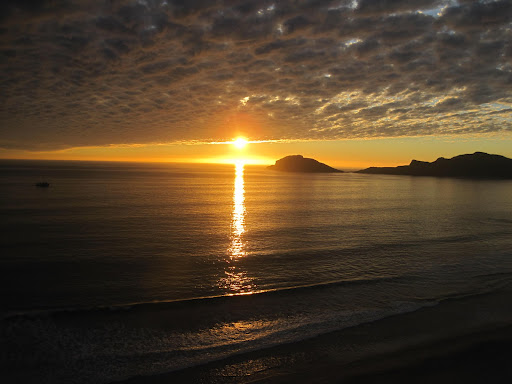
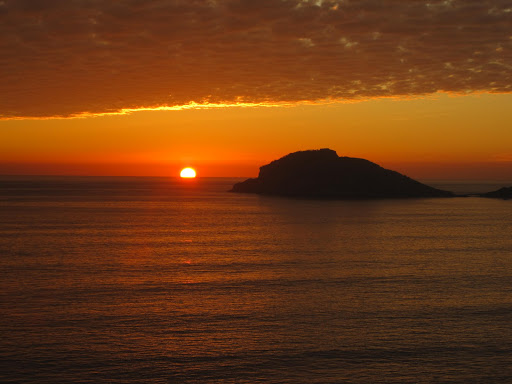
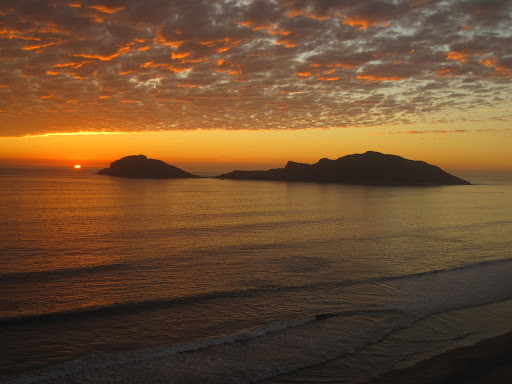
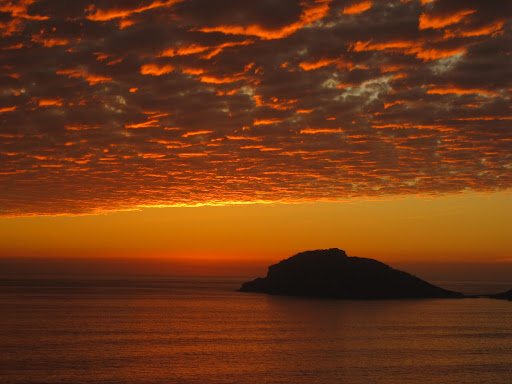
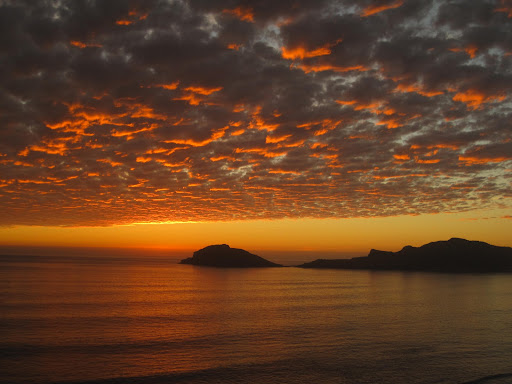
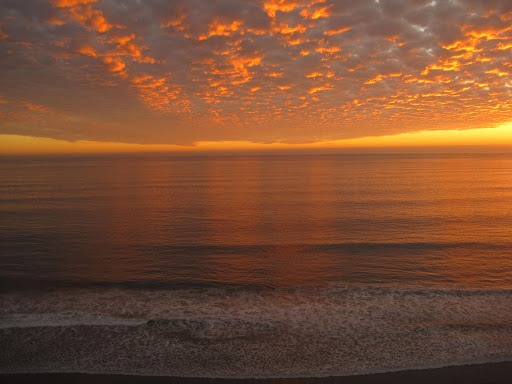
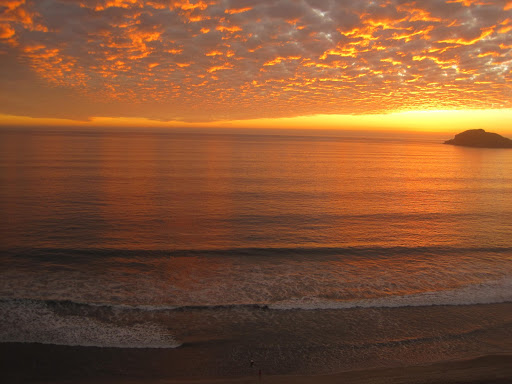
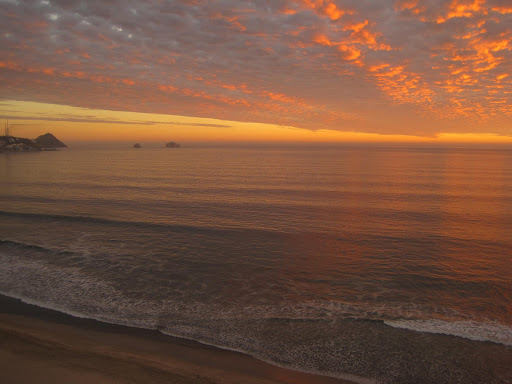
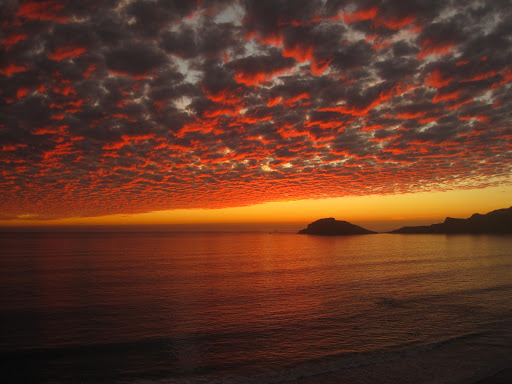
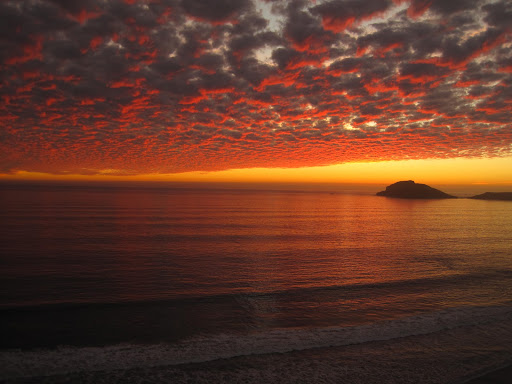
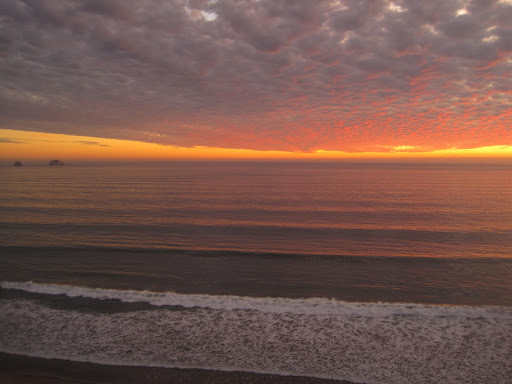
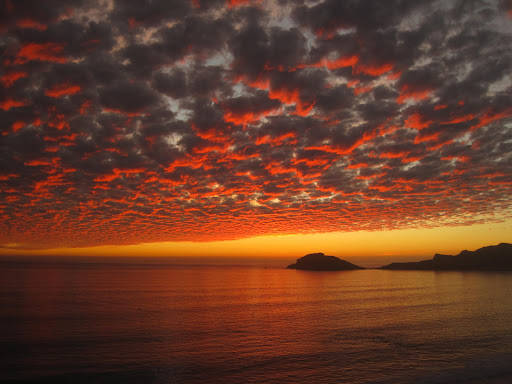
Sky on Fire – Time Lapse


29 January 2011, photos taken from our terrace

5:42:12 pm
5:42:43 pm
5:43:39 pm (note the yate fiesta/party boat)
5:44:05 pm (note the yate fiesta/party boat)
5:51:38 pm
5:53:32 pm (clouds moving quickly though there is no wind)
5:54:21 pm
5:54:51 pm
5:55:34 pm (almost set)
5:55:52 pm
5:56:07 pm
5:56:26 pm
5:56:40 pm (and set)
5:56:52 pm
5:57:45 pm
5:57:54 pm
5:58:22 pm
5:58:42 pm
5:59:40 pm (we feel the best is usually after the sunset…)
6:00:42 pm
6:02:18 pm
6:02:30 pm

6:02:48 pm

6:03:47 pm
6:04:01 pm
6:04:14 pm
6:05:06 pm


Los 2 Tesoros de Mazatlán/Pirate Treasures of Mazatlán


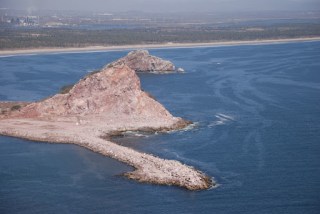
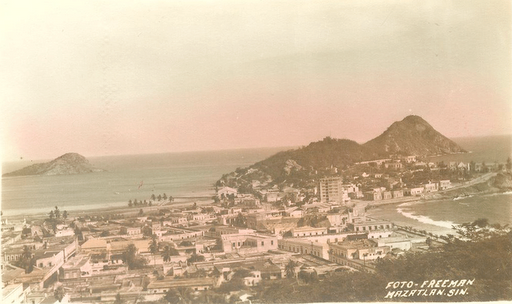
Greg has collected a lot of vintage photos, postcards, pamphlets and magazines of our adopted home. Today our friend Jorge happened to see one of the postcards, an aerial shot of El Centro when Playa Sur was still all beach, before land was reclaimed from the sea and houses built, and before Isla de Chivos was chopped off and its rock used to build the sea wall (is that what it’s called?) to protect the ship channel.

Well, he got to telling stories about his youth, which are always fun. About how Mazatlán used to be, when the area along the malecón in which we live was nothing but open space. He told a couple of stories that I had never heard before. Many of you may be familiar with them, so perhaps you can point me to a source to learn more?
The first was about the old cinema/theater downtown, where Parisina now stands. Evidently that building was roofless for years, abandoned and downtrodden. When they decided to rebuild it, to raise the building that is now the fabric store, the backhoe workers found buried treasure! According to Jorge, there was a huge pirate’s chest full of coins and jewelry. The workers started fighting amongst each other for the spoils, the police were called, the treasure chest and its bounty confiscated, apparently never to be seen again.
Which led him to a second story, about when they built the sea wall or entry to the shipping channel/port where the cruise ships now come in (or don’t, as the case may be). They evidently chopped off Isla de Chivos in two places, on the ocean side and on the inland side, to have rock to use for the sea wall. Jorge told us that the bulldozer was found still running, key in the ignition, with a few antique coins scattered around. Legend or story has it that the bulldozer driver found buried pirate treasure, and learning from the bad fortune of the Parisina workers, grabbed it and took off with it, never to be seen again.

Jorge tells us that there is still supposedly buried pirate treasure on the lighthouse rock, a story we have heard before. He also told us about the tunnels connecting so many of the houses and buildings downtown, including the cathedral. We know about those, and have seen a few. Cueva del Diablo, a tourist attraction along the malecón, supposedly went under the ocean and connected up with those tunnels. When several people went in and never came out, Jorge says the tunnel there was closed up.
Finally, Jorge told us about a now-deceased treasure hunter and historian, a man who hunted for pirate treasure and was a well-known historian here in town. He owned a business and had an antique chest on display that he’d found. He can’t remember the man’s name. Can you? Maybe that man wrote a book or some essays? Sure would be interesting reading!