The two gentlemen in the photo above very kindly explained
a bit about the dance to me, and walked me through the ceremony.
They live in a pueblo between Guasave and Los Mochis.
Last year we were privileged to welcome spring with the famous Deer Dance (danza del venado), conducted in the scenic oceanside setting of Las Labradas petroglyph park, a 30 minute drive north of Mazatlán. The dance was conducted by the Yeu Matchue, a traditional dance group of Mayo or Yoreme Indians.
The dance will be conducted again this coming Wednesday, March 21 in the same location, as part of Mazatlán’s International Friendship Week. Be sure not to miss this event!
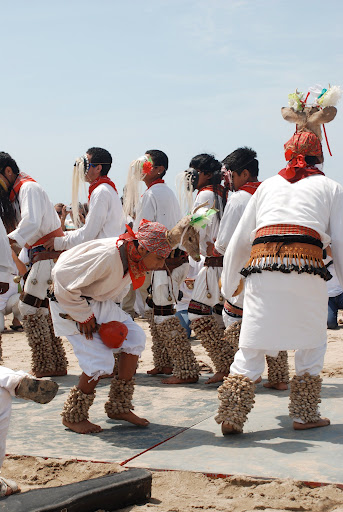
The Mayo are considered to have the purest native blood in Mexico. While centuries ago they performed the Danza del Venado in full deerskin clothing with a bow and arrow (it’s the dance of the hunt, and I am Dianne, the goddess of the hunt, ha ha), to welcome the spring solstice at Las Labradas they wore white cotton manta (symbolizing purity), leather belts with deer hooves and bells, they wrapped their shins in leggings made of shells (representing snakes entangled in the deer’s legs), red bandanas (to honor the deer’s sacrifice of its blood), and sonajas or wrist and ankle bands made of nuts and shells. They carry red gourd maracas or shakers.
I grew up in northern Arizona, spending many weekends as a child in the 70s with my friends on the Hopi mesas. I was able to witness the Snake Dance, eat my fill of piki bread spread by hand over a hot rock, and play with the Mudheads. The deer dances soooo reminded me of the Kachina dances! Amazing similarities in dress, adornment, line dancing, movement, underlying beliefs of harmony with the environment, even the music and chanting. The noise makers (shells, gourds) were reminiscent of artisan rattles worldwide, whether from Africa, Asia, Oceania…
There were at least two dancers who wore taxidermic deer heads decorated with flowers, fastened to their heads with leather straps. They pranced, twitched, paused and sniffed, incredibly evoking the sense that we were watching a deer move through a clearing. It was eerie and beautiful to watch.
It was gratifying to see so many young people involved in the ceremony. It is obvious the young Mayo/Yoreme are eager to carry on the traditions of their elders and ancestors.
Above is a minute or so of video of the dance.
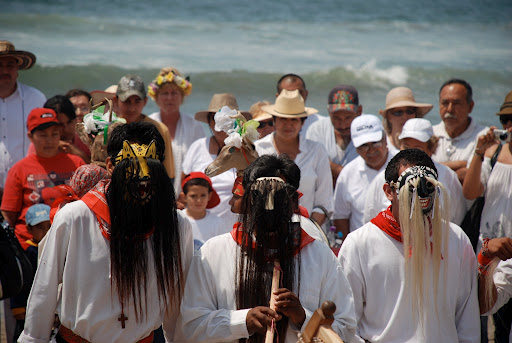
In addition to the boys with the headdresses, there were quite a few others dressed similarly but wearing masks. The masks were made of torote or poplar wood, both very sacred, and painted with smiling faces as well as Christian crosses, with long hair. Again, the long hair reminded me of the kachinas.
The musicians included a couple of fiddlers who sat in wooden chairs as they played, a large harp (played standing), gourds (sonatas de bule), jiruquias, and various drummers including a water drum.
The shaman had an altar or offering of fresh fruit, as well as a container of incense that he used for purification during the ceremony as well as to purify or bless the spectators afterwards. The purification ritual was very similar to what I’ve experienced at Teotihucán on the solstice, or in Mexico City nowadays on the street corners.
The dance was an interesting mix of indigenous and Christian ceremony, in the Mayo language and rhythms. When we arrived we saw several flags or banners with crosses on them on the beach. Beside these were placed the deer headdresses and rattles.
During the ceremony, the dancers made the Catholic sign of the cross and held their hands in prayer. It was evident that the Jesuits of the 16th century had much influence on these indigenous rituals.
As with almost any special event I’ve attended in Mexico, the Deer Dance ceremony also included fireworks.
An exhibition of the ancient ball game of ulamawas also part of last year’s Spring Equinox events. It took place just outside the museum. A game is on the schedule for this year.
Las Labradas is a UNESCO World Heritage site. The oceanside petroglyphs, mystical figures carved into the rocks, are dated by INAH at 1000-1500 years old and of Toltec origin. There is a small museum at the site.
If you’d like to attend this event next week you can drive north of Mazatlán on Highway 15, exiting at Km. 51 where you’ll see the large petroglyph marker on the west side of the maxipista. It is a dirt road after you leave the highway, through Chicayota to Las Labradas. Alternatively you can take one of the buses that the Sinaloa State Tourism Office has arranged, to depart from la Mujer Mazatleca monument in Olas Altas at 9:00 am. To reserve your spot contact mazatlanturismocultural@gmail.com, or telephone 191-2005. Be sure to wear white clothing.
—
Update May 26, 2012: Today the Noroeste ran an article about these dances, including some of the dancers photographed above. It’s in honor of Festival de la Juventud.
Our third stop on Meseta de Cacaxtla today was Los Llanitos. (Links to blog post 1/Chicayota or blog post 2/Guillermo Prieto) By the time we got there we had already decided we had had a terrific day. And it only got better! What a gorgeous place this was, by far the most economically successful, and the people were so much fun!
What stood out for me right away were the stories of jaguar in the area. I do hope that some day I might get to see one!
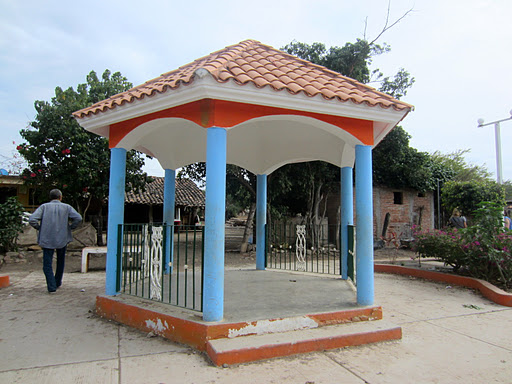
Los Llanitos was so fancy, after our previous two stops, that it even had a little kiosk in the plaza in the center of town! Very charming.
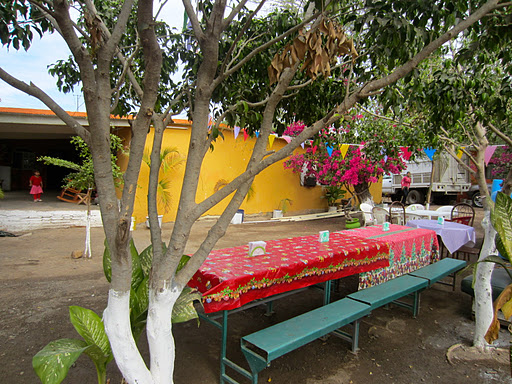
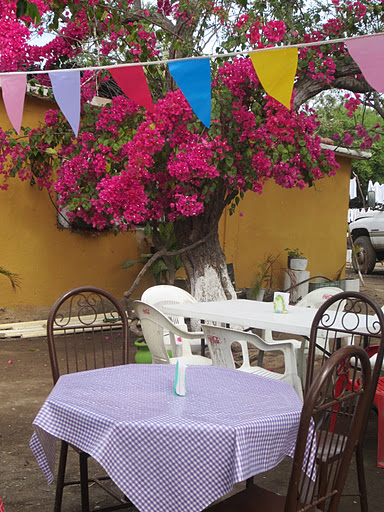
Our hosts were all ready to serve us lunch. I fell in love with the setting. It reminded me of picnicking in a vineyard in Italy, with the bright colors and flowers.
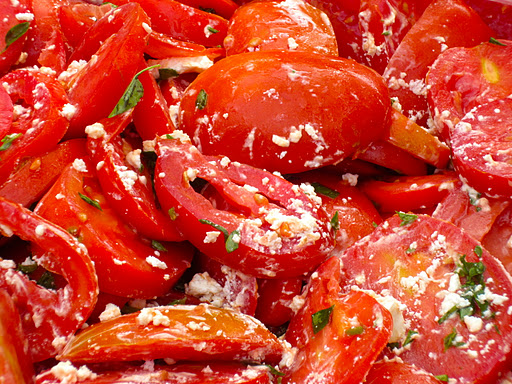
Carlos’ wife had taken some of the organic tomatoes, sliced them, and added goat cheese, fresh-picked basil, olive oil and a bit of low-sodium soy sauce. OMG! We were in HEAVEN!!!!! I think I ate about ten tomatoes they were so good!
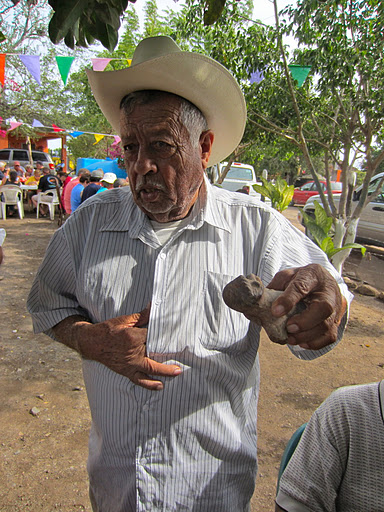
While we were munching, Maximiliano, the grandfather, started regaling us with stories of the pre-Hispanic artifacts he has found while tending his fields in Los Llanitos. The area, according to him, is home to the game of ulama; this town is where it originated, they say. Max brought out a couple of pottery figurines that he passed around to show us.
The figures had clear faces: eyes, nose and mouth, arms and legs. They seemed to be wearing shirts or tunics. They reminded me of the Chinese burial dolls, which I’ve also seen in Japan, as well as among some of the Pueblo Indians of the US Southwest.
Most fascinating to me, however, were what I first thought to be “angel wings” on the back of the dolls. Upon closer scrutiny, they seem to be the hands of other dolls. It would appear these dolls were part of a set or group of dolls, with one doll hugging the next.
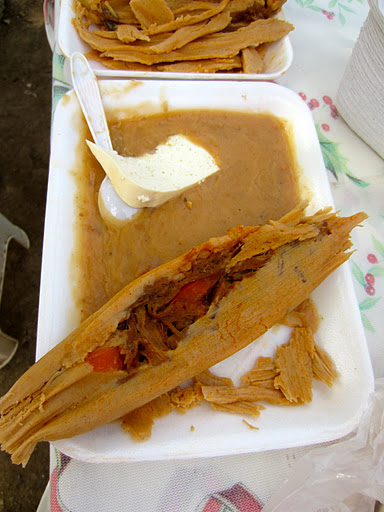
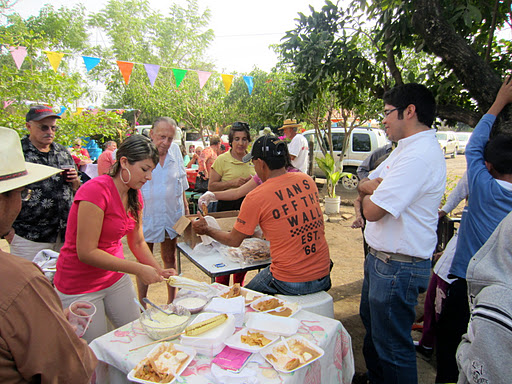
As if after our big breakfast and all the tomatoes we might still be hungry, our hosts in Los Llanitos brought out some of the best tamales I’ve ever had. Organic beef, tomato, chile, and squash, in a thin wrap of corn masa.
Followed by freshly harvested corn on the cob, which our pretty new friend proceeded to drench in fresh cream, cover with grated cheese, and serve up. Oh my!
But, no! That still wasn’t enough. There were homemade jamoncillos.
And my personal favorite, freshly baked empanadas de calabaza, pumpkin turnovers, made by one of the daughters in the family.
My new friend Consuelo lives in Mazatlán with her daughters. They are all three estilistas, beauticians who do manicures, makeup and hair styling. We hope to see them here again soon. She also has a son who was there for the winter holiday, Marcos. He is graduating soon as a biologist, from university in Ensenada, and will return to Los Llanitos to contribute to the local community.
The kids were really cute, but what really stood out for Greg and I were that the boys were sharpening knives for use in cockfighting or palenque. It seems they often hold cockfights in the backyard. I’ve seen men who love this, and I know families attend. I just didn’t realize that kids from such a young age raise chickens for fighting and get so excited about it.
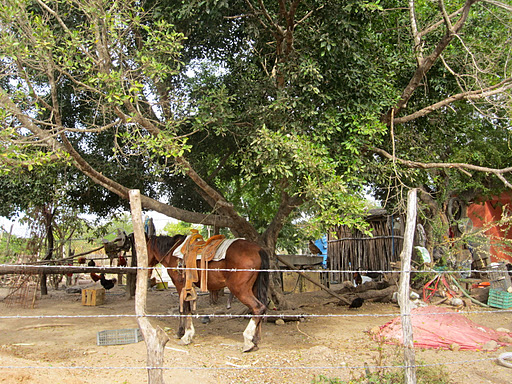
After lunch we walked or drove over to the fields, passing some corrals along the way.
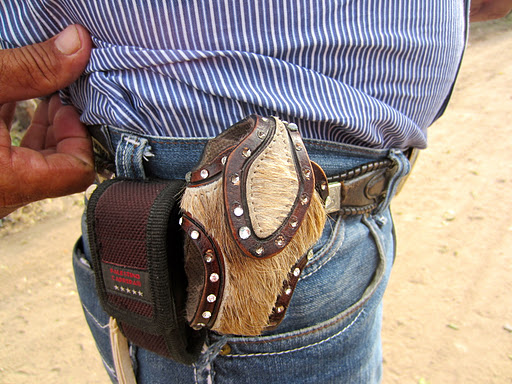
One of Consuelo’s brothers, Gustavo, had a deerskin cell phone holder on his belt.
Gustavo, Greg, and his brother and daughter really hit it off well. They insisted we come back to visit soon, and we have every intention of doing so. This is obviously a very hard-working, wholesome Mazatlán community that we would love to get to know better.
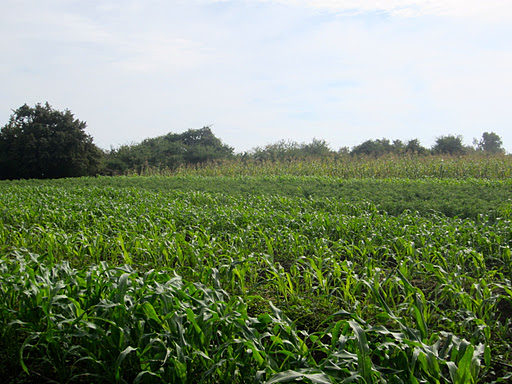
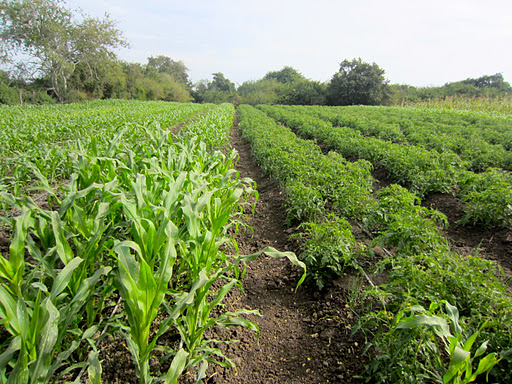
The fields on one side of the road are organic. Gustavo told us the produce is mostly sold to Mexico City or exported abroad. They had many different kinds of vegetables here, scallions and corn. Acres and acres of green.
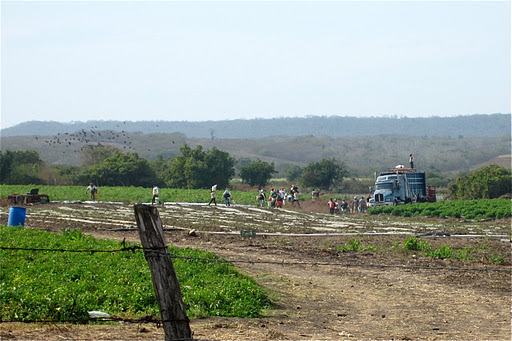
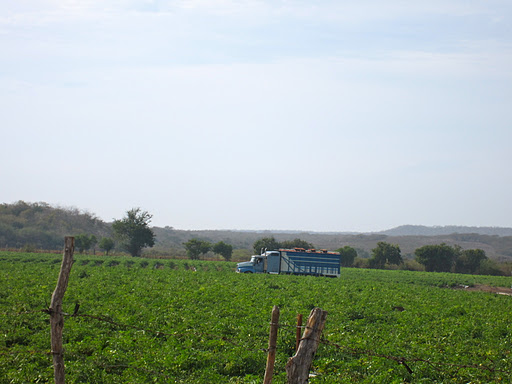
The fields on the other side of the road are “regular,” non-organic. These fields seemed to go on forever. We were there just as the field workers finished loading 16 TONS of tomatoes into a trailer truck, bound for DF.
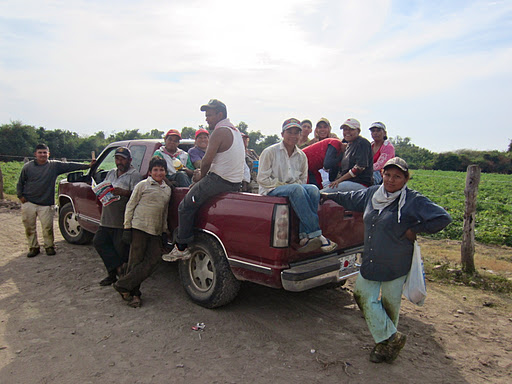
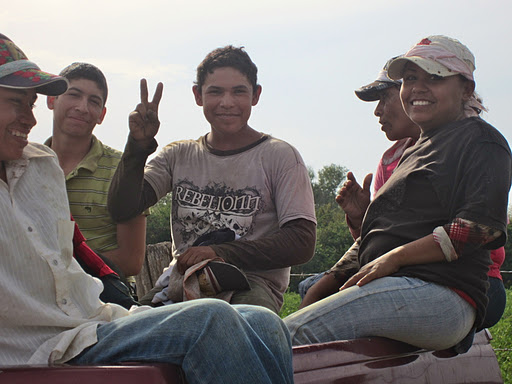
We had to leave earlier than the rest of the group, so we missed visiting the dairy and the “biodigestor” (compost system?). As we drove out, however, a group of field workers asked if I’d take their photo. Here it is, folks.
One young man in particular wishes to send a special hello to all the young ladies on Facebook 😉
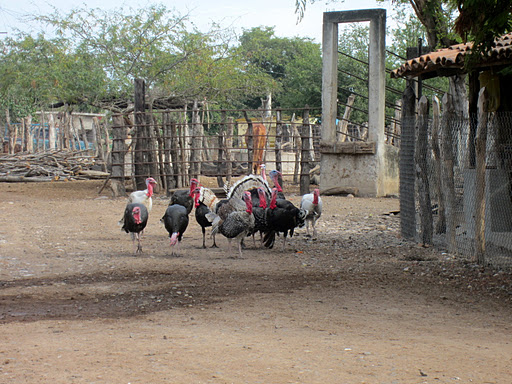
I’ll close with a beautiful shot that Greg took of some turkeys in the yard. It was a long and very wonderful day. Thank you, Martha, Gaby, and everyone else who helped make today happen. We are so happy to know you, and look forward to seeing you again soon and helping in any way we can to support you as you work to develop our area in environmentally respectful and sustainable ways.
Second stop on our tour today was at the organic community orchards and gardens of Comunidad Guillermo Prieto, a couple of kilometers north of La Chicayota on the highway. My oh my do they have beautiful produce! (If you missed it, link to blog post on our first stop, La Chicayota)
Lush, delicious, fresh; all they lack is a market. They sadly told us that much of their first-year bumper crop of scrumptious organic tomatoes went unsold! We of course immediately told them about the new Mazatlán Farmers’ Market/Mercado Orgánico de Mazatlán every Saturday morning in Plaza Zaragoza, Mazatlán. The cooperative’s leader, Sra. Sacramento, promised they would be here this Saturday to start the application process, so that their organic produce might also be sold there on Saturdays.
Sra. Sacramento… a beautiful name, don’t you think? That is her in the photo at left. When I told her she had a beautiful name, she said it’s what she’s been “saddled with” because when she was young her father moved north to tend fields in Sacramento, CA.
To Sacramento’s left, in the red shirt in the photo, is Carlos Carballo, an engineer, teacher of organic farming, holistic cattle raising, and ….
Hydroponics. These farms are located in an area of town that is sort of “off the grid.” The only source of water, other than private delivery by truck, is to have it piped in from Dimas, miles away. The water from Dimas is turned on once a day for two hours. To work around this shortage of water and be able to reuse some the precious water they do have, the community has turned to hydroponics.
Another difficulty facing the organic farms of Comunidad Guillermo Prieto is that they don’t have a steady market for their product. Traditional planting aggravates this market problem because crops ripen at the same time and need to be harvested quickly. Hydroponics, as we were told, allow the plants to root indoors in a greenhouse, protected from the sun, and provide the farmer a bit more leeway with when to put the plants in soil. In this way, the cooperative farmers can choose when to transplant a hydroponically rooted strawberry or lettuce plant, and extend the harvest!
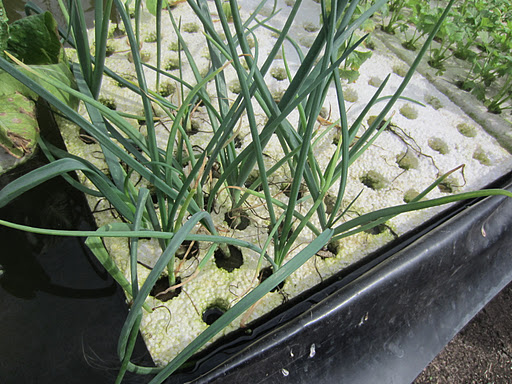
Comunidad Guillermo Prieto uses two kinds of hydroponic systems. The first, as you see above and at left, is a tube system. The engineering uses readily available items (see the rebar holding the piping on the wood support).
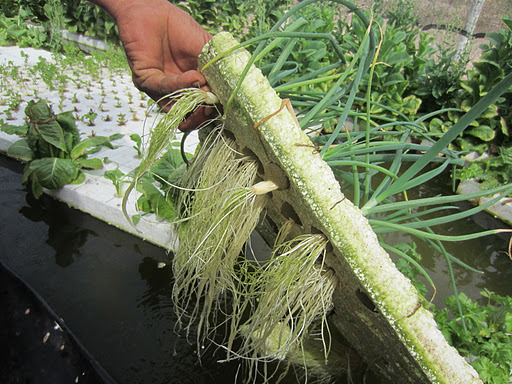
The second hydroponic system we saw here were floating gardens — plants rooting into the water through holes in styrofoam! It was really cool. Four times a day for 15 minutes each time, pumps are turned on to circulate and refresh the water.
We saw lots of kinds of lettuce, cilantro, and scallions growing in these floating gardens.
And here in the photo you can see how well the roots respond to the floating garden concept.
Because the community here doesn’t yet have sufficient greenhouse space or netting, they are unable to vine-ripen their organic tomatoes. If they allow the tomatoes to ripen on the vine, the birds eat their crop. Thus, they harvest them while still green, and allow the tomatoes to ripen inside the netted greenhouse, safely out of the way of the hungry birds.
We saw a lot of different crops here, including peppers, camote(sweet potato), cherry tomatoes, and citrus fruits.
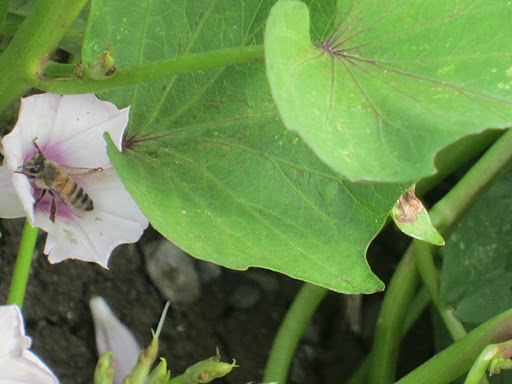
A bumblebee inside a camoteflower.
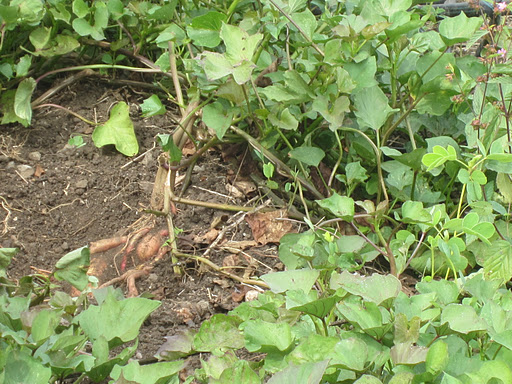
And some camote, peeking up through the soil.
A nice healthy broccoli plant…
Many thanks to our hosts. We weren’t able to spend a lot of time here. I would have loved to have toured the orchards and some of the other fields. As we left I was gifted with a huge bunch of basil and three gorgeously sweet grapefruit. I will be back, to buy some plants and produce, and to visit the terrific people we met. Thank you all!
(Link to third and final blog post from today’s journey, Los Llanitos)
UPDATE:
I am really happy to report that yesterday, Jan. 28, Sacramento and her crew were at the Mercado Orgánico Mazatlán. Conanp had submitted all their paperwork, and will be buying them a tent to aid their display. Hooray! So very happy that this trip and this post had a positive outcome in that way. Sacramento was psyched because they quickly sold out of greens and were well on their way to selling out of other vegetables as well. So glad also that MOM/Mazatlán Farmers Market and Conanp are also now in touch.
Today we had the very good fortune to meet some awesome people doing wonderful work to promote economic development, environmental sustainability, and ecotourism in La Meseta de Cacaxtla preserve.
We accompanied Gaby from CONANP (Federal Department of Natural Protected Areas) and Martha Armenta from CONREHABIT (Conservación y Rehabilitación de Fauna Silvestre) on a tour of several villages in this protected area: La Chicayota, Comunidad de Guillermo Prieto, and Los Llanitos. CONANP invested 1.5 million pesos last year (2011), with more requested for this year (2012). 100% of this money goes towards projects in the 50,000 hectare La Meseta de Cacaxtla preserve.
While the Meseta de Cacaxtla was named an ecologically and archeologically protected area in 2000—it is home to 26 species of amphibians, 59 species of reptiles, 79 species of mammals, and 340 kinds of birds, as well as to numerous pre-historic sites including Las Labradas—that status has had little meaning. No efforts were made to stop the hunting and poaching of protected animals, nor the looting of archeological sites, and the local communities continued, as they had for generations, to be generally poor and lacking in resources and infrastructure. Five years ago, however, CONANP began investing in the Meseta: ecotourism projects in Barras de Piaxtla, La Chicayota, and El Pozole, and productivity projects in Guillermo Prieto, Coyotitán, Los Llanitos, Toyua, and Mármol.
This first post will be about our first stop, La Chicayota. We have driven through this small town many times on our way to take visitors to Las Labradas, and once I know we stopped there hoping for some refreshment. CONANP federal funding is supporting quite a few plans for La Chicayota because it is the gateway to Las Labradas Petroglyphs, a UNESCO World Heritage Site. To reach it, you exit at Km. 51 on the maxipista just north of Mazatlán.
The first order of business should definitely be road improvements, as it’s long been our complaint that entrance to this gorgeous area is quite the bouncy, dusty, pot-holed endeavor! While we didn’t hear about any CONANP plans in this regard, we are still hoping federal or state tourism authorities or others are budgeting for this much-needed improvement.
The town is named after this tree, la chicayota. My dictionary tells me it is the same name in English, but I am not familiar with it.
The main street in town shows you how (un)developed La Chicayota is. The residents keep the area very well-tended, with many flowering trees and other plantings.
The community consists of 12-20 families. With CONANP funding they have built a community kitchen. It is a beautiful building using local materials, building techniques (sort of woven limbs) and builders.
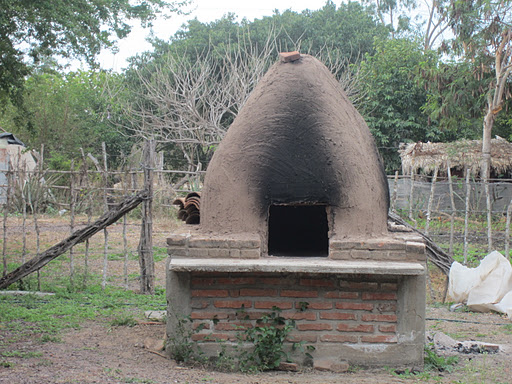
Outside the community kitchen is a large earthen oven for cooking breads.
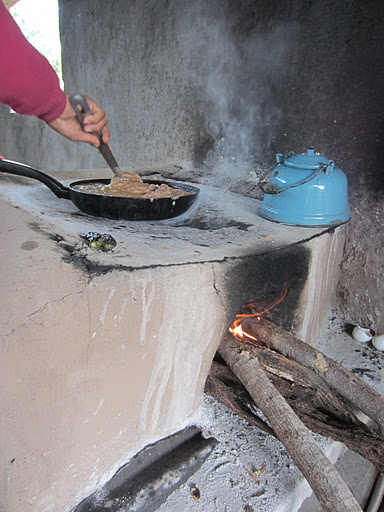
Inside the community kitchen is a wonderful wood-fired comal, great for cooking tortillas or almost anything else (cooking refried beans, below). You can tell from this cook’s smile how friendly people were and how welcome they made us feel. They are so eager to learn how to cook, give tours of their local area, and in other ways help national and international visitors to the area.
The indoor wood-fired comal smartly vents to the outdoors, and I was fascinated with how beautiful the smoke looked against the woven wood, the cactus, and the roof tiles.
Beside the indoor kitchen is a very large community meeting space or party place.
In addition to the community kitchen, there is a smaller “guest” kitchen, with another wood-fired stove and sets of dishes. Behind these two kitchens and the meeting space are public restrooms. Right now they flush by dumping a bucket of water into the basin, but there are plans to install a septic system or dry toilets.
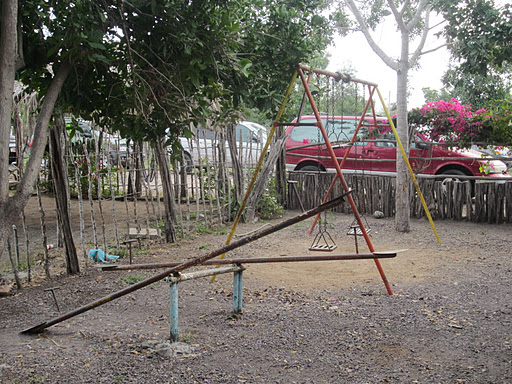
The community center area also has a nice playground for the kids: teeter totter, swings…
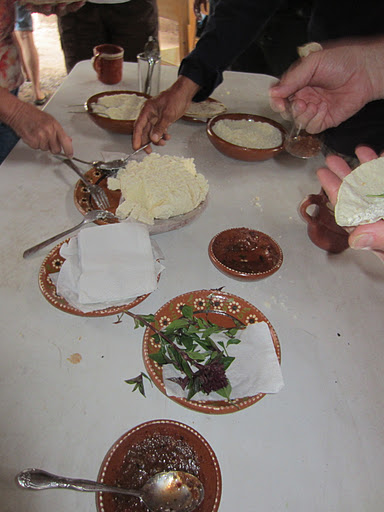
For breakfast this morning the ladies kindly served us freshly made tortillas de maiz with queso fresco (de vaca), fresh-picked basil, freshly made salsa and refried beans. They ROCKED! There is nothing like a tortilla cooked on a wood-fired comal with fresh cheese!
One of the terrific women I met here is named Nereida. She told me that the quesos or cheeses are made in a nearby town. Some are made from goat’s milk, other’s from cow’s milk, and that they are made in several different styles. She gave me her cell phone number and invited me to call her anytime, as she’d be happy to take us on a queso-making tour. I can’t wait!
Almost just as wonderful as the fresh tortillas con queso were the panes de mujer, served fresh from the oven and dripping with brown sugar glaze.
I noticed that these wonderful breads arrived from the house next door, so of course I wandered over there. In a spotlessly clean outdoor kitchen I met Silvia, mixing up some more bread dough.
She didn’t measure anything–just eyeballed and dumped all the ingredients into a bowl, mixed with warm water, and set to baking more wood-fired-oven-baked panes de mujer. OMG they were good!
Above is a video of Silvia removing the breads from her wood-fired oven or hornillo. At the end of the clip you will also see José, one of the project’s leaders.
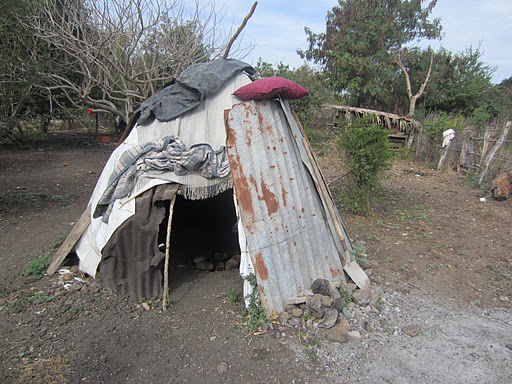
To be honest, what really brought me over to the neighbor’s house was noticing this: a temazcalor sweat lodge. Silvia told me all about how to fire it up and make it work. She said her grandchildren and her get in it every other night, and that it’s terrific for fighting colds and maintaining good health. She said after sitting in the temazcal for a while, you feel that every impurity has been cleansed from your soul. Then, she also gave me a cell number, and said to call her anytime I wanted to take a sweat. You bet I will!
This is a fish-eye view of the inside of the temazcal. You can see that Silvia and her family made it with recycled materials. No Home Depot purchases for them!
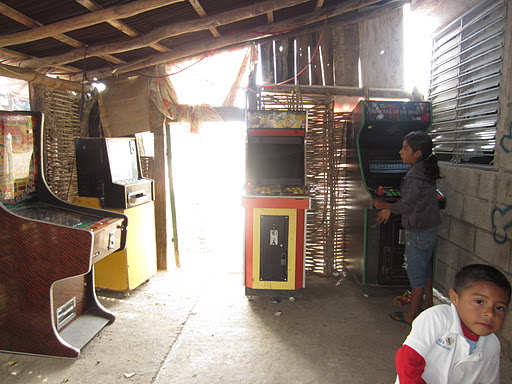
Next to Silvia’s kitchen and temazcal, on her front porch, is La Chicayota’s video arcade. The kids seem to love it.
In Chicayota you can eat, take a boat tour, go fishing, mountain biking, or horseback riding. The best way to visit, at this point in time and if you are not very comfortable with Spanish or rural Mexican travel, could be to get on one of CONANP’s tours.
Let me close this post with a video of Gaby telling us a bit of history about the Chicayota project. Martha is translating. Behind them, against the wall you can see José (far left) and Nereida (far right with glasses). To see the second post in this series, about our stop at Comunidad Guillermo Prieto’s community orchards, click here.
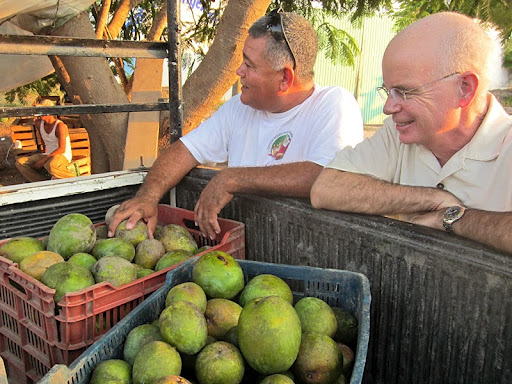
We had a FANTASTIC afternoon and evening learning about shrimping with a cast net/atarraya in the estuaries of Agua Verde, which is between Caimanero and El Rosario. We returned home with heartfelt smiles, new friends, 5 kilos of huge fresh shrimp (for which we paid about 7 bucks), a bunch of fresh crab (which our new fishermen friends gave us for free), and a bucketload of end-of-season mangoes ($4 for a crate full). ¡¡Viva Sinaloa y los Sinaloenses!!!!!!
We set out late Saturday afternoon with our compadres, Jorge and Silvia, to attend the first annual “Festival de la Frasca.” While Jorge told me “frasca” is not a word, and that I surely must be trying to say “zafra” or “open season,” local people tell us it is a southern Sinaloan term meaning “to capture shrimp from the estuary.”
The Festival de la Frasca was supposed to be a food fest with live music. But as usual they were running late setting up, and before we could really get into the party we found much more exciting things calling us.
Just one month ago we had driven this very same road, but shrimp season is now open, and it was an even more wonderful place! I HIGHLY recommend you visit during shrimping season! While the season lasts 6 months, the first few weeks are supposedly the best, as the shrimp and the shrimpers are the most plentiful.
As we drove in we saw men with cast nets (atarrayas) everywhere. Though mango season has finished, it is now the height of the shrimping season, and they have already planted tomatoes. After tomato season will come chile season, and so goes the year here.
Shrimp season is huge. We were told that opening day is like Carnaval—wall-to-wall people everywhere, with families fishing, picnicking and partying all night long. Family members come from all over the region back to Caimanero and Agua Verde to help with the shrimping, and to perform their obligations under the cooperativa(to work a minimum of so many hours and to capture a minimum of so many kilos). Women and children hang out with the fishermen, so it feels like life transfers from town to the estuary during this time.
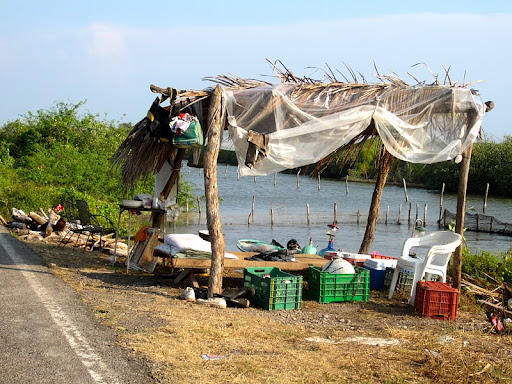
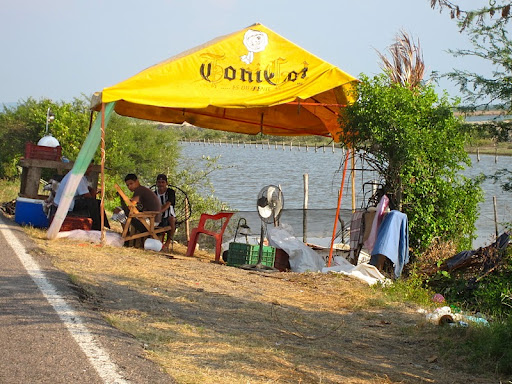
Beside the road that just two weeks ago looked so very different we saw little houses or shelters, many of them housing the shrimpers. A standard shelter like the one shown here has one or two lights powered by a propane tank, a plastic shelter for rain, chairs, a way to cook (usually a fire pit), a radio and a cell phone. As you can see, they sit just off the road. Can you imagine spending the night there with cars, trucks, and motorcycles coming by a few feet away from you all night?
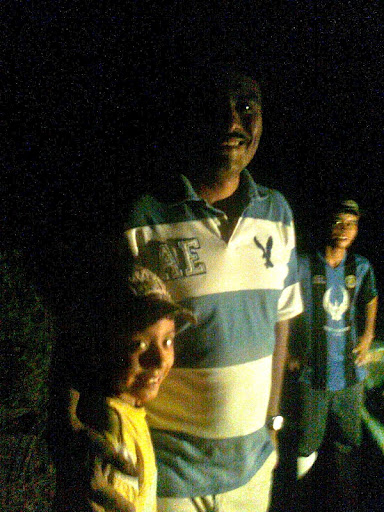
We greeted one of these guys, Rodolfo, at one of the stands, and he urged us to pull over and join him. So we did. The night crew, including Marco (who lives in Mazatlán but returns home for shrimp season), his 8 year old son and his 17 year old nephew, plus one other man, were just pulling up as we arrived.
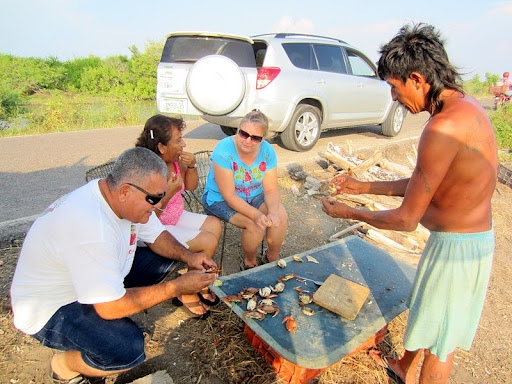
Rodolfo proceeded to feed us a whole mess of fresh crab and shrimp, beside the road, in the fresh breeze, looking out over the estuary. La vida dura. While I well know, from living in Japan, how to crack open a fresh crab, scrape out the lungs, and eat the juicy brain and meat, this fisherman really enjoyed teaching us, and my comadre, Silvia, really enjoyed learning.
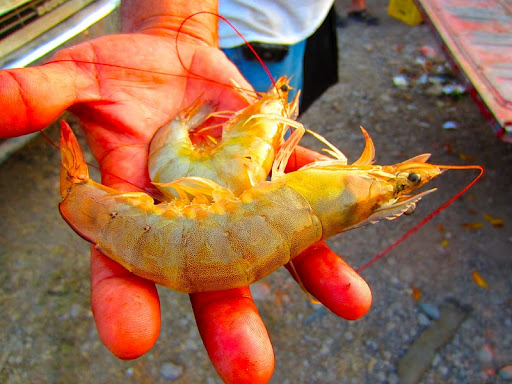
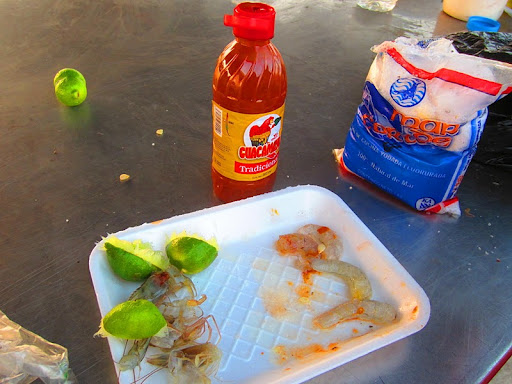
Here we also ate shrimp crudo with salt and lime (my all-time favorite—huge prawns, still wiggling; oh yum!), but he also cooked some for Silvia in a pot of broth.
We stayed here about an hour, chatting, feasting and just generally relaxing. We bought our first few kilos of shrimp, as well as receiving a huge bagful of cooked crab.
There were also many changueros, who we’ve heard about since arriving in Mazatlán, but this was the first time we met a few. They are estuary shrimpers who are not members of a cooperativa. They catch shrimp but legally are not supposed to be doing so. Many of the changueros used purina (shrimp chow) to get the shrimp up to the surface. None of the cooperativa fishermen we met used purina. They were very proud to explain to us that their shrimp were the purest.
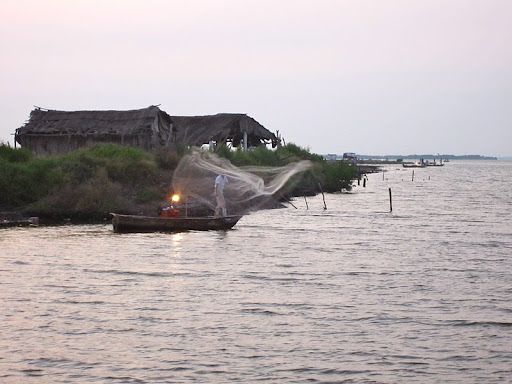
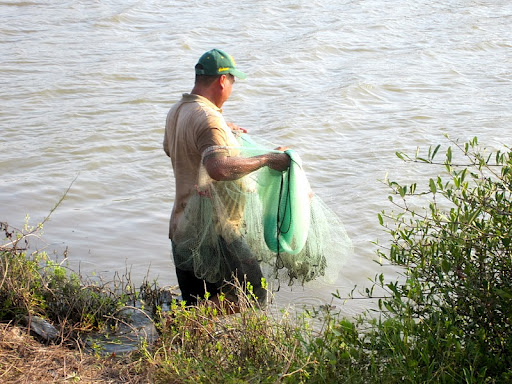
Below is a video of one shrimper casting a net, and his wife helping him take out the shrimp and put them into a bucket.
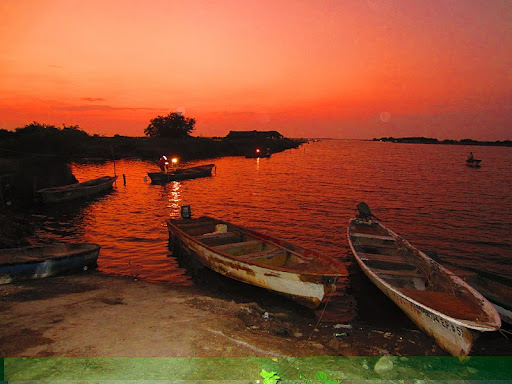
After getting back in the car, we made the rounds of several cooperativas. At the first one the view was spectacular.
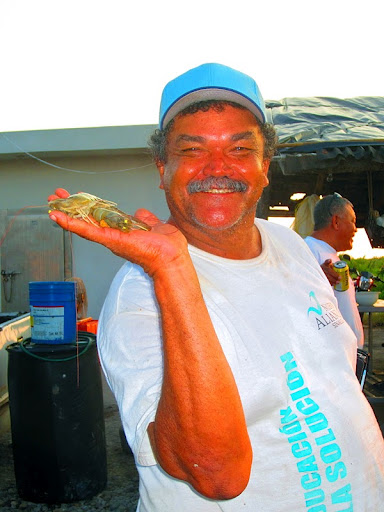
Rodrigo, a man we met there, sold us some more live shrimp. At left is his photo, and below a video of some of the shrimp wishing they could run away.
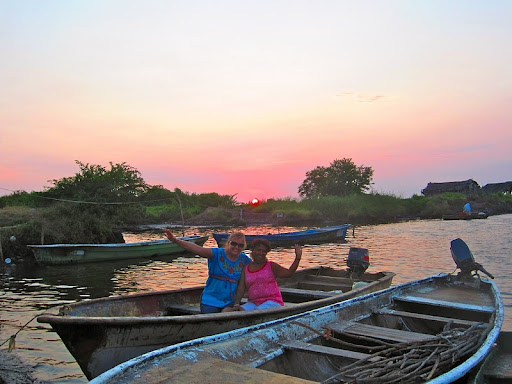
We had arrived here just in time for sunset. The sky and the water glowed. People were all so friendly, open and hospitable that it was amazing. Everyone was eager to talk, to explain this long Sinaloan shrimping tradition, and to share their catch of the day with us. To me this frasca tradition is soooo important; it’s Sinaloa’s history, and the if not some of the best shrimp in the world. And tons of it are harvested BY HAND here each year and shipped worldwide. I know such shrimping used to happen right here in Mazatlán; even next to Hotel Playa was an estuary (no wonder Zona Dorada floods).
The fishermen brought out packets of salt, fresh limes and bottles of salsa, and urged us to eat from their catch to our hearts’ content. Alfresco dining overlooking the estuary with friendly, happy, relaxed, knowledgable people; it was a wonderful afternoon. Every boy we met knew how to cast a net. They seem to start as young as seven or eight.
“Girls just wanna have fun…”
We also sat here for quite a long time, again feasting on raw shrimp (no cooked ones this time), and watching the guys cast their nets in the scenic little harbor.
The video below shows a guy casting his net from a panga, so you can see that as well as the earth-bound approach shown above.
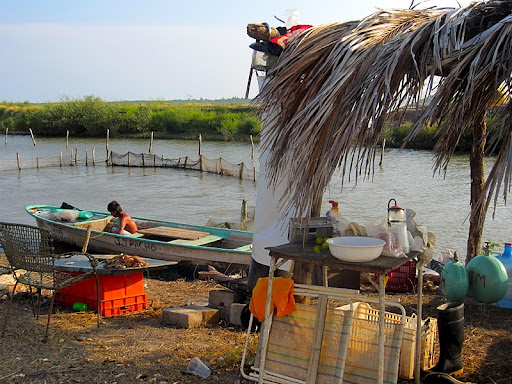
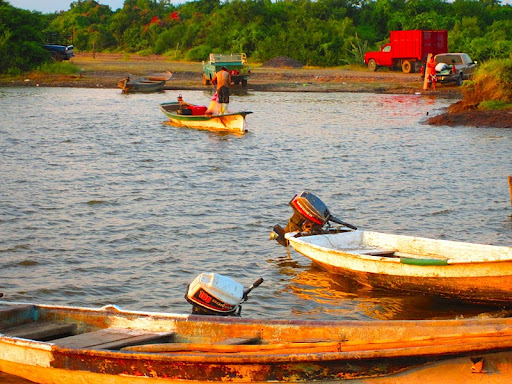
The pangas or small fishing boats go out with two guys normally, one remero or rower, and one atarrayero or net caster. Most of the estuary is only hip- or waist-deep, so the remero carries a long stick or remo and basically pushes the panga along, similar to the movement of the gondolas in Venice.
Below is a short clip of the gentleman at left rowing.
There are various cooperativas to which the shrimpers belong. This drive out to one of them was really something — estuary on either side of the road, with loads of lit pangas all around.
Below is a video, so you can get a better feel for this road-with-water-on-both-sides drive.
After visiting some very cool places and meeting lots of wonderful people, we ended up spending another couple of hours sitting with Marco and his family. It was so peaceful there, and so very pleasant. Excuse the poorer quality of the photos from here on. The batteries on our camera died, so the remaining photos are taken with our phone.
On the way out we stopped at one last cooperative, this one the largest we’d seen. Here they had a large building or warehouse, surrounded by dozens of pangasfishing. Families were sitting and standing everywhere, waiting for their husbands, fathers, boyfriends and brothers to come in with their catch.
A semi-truck full of ice was waiting nearby.
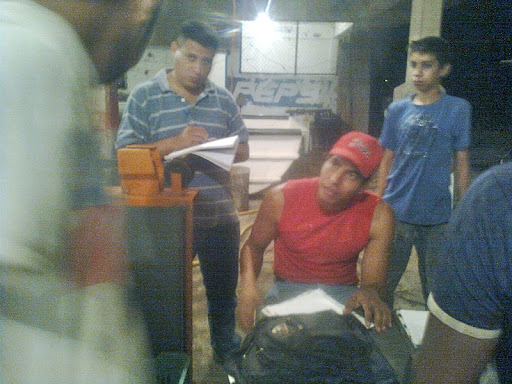
A group of men with a scale and ledgers was registering incoming shrimp.
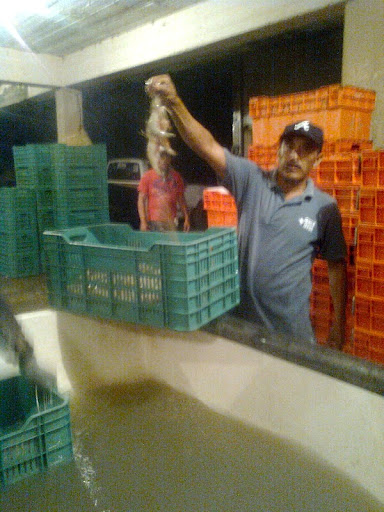
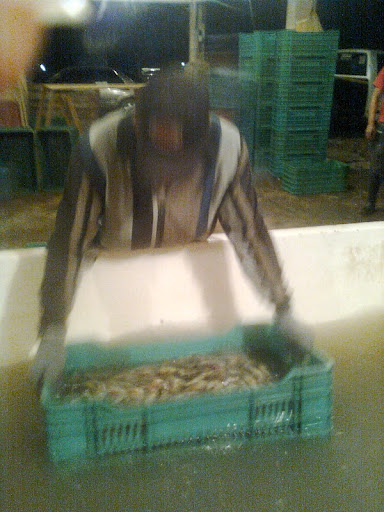
After dipping the bins full of shrimp into ice water, they placed the bins in the refrigerated truck where they are covered with ice and then taken to Mazatlán for sorting, packing and export.
It was at this last cooperative that we also saw our youngest atarrayero, this boy of about eight, at left.
We kept telling our friends that this was an otro mundo, or other world, that most guests in Mazatlán don’t know anything about or understand. We learned a lot about how the cooperativas function and about the life of a shrimper. We all got to eat live shrimp and enjoy some great company. The festival probably happened, but we know we had a lot more fun hanging out with our friends and meeting new ones. We already have plans to go back. We will definitely go opening night next year for the carnaval de cameron, and will head out some month just before the full moon when the really large shrimp are said to be much more plentiful and easier to catch. To be able to find Rodolfo and Marco’s shelter, we put their spot into our GPS and got their cell phone number. Stay tuned.








































 ¡VidaMaz!