FINALLY! Love from a sushi-snob, right here in Mazatlán

1525298_332999673504852_1928518310_n

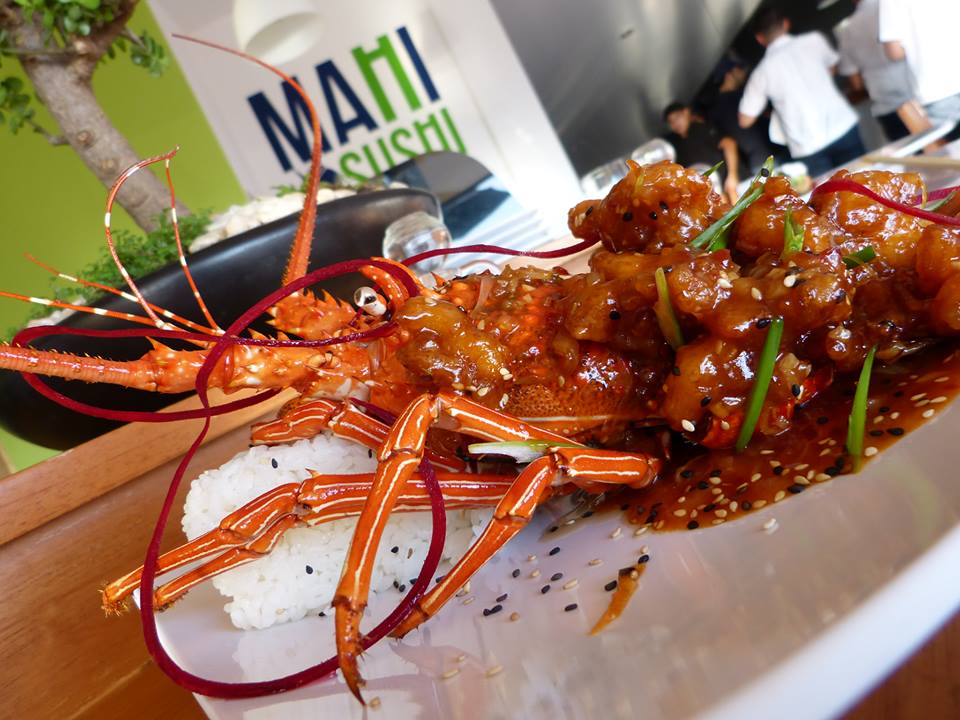
Photo from the Mahi Sushi Facebook page

It all began with a photo on Facebook, similar to the one above, posted by my friend Gaby. Since she lives much of the year in southern California, home of some awesome sushi, her message definitely got my attention:

“Deliiiiiiiciosoooo! Vengan a #mahisushibistro. Hiper recomendado! #visitamazatlan”

“Where is it, Gaby?” I quickly texted, and it turns out this magical Mahi Sushi Bistro (01 669 983 2801) is practically right next door to me, on Avenida del Mar in the former coffee shop site between the Hotel Don Pelayo and Hotel Amigos Plaza. Because today I am mourning the departure of my cousins who were visiting us for Christmas, we attempted to cheer ourselves up by trying this place.

And—oh my—what a place it is! Everything we were served was a feast for the eyes as well as the taste buds! And SUCH generous portions! We waddled out, as the taste was so good we couldn’t stop ourselves from finishing all that we were served.

With the abundant fresh-caught fish and seafood we have available to us here in Mazatlán, it makes sense that we have sushi shops on every corner. But I’ve tried many of them, and am in love with none. I will admit that, after living so many years in Japan and commuting there for over half of my life, I am a bit of a sushi snob. Cream cheese does NOT belong in quality sushi, IMHO, and sushi menus should NOT be comprised of all cooked rather than raw fish! Don’t even get me started on the mayonnaise and kamaboko (surimi) that most Mazatlecos put in sushi rolls.

While Mahi Sushi is most definitely not the traditional sushi I know and crave,  I definitely agree with my friend: do yourself a favor and check it out!

They advertise themselves as a fusion of Japanese cuisine and Sea of Cortés flavors. The menu includes fresh sashimi, some standard nigiri, a few cooked dishes, and a creative variety of sushi rolls filled with lobster, prawns, crab, mahi-mahi, sword fish, tuna, octopus, eel, oysters, marlin, masago, and roe. Add to that mango, avocado, chambray onions, and cilantro; topped with sauces such as ponzu, Thai-style green curry, or ginger dressing; and garnished with peppers (jalapeños, serranos, habaneros, Caribbean escafaldo), garlic chips, green tea salt, or black and white sesame seeds… the heady combination of international flavors made me feel that I’d died and gone to heaven! I owe you, Gaby dear!
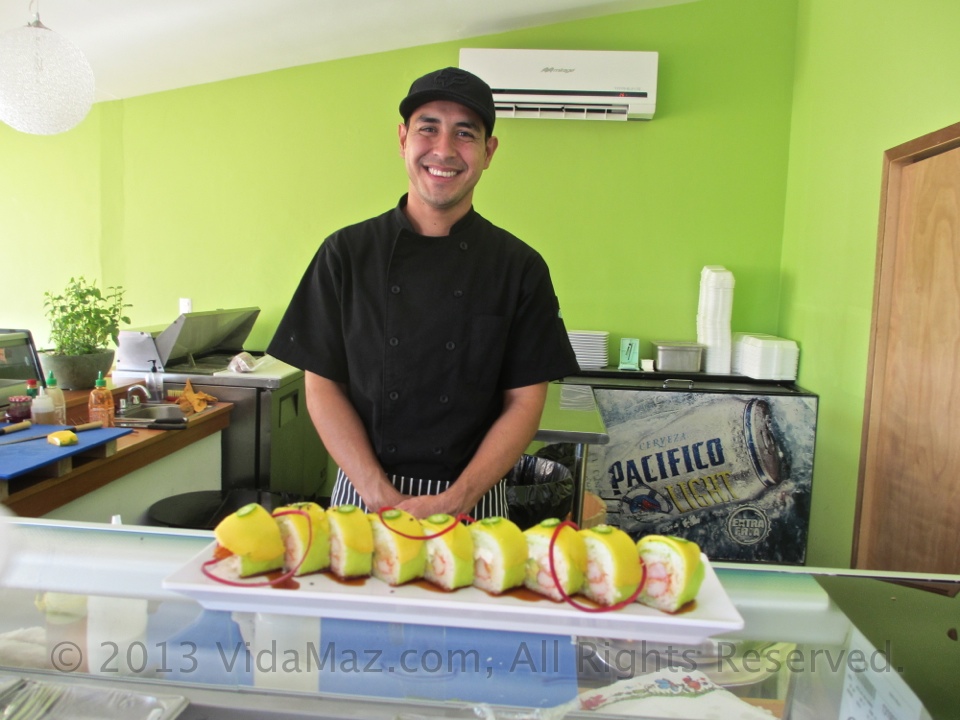
Sous chef Jorge

Sous chef Jorge and a sample of the generous portions

Chef Ricardo worked at Nick-san in Los Cabos. We are so fortunate that he has brought his eye for flair and his excellent taste to Mazatlán! He has taught his sous-chef, Jorge, who prepared all our food today, impressively well. Mahi Sushi is owned by Carlos Moreno, who is currently out of town for the holiday.

When we sat down, so many things on the menu looked so good that we were befuddled what to order. The waiter brought us over a tasting of the Sashimi Currican: spicy kani (the imitation crab made from fish cake) and avocado topped with thin slices of mahi-mahi, yuzu (soy sauce mixed with yuzu citrus fruit), and black and white sesame seeds. Oh so good! Next up were the dumplings we’d ordered as an appetizer—filled with ground smoked pork and vegetables, covered in a house sauce, served on a bed of lettuce with a beautiful fresh beet garnish.

I ordered a Mango Roll (below): spicy crab and prawn tempura wrapped in colorful soy paper, topped with fresh mango and serrano pepper. I would add that this roll did include cream cheese, which it did not need, and which was not noted on the menu. The sous chef told me it’s their only roll that includes cream cheese, unluckily for me. Other than that, the dish was superb.

Our son Danny, who always orders the best thing at the table, did so again today (below). Every one of us sopped up the incredible sauce from this dish! Crab, shrimp tempura, cilantro, mango and  avocado in a soy paper-wrapped rice roll, placed on a bed of Thai green curry sauce. This was completely to die for!

Greg ordered fried rice, which was also very good. All of this was obviously way too much food for three people, though it was all so good that not a grain of rice remained on any plate. The waiter, however, brought us a second tasting: Sashimi Black and White—thin slices of sword fish, black and white sesame seeds, purple onion relish, a crisp-fried slice of garlic, and a bit of curry oil, served on a bed of ponzu. This too was awesome.
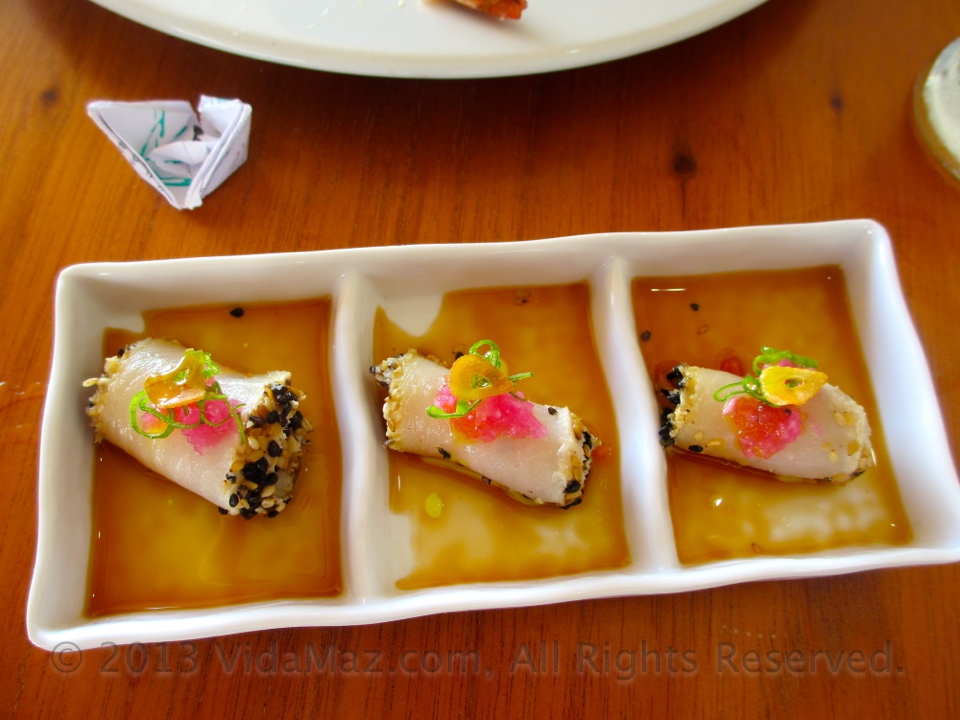
Sashimi Black and White

Sashimi Black and White

The interior of Mahi Sushi is simple, clean, bright and pleasant.

The views from the restaurant are direct to the ocean, the islands, and downtown, looking past the cars on the Avenue, of course.

I was enthralled with Mahi Sushi, and hope it will succeed. It is a wonderful addition to our local restaurant scene. Because it’s a new place, and the staff seems dedicated and enthusiastic, I’d like to offer a few small (nitpick but important) suggestions in hopes that they might be helpful.

  1. With a place of this caliber and this price point (on the high end for Mazatlán), please purchase some chopstick rests (or chopstick “pillows,” as we say in Japanese). Otherwise the waiters have to touch our chopsticks as they clear the dishes, which is far from ideal. The rests would also add a quality look to the table setting.
  2. The climate here in Mazatlán demands coasters for cold drink glasses, or the table quickly becomes flooded. I improvised both the rests and the coasters for us today (photo below).
  3. The generous dish of shouga/pickled ginger and the beautiful serving of wasabi were terrific. I was disappointed, however, that just like every other sushi place in town, I had to ask for wasabi in order to get it. If these gorgeous dishes were served without the customer having to specially request them, wouldn’t that be wonderful? Maybe that’s too wasteful for those who don’t eat them?
  4. PLEASE purchase some green tea and a teapot! 😉

I do hope that Mahi Sushi Bistro meets with much success. They already appear to get quite crowded in the evening, and with a young, hip crowd of clientele. Let us hope!

NOTE: Each time we write about a restaurant, we receive requests and suggestions for other restaurants to review. VidaMaz does not write restaurant reviews. We write about our every day life here, as expats in Mazatlán (“la vida Mazatleca”). If we happen upon a restaurant, bar or shop that we love or think is noteworthy, we often publish about it (if our busy lives permit). We trust you’ll understand.

So So Happy for Southern Sinaloa Organics

Productos Rivera logo¡Mil felicidades a Productos Rivera!

You probably recognize them from our Saturday Mazatlán Farmers’ Market. Productos Rivera are from Escuinapa, just south of Mazatlán, and have been growing mangoes since 1970. They hold US organic certification. Today in the Noroeste I read that they have just signed a new contract with UK-based Marks and Spencer.

I’m so excited for southern Sinaloa, for our farming industry, and especially for organic farming in this gorgeous part of our fair state! Thank you for leading the way and strengthening our local economy, our environment, our health, and our reputation in world markets!

22,000 hectares of land around Escuinapa, Concordia and El Rosario are dedicated to mango; southern Sinaloa has perfect conditions and micro-climates for the best mangoes the world has to offer. Productos Rivera already sell their mangoes in the US market, and they have been attending international trade shows and trying to crack the European market for the past 15 years.

In an attempt to provide more year-round employment to the 150 people they employ in season (May-September), Productos Rivera began dehydrating mangoes in 1995. They sell fresh as well as dried mango, dried mango with chile, and decorative dried fruit arrangements. To quote the Noroeste article, “Last year we produced 50,000 tons of mangoes, and most of it was exported fresh to the USA. But we need to find a way to add value to our product and to differentiate it, because when we have good harvests and lots of mango, the prices fall,” said Ernesto Rivera Valdez, Director General of the firm.

Productos Rivera already exports about 100 tons of dehydrated mango per year to the US, where they are sold in Starbucks, Whole Foods, CVS, Draeger’s, Wegmans, and Hudson News. Thanks to this new agreement, an initial shipment of nine tons of dried local mango will soon depart for London. May the Londoners learn what we already know: Sinaloan mangoes ROCK!


Photos of the 2013 Chicken Breakfast/Entrega de los Pollos

More chickens than ever (2300 families), more despensas/food packets than ever (1164), more routes and more volunteers. Handing out of the chickens this year was a terrific time, as usual. Hearty thanks to all who participated, and to Yolanda for leading us in this effort for 21 years.

Merry Christmas, everyone! We are so fortunate to be able to share with others in this way. The smiles and hugs of the people on our route in San Antonio, their joy, was the best gift I can imagine. See below for photos from this year (mouseover to view larger; click to view slideshow).


Fiesta de las Velas Candlelight Procession in Cosala

DSC_0312

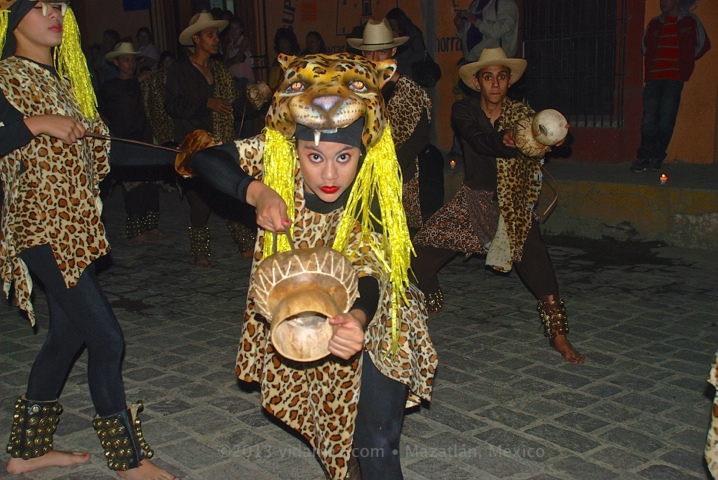
Danza del Jaguar

We have long loved the small town of Cosalá, the first and very well deserved “Pueblo Mágico” (2005) of Sinaloa. It’s history is well preserved in its lovely architecture as well as the lifestyle of its people. This year we were able to take time off work to attend the Fiesta de las Velas, which is held every December 11th, on the eve of Virgin of Guadalupe Day.

The candlelight procession was an absolute delight! It was not a “spectacle” or performance, as so many of these events become in larger cities. Cosalá’s homage to the Virgen is home-spun loveliness. The procession is a tradition that dates back over 300 years, and is the only event of its kind in Mexico or throughout the world! As Cosalá is only 2-1/2 hours from Mazatlán, we highly recommend you make the journey!

Mouse-over any photo to view it larger or see a slideshow, and be sure to scroll down to read the full post—there are lots of pictures in this one, as so much happened in such a very short time!

People all over town began lighting candles at dusk, setting them out in front of their homes and businesses, along the curb, on window ledges, and atop rock walls. We saw a wide variety of different candles: tapers, candles in glass, votives in glass, candles in plastic cups, and even beautiful Virgen de Guadalupe votives, so we supposed that each family buys its own candles to put out on this very special night.

As soon as the candles are lit, the children, of course, begin to have fun with them. What little boy can resist a burning flame? I very much enjoyed watching these three boys light sparklers from the candles their mother had just lit, squealing in delight. The entire night was just a joy.

At 7:00 pm, the electric lights in the city went dark, and the entire pueblo took on the lovely glow of candlelight. It was truly a sight to behold! The streets were nearly empty except for those waiting for the procession to reach them, so they could join in. The winding streets lined with glowing candles, street lights draped and shaded, it was truly magical.

As we walked around the pueblo, marveling at the beauty, we noticed a miniature Christmas village displayed in a window. The lady of the house quickly came out to invite us inside. This very humble-looking-from-streetside home was huge and wonderful inside! And its family was so very hospitable! We entered into a courtyard with a life-sized nativity, through to the living room with a huge Christmas tree and the village we had first noticed, past a large statue of the Virgin to another living room with a tree hung from the ceiling, out to a back courtyard that was strung with beautiful twinkle lights. Later on, we met the ladies of the house again during a procession.

The procession wound around town, lasting perhaps an hour and a half, growing larger and larger as more and more people joined in. The procession is most definitely inter-generational: grandmothers and children, husbands and wives, groups of teenaged friends or middle-aged women, all walking with candles in hand. This event was most definitely a photography challenge! In addition to low light, you have constantly moving targets! How to possibly capture candlelight and people moving? I’m sure many have done better than I did, but at least you’ll get an idea of the beauty and preciousness of it all, I hope.

The painting of the Virgin is held high, on the shoulders of local men, as she is fêted. In addition to the main image in the procession, there are of course images of the Virgen all over town to celebrate her on her special day.

People in the procession were singing and praying as they made their pilgrimage through town, from one church to another and back. There were also two groups of dancers in the procession. One group of mostly young girls carried a candle in each hand and danced in a choreographed way each time La Guadalupana was sung. They had their heads covered and were dressed in gowns, to represent the Virgen, I believe. The drummer accompanying this group was a boy dressed in a shirt with a beautiful image of the Virgen on the front.

The second dance group of the evening were the teenagers who performed the Danza del Jaguar, native to Cosalá. The young men act as hunters, while the young women act the role of jaguars, hiding, running from, and occasionally leaping at the young men. They play these terrific instruments called rotares: hollow so they’ll reverberate, with a leather cord attached that is pulled to create the sound of a jaguar roaring. Accompanying the dancers was a small band, in the back of a pickup truck, with several drums, more rotares, and other percussion instruments. This group walked immediately in front of the Virgin, and we were told that their dance clears the way of any bad spirits, cleansing and purifying the route for today’s honored guest.

The following morning as we were walking through the plaza, we noticed two of the jaguar dancers from the night before. The young woman, Maribel, had such striking eyes that we immediately recognized her. She was very congenial and outgoing, and was so very pleased when I asked her to tell us the story of the jaguar dance.

The procession ended at one of the town’s churches, where an outdoor Mass had been set up. The painting of the Virgen was proudly displayed on the altar, and Father Nahúm Villalobos said a heartfelt Mass attended by hundreds who crowded into the yard and filled the church proper to overflowing.

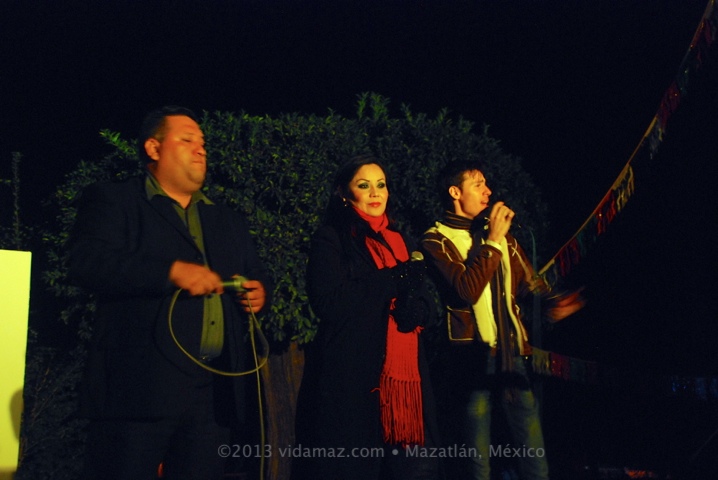
During the Mass, Victor Franco debuted a new song he had written for the town, Cosalá Bendita. We felt very privileged to be able to hear it as it was performed for the first time ever, in the presence of so many Cosaltecos who seemed incredibly moved by its words and melody.

After Mass concluded the outgoing Mayor of Cosalá, Mario Cuauhtémoc Padilla, and Francisco Córdova, State Secretary of Tourism, announced that the town had just officially named Fiesta de las Velas as a cultural heritage event. Next steps will be to seek state, then national, and finally, hopefully U.N. designation for this gorgeous event. I can not imagine it will stay small, sweet and uncrowded for many more years.

Following that ceremony was a singing performance, which culminated in singing Las Mañanitas to the Virgin.

Show

Our friends Sandra and Hector took us on this wonderful trip. They seemed to know absolutely everyone in town, so we felt so very welcome, and our friends Jeanette and Emery joined us as well. I will later do a post on the town itself, and our adventures the day following the procession, but let me leave this post here. It is definitely worth planning for next year. There are good restaurants in Cosalá, and several categories of hotels as well. I’d recommend you go up and stay two nights, as on the 12th there were fireworks, a town fair, and a children’s parade.

I put together a two minute video of the procession, including a bit of both dances and the prayers. You can view that below.

400 Years of Japan-Mexico Relations:舞書楽

1480733_206475372870422_83837982_n

This year is the 400th anniversary of diplomatic and trade relations between my two beloved adopted nations: Mexico, with which I fell in one when I was 12, and Japan, with which I fell in love when I was 19. And oh, what a love affair both have been!

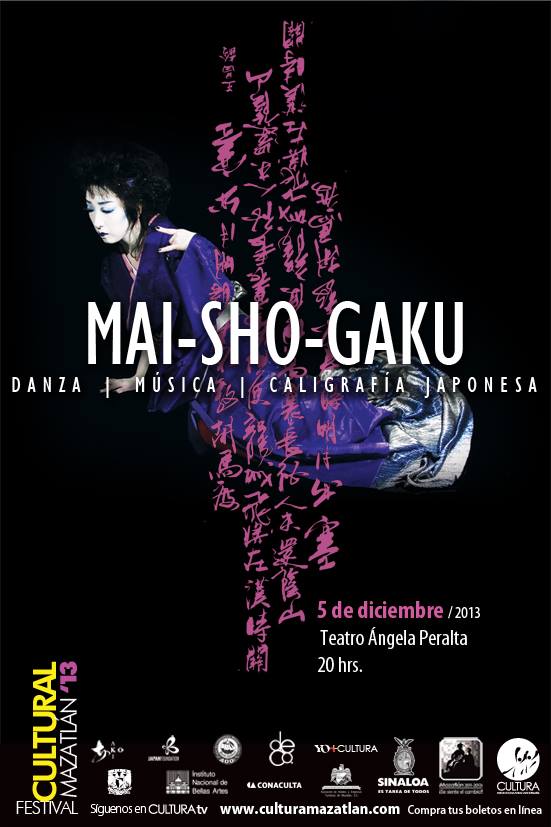
On Thursday, December 5, we were fortunate to be able to attend a performance entitled
「舞書楽」—  MaiShoGaku, or “dance, calligraphy and music,” written and performed by Irene Akiko Iida, choreographed by her and Arturo Tames, with music by Alejandro Méndez.

The piece is the story of the inner struggles of a Buddhist monk to achieve enlightenment, struggling with the elements of water and fire, using the discipline of calligraphy to work through and free himself from emotion. Accompanied by taiko drumming and some incredible vocalizations, it made for an evening far from the norm here in Mazatlán.

As always, thank you CULTURA Mazatlán, for helping us retain our cultural connections with the world in which we live.