Most Important Archeological Site in Northwestern Mexico: Chametla

©40.DSC_0263It always amazes me how we can have hugely rich archeological history very close by that goes unsung and unvalued, while we all dream about seeing the more famous sites. You know what they say about prophets in their own land, and I guess that’s true about places as well; we don’t value those nearby.

I’ve told you before that archeological evidence indicates that Mexcaltitán, just three hours south of Mazatlán, was probably the original Tenochtitlán—that Mezcaltitán was the legendary Aztlán, where the Aztecs (Mexica) lived before they moved to the Valley of Mexico. It’s so very close, our own gorgeous little Venice, yet we hardly hear about it.

I’ve also heard many people say that here in Sinaloa historically there were no native peoples; that we don’t have indigenous crafts or artwork because this area was only populated after the discovery of minerals in the mountains and the influx of Europeans. Hogwash! I’ve written before about the Mayo-Yoremes in the northern part of our state. Down here in the south, Totorames lived on the coast. They spread over quite a wide territory, as most of southern Sinaloa was connected by estuary; using a canoe they could easily get from one place to another. The Totorames often fought with the cannibalistic Acaxes and Xiximes who lived up in the Sierra Madres.
©31.DSC_0202

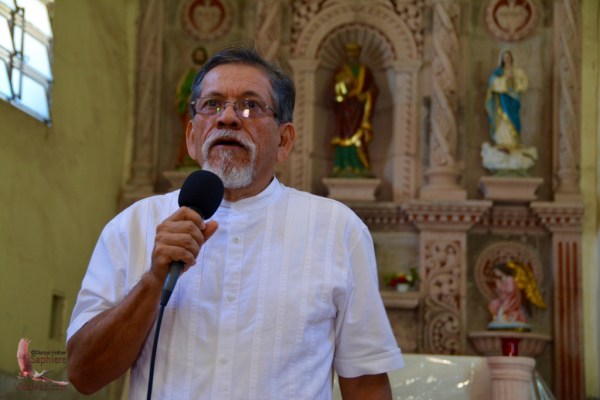
Joaquin Hernández

This week I learned from our friend, Joaquin Hernández, that Chametla—just 90 minutes from Mazatlán in the municipio of El Rosario—is the most important archeological site in all of northwestern Mexico! In Chametla are at least two pyramids built in pre-Hispanic times by the Totorames. Both were sacred sites, with platforms on top for sacrifices. Hernán Cortés himself visited Chametla, in 1535, before traveling over to La Paz; there are written documents and paintings that record this fact. Legend has it that he sat in the Cueva del Diablo looking out over the entire valley.

Near Chametla were 22 pre-Hispanic towns. What attracted so many Totorames to Chametla? The area is home to seven hills, which contain many caves. The Rio Baluarte runs through it; it’s very close to the Pacific Ocean; it’s fertile land; there’s jungle as well; and it’s right in the middle of the wonderful estuary system where historically mangroves and shrimp have thrived. In ancient times, there were three regions in southern Sinaloa: Sinaloa, Culiacán, and Chametla. Chametla comprised the territory from Escuinapa in the south to Piaxtla in the north. Only later was Mazatlán founded (on the present site of Villa Unión).

So, where are these pyramids? The first is the setting of the church in Chametla, at the foot of Cerro de San Pedro. I took some photos, but the pyramid is much easier to see live and in person. The church is built at the top, on the platform of the pyramid, while the lower part of the pyramid goes way beyond the church and down the hill. You can see that it’s man-made.

In 1935, when they were renovating the church, they found a secret passageway behind the altar that led to an underground cave. There they found “pagan” icons and relics, so the church quickly sealed it all back up. There was a second entrance to the cave just outside the church, at the entrance to where the original church was located. That cave entrance is now covered with a huge boulder. Click on any photo to enlarge it or view a slideshow.

Cool, huh? Not as visually stunning as a Chichen-Itza, by any means, as this pyramid has been built on and tweaked over and over throughout the millennia; it’s located right in the center of town. But, you can most definitely see its vestiges. The conquista of course was not just about conquering territory or even people; the conquistadores wanted to conquer the entire culture. So many churches are built on sacred sites of the indigenous peoples, as in Chametla.

And where is the second pyramid? It’s a 400-meter pyramid on which the local cemetery is built, also clearly visible. Local people say that when graves are dug, they almost always dig up pottery and other relics from the Totorame. The best specimens of these can be found in the small museum that is right next door to the church.


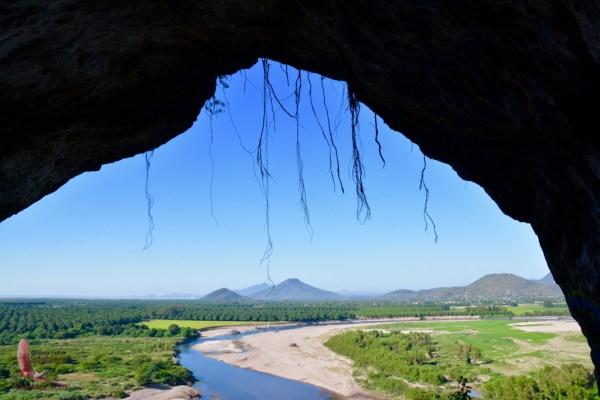
If you go to Chametla, I’d urge you to hike the 365 steps up El Cerro de la Cueva del Diablo. At the top is a man-made cave, obviously another sacred site, with a view of the entire river valley, estuary, ocean… The view is spectacular. It is in the cave that you’ll see an indentation that looks like two butt cheeks, and legend says that’s where Cortés sat. While he wasn’t in Chametla long enough to carve a seat, he may have enjoyed the gorgeous view, with the opening of the cave mirroring the curve of the hill it faces. On many of the hills in the area you’ll find platforms, indicating they were sacred sites; Loma de Ramírez has a 100 meter x 100 meter platform. The area is splendid for hiking, with a diversity of flora and fauna as well as elevation and lots of water.

Joaquin is quite the historian. He has spent much time researching, talking to locals, hiking around; traveling with him and his daughter was a joy. One final tidbit he told us? One of the seven hills in Chametla is called Cerro de las Cabras. However, no one has ever heard of there being goats on that hill. Joaquin found an old, old manuscript that referred to a hill in Chametla as Tetas de Cabras, or “Goat Tits.” His guess is that the vulgar-sounding part of the name was dropped or lost, so that only the goat part remains in modern times.

Joaquin speaks excellent English, as he lived and studied in San Francisco for several years. He frequently conducts presentations in both Spanish and English, so be sure to catch one if you are interested in history, literature… any of the many themes that spark the curiosity of this Renaissance man.

We happened to visit Chametla during the festival Chameitlán, celebrating 485 years since the founding of the town. I captured a photo of the cake and a few of the kids breaking the piñata. That’s Hernán Cortés on the piñata, the children told me—not at all like I pictured him to look!

After Mass, the cake and the piñata, there was a parade through town. We didn’t stay for it, but the young men in the Nautica band played, and the kids seemed to dress up as Indians. I also include a few other photos of the town.

If you enjoy hiking, history, archeology, kayaking, or if you’d just like to visit a small town and the estuary where the shrimpers still cast their atarrayas or hand nets, Chametla is a beautiful place to visit!

Farm to Table 2016—Unbelievably Better than the First!

©08.DSC_0308The Farm to Table is absolutely the best food event of the year, IMHO. Ok, Delfos’ Cuerpo Gourmet is really cool, too, and it involves performance art as well as good food in a great setting. But nothing beats great food and awesome friends in the fresh air and sunshine on a nice cool day! FTT took place on Sunday, 20 minutes north of Mazatlán, at Chuy Lizárraga’s organic farm in El Recreo. The farm is just off the highway, at kilometer 21 heading north on the toll road towards Culiacán. All 150 or so of us absolutely had a MARVELOUS time!

The day didn’t start out so great. I was so excited to have our son, Danny, home from school for Farm to Table this year. We planned to go together—along with a large group of friends with kids his age—and it was to be a wonderful way to celebrate one last hurrah as a family before he left today. Alas, Danny got sick, and had to cancel out on Sunday morning. So, we all went and had a good time, while he stayed home alone on his last day, suffering. 😦

The day fortunately ended up wonderfully. Danny felt better this morning, and I yet again realized how very blessed we are with wonderful, talented, interesting friends. What an absolutely spectacular day we had! Thank you all for joining us! And for bringing your heartfelt smiles and laughter!

The event featured seven food courses prepared on site by seven chefs—two from Culiacán and the rest from our own beloved port. In addition to the excellent cuisine, we had all-we-could-drink cucumber-mint margaritas, red and white wine, and Mazatlán’s own micro-brew, Tres Islas . So, what was on the menu, and who prepared it?

  1. Welcome cocktail—those cucumber-mint margaritas made with Mazatlán’s own Los Osuna—prepared by Chef Alistair Porteous, Water’s Edge
  2. Green ceviche—shrimp, mahi, avocado, cilantro, parsley, garlic, chilaca and anaheim chile pesto—by Chefs Gabriel Ocampo and Luis Vargas, FISH
  3. Tres Islas micro-brew—Belgian-style, amber color, light body, dry finish, notes of fruits and spices—by Brewmaster Edvin Jonsson
  4. Dual temperature salad—grilled eggplant and portobello, squash that had been roasted in the ground, tomato trilogy and sweet baby bell peppers with a cranberry, raspbery and balsamic vinaigrette—by Chef Daniel Soto, El Caprichito Mio
  5. Traditional risotto—on a bed of huitlachoche/corn truffles, with radish garnish, parmesan crust, and tempura zucchini blossoms—by Enrique Freyre, Raggio Cucina Casual
  6. My favorite: grilled sea bass—in a smoked tomatillo sauce topped with seafood gratin—by Chef Luis Osuna of Cayenna
  7. Greg’s favorite: chamorro/pork shoulder rib—braised with red wine, star anise, garlic, cumin and thyme—by Chef Alistair Porteous, Water’s Edge
  8. Cabernet Sauvignon and Sauvignon Blanc from Chucaro, along with hibiscus tea
  9. Fresh fruit and cheese petit fours, plus incredible breads—by Susan Reynolds, Miel Fresh Baked Goods
  10. Dessert coffee—organic Chiapas espresso with a spiced date pure over vanilla ice cream, topped with toasted almonds and coconut—by Marianne Bisotti of Rico’s Café

This was the second Farm to Table that’s been held, and I’m told it will now be an annual event. Thank goodness! We sat at long tables covered with white linen and decorated with sunflowers, in the middle of a green pepper field. We were entertained with saxophone music and a raffle, and were able to purchase the centerpieces to take home. The proceeds from a silent auction at the end, with LOADS of wonderful gift baskets, all went to Floreser.

Are you wondering who organized this event? Our thanks go to geniuses Alastair Porteous, Sarah Emerson and Chuy Lizárraga for the vision. Though, of course, execution is thanks to a huge team of talented and passionate people!

If you want to get one of the limited number of tickets for this event next year, get your name on a list with any of the participating chefs/restaurants now. BLESS YOU ALL who made this event happen!

PS: is your mouth watering? Want more? Read about the first FTT here.

Ballenas Jorobadas: Whale Watching in Mazatlán

©2.DSC_0552-EditDo you know that only two types of whales sing? Lucky for us, the humpbacks that frequent the waters of Mazatlán are most definitely singers! The males are the ones that sing, and they do it to attract a mate. They invent new sounds in order to get noticed, and then, just like humans, other whales then copy their innovations.

Our family goes whale watching at least once each year (lots more info and pics in my posts from 2015, the trip with thousands of manta rays, swimming with dolphins in 2013, and a trip back in 2009 in which the whales approached nearly close enough to touch, and engaged in a lot of slapping and wrestling). We go out with Onca Expeditions, and they have a cute little gizmo (amplifier) they stick into the water to allow all of us on the boat to hear the whales’ singing. It’s awesome!

©1.DSC_0434.jpg

Not only do the humpbacks sing, they also love to do acrobatics. Often you will see them curling up out of the water and then diving down, tail raised into the air. When they’re competing for mates you can watch them slapping each other around. The humpbacks will breach, often with their full body in the air above the water, in an attempt to impress a female. Once couples pair off, the acrobatics tend to die down as well; lovers in love are more gentle than that. Often times mothers arrive here with their calves, which is gorgeous to watch. Click on any photo to enlarge it or to view a slideshow.

Whale watching season here is during the winter, and it is one of the activities I most highly recommend for you to do here in Mazatlán. Onca’s guides are marine biologists who are actively engaged in researching the cetaceans that frequent our waters. According to Jesús, who took us out this time, Onca has catalogued 420 whales since Oscar Guzón started his research in our waters, but they’ve only gotten through 2010 data. Jesús told me he believes they have photos and data on 1100 unique tails!

While I’ve been told humpbacks live to be about 50 years old, Jesús said they can live to be 80 or 100. He told me the age of a whale is determined via DNA testing and sometimes via photo ID. They’ve also found whales with bone harpoons stuck in them—sort of reminiscent of Moby Dick, don’t you think?

The official viewing distance for whale watching is 16 meters; no boat in our waters should approach closer than that, although if the whales approach your boat, lucky for you. I was told the humpbacks swim about 10 knots per hour, and the babies drink eight liters of milk per day.

Do not miss your chance to see these magnificent creatures in their natural habitat! We do it every year, and never tire of the experience.


Las Labradas on New Years

©11.DSC_0227-Edit
Happy New Year! May the Year of the Monkey bring you much joy, playfulness, flexibility, creativity and community!

We all know and love Las Labradas, the gorgeous National Cultural Heritage site with its incredible oceanside petroglyphs that is located just north of Mazatlán in Chicayota. What better, more beautiful and sacred place, to bring in the new year? So we headed there today after lunch.

The petroglyphs include crosses, foxes, spirals, cats, pelicans, and people—faces, figures, arms, hands, the hunters, the swimmer. Last time we visited the new museum was operational. This time we were happy to see that signs have been installed along the path, pointing to key petroglyphs, and there is a small brochure with a map, which really helps. In addition to the magic of the petroglyphs, the site is absolutely gorgeous, as well. Click on any photo to enlarge it or view a slideshow.

Most of the petroglyphs are from 750 to 1250 CE, but some could be as old as 3000 BCE. We very much enjoyed the ride and the hike, and our New Year’s toast with Danny and his roommate. It is so very wonderful to have our boy home with us for winter break!

Danny brought me some camera filters for Christmas, including a neutral density filter. It allows me to take long exposures without letting in too much light. In the photos below, you can see several shots taken at normal quick exposure, followed by the same shot taken with the ND filter and the lens open for a couple of seconds (of course using a tripod). Note that the ocean waves start to look soft, smooth, and misty. It’s a whole different look, and both ways of course have their advantages.

Driving up to Las Labradas, there was a HUGE snake in the middle of the road. He had to be about five feet long and about 6-8 inches around. Scary! A few pics of him are below, taken before he slithered away into the brush.  Anybody know what he is? Is he dangerous? I wanted to get close enough to get a good pic of his eye, but caution prevailed.

I also have to share a few of the pelicans playing in the pre-sunset color, and the two kids on a motorcycle on the beach. On the way out, I couldn’t resist getting a few final photos of a regal rooster. Does he look proud or what?

Happy New Year, everyone! I trust the year will bring blessings and, most of all, peace.


No Child Labor a Good Thing?

©1.DSC_0402

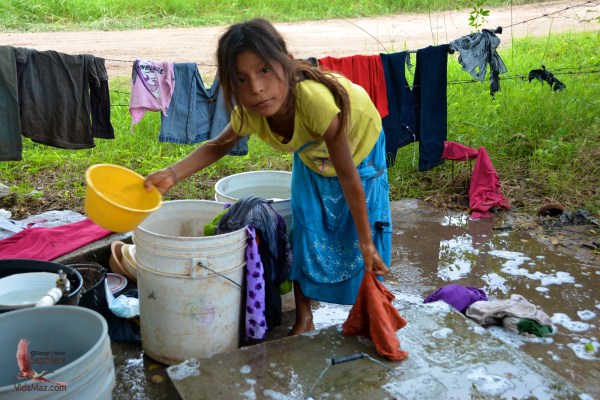
Doing the wash while her parents are in the fields

The plight of migrant agricultural workers sadly continues, decades after César Chavez’ death.

In one month this year, five children died just in the migrant camps of Teacapán: one fell into a ravine, another was bit by a scorpion, a third choked, a fourth drowned in an uncovered tinaco… On our trip to visit the migrant workers in Teacapán recently, we met a family that had lost a two year old just a few months ago. Such is what happens when adults need to work in the fields to feed their families, and children are left home to take care of younger siblings and neighbor kids. Click on any photo in this post to enlarge it or view a slideshow.

Most of us can agree that child labor isn’t a good thing. Many of us perhaps campaigned or voted to outlaw child labor. Grocery stores up north won’t buy produce harvested by children, so the local growers are vigilant to ensure that children don’t participate in agricultural activities. But, with the absence of effective support systems, and given the horribly inequitable economy in which we live, outlawing child labor has meant that children are dying, and are not being educated, in record numbers.

The thousands of migrant workers in Sinaloa come from places like Oaxaca, Chiapas, Guerrero—poorer states of the republic. Most of the workers are native Mexicans: Miztecos, Zapotecos… Many of them don’t speak Spanish, as it’s a foreign language to them. Most of them don’t have birth certificates or official documentation, as they were born at home and it’s not their custom to register with the government. Given the lack of language and birth certificates, most migrants are unable to enroll their children in school.

Sound like a hard life? Add to it the fact that the migrant workers are treated like outsiders in most any community in which they work. In Teacapán, for example, I was told the migrants pay 2000 to 3000 pesos a month for rent—of a ROOM, with no running water, no furniture, and most definitely no toilet or kitchen. It was heartbreaking to see.

During my trip to visit the migrant workers, there were still huge puddles of standing water on the roads, in the yards and fields. I was told that Hurricane Patricia dumped 25 inches of rain on Teacapán in 15 hours; the puddles were the months-later remnants of the flooding.

The migrant workers are disciminated against. Many of the townspeople tell their children to stay away from the migrants; they call them filthy and stupid. I suppose if I didn’t have access to water or a toilet at home, I’d be dirty, too. Last Christmas a church in Mazatlán brought toys to the migrant workers’ kids, and some of the townspeople made such a stink because their kids didn’t get toys, that the church was afraid to go back this year. The mistreatment of migrants is by no means limited to Teacapán; that is just where I happened to go visit them.

The migrant workers told me they stay here in Sinaloa for about six months, then travel to Baja or Zacatecas to continue their labors, rotating their residence to follow the agricultural cycle. One worker told me he is paid two pesos for a bucket of chiles; how is that for exploitation! Can you imagine how long it must take to pick a bucket of chiles? Women work all day in the fields, then return home in the evening to cook and care for the kids.

I went to visit the migrant worker families on a trip organized by Sue Parker of Vecinos con Cariño. Each of the ten or so of us on the trip that day paid 400 pesos, money which is used to buy food, disposable diapers, baby formula, and basic medical supplies (cough syrup, cold medicine, aspirin, first aid supplies), after paying the expenses of the van and driver.

In Teacapán we visited the home of Helen and Jerry Lohman. They have a gorgeous place, right on the ocean. Their yard is the biggest stretch of green grass I’ve seen in Mexico outside a golf course. The Lohmans and their driver, Ulises Gil Altamirano (a retired engineer), do all they can to help the migrant workers. Helen has learned the hard way that the migrants do not like to wear shoes (they wear huaraches or go barefoot), nor do the women wear slacks. She has personally sewn 22 pairs of jeans, 57 dresses, and 72 receiving blankets that she’s given out to the migrant families just in the past couple of months. She has five volunteers who now help her. Ulises works as ambulance driver, interpreter, and lawyer for many of the migrant families.

On this trip we also met Brenda Irvin, who lives in Teacapán with her husband. Despite having her arm in a sling, Brenda goes out three days a week every week to hand out nutritive biscuits and milk to the migrant children. Oh how they look forward to her visits! She has divided the town into four zones, and each of the days she goes out, she visits a different zone, in rotation.

Brenda, the Lohmans and Ulises worked hundreds of hours to get registration information for 500 members of the migrant worker community. They got a judge to agree to issue them birth certificates, so the kids could go to school, and the parents could get access to health insurance. But, after all that effort, the documentation remains in limbo; the judge has not come through on his word.

Brenda told me that a few years ago she happened to gain an audience with Governor Malova. She showed him photos of the conditions in which the migrant workers live. He agreed to get the state DIF (Family Development Services) involved. Now Sinaloa DIF sends milk, the nutritive cookies, and some other basic items to Teacapán regularly, and Brenda delivers them to the workers’ families.

I am posting a lot of photos, because the photos tell you more than I can with my words.

If you are interested in taking this trip with Vecinos con Cariño (VCC), contact Sue Parker via email. She tells me she will do a couple of trips in January, 2016.

VCC will welcome your donations; 100% of what you donate will go to help the migrant worker families. The money goes a long way; a donation of US$300 helps them clothe all the kids, for example. They will also take donations of gently used clothing, basic medical supplies, disposable diapers, and non-perishable food items.