
 One of the interesting things I’ve noticed about how living here in Mazatlán has changed me over the past three years is in my vocabulary and manner of expression.
“When are you leaving on your business trip?” a friend asks me in Spanish. My “normal,” pre-Mazatlán response would have been, “I’m leaving late Sunday morning.”
After living here a few years now, however, my “normal, living-in-Mazatlán” response tends to be either: “Primero Diós (God permitting), I’ll leave late Sunday morning;” “Si Diós quiere (God willing), I’ll leave late Sunday morning;” or “Dios mediante, I’ll leave late Sunday morning.”
BIG difference to me, in both my worldview (more fatalistic/less control and structure) as well as in my phrasing. I find myself talking like this in Spanish all the time now, without thinking about it, whereas I would never before have said that. It is of course because I hear the people around me talking like that every day.
And I don’t just talk like this in Spanish; I find myself saying things like this more and more often in English as well. I’ve had some interesting feedback when saying things like this in English, especially when talking to Europeans. “What does God have to do with it?” or “Religion sure has taken on a major role in your life, Dianne.” A response in which I sense a bit of distrust, dislike or caution. This response, like any behavior, reflects a worldview, one in which it is not the custom to refer to God in this way, one in which spiritual beliefs are private matters, and in which recently there has been significant backlash to immigration and Islamization. In our local context, such phrasing doesn’t necessarily seem particularly religious; it’s just how many people speak.
To avoid such misinterpretation, I sometimes find myself avoiding references to God, which at this point requires purposeful choice. Alternatively I say something like, “The plan is to leave late Saturday morning,” or “My plane reservation is for a late Saturday morning departure.” Both of these phrasings feel much more cumbersome to me, they are not natural, yet they feel better than the “old” phrasing: “I’ll leave late Saturday morning.” That’s hard for me to say now. It feels too arrogant, too mechanistic. Things happen; things change. “The plan is to leave…” feels more truthful. More respectful. Less arrogant.
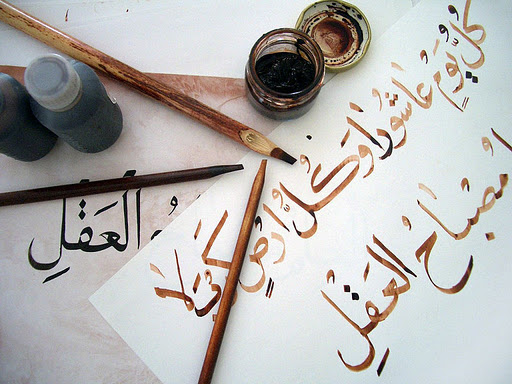
Most Mexicans will say that this sort of fatalistic or God-fearing phrasing originates in Catholicism. I am confident that Catholicism is part of the reason, and a devout belief surely encourages such thinking and expression. But the people who use such expressions are not limited to Catholics, nor church-goers. I’ve been to many Catholic countries where I don’t hear people referencing fate and God with every other sentence. Honestly, I believe this sort of phrasing in Mexican Spanish originated or was at least an influence of the Moors in Spain. They brought Islam and Arabic phrases to Spain (inshallah in Arabic, which became ojala in Spanish), and this mentality and phrasing have survived, thrived, and are alive and in frequent use in modern day on the west coast of Mexico. Such an outlook may resonate with indigenous Mexican beliefs and worldviews as well; of that I am unsure.
Another frequent local expression is the response to “How are you?” In high school Spanish classes I learned that the correct response is, “Bien, gracias. ¿Y tú? More often than not, people here will respond with, “Gracias a Diós, aquí ando” (Thanks to God, here I am); “Sigo de pie” (I am still alive); or “Echándole ganas” (I’m doing my best/giving it my all). These expressions, in my feeling for and understanding of them, infer a gratitude for life, a desire to express joy and gratitude and not to complain despite the huge economic hardships people have experienced in recent years. These are also expressions I find myself saying all the time, and ones I sense also originate from Islamic beliefs. It is amazing to me how what happened centuries ago on another continent affects so strongly how we express ourselves today. Or, you may say, it’s all Catholicism. 🙂



 ¡VidaMaz!