México, the land of mañana, a place where ahorita (“right now”) means “I am aware of it; we will get to it, eventually…” So imagine our shock this afternoon when we walked into a restaurant across the street from our hotel in Guadalajara, and before we could even sit down onto our table appears FRESH food: limes, chopped cilantro and onion, chips and salsa, and hot corn tortillas! A waiter showed up with pen and notepad in hand, smiling, asking us for our order, before we had barely sat down!
“What do you have?” I naïvely asked. “Beef cooked in its juice, small, medium or large.” Easy enough. (They do have quesadillas if you don’t want meat, but not much else.) Our small orders showed up in about 20 seconds. We had been sitting for all of 30 seconds, maybe, and we were eating fresh hot food! The slowest part of the process was us. Had we been experienced diners, it would have been a seamless, fluid transaction.
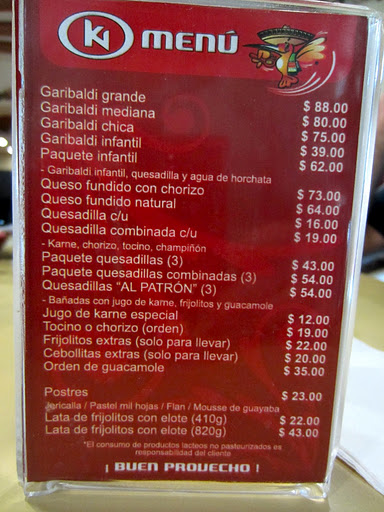
For us it was quite disconcerting. The place, Karne Garibaldi, is evidently pretty famous in Guadalajara, founded in the 1970s and currently with five different locations throughout the city. Since August 31, 1996, they have held the Guinness World Record for fastest service: 13.5 seconds from kitchen to table! This is not a taco stand; it is huge, comprising what are basically three large dining rooms. We didn’t count, but would guess there are sixty tables and seating for a few hundred people. We normally clocked people getting served their main courses and drinks between 30 and 50 seconds, but that’s still pretty darned amazingly speedy!
Remarkably to me, the staff all worked together like a well-oiled machine and, they were happy doing it! The hostesses seat groups of people and stand at the table with their hands in the air as the guests sit down. The side dishes all show up, and a waiter shows up. The waiter runs (literally) the order ticket to the kitchen, and the food and drinks are served lickety split. Other waiters wander around with fresh guacamole or other side dishes you might want to add to the standard-issue salsa, grilled cebollitas, limes, and their famous frijoles con elote (beans with corn). Waiters who are not busy taking orders or serving clear plates from tables. And boy, can they carry the weight! These are heavy pottery dishes! The entire time we were there, we only small smiles and great examples of team work, so often missing in restaurants today. Someone has done a great job instilling a culture of team work and customer service. Even the manager or crew supervisor was pitching in non-stop. Lots of nonverbal communication and staff member helping staff member; it was really fun and beautiful to watch.
Outside the restaurant in Plaza del Sol a line of cars waited a long way down the street for valets to park them, such is the demand on this place. We personally found the meat in its juice a bit bland, but there was plenty of salsa, lime, cilantro and onion to spice it up. And, thankfully, it was meat, not tripe or ears or eyes or…
The menu includes a large variety of drinks (including Greg’s beloved Coke Zero in a BOTTLE!) as well as Mexican desserts (jericalla, pastel mil hojas, flan, mousse de guayaba). Prices are reasonable (see menu at left). The small orders were enough for us as we went home very satisfied. It is only a few pesos more for the next sizes up, so a hungry diner won’t go broke. This is a great place to eat and probably a great place to work.
Just remember, next time someone tells you that Mexicans like to take their time… there are exceptions to every tendency!
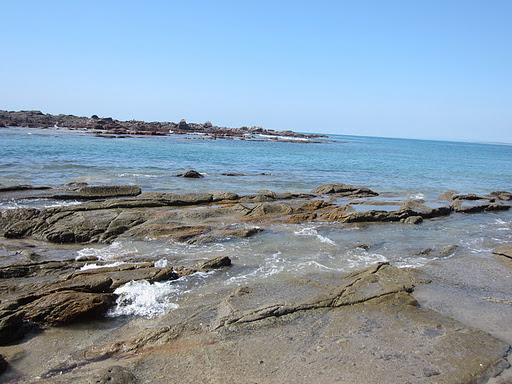
I know a tranquil beach where the views are spectacular,
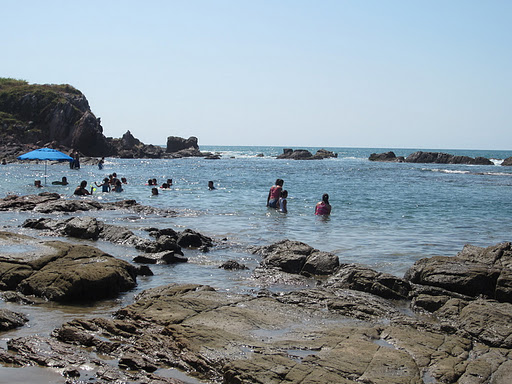
Where rock outcroppings shelter swimmers from rough tides.
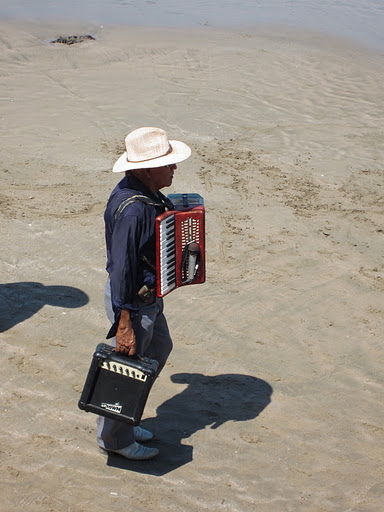
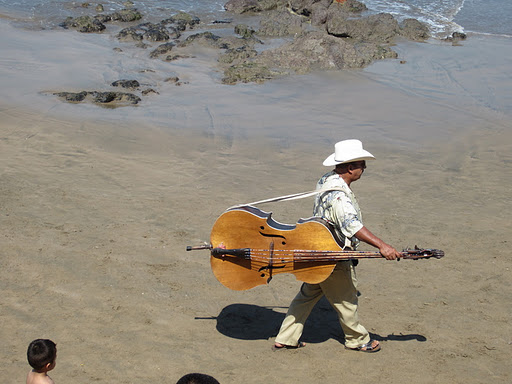
I know a beach where both the music and the food are fantastic.
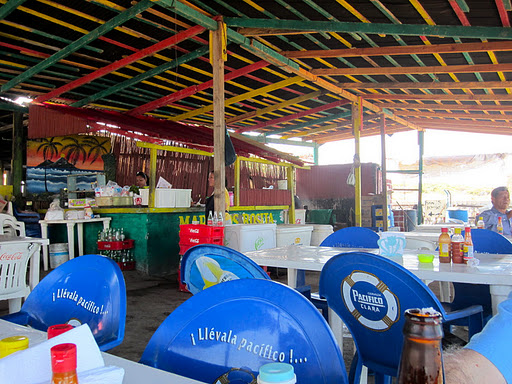
The restaurants are basic, in no way luxurious…
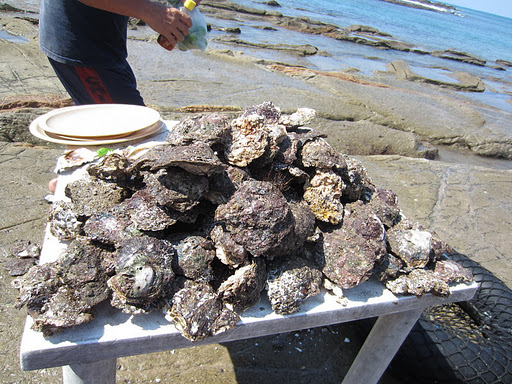
But, they serve fish, seafood and shellfish caught just minutes earlier…
In a shady, ocean breeze-cooled environment. Along with the seafood they serve cold beers and…
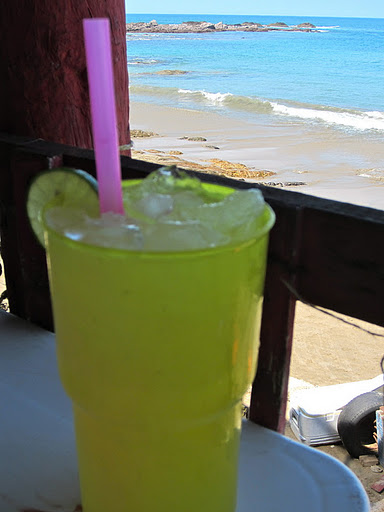
Freshly squeezed, ice cold lemonade!
I know a beach where the restaurants are plenty comfortable, and you can’t beat the freshness of the food served, the spectacular views, the joy of the environment, or the price. (Greg and I had barbecued corbina, two beers, and a fresh lemonade today, and we paid 220 pesos or about US$18 for the privilege.)
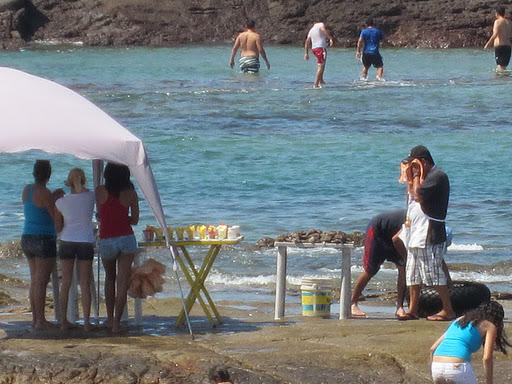
I know a beach where, in addition to the music, the food, the drink, there is plenty to keep you entertained while you are relaxing, including watching families out for a Sunday afternoon picnic and swim, and fishermen putting their boats in.
If you are from Mazatlán you of course know this beach: Cerritos. Decades ago when we first started visiting Mazatlán, Cerritos was a long drive up a lonely dirt road. The beach was great, and there were a few open-air restaurants just like today.
But today the road is paved, Cerritos is right next door to the huge, world-class El Riu hotel complex, and it lies at the end of a shopping mall that caters to gringos who stay in the trailer park. It is a mere 15 minutes from the Golden Zone. And Cerritos is still, fortunately, wonderful!
If you don’t want to visit a restaurant, you can picnic on the beach. You can bring your own shade, or, even easier, bring your ceviche and shrimp paté and…
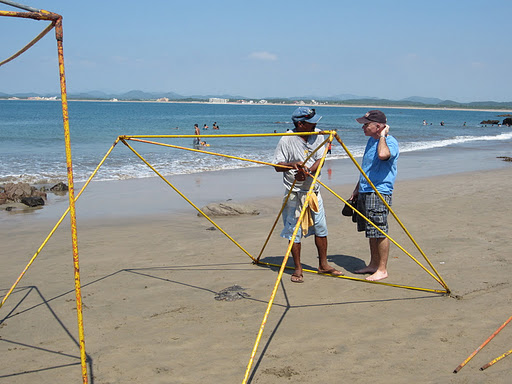
Rent some shade: 130 pesos for day use of a tent, a table and four chairs.
If you haven’t been to Cerritos in a while, you are overdue! If you’re heading down to Mazatlán, be sure to add Cerritos to your agenda!
Below I’ll add just a few random photos taken today that I thought you might enjoy.
For three days recently Mazatlán was blessed with a lot of laughter (normal here) and a whole lot of wonderful Thai cooking (a blessing), with fresh ingredients and a trained chef in a GORGEOUS old ocean-view home with honest-to-God incredibly wonderful women.
We have terrific food here, but, having lived for a decade in both Tokyo and San Francisco, we don’t have the international variety I would like. I CRAVE good Moroccan, Ethiopian, Indian, lamb shish-kabob, a good borscht …. Ironically, we do have a terrific local Thai restaurant, Zab Thai, where we eat every once in a while and for which we are very grateful.
Anyway, when six months ago my friend Indra told me she’d taken some Thai cooking classes in a friend’s home, I made sure she gave me all the info! I cook a lot of Asian food at home, but I was sure I’d learn something new, and I was eager to check out the classes.
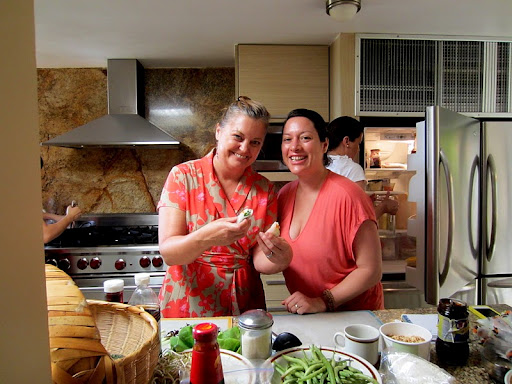
The classes are taught by Lis Maiz Rochin, a Mexican woman who lived in Southeast Asia for years and runs the Mibong restaurant in the Condesa neighborhood of the DF. Her husband is Mazatleco, so fortunately for us Lis comes here regularly. Though I doubt she will visit us again in the heat of September! That’s her on the right in the photo with me.
I wasn’t able to attend all three classes, since I am a working woman, but I made two of them. Each time we prepared four dishes, and walked out of class stuffed!
What I Loved Most
So, what did I love most about these classes? FISH BALLS! They rocked! I was really shocked to realize that I love these little things, order them all the time when traveling, but I’ve never made them at home. And they are so easy! And the dipping sauce we made was exquisite.
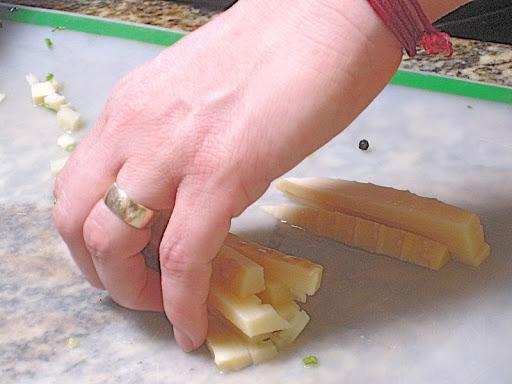
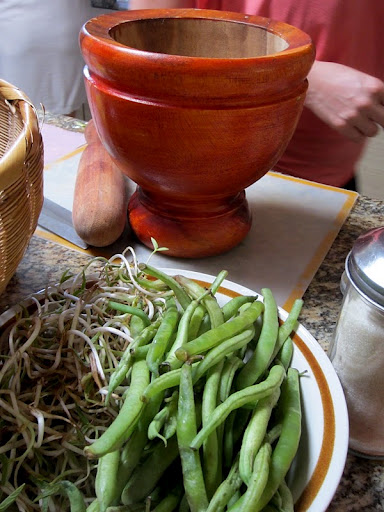
I was so so so so very psyched to see fresh (it may have been packaged, I’m not sure, but whole, real not canned) BAMBOO SHOOTS. Oh how I loved these in Japan, eating them as if they were candy! I soooooo miss them. And Lis brought some, and used them with abandon in the foods we prepared. Gotta love it!
Bamboo grows in Mazatlán, and I hadn’t realized how much I missed this until we used it, but if you know where in town I can buy fresh bamboo shoots, please let me know.
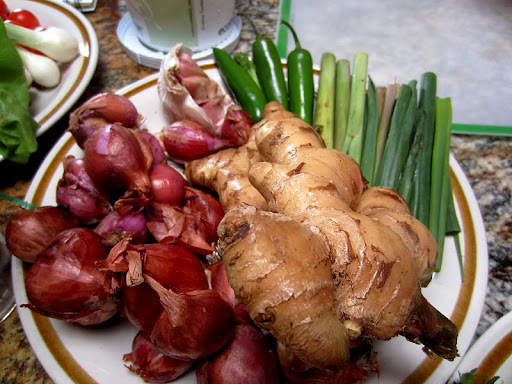
Giant fresh GINGER ROOT! Now ginger root I can buy here, and I often do. But these were soooo much fresher than what I normally find here in town, and they were gigantic! I brought some of the class leftovers home, sliced it up, and put it in the freezer so I’d always have some on hand.
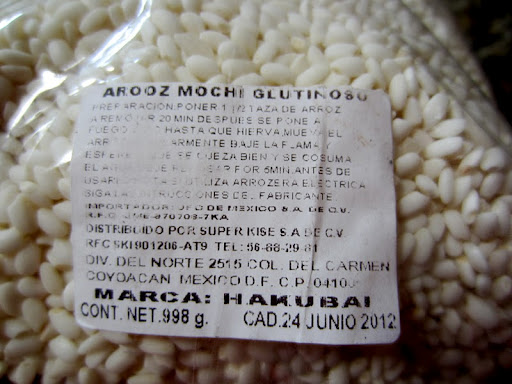
I also was sooooo excited to see a bag of sticky rice for the first time in forever! I was lucky to be able to bring home the remainder of this bag, at left, and I plan to do my best to get some shipped from Coyoacán to us here in Mazatlán.
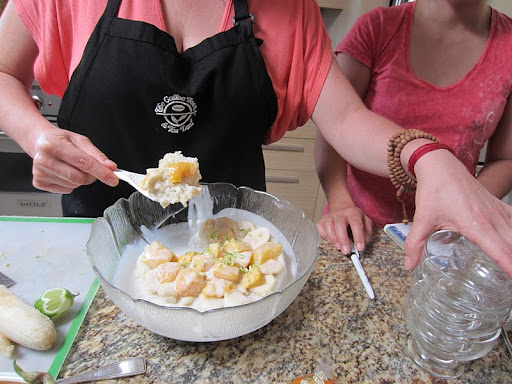
And what did we make with this mochi-gome? Mango sticky rice, of course! Mmmmmhhh!!! Calorie-, sugar-, and fat-free of course (lol).
So, okay Dianne, you loved your nostalgic trip through some of the foods you miss from Japan, finally available in Mazatlán. Anything else?
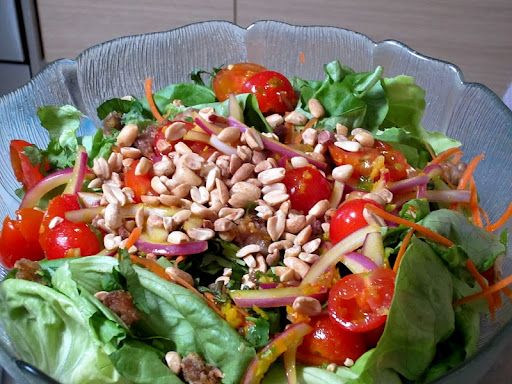
Yes, Lis had the most beautiful, and practical, Thai wooden mortar and pestle, which she used for making salad dressing. Take a look; that’s the wooden bowl and pestle there at the rear of the photo.
The thing I most loved about this class, though, was that the women attending it were truly awesome. I crave girlfriends who have international interests and passions, who are creative and fun, and boy did I find it with this crew!
Left to right we are Magda, me, Chika (I am sooooo excited to meet a Japanese woman who lives here in Mazatlán!!! FINALLY!!!! Hooray!!!), Erika, Lis our teacher, Manina our hostess, and my friends Nancy and Conchita.
What I Learned
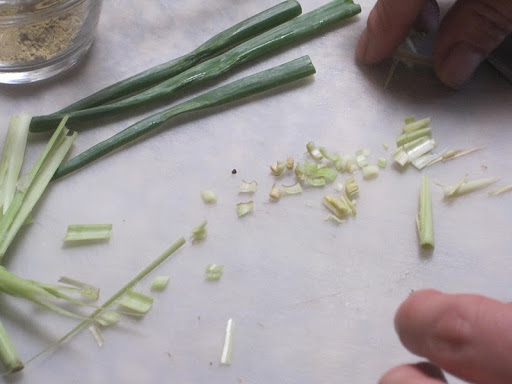
What did I learn in this class? Well, embarrassingly enough, I learned that when we cut lemongrass, we should only cut the center, white, heart of the stalk. I always wondered why the stalks were so hard to cut! Oops! I know that lemon grass (té de limón) also grows here in town, so if you know a source, would you please let me know? I’d love to grow some on my balcony beside my beloved basil plant.
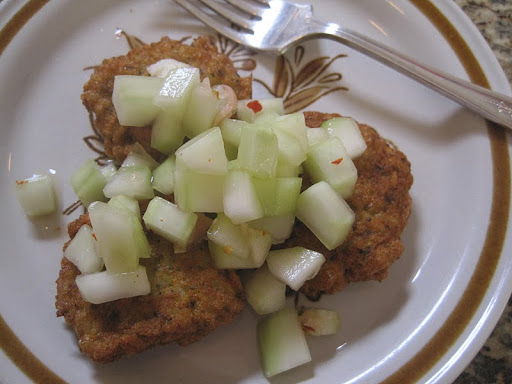
While I’ve eaten a lot of Southeast Asian desserts in my day, I never realized the terrific combo of pairing light/sweet/slimy lychee or rambutan with crispy/strong/bitter fried shallot. Definitely an inspired pairing!
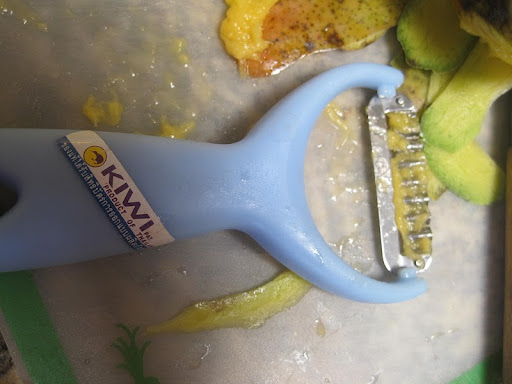
There were of course many things I learned, such as to always remove the green “sprout” in the center of a clove of garlic, if you find one, as it’s bitter. One last learning that really stands out for me, though, is the cool cutter Lis had. I WANT ONE! Mis primas-hermanas or beloved sister-cousins: when I visit Indiana to see you in October please let’s find and buy a few of these. I promised the ladies here I’d try. Why is it so cool? Well…..
Look what it does! You can julienne mango or carrots or whatever, in the same quick and easy way you peel them! Gotta get me one of these gizmos.
Thanks for reading my post! I welcome your comments and especially your local ingredient and supply sources. You all, of course, know about Toyo Foods, up the right-side-fork of the street above Club Navy, next to the pescadería. They are a godsend.
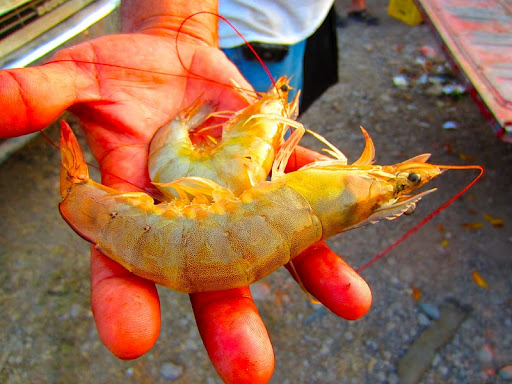
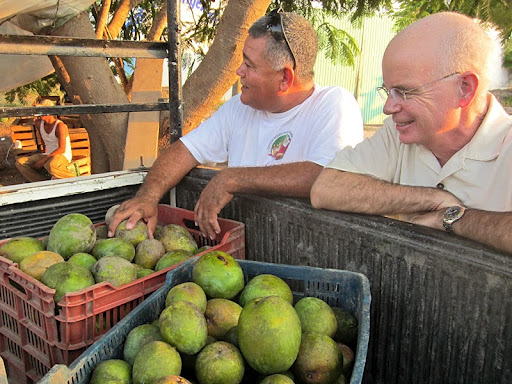
We had a FANTASTIC afternoon and evening learning about shrimping with a cast net/atarraya in the estuaries of Agua Verde, which is between Caimanero and El Rosario. We returned home with heartfelt smiles, new friends, 5 kilos of huge fresh shrimp (for which we paid about 7 bucks), a bunch of fresh crab (which our new fishermen friends gave us for free), and a bucketload of end-of-season mangoes ($4 for a crate full). ¡¡Viva Sinaloa y los Sinaloenses!!!!!!
We set out late Saturday afternoon with our compadres, Jorge and Silvia, to attend the first annual “Festival de la Frasca.” While Jorge told me “frasca” is not a word, and that I surely must be trying to say “zafra” or “open season,” local people tell us it is a southern Sinaloan term meaning “to capture shrimp from the estuary.”
The Festival de la Frasca was supposed to be a food fest with live music. But as usual they were running late setting up, and before we could really get into the party we found much more exciting things calling us.
Just one month ago we had driven this very same road, but shrimp season is now open, and it was an even more wonderful place! I HIGHLY recommend you visit during shrimping season! While the season lasts 6 months, the first few weeks are supposedly the best, as the shrimp and the shrimpers are the most plentiful.
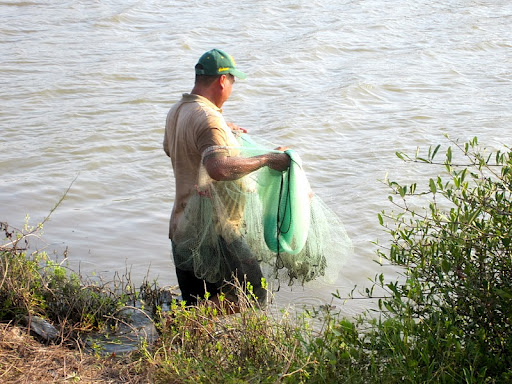
As we drove in we saw men with cast nets (atarrayas) everywhere. Though mango season has finished, it is now the height of the shrimping season, and they have already planted tomatoes. After tomato season will come chile season, and so goes the year here.
Shrimp season is huge. We were told that opening day is like Carnaval—wall-to-wall people everywhere, with families fishing, picnicking and partying all night long. Family members come from all over the region back to Caimanero and Agua Verde to help with the shrimping, and to perform their obligations under the cooperativa(to work a minimum of so many hours and to capture a minimum of so many kilos). Women and children hang out with the fishermen, so it feels like life transfers from town to the estuary during this time.
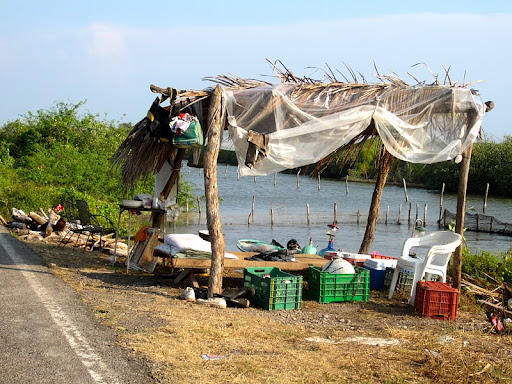
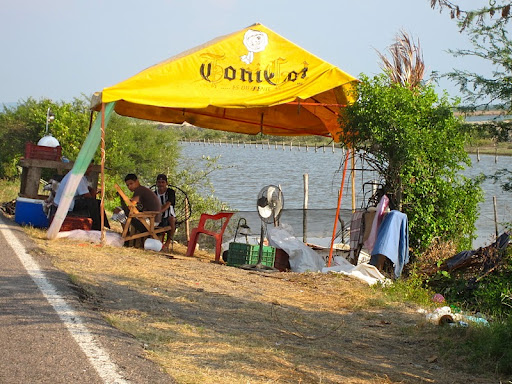
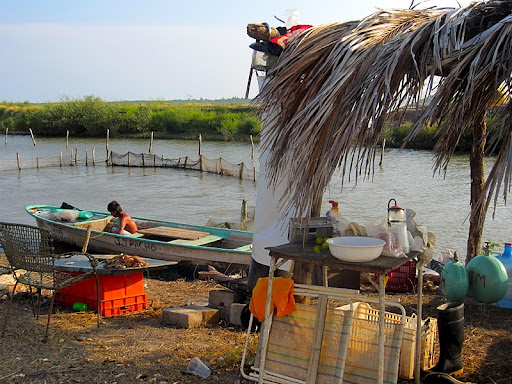
Beside the road that just two weeks ago looked so very different we saw little houses or shelters, many of them housing the shrimpers. A standard shelter like the one shown here has one or two lights powered by a propane tank, a plastic shelter for rain, chairs, a way to cook (usually a fire pit), a radio and a cell phone. As you can see, they sit just off the road. Can you imagine spending the night there with cars, trucks, and motorcycles coming by a few feet away from you all night?
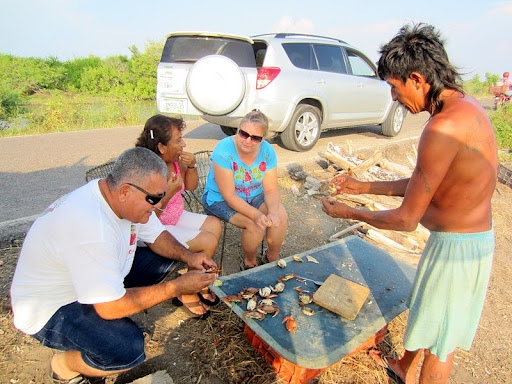
We greeted one of these guys, Rodolfo, at one of the stands, and he urged us to pull over and join him. So we did. The night crew, including Marco (who lives in Mazatlán but returns home for shrimp season), his 8 year old son and his 17 year old nephew, plus one other man, were just pulling up as we arrived.
Rodolfo proceeded to feed us a whole mess of fresh crab and shrimp, beside the road, in the fresh breeze, looking out over the estuary. La vida dura. While I well know, from living in Japan, how to crack open a fresh crab, scrape out the lungs, and eat the juicy brain and meat, this fisherman really enjoyed teaching us, and my comadre, Silvia, really enjoyed learning.
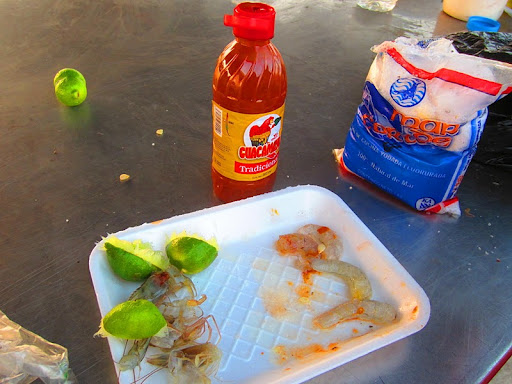
Here we also ate shrimp crudo with salt and lime (my all-time favorite—huge prawns, still wiggling; oh yum!), but he also cooked some for Silvia in a pot of broth.
We stayed here about an hour, chatting, feasting and just generally relaxing. We bought our first few kilos of shrimp, as well as receiving a huge bagful of cooked crab.
There were also many changueros, who we’ve heard about since arriving in Mazatlán, but this was the first time we met a few. They are estuary shrimpers who are not members of a cooperativa. They catch shrimp but legally are not supposed to be doing so. Many of the changueros used purina (shrimp chow) to get the shrimp up to the surface. None of the cooperativa fishermen we met used purina. They were very proud to explain to us that their shrimp were the purest.
Below is a video of one shrimper casting a net, and his wife helping him take out the shrimp and put them into a bucket.
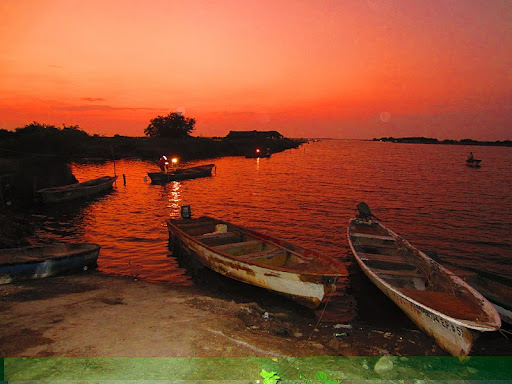
After getting back in the car, we made the rounds of several cooperativas. At the first one the view was spectacular.
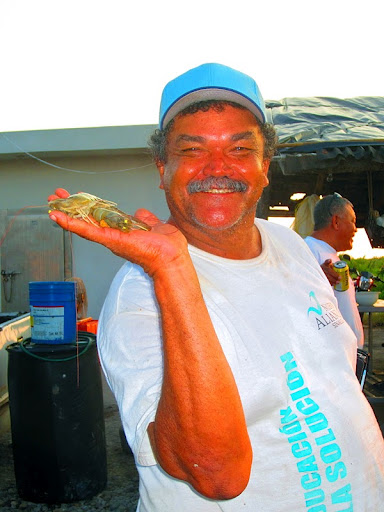
Rodrigo, a man we met there, sold us some more live shrimp. At left is his photo, and below a video of some of the shrimp wishing they could run away.
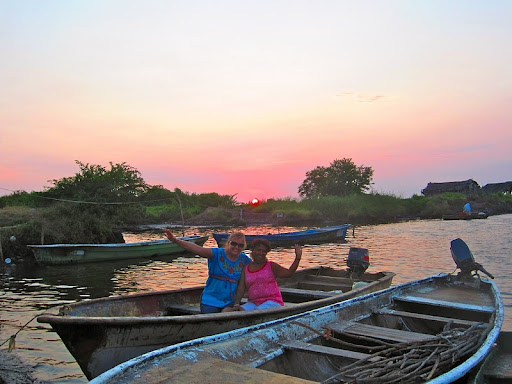
We had arrived here just in time for sunset. The sky and the water glowed. People were all so friendly, open and hospitable that it was amazing. Everyone was eager to talk, to explain this long Sinaloan shrimping tradition, and to share their catch of the day with us. To me this frasca tradition is soooo important; it’s Sinaloa’s history, and the if not some of the best shrimp in the world. And tons of it are harvested BY HAND here each year and shipped worldwide. I know such shrimping used to happen right here in Mazatlán; even next to Hotel Playa was an estuary (no wonder Zona Dorada floods).
The fishermen brought out packets of salt, fresh limes and bottles of salsa, and urged us to eat from their catch to our hearts’ content. Alfresco dining overlooking the estuary with friendly, happy, relaxed, knowledgable people; it was a wonderful afternoon. Every boy we met knew how to cast a net. They seem to start as young as seven or eight.
“Girls just wanna have fun…”
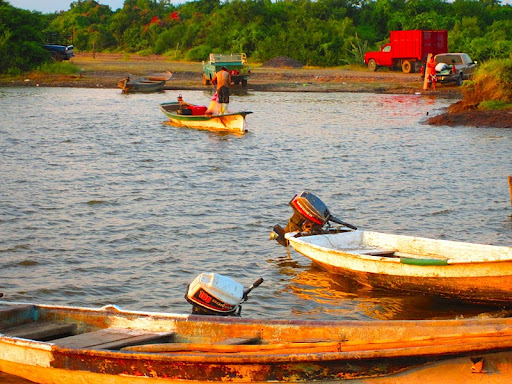
We also sat here for quite a long time, again feasting on raw shrimp (no cooked ones this time), and watching the guys cast their nets in the scenic little harbor.
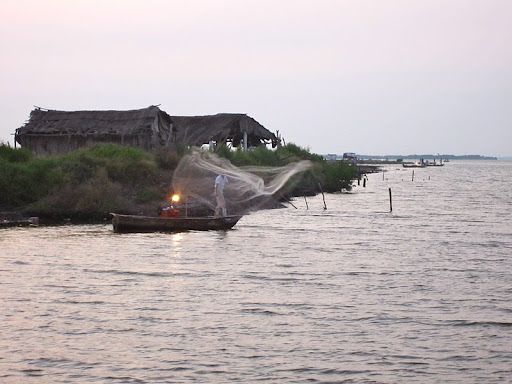
The video below shows a guy casting his net from a panga, so you can see that as well as the earth-bound approach shown above.
The pangas or small fishing boats go out with two guys normally, one remero or rower, and one atarrayero or net caster. Most of the estuary is only hip- or waist-deep, so the remero carries a long stick or remo and basically pushes the panga along, similar to the movement of the gondolas in Venice.
Below is a short clip of the gentleman at left rowing.
There are various cooperativas to which the shrimpers belong. This drive out to one of them was really something — estuary on either side of the road, with loads of lit pangas all around.
Below is a video, so you can get a better feel for this road-with-water-on-both-sides drive.
After visiting some very cool places and meeting lots of wonderful people, we ended up spending another couple of hours sitting with Marco and his family. It was so peaceful there, and so very pleasant. Excuse the poorer quality of the photos from here on. The batteries on our camera died, so the remaining photos are taken with our phone.
On the way out we stopped at one last cooperative, this one the largest we’d seen. Here they had a large building or warehouse, surrounded by dozens of pangasfishing. Families were sitting and standing everywhere, waiting for their husbands, fathers, boyfriends and brothers to come in with their catch.
A semi-truck full of ice was waiting nearby.
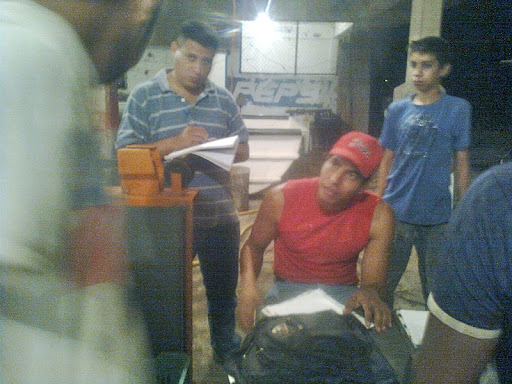
A group of men with a scale and ledgers was registering incoming shrimp.
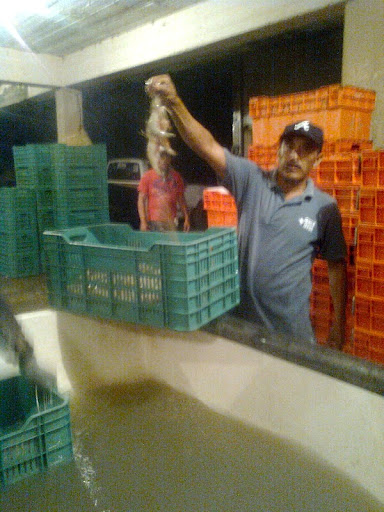
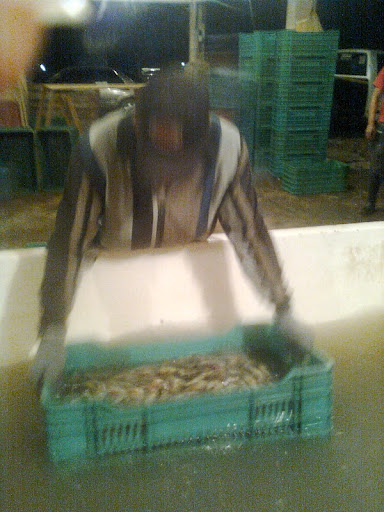
After dipping the bins full of shrimp into ice water, they placed the bins in the refrigerated truck where they are covered with ice and then taken to Mazatlán for sorting, packing and export.
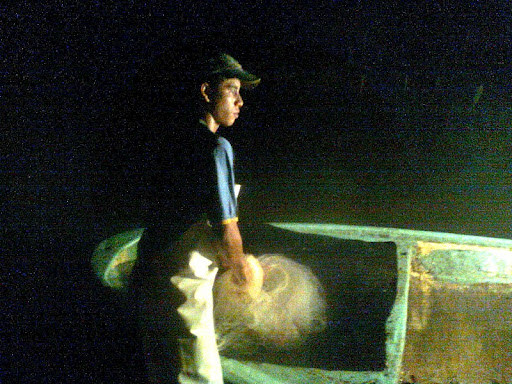
It was at this last cooperative that we also saw our youngest atarrayero, this boy of about eight, at left.
We kept telling our friends that this was an otro mundo, or other world, that most guests in Mazatlán don’t know anything about or understand. We learned a lot about how the cooperativas function and about the life of a shrimper. We all got to eat live shrimp and enjoy some great company. The festival probably happened, but we know we had a lot more fun hanging out with our friends and meeting new ones. We already have plans to go back. We will definitely go opening night next year for the carnaval de cameron, and will head out some month just before the full moon when the really large shrimp are said to be much more plentiful and easier to catch. To be able to find Rodolfo and Marco’s shelter, we put their spot into our GPS and got their cell phone number. Stay tuned.
In my last post I told you all how I fell in love with Turkey: her beauty, history, people and blend of cultures. Well, I also loved the food. Succulent, savory lamb, and roasted and raw vegetables in multiple combinations with every meal. I especially loved how the Turks prepared eggplant, or patlican (pronounced “patlijan”).
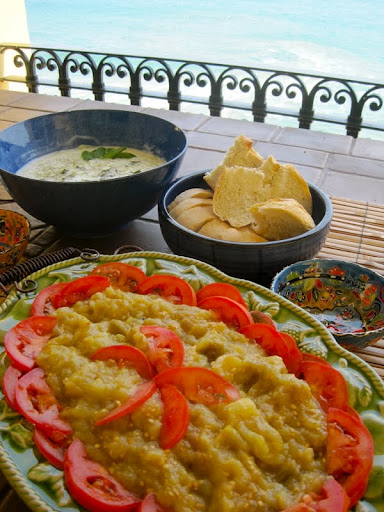
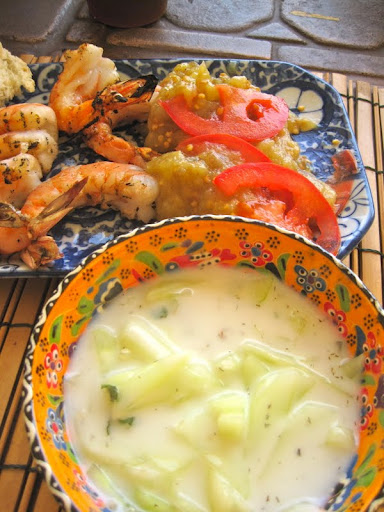
So, I bought Greg a book called “Turkish Cookery,” figuring his real gift would be that I’d try out some of the recipes. Today was my first try. I was of course worried. I’ve never cooked anything Turkish before. But man oh man oh man, was it good! At left is a glimpse of the meal we ate today on our Mexican terrace overlooking the Pacific Ocean.
The weather here in Mazatlán has been very hot and humid. We took a long sweaty walk along the malecón/boardwalk this morning, and I then spent a couple of hours gardening. So, a cool meal sounded best today. Cucumbers are in season here, so first on today’s Turkish menu was cacik (pronounced jajik), yoghurt with cucumbers.
This dish is similar to Indian raita. I’d call it a cucumber-yoghurt salad, though my boys called it “cucumber soup.” I guess it is sort of like a gazpacho. It was easy-peasy to make and I HIGHLY recommend it on a hot day!
Peel, thinly slice and chop 2 large cukes. Sprinkle them with a bit (1 teaspoon or so) of sea salt. Let them sit. Put 500 grams plain yoghurt in a bowl, and with a whisk whip in about 1 cup of water. Add to the yoghurt mixture the salted cucumbers along with a clove of crushed garlic. Stir, and garnish with chopped fresh mint and dill. You can also drizzle a bit of olive oil on top (I didn’t and it still rocked). Be sure to chill this and eat it cold; the flavors really came forth after a couple of hours in the refrigerator. So refreshing!
The second dish I made was the one I was really craving: patlican salatasi, or eggplant salad. I ate this dish, or adaptations of this dish, quite a few times during my trip. Every time I’d ask the waiter, my meal mates or friends what the dish was called. Everytime they’d tell me “patlican,” “eggplant.” “Yes, I know it’s eggplant. But what is the name of the dish?” No one seemed to know. The photo in the cookbook looked like the dish I was craving, but what would it taste like????
First step was to mix the juice of one lemon with 1/2 cup of olive oil.
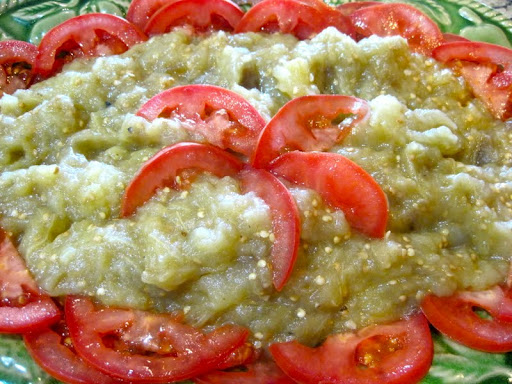
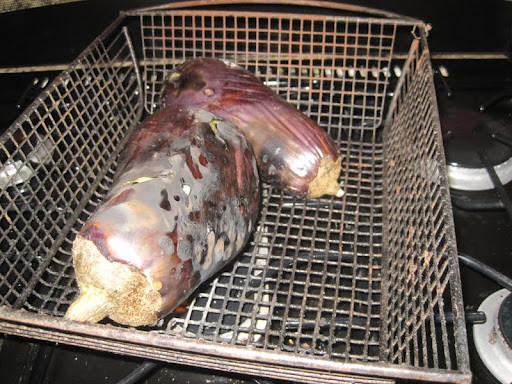
Then, just like in Japan, this recipe required that I roast the whole eggplants over an open flame, till the inside becomes tender and the outer skin becomes charred, then hold under cold running water for a few seconds before peeling off the skin. In Japanese cooking I absolutely love eggplant roasted in this fashion, and my taste proves consistent for Turkish cooking as well, evidently. After peeling the roasted eggplants (I roasted 3 big ones), you put them in a bowl and mash them up with a fork. I also used two knives like pastry knives to make sure all the pulp was cut and easy to eat.
Into the mashed roasted eggplant I dumped the oil/lemon juice, added a tablespoon of balsamic vinegar, and a couple of cloves of minced garlic (the garlic wasn’t called for in the recipe, but hey, we love the stuff). I garnished the plate with sliced tomatoes (the recipe said to also garnish with onion, green pepper and olives), and we ate the roasted eggplant salad with French bread. Mmmmmm! Definitely a hit!
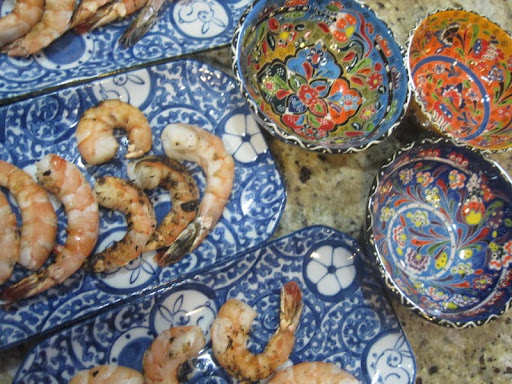
As long as I was roasting on top of the stove (too much work to start the grill, I guess, or maybe I just like that grill to be Greg’s territory), I figured I might as well roast the shrimp we had for lunch as well. After grilling I drizzled these with a bit of sesame oil and a bit of homemade aioli.
What to serve all this in? While in Turkey I bought a few Kütahya bowls, underglazed and handpainted. You can see them in the photo at left, the bowls to the right of my Japanese plates. The Kütahya remind me of our Mexican Talavera, don’t you think? In the same way as Talavera, Kütahya painting varies widely quality-wise (and price-wise!).
Here is a close-up of some of the food. Afiyet olsun!!! (Bon apetit!)
And here is a photo of one of the handsome men who lunched with me, a new convert to the joys of Turkish food 🙂


































 ¡VidaMaz!